Extreme Temperatures
S


Snowflake Cold

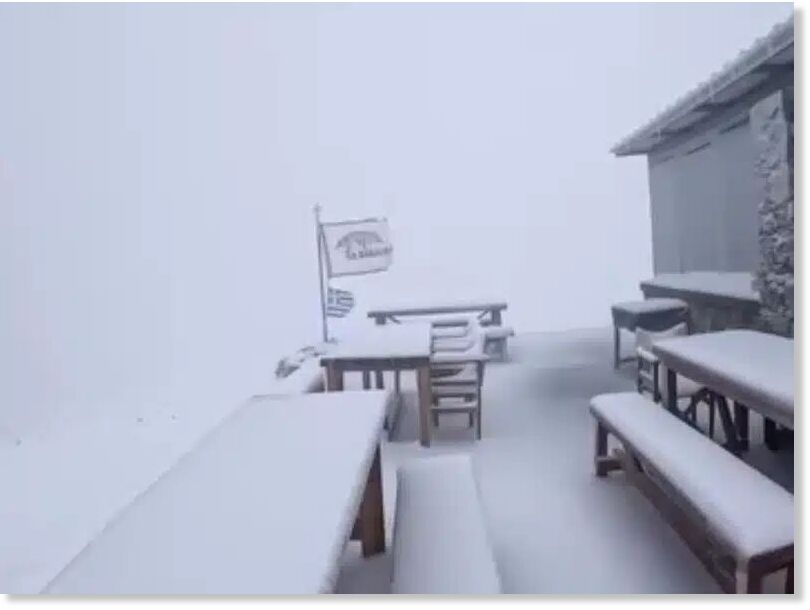
Rare early October snow blankets Greece's mountains

Below-zero temperatures were recorded on Greece’s highest peaks, including Mount Olympus.
The first snowfalls of the season have arrived in Greece, covering high-altitude areas of Mount Olympus, Kaimaktsalan, and Falakro on the night from Wednesday to Thursday. Snow cover was expected to expand further Thursday night into Friday as temperatures dropped sharply.

"Early October snow is extremely rare in Greece," Stavros Dafis, a researcher at the National Observatory of Athens' METEO group, told Kathimerini.

According to Dafis, only four previous years - 1983, 1989, 1995, and 2002 - recorded similarly low temperatures in early October, though it is unclear whether snow fell then. The last somewhat extensive October snowfall occurred in late October 2017.

It remains uncertain whether this unusual early-season snow is an anomaly or a sign of a wetter, snowier winter ahead.

Long-term trends show a clear decline in snowfall across Greece, with METEO researchers noting that between 1991 and 2020, the duration of snow cover decreased by about 1.5 days per year.

Snowflake Cold

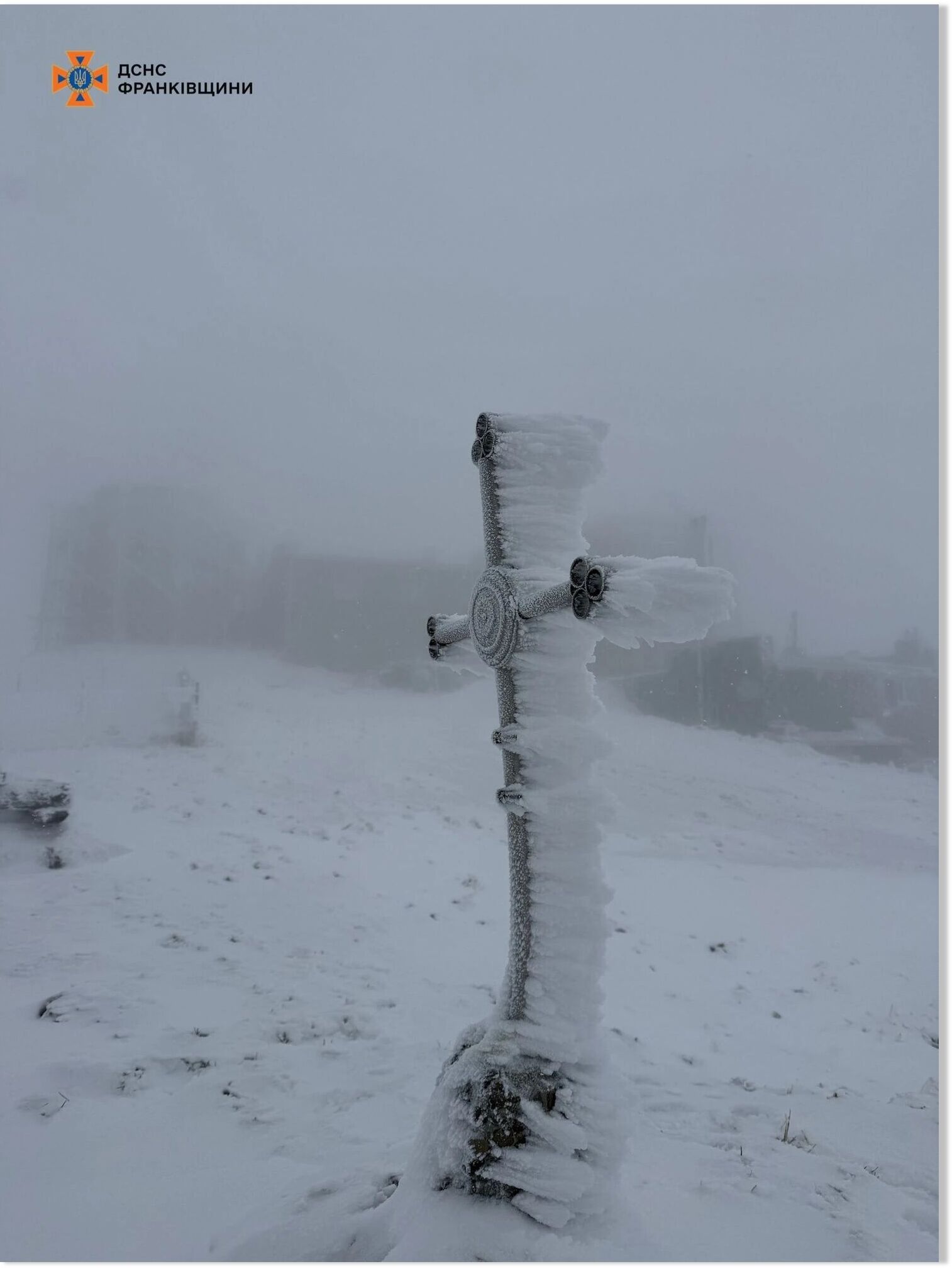
Real winter has arrived in the Carpathians, Ukraine: snow, frost, and danger for tourists - 19.6 inches of early snow (UPDATE)

mmmmm
On September 30, heavy snow fell on On September 30, heavy snow fell on Mount Pip Ivan Chornohirskyi, with the air temperature at -3°C. Rescuers warn of danger to tourists due to the sharp deterioration of weather conditions. with the air temperature at -3°C. Rescuers warn of danger to tourists due to the sharp deterioration of weather conditions.

Real winter has arrived in the Ukrainian Carpathians - on September 30, heavy snow fell on Mount Pip Ivan Chornohirskyi, the wind was northern at 4 m/s, and the air temperature was -3°C. This was reported by UNN with reference to the State Emergency Service of Ukraine in Ivano-Frankivsk Oblast.

Details

As noted by the State Emergency Service, the mountains rapidly transitioned into winter mode: snow is falling, and the temperature is below zero. Such weather makes conditions particularly dangerous for tourists, rescuers warn.

The State Emergency Service warned tourists: these weather conditions significantly complicate movement in mountainous areas and can be dangerous to health and life.


Comment: Update October 1

Ukranews.com reports:
On October 1, real winter reigns on Mount Pip Ivan Chornohirskyi, the temperature dropped to -5, it is snowing, in places up to 50 cm. This was reported by an employee of the observatory on Mount Pip Ivan, Vasyl Fitsak, on his Facebook.

"Air temperature -5°C. North-northeast wind 6-8 m/s, in gusts of 12. Visibility is limited, snow is falling. Snow is 5-15 centimeters, in places there are already up to 50 centimeters of snow," he said.

Pip Ivan is one of the highest peaks of the Ukrainian Carpathians, with a height of 2028.5 m. It is located at the southeastern end of the main ridge of the Chornohora massif, on the border of the Ivano-Frankivsk and Zakarpattia Regions.


Snowflake

Romania sees season's first snow on mountain areas as temperatures drop

mmmmm
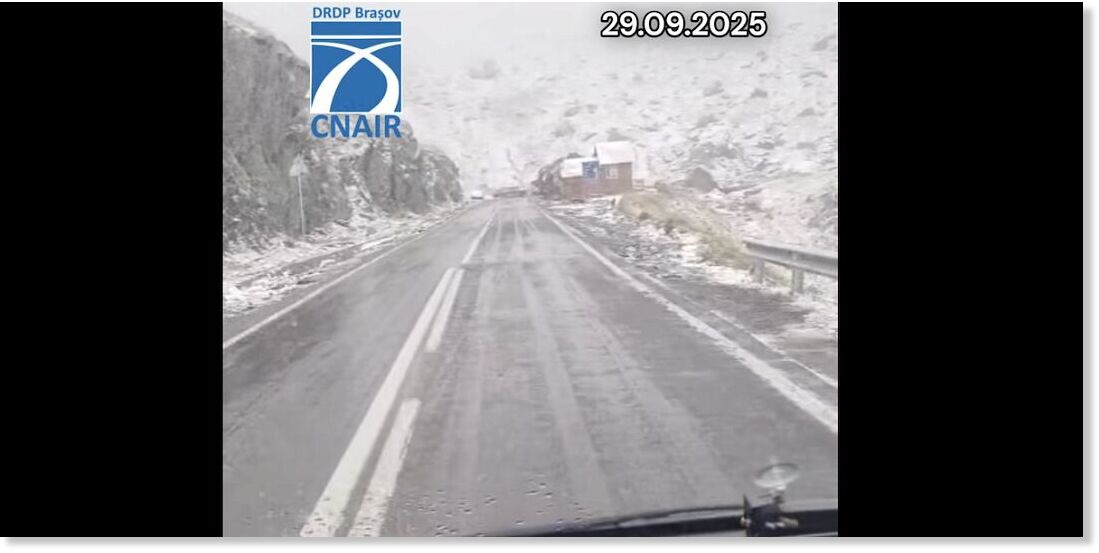
Romania recorded the season's first snowfall in several mountain areas on Monday morning, September 29, including the scenic Transfăgărășan highway, as colder weather settled across the country. The National Meteorological Administration (ANM) also issued a weather advisory valid for this week, warning of cold and rainy conditions.

The Regional Road and Bridge Directorate (DRPD) in Brașov reported snow in the Bâlea Lake area of the Transfăgărășan, where crews prepared plows and spread anti-skid materials to prevent ice formation.

"Although the snow that fell this morning is not causing problems yet, our colleagues will intervene throughout the day with plows and anti-skid material, especially since conditions are expected to worsen in the coming days," the agency said on social media, urging drivers to adapt their driving to road conditions.


Snowflake

The first snow falls in Kazakhstan, turning cities white

mmmmm
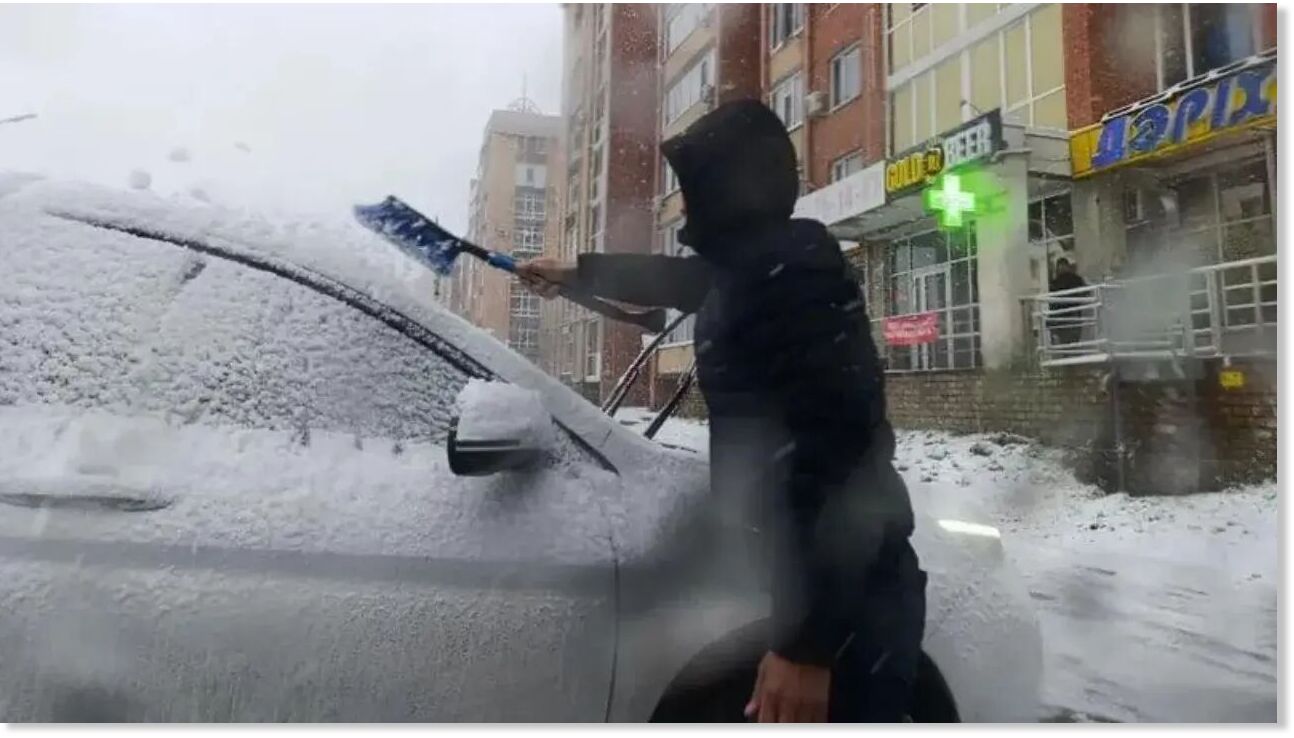
On the morning of September 29, the first snow of the year fell in the Kostanay district of the country. In a short time, the city streets and houses were covered with white snow, while the roads became icy and inconvenient. This was reported by local publications.

In some areas, power outages were observed, and several traffic lights stopped working. This led to delays in traffic and congestion on the roads. The police urged drivers to be cautious in adverse weather conditions and to strictly follow traffic rules.

Meteorologists had earlier warned about a sharp drop in temperature across the republic starting from September 28. According to them, thunderstorms and strong winds may occur in the southeast of the country. In the northern regions, heavy rains and a significant decrease in temperature are expected.


Snowflake Cold

Temperatures plummet & September snowfalls of up to 2 feet in European Alps

The first decent snowfall of the 2025-26 season was seen across the Swiss peaks.
Temperatures plummeted across the European Alps this week, with snow falling in French, Swiss, and Italian ski areas above 2,000 meters (6,560 feet).

At Zermatt's Gornergrat station at 3,129 meters (10,266 feet), temperatures dropped from 13°C (55.4°F) to -2°C (28.4°F) in three days.

Areas in Italy's Piedmont region saw the strongest September snowfall in over 30 years, which closed many roads in the region.

Several pass roads had to close in the Swiss-Italian border regions, including the famous Gotthard Pass.

While the snowfall has not been quite as big as last year's September snow storm, when up to 1 meter (3 feet) fell, this year's September snow is still a welcome harbinger of things to come for the 2025-26 ski season in Europe.


Snowflake

Expanding early season snow cover in Russia

mmmmm
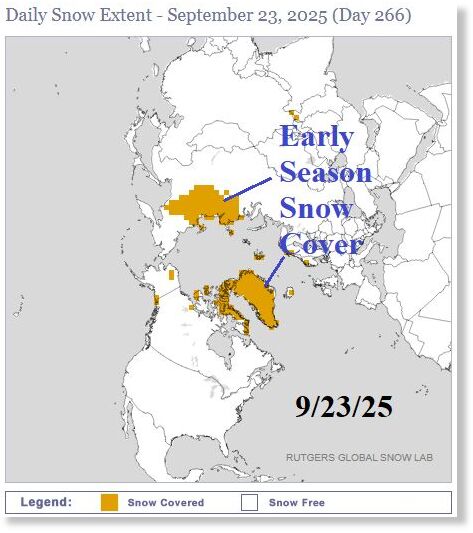
Discussion: Early season snow cover has developed over North/Northeast Russia (Fig. 1). The snow cover in that region for later September is above normal (Fig. 2). Snow cover expansion is likely.

The GFS 15-day temperature anomaly forecast indicates widespread cooler than normal temperatures with snow snowfall across Northern Russia and the attendant cool air mass extending southward (Fig. 3). Although the early season snowfall in this region is above normal, the snow is not unusual.

Given the constricted polar ice cap (Fig. 4) and early season colder wind extending across open water, advection snows can occur in far northern latitudes especially Northern Russia in early autumn. Of course, the snow cover biases the region cooler and can influence the prevailing weather pattern across Eurasia which features a partial extension of the cool regime described southwestward beneath a longwave trough and into the Black Sea region.

Snowflake Cold

Unusually heavy snow blankets western Mongolia's Zavkhan province, depth almost 2 feet

mmmmmmm
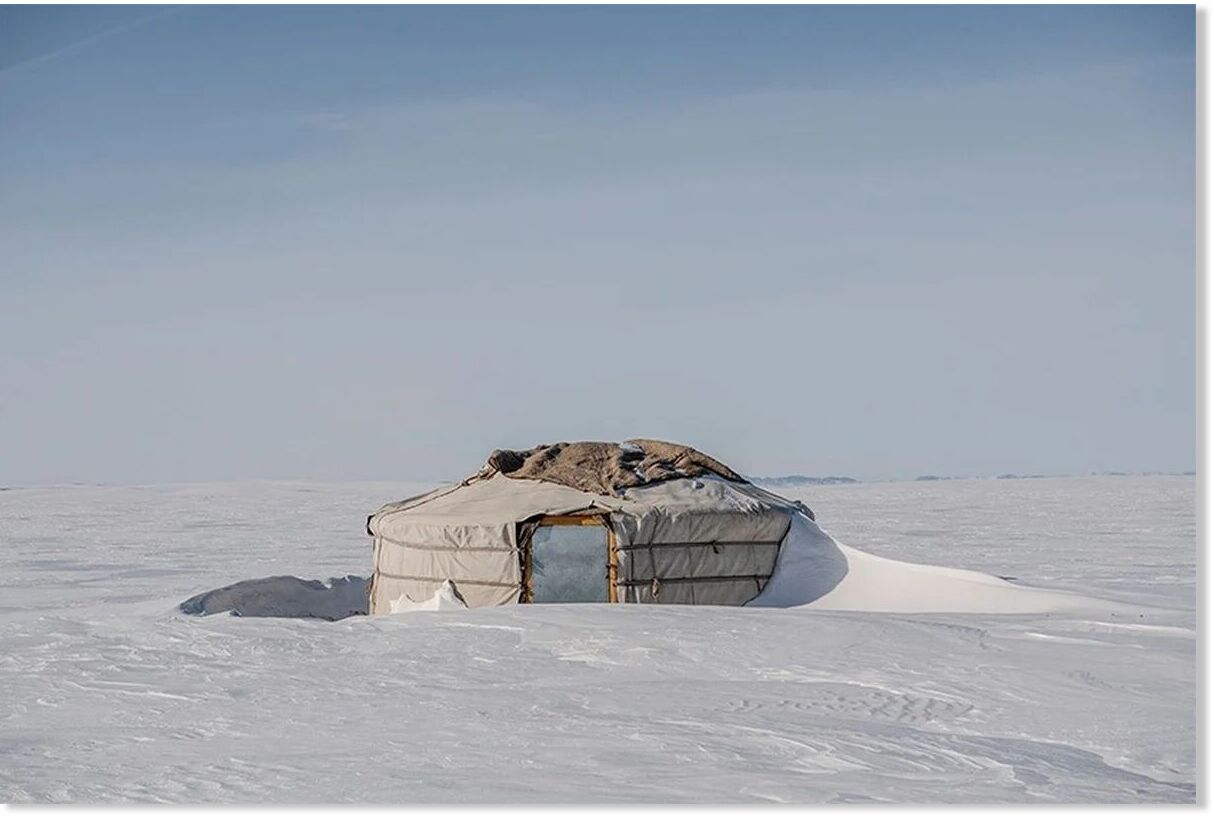
An unusually heavy snowfall has struck Zavkhan province in western Mongolia, the National Agency for Meteorology and Environmental Monitoring reported Monday.

The snow hit several soums (administrative subdivisions), including Uliastai, Yaruu, Ider, Aldarkhaan, Tsagaankhairkhan, Shiluustei, and Otgon, on Sunday and Monday.

Precipitation in the affected areas averaged 25-30 centimeters, with snow depths reaching up to 60 centimeters in mountainous regions.

Temperatures in these areas are expected to plunge to minus 2 degrees Celsius following the snowfall, the agency said. Authorities have warned the public, particularly nomadic herders and drivers, to take extra precautions against potential hazards.

Mongolia is known for its harsh continental climate, marked by long, frigid winters and short summers. Zavkhan province, located in the country's west, is among the regions that regularly experience some of the nation's coldest winter temperatures.


Snowflake

Unexpected winter in Turkey: snow covers Rize district

mmmmm
The high mountain regions of Turkey's Rize district, located on the Black Sea coast in the northeastern part of the country, woke up under a blanket of snow - an unusual sight for the end of September. According to TRT Haber and regional media, the rain that fell during the day turned into snow at night, with the snow cover reaching up to 10 centimeters in places, BTA reports.

The most affected are the Avusor and Kavron plateaus in the Çamlıkhemşin municipality, where shepherds still live. Residents say that although such phenomena are not unknown in the region, such early snowfall always causes surprise.

The website TurkishTourismNews published footage of the snow-covered slopes, describing them as "winter landscapes in the middle of autumn". Locals say that while the snow has not caused any major problems, it has affected livestock grazing and hastened preparations for their return to lower pastures.


Attention

Of empires and famines

British Empire used famine as a weapon of war dozens of times. It will continue to do so until it is defeated and quarantined from the rest of humanity.
Indian Famine
© Alex Krainer's Substack
The unbearable, yet persisting blight on humanity today is the deliberate starvation of the two million Palestinian people in Gaza, or however many are still left alive. The figure is probably closer to 1.5 million. It may seem like the worst thing humanity has witnessed since who knows when except that, unfortunately, it's only the most recent and most widely reported example of the empire's monstrous misdeeds.

Many of us recall the famines in Somalia, Sudan or Ethiopia but those seemed like accidents of nature or consequences of civil wars that raged between camps dominated by cruel, barbarous warlords who couldn't or wouldn't settle their differences by any civilized means. Any involvement by Western powers in such atrocities was strictly the domain of unhinged conspiracy theorists and little more.

Snowflake

'Amazing' scenes across Australia's alpine regions as winter's 'last hurrah' extends ski season after nearly a meter of late snowfall

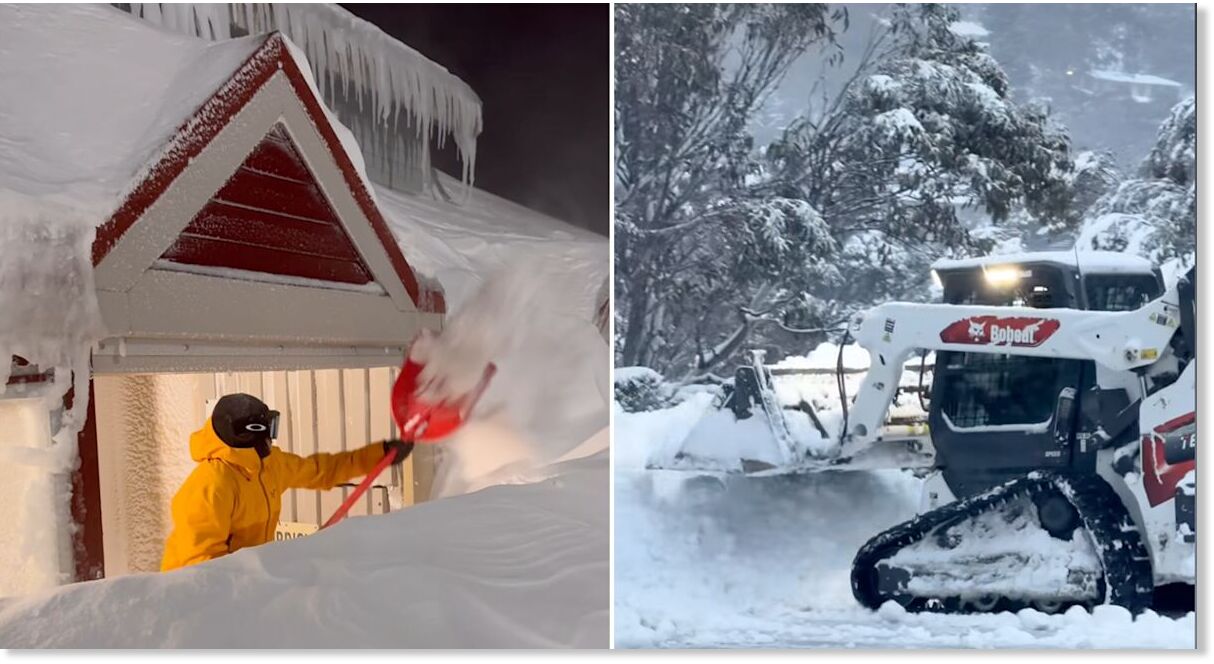
Mount Hotham in Victoria has enjoyed nearly 80cms of fresh snow in recent days.
Spring might be just around the corner but you'd hardly know it looking out the window for millions of Australians this weekend. Keen skiers are thanking their lucky stars after blizzard conditions have dumped plenty of snow in the alpine regions in Australia's southeast in recent days - promising some enticing September skiing this year.

As a cold front moved through south-east Australia to end the week, nearly a metre of snow has landed for the resorts. And the intense and blustery conditions are set to ease as the weekend rolls on with one resort saying the "best day of the season" could be in store.

"Blizzard conditions will be generated by damaging wind gusts, combined with a very cold air mass that will cause snow levels to fall as low as 700 metres," the Bureau of Meteorology warned late on Friday.

"Gusty and snowy conditions are forecast to continue into Saturday morning, before gradually easing later in the day."