The Antarctic stratosphere is showing initial signs of disruption, as early warming waves form around a persistently cold polar vortex core. Further intensification and broadening of the anomalies are forecast for July 2025.
The latest NASA stratospheric analysis at the 10 hPa (31 km / 18.5 miles) level indicates the vortex core in the Southern Hemisphere remains colder than normal, with temperatures in the heart of the polar stratosphere well below the seasonal average.
Despite the persistent cold in the core, satellite observations and model data reveal the early development of warming waves in the outer layers of the polar vortex. These waves are associated with high-pressure anomalies, particularly over the eastern portion of the vortex, as seen in current and forecast pressure analyses.
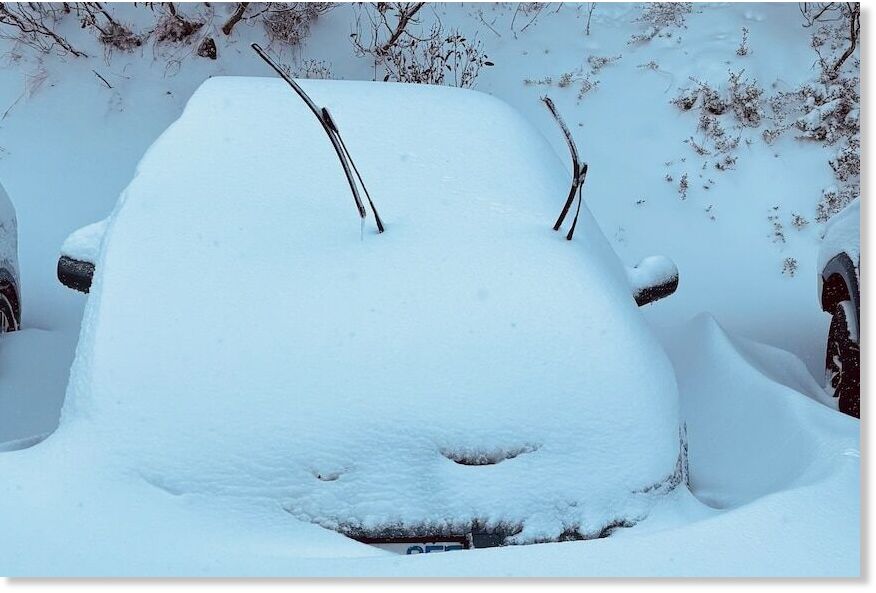
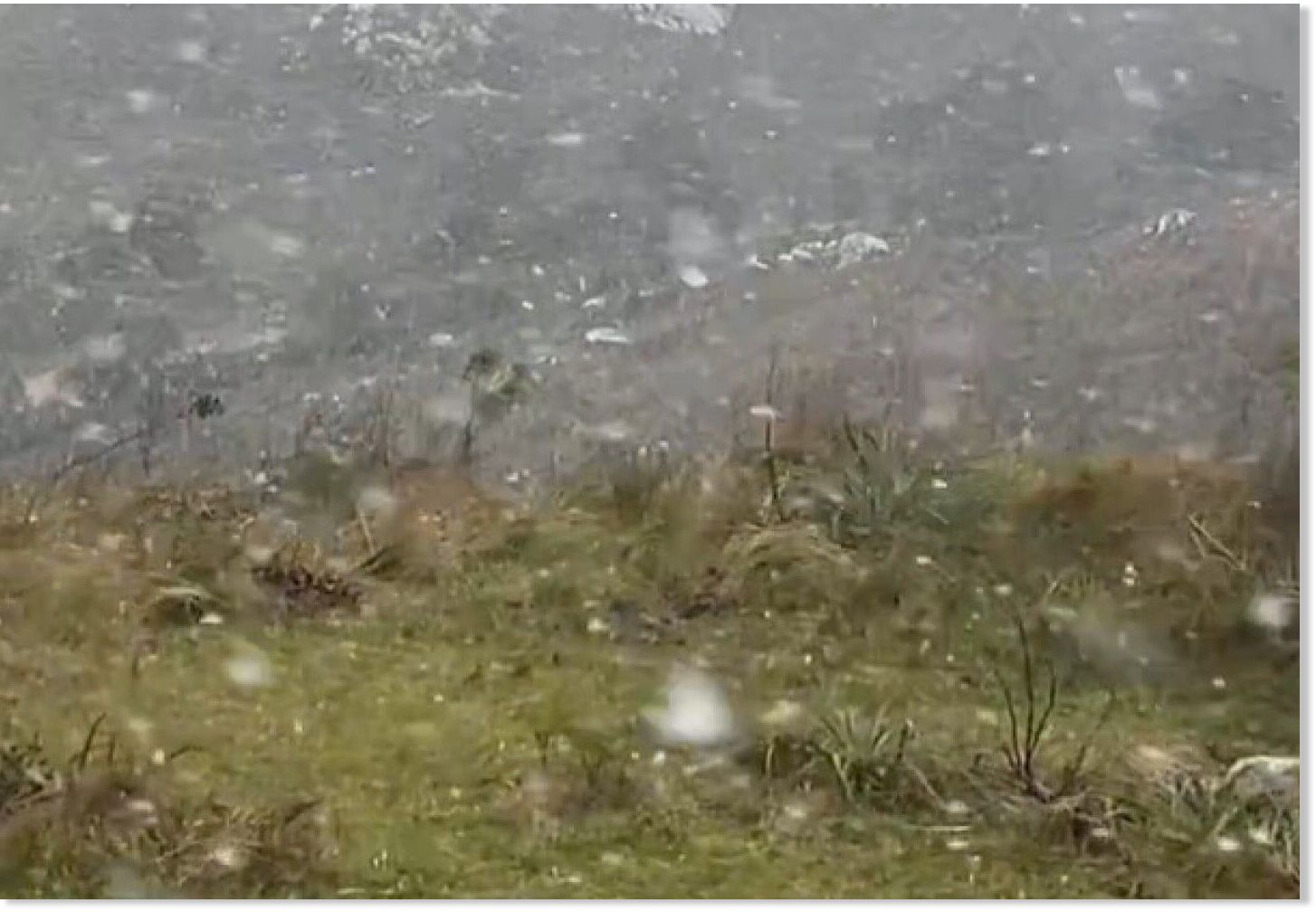
A rare blanket of heavy snow fell on parts of northeastern Turkey on Friday.
In the two Turkish cities of Rize and Trabzon, a rare natural phenomenon occurred that surprised not only local residents, but also tourists who were there.
At the beginning of July, in the middle of summer, snowfall covered the high mountain areas of these cities, creating an unusual and amazing natural landscape.
According to the forecasts of the General Directorate of Meteorology, snowfall was expected for the high areas in Rize and Trabzon, where temperatures dropped significantly, giving nature a typical winter appearance, which is very rare for this period of the year, they write.
Residents of mountain villages and valleys such as Çamlihemşin, Hemşin and İkizdere, as well as other high mountain settlements, woke up to a landscape covered in white and fresh snow. This unique sight created by snow in the middle of summer was a surprise that attracted a lot of attention.
A polar air mass has brought record low temperatures to Argentina, Chile and Uruguay, causing at least 15 deaths and forcing governments to restrict gas supplies and activate emergency shelters.
The three South American countries have all recorded sharply below-zero temperatures as the polar air originated from Antarctica and swept across the region.
In Argentina, at least nine homeless people have died from the cold this winter, according to NGO Proyecto 7.
The capital Buenos Aires recorded its lowest temperature since 1991 at -1.9 degrees Celsius (28.6 Fahrenheit) on Wednesday, while the coastal city of Miramar saw snow for the first time in 34 years. Further south, the town of Maquinchao recorded -18C on Tuesday.
Electricity demand caused cuts across Buenos Aires, leaving thousands without power for over 24 hours in some areas.
The government suspended gas supplies to industries and petrol stations Wednesday to ensure household supplies, and removed price controls on gas cylinders Thursday.
Rare snow transformed Argentina's Atlantic coast into a winter wonderland on Monday, as an intense polar cold front swept across the country, blanketing beaches and resort towns in Buenos Aires Province. Residents of coastal communities such as Miramar, Monte Hermoso, Mar del Plata, Costa del Este, and San Eduardo del Mar awoke to find their sandy shores and streets hidden beneath a layer of snow, a phenomenon not seen in the region since 2013 and the heaviest snowfall in more than three decades.
Argentina's National Meteorological Service (SMN) explained that this unusual event was triggered by a surge of cold, humid air, driven northward by strong southern and southwestern winds. Temperatures in the affected areas dipped to between 0°C and 1°C, prompting weather alerts for both rain and snow.
The polar front's reach extended far beyond the coast, bringing rare snowfalls to areas such as Tucumán, southern Córdoba, La Pampa, Mendoza, Neuquén, and Chubut. In Trelew, snow returned after more than ten years, while in Puerto Madryn, a soccer match had to be suspended due to the weather. In the southern provinces of Santa Cruz and Tierra del Fuego, snowfall exceeded 10 inches (25 centimeters).
Spain's summer didn't knock politely this year: it just kicked the door open.
The first heatwave in Spain (with more to follow in mid-July) has brought record-breaking temperatures to the country.
And it's only the start, with experts warning that Sunday and Monday, June 29 and 30, will bring even warmer temperatures.
El Granado breaks record: highest temperature ever recorded in June
Over the weekend, the tiny town of El Granado, in Huelva province, made history by registering a scorching 46°C.
According to AEMET (Spanish national weather agency), this is the highest temperature ever recorded in Spain during the month of June. We repeat it: 46 degrees. In June.
Marek Kučera mkweather.com Sat, 28 Jun 2025 13:06 UTC
In a remarkable reversal of seasonal expectations, the remote Arctic settlement of Tiksi, located on the northern Siberian coast, experienced rare mid-summer snowfall and frost, with up to 5 centimeters of snow accumulating — an extremely unusual event for late June, with cooldown into -1.8°C on June 26th 2025, only 2.2°C from all-time July record. Maximum temperature reached only +0.5°C on June 27th 2025 and minimum temperature -1.4°C on June 28th 2025.
Snow in the Season of Sunlight
Situated above the Arctic Circle, Tiksi is no stranger to extreme weather. But snowfall during the period of the Midnight Sun, when the sun barely sets, is highly anomalous.This week, residents woke up to frozen white landscapes, a stark contrast to the region's brief but intense summer.
Southern Africa is experiencing one of the most significant cold air incursions in recent memory, as a strong polar cold front has pushed unusually far north, covering large areas of Namibia, Botswana, and South Africa with bitterly cold temperatures, widespread frost, and disruptive snow in some regions.
Satellite Images Reveal Unprecedented Reach
At 12:30 UTC on Thursday, June 26th, satellite imagery confirmed the cold front's deep penetration well into central and southern Namibia, southwestern Botswana, and most parts of South Africa — a phenomenon rarely seen in recent years. This broad coverage of cold air is causing temperatures to plunge and weather conditions to deteriorate across a vast region.
In a rare and stunning weather event, residents of northern Chile's Atacama Desert — the driest desert on Earth — woke up Thursday to find their arid surroundings covered in snow.
"INCREDIBLE! The Atacama Desert, the world's most arid, is COVERED IN SNOW," the ALMA observatory, situated 2,900 meters (9,500 feet) above sea level, wrote on X, alongside a video of vast expanses covered in a dusting of white, News.Az reports, citing foreign media.
The observatory added that while snow is common on the nearby Chajnanator Plateau, situated at over 5,000 meters and where its gigantic telescope is situated, it had not had snow at its main facility in a decade.
Victoria's alpine resorts are reporting their best start to the ski season in years.
Overnight, Falls Creek received 37 centimetres of fresh snow, while Mount Hotham welcomed a 28cm dump.
"It's still coming down heavily today," Falls Creek's field marketing manager Betony Pitcher said on Wednesday.
"The top-up has the resort looking amazing for the school holidays.
"This is the best start to the snow season we've seen in years [after] the greatest snowfall recorded at Falls Creek over the King's Birthday weekend in a long time."
Marek Kučera mkweather.com Mon, 23 Jun 2025 13:09 UTC
Other snowfalls were reported in the Argentine province of Buenos Aires, but none in densely populated areas
In an extraordinary meteorological event, Buenos Aires and parts of Uruguay experienced rare June snowfall, surprising residents and meteorologists alike. On June 23, 2025, snowflakes were observed in Buenos Aires Province. The National Meteorological Service of Argentina had issued alerts for the possibility of snow, and these forecasts materialized as temperatures hovered around 3°C, accompanied by strong winds .
This snowfall is particularly noteworthy as snow in Buenos Aires is an infrequent occurrence. The last significant snowfall in the city was recorded on July 9, 2007, marking the first major snowfall in 89 years. The rarity of such events underscores the unusual nature of the recent weather patterns.
In Uruguay, while snow was not reported, the country experienced an intense cold snap during the same period. Snow in Uruguay is rare but not exceptional for few isolated flurries but it's extremely rare for widespread episodes (1918,1962) /https://x.com/extremetemps/. The cold front led to widespread frost, a phenomenon uncommon for the region.