Health & WellnessS


Target

Medical revolutions in America

Image
© wikipedia1857 painting by Alexander Beydeman showing historical figures and personifications of homeopathy observing the brutality of medicine of the 19th century
About 170 years ago our ancestors forced the repeal of licensing laws which had created a monopoly over the practice of medicine for orthodox physicians. Ordinary people, farmers, artisans, tradesmen and others got together and forced politicians to act on their behalf. They were tired of bloodletting, and harsh medications like mercury compounds that ruined their teeth and weakened their bodies. They opted for kinder and gentler alternatives with lower casualty rates, particularly the newly introduced homeopathy. They were impressed that tiny doses of medicine were able to cure cholera much better than the massive doses used by orthodox physicians.

Comment: The following articles present interesting information about Why Skeptics Love to Hate Homeopathy:
Most homeopaths of the 1800s were former allopaths who had abandoned their brethren because they found Hahnemann's system to be more successful in battling cholera, typhus, yellow fever, diptheria, influenza, and other epidemics of the 1800s. In retaliation, the preamble to the AMA's charter forbade its members to associate with homeopaths or to use their medicines, and many doctors were expelled for failing to comply.

But does homeopathy really pose such a threat to conventional medicine today? To see how the little David of homeopathy could take down the Goliath of Big Pharma, we need to take a closer look at what homeopathy is all about.


Health

Infectious bacterium causing Query fever linked to increased risk of lymphoma

Q fever
The bacterium that causes Q fever, an infectious disease that humans contract from animals, is associated with an increased risk of lymphoma, according to a study published online today in Blood, the Journal of the American Society of Hematology (ASH).

Q fever is caused by infection with Coxiella burnetii, a bacterium primarily transmitted through the excrement of cattle, sheep, and goats. Approximately 3 percent of healthy adults in the United States and 10-20 percent of those in high-risk occupations such as veterinarians and farmers have antibodies for C. burnetii, suggesting previous infection.1 Symptoms of Q fever vary from person to person and can be acute and resolve spontaneously, or chronic and persistent. Because some patients have been reported to also suffer from lymphoma, researchers believed that this type of cancer could be a risk factor for Q fever. However, the experience of one patient prompted doctors to consider the opposite -- that the infection might actually cause the lymphoma.

"During a follow-up scan in a patient we had successfully treated for Q fever, we observed a tumor close to the location of the previous infection," said senior study author Didier Raoult, MD, PhD, of Aix-Marseille University in Marseille, France. "The discovery that it was a lymphoma tumor containing C. burnetii encouraged us to consider that the infection might have contributed to the development of the cancer."

Comment:


Heart

Duke, the rescue dog warns his family when their 9-week old infant stopped breathing

Image
A rescue dog is being called a hero after saving the life of a Portland, Conn., family's infant daughter.

The Brousseau family had already gone to bed on Sunday night when their dog, Duke, who was adopted nearly six years ago, jumped on their bed and began shaking uncontrollably. Duke's behavior immediately woke the couple up, reports the Orlando Sentinel.

"He is insanely obedient, so this was extremely bizarre," Jenna Brousseau told WFSB News.

Duke had never acted like this before, according to the Brousseaus, so they knew something had to be wrong. When they went into their 9-week-old daughter Harper's room to check on her, she wasn't breathing.

According to ABC, Jenna's husband immediatley called an ambulance. Baby Harper was then revived by paramedics, and taken to the hospital.

"If Duke hadn't been so scared, we would have just gone to sleep," Jenna Brousseau said of her heroic dog.

She added, "He's the perfect dog, he was meant, meant to be ours."

Bug

U.S. Midwest experiencing massive outbreak of mysterious oak leaf itch mite

oak leaf itch mites
The mysterious bug bites first appeared a few weeks ago.

George Monks, a dermatologist in Tulsa, Okla., started hearing complaints about weird, itchy welts. The bites had strange, tiny blisters in the center, ruling out mosquitoes. Appearing on arms, necks and faces, they were in the wrong places to be from chiggers, which tend to attack around waistbands and sock lines.

Then Monks' friends got bitten. Then his kids. And when he then posted on Facebook about the odd welts, he couldn't believe how many people responded that their kids had bites too.

That's when Monks realized that some kind of epidemic must be unfolding before him - except nobody had seen the culprits.

"It's a massive, massive outbreak," said Monks, who says about 1 in 5 of his patients coming in for other skin issues have the mysterious bites. "I've been in practice for 13 years and never seen an outbreak like this."

Syringe

FDA to approve flu shot containing squalene which has been shown to cause severe autoimmune disorders

flu shot
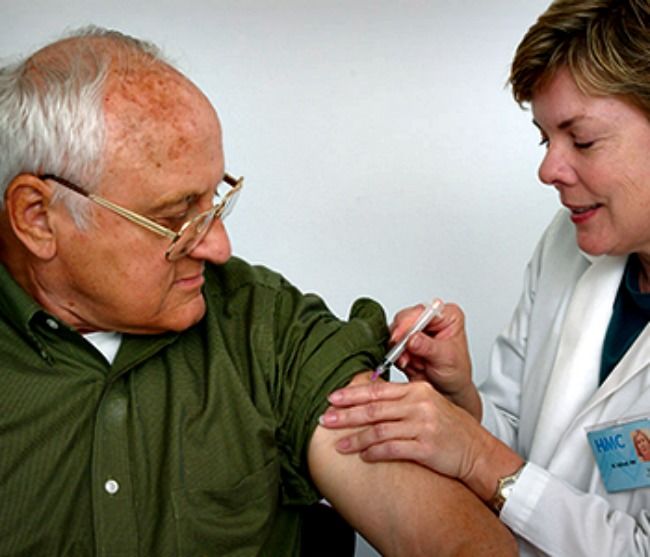
The FDA has granted fast track approval for Swiss based Novartis's flu shot that contains squalene as an adjuvant to boost what they consider an immune response.

Fast track approval is normally reserved for crucial emergencies during vaccine shortages. You might be aware that there is no shortage of flu vaccines and most hyped flu epidemics are bogus.

But what they call an immune response is mostly a localized cytokine response to toxic adjuvants and preservatives. But the process of creating a cellular memory to defend against future viral attacks is usually bypassed by vaccinating.

Comment: The former Chief Vaccine Office at the FDA, Dr. Anthony Morris stated that "there is no evidence that any influenza vaccine thus far developed is effective in preventing or mitigating any attack of influenza." Considering the ineffectiveness of the vaccines and the potential side effects that go along with all vaccines, they are not worth the potential risks.


Pills

Medicated and Mighty? Mom starts pro-psychotropic drug movement (with the help of a PR firm)

Erin Jones
© Erin Jones
The corporatists at Big Pharma, as well as the purveyors of political correctness, have scored another victory with Americans: shaming anyone who thinks that dangerous psychotropic, mind-and-mood-altering medications are ultimately bad for your health.

They even have a catchy new hashtag campaign underway.

As reported by the left-leaning Buzzfeed news site, #MedicatedAndMighty is a hashtag developed by Erin Jones, a blogger who posted a photo on her Facebook page of her holding a pair of prescriptions for psychotropic drugs after being offline for a while, with this accompanying explanation:

Comment:


Magic Wand

Helping the Microbiome with mushrooms & mycelium

Image
Trametes versicolor, commonly known as the Turkey Tail Mushroom
Few people know that we are more closely related to fungi than to any other kingdom. 650 million years ago, we split from fungi. We evolved to encircle our nutrients within a cellular sack, a stomach, and digested nutrients within. Fungi evolved to externally digest its nutrients, and projected a fine filamentous, cobweb like cellular networks known as mycelium. In both cases, over millions of years, choosing beneficial bacteria to aid in this process became essential for good digestion. By selecting commensal bacteria to help digest food, both humans and mushroom mycelium created complex communities - microbiomes - to help digestion, prevent disease, and extend longevity. Not only do we benefit from a healthy microbiome, but so too does the mycelium.

Comment: Four medicinal mushrooms to add to your home pharmacy


Health

Strategies to tackle Lyme Disease

Image
© livinggreenmag.com
"I have Lyme disease," writes this week's viewer. "Is there anything I can do to treat it naturally?"

Lyme disease, the most common American tick-borne infectious disease, often goes undiagnosed or becomes misdiagnosed. That becomes a real problem when you consider that in America, up to 300,000 new cases a year of Lyme disease diagnoses have been reported by the Centers for Disease Control and Prevention (CDC) , an increase of up to 10 times what researchers previously believed.

Lyme disease, or borreliosis, is caused by the bacterium Borrelia burgdorferi, which can proliferate to every area in your body. An infected blacklegged deer tick transmits the virus to humans through a bite.

Top Secret

Obesity cover-up? UK Health Secretary caught surpressing 'sugar tax' report

Image
© Stefan Wermuth / ReutersJeremy Hunt.
Health Secretary Jeremy Hunt has been accused by MPs of suppressing a scientific report on the use of a sugar tax in tackling the UK's obesity epidemic.

The Commons Health Select Committee has questioned whether ministers opposed to the tax exercised political power to prevent the release of the review by Public Health England (PHE).

The agency carried out a review into the merits of higher taxes on sugar drinks and sweets, a move backed by health experts.

The report was originally due to be published last July, but has been held back for use in "ongoing policy development" and would be made public later this year.

Comment: Could it be that Health Secretary Jeremy Hunt is leasing out integrity to Coca Cola? Just like the Pediatricians & Dietitians in the U.S.! Could he be in the pockets of Big Food, casting doubt and suppressing information on the link between sugary drinks and obesity?


Info

People hospitalized because of a fall often have undiagnosed infections

fall risk, infection falls
© Shutterstock
People who end up in the emergency room because of a fall often are tripped up by an infection, rather than a loose throw rug or poor eyesight, suggests a study being presented at IDWeek 2015™.

Bloodstream, urinary and respiratory infections are the most common culprits for infection-related falls, according to the Massachusetts General Hospital study. The findings also suggest that while these falls may be more common in the elderly, they shouldn't be overlooked in younger people: 20 percent of patients in the study were younger than 65.

"Over the years I've been struck by the fact that some of the more serious infections I treated were in people who came to the hospital because they fell," said Farrin A. Manian, MD, MPH, principle investigator of the study, a clinician educator in the Division of General Medicine at Massachusetts General Hospital in Boston and a visiting associate professor at Harvard Medical School. "Even though many of the patients had vague early signs of an infection, such as weakness, or lethargy, it was the fall that brought them in."