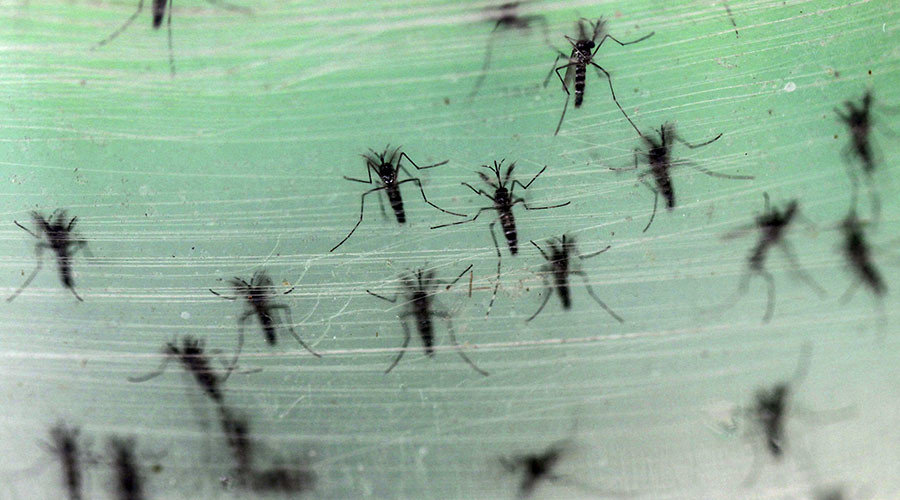
© Ma Qiang / Southern Metropolis Daily / ReutersIt is not known if the infected are currently in the UK
You may not have heard of it until very recently, but new cases of the Zika virus continue to pop up around the world. Spreading mostly in Latin America and the Caribbean, the virus has now been confirmed in three travelers from the UK.
A statement from Public Health England said those infected had recently traveled through South America, but it is not clear if the people involved have since returned to the UK.
The Britons travelled to Colombia, Suriname and Guyana, where they are suspected of contracting the mosquito-borne disease. Public Health England has not confirmed if any of the three are pregnant.
Why is Zika dangerous?There is no vaccine for the virus, which can cause fever, rashes, joint pains, and conjunctivitis within days of being contracted. For most of those infected, the virus causes a short illness lasting between two and seven days. However, in some rare cases, it can result in serious illness and death.
Infants are most at risk from Zika, as mothers can pass the infection on to their fetus, leading to microcephaly - a rare birth defect where babies are born with abnormally small heads and developmental delays.
Treatment for the Zika virus focuses on pain relief and fever reduction, with some patients also given antihistamines for itchy skin rashes.
Preventative measures focus on general mosquito bite prevention, such as using insecticides, and special nets and screens.


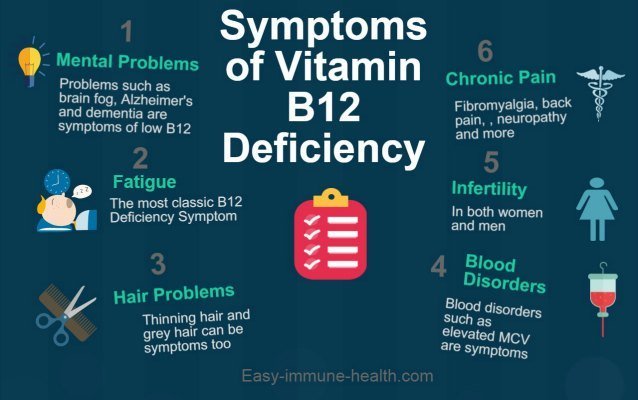



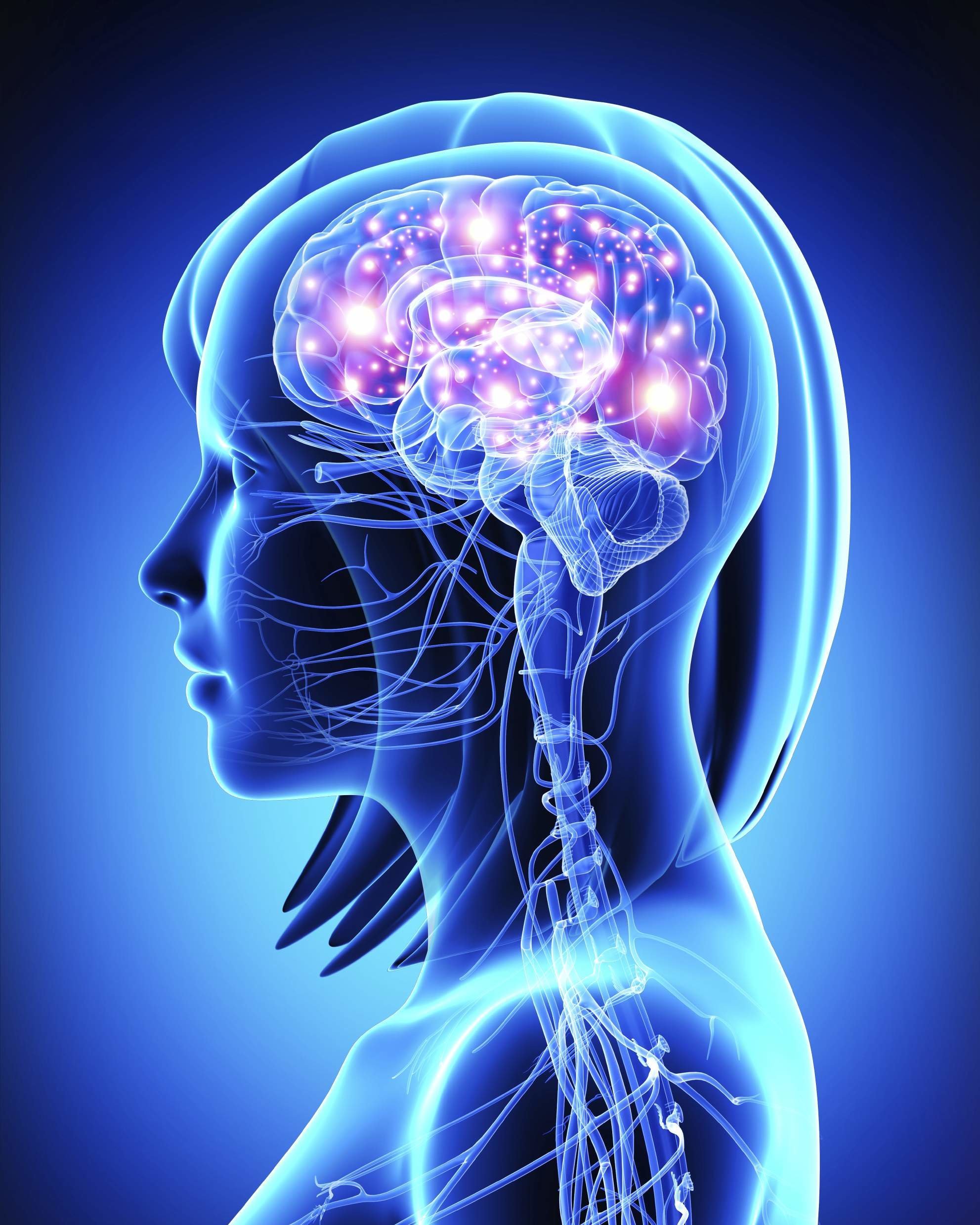





Comment: B12 deficiency is far more common than most health care practitioners and the general public realize. One study suggests that 40 percent of people between the ages of 26 and 83 have plasma B12 levels in the low normal range - a range at which many experience neurological symptoms. It is possible that at least some of the symptoms we attribute to "normal" aging - such as memory loss, cognitive decline, decreased mobility are in part caused by B12 deficiency. As well as cognitive decline, many diseases may be caused by Vitamin B12 deficiency, including neurological disorders such as MS, cardiovascular disease, mental illness, learning and developmental disorders in children, autoimmune diseases and cancer.
The best dietary sources of B12 include meat, poultry fish and eggs, which is one reason why B12 deficiency is particularly common in vegetarians and vegans. The most recent studies using more sensitive techniques for detecting B12 deficiency have found that 68% of vegetarians and 83% of vegans are B12 deficient, compared to just 5% of omnivores.