Health & WellnessS


Syringe

British Medical Journal: Vaccines sold by marketing fear of disease

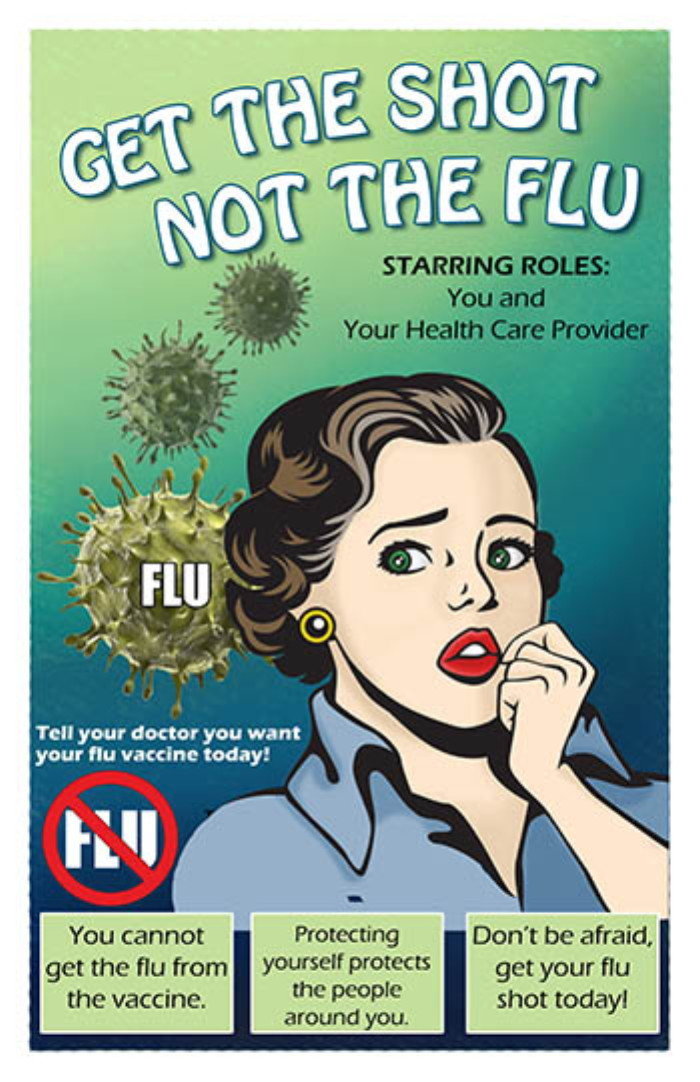
flu vaccine
© med.unc.edu
Influenza vaccines are killers, life destroyers, and provide little or no benefit. The evidence is clear. A report published in the BMJ clarifies how these facts are ignored by health agencies. To get around them, they simply push fear of disease well past the point of absurdity. But the CDC and other health agencies have no other way to sell the unsellable.

The British Medical Journal (BMJ), one of the world's most highly revered scientific medical publications, has published an article that condemns influenza vaccines and their marketing. The last sentence reads:
It's no wonder so many people feel that "flu shots" don't work: for most flus, they can't.[1]
Influenza vaccines don't work as advertised. Nonetheless, they're heavily marketed by governmental agencies through one consistent tactic: fear. Dr. Doshi describes how influenza vaccinations are sold:
[I]nfluenza is a serious disease, we are all at risk of complications from influenza, the flu shot is virtually risk free, and vaccination saves lives.

Comment: Flu Vaccine: No Good Evidence


Health

How to boost your body's innate recycling system to detoxify and repair itself

autophagy
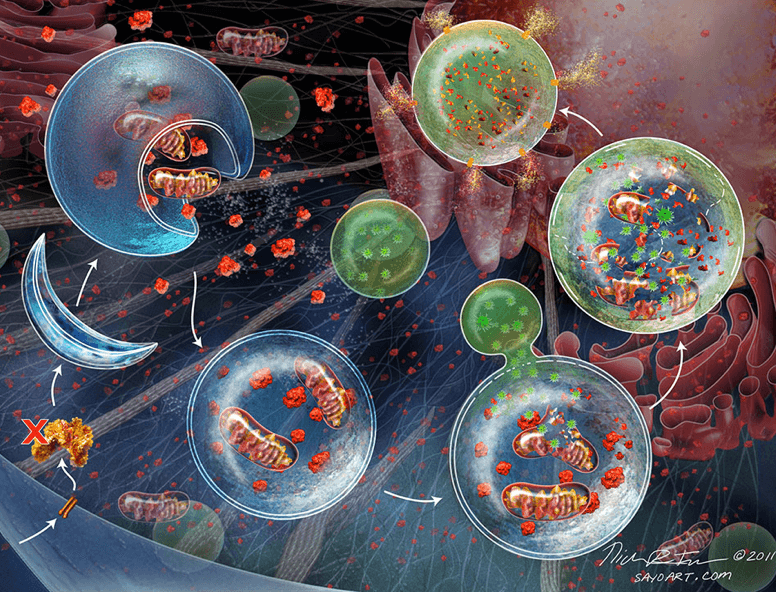
Autophagy: How Cells Recycle to Survive
While there are many different ways to rid your body of accumulated toxins, from detoxifying foods and chemical and/or natural detox agents to saunas, a biological process known as autophagy plays a key role.

The term autophagy means "self-eating," and refers to the processes by which your body cleans out various debris, including toxins, and recycles damaged cell components.

The video provides a more in-depth biochemical review of the autophagy processes involved in health and disease. As explained in layman's terms by Greatist:
"Your cells create membranes that hunt out scraps of dead, diseased, or worn-out cells; gobble them up; strip 'em for parts; and use the resulting molecules for energy or to make new cell parts."
Dr. Colin Champ, a board-certified radiation oncologist and assistant professor at the University of Pittsburgh Medical Center explains it thus:
"Think of it as our body's innate recycling program. Autophagy makes us more efficient machines to get rid of faulty parts, stop cancerous growths, and stop metabolic dysfunction like obesity and diabetes."
By boosting your body's autophagy process, you dampen inflammation, slow down the aging process, and optimize biological function. As noted by Fight Aging:
"Greater autophagy taking place in tissue should mean fewer damaged and disarrayed cells at any given moment in time, which in turn should translate to a longer-lasting organism."

Telephone

Anti-Monsanto science is being censored by the USDA

pesticides
A USDA hotline is blowing up with complaints from government scientists about censorship of science, begging the question: Who does the USDA work for? Consumers and
farmers—or Monsanto?

Last weekend's Washington Post featured a front-page article about the mounting allegations of scientific censorship at the USDA, often to appease politically powerful agricultural companies like Monsanto.

You heard that right: when independent, government scientists produce research that threatens corporate agribusinesses, the USDA—according to at least 10 government scientists—censors the results, waters down the findings and punishes the researchers.

Donut

New study finds another reason to avoid Splenda

Splenda
© Daniel Zuchnik/WireImage/Getty Images
Sure, the idea of getting your sugar fix without the calories always seems enticing, but new research suggests that Splenda—an artificial sweetener recently considered safe—may contribute to serious health problems like cancer.

The study, published in the International Journal of Occupational and Environmental Health, found that mice fed sucralose daily throughout their lives developed leukemia and other blood cancers. In response to the findings, the Center for Science in the Public Interest—a nutrition watchdog group that assesses the safety of food additives—has now formally recommended that consumers avoid the sweetener. That's a big deal, considering that until 2013, they'd rated the additive as "safe."

This new evidence was especially powerful because it was funded without special interests in mind, explains Lisa Lefferts, MSPH, senior scientist at the CSPI. "For most food additives, the safety studies are conducted by the manufacturers who have financial incentives," Lefferts says. (Here's why industry funding in nutrition studies is such a huge problem.)

Comment: See also:


Info

Brown fat tissues have their own circadian rhythms that regulate glucose and lessen pancreatic stress

brown fat
© Lee et al./Cell Metabolism 2016This visual abstract depicts what Lee et al. found, how glucose utilization by brown fat in humans is coupled with heat production in a circadian manner. Higher brown fat abundance correlates with lesser glycemia variability, suggesting that brown fat may help buffer glucose fluctuations and maintain whole-body glucose homeostasis over time.
Brown fat is well known for protecting the body from cold temperatures, and now researchers have discovered that this cell type in humans shows circadian rhythms in its consumption of glucose--an energy fuel for heat production. These rhythms, which rise just before waking, may have evolved as a thermal defense mechanism to prepare our ancestors for hunting and gathering in the coldest morning hours. The research appears March 10 in Cell Metabolism.

"Marked day-to-day glucose variations have been proposed to be a precursor of diabetes," says lead author Paul Lee, a clinician scientist and endocrinologist at the Garvan Institute of Medical Research in Australia. "For modern humans who do not rely on it for cold protection, the energy-consuming brown fat rhythm may act as a glucose buffer, smoothing glucose fluctuations and lessening the stress on the pancreas."

In the survival hierarchy, the maintenance of the body's core temperature trumps the need for food and water. In response to cold temperatures, brown fat consumes a large quantity of glucose and lipids as a fuel source for generating heat and keeping the body warm. By the same token, cold-induced activation of brown fat burns calories and lowers glucose levels, thereby protecting animals against obesity and diabetes. But it has not been clear whether brown fat regulates glucose levels in the absence of cold exposure.

Comment: Brown fat is full of mitochondria, the glucose-burning power plants of cells. Studies have shown that people with more brown fat tend to be leaner and have lower blood sugar levels. One of the best ways to stimulate the growth and activity of brown fat is through cold adaptation.


SOTT Logo Radio

SOTT Focus: The Health & Wellness Show: Idiocracy, apathy & ignorance in an unhealthy world

Chemicals in food
Today on the Health & Wellness Show we looked at some of the latest headlines and connected the dots to get an overall picture of what's happening to our collective state of health here on the big blue marble. Has America truly become an Idiocracy where citizens are so dumbed down that they trust the people who know the least and ridicule any sort of rational, well-read, informed knowledge? Are we creating a world of dummies through toxic junk-food lifestyles exported abroad, setting an example by being self-righteous, ignorant and deliberately gullible? Join us as we will delve into the details of the corporate shenanigans of Monsanto, Big Pharma, FDA conflicts of interest, sick care in America, and the poisoning of our bodies with everyday products.

The Health and Wellness Show airs every Friday at 10 am EST and 4 pm CET, where we expose the lies and emphasize the truth about health in our modern world. With us today, as always, was our resident animal health expert Zoya, with her weekly Pet Health Segment.

Running Time: 01:55:08

Download: MP3


Bulb

Silence: Why it is so good for your brain

Silence
In a loud and distracting world, finding pockets of stillness can benefit your brain and body.

We live in a loud and distracting world, where silence is increasingly difficult to come by -- and that may be negatively affecting our health.

In fact, a 2011 World Health Organization report called noise pollution a "modern plague," concluding that "there is overwhelming evidence that exposure to environmental noise has adverse effects on the health of the population."

Comment: Quiet is crucial to your health: The dangers of noise pollution


Bulb

Light pollution may be contributing to obesity as much as eating junk food

light pollution, earth night
© NASA
Obesity rates may surge in places where artificial lights blaze all night compared to communities where people tend to live in darkness after the sun goes down, a recent study suggests.

To explore this connection, researchers analyzed U.S. military satellite images of nighttime illumination around the globe and country-level data from the World Health Organization (WHO) on the prevalence of overweight and obese people.

Artificial light at night contributed to excessive weight in men and women about as much as eating junk food, the research team reports in the International Journal of Obesity.

"Because of artificial light at night, we often eat in the wrong time, that is, after the natural dusk, when metabolic processes slow down," said N.A. Rybnikova of the University of Haifa in Israel.

The study doesn't prove light bulbs cause obesity, and scientists aren't yet certain how lamps or the glow from gadgets like tablets and televisions might influence how much people weigh, researchers caution.

But it's possible artificial light might contribute to obesity by suppressing the production of melatonin, a hormone that helps regulate sleep cycles.

Comment:


Info

Lead exposure in early life causes long lasting changes in gut microbiome, may contribute to obesity

lead exposure, lead paint
Exposure to lead during early development can alter the the gut microbiota, increasing the chances for obesity in adulthood, researchers from the University of Michigan School of Public Health have found.

Adult male mice exposed to lead during gestation and lactation were 11 percent larger than those not exposed, due to differences in their gut microbiota, which is the ecological community of microorganisms within the body.

"Early life exposure to lead causes a long lasting impact on gut microbiome, and the change of gut microbiome may partially contribute to the increased body weight in adult life," said lead author Chuanwu Xi, associate professor of environmental health science.

Lead was added to the drinking water of female mice prior to breeding through nursing their young. Once weaned, the offspring were raised to adulthood without additional exposure, and then tested for lead effects acquired from their mothers.

Comment:


Attention

Fluoride: No such thing as a safe level of exposure

Dr. David Kennedy says there is no such thing as a safe amount of fluoride. He states that even if you use it in toothpaste and spit it out, research shows that blood levels of fluoride increase. What does that do to children's and your health?


Comment: See also: