
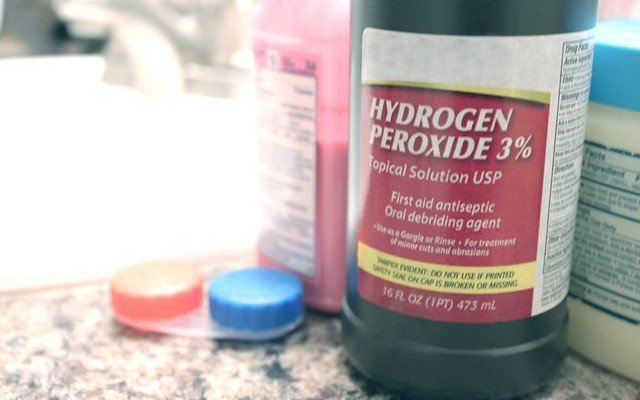
Note: always be sure to use proper doses and be careful not to over dose on hydrogen peroxide. Use 3% solution hydrogen peroxide that can be purchased at any drugstore.
Califf worked very closely with pharmaceutical companies at the Duke clinical trials center "convincing them to do large, expensive, and, for Duke, profitable clinical trials." He was a paid consultant for Merck Sharp & Dohme, Johnson & Johnson, GlaxoSmithKline, AstraZeneca, and Eli Lilly per ProPublica from 2009 to 2013. The largest consulting payment was $87,500 by Johnson & Johnson in 2012, and "most of funds for travel or consulting under $5,000", which has been called "minimal for a physician of his stature". From 2013-2014 he was paid a total of $52,796, the highest amount was $6,450 from Merck Sharp & Dohme, followed by Amgen, F. Hoffmann-La Roche AG, Janssen Pharmaceutica, Daiichi Sankyo, Sanofi-Aventis, Bristol-Myers Squibb and AstraZeneca. He was the Director of Portola Pharmaceuticals, Inc. from July 2012 to January 26, 2015,[11] Advisor of Proventys, Inc., Chairman of the medical advisory board of Regado Biosciences, Inc. and has been member of the medical advisory board since June 2, 2009, and member of the clinical advisory board of Corgentech Inc. Forbes wrote that his close ties to the drug industry were the reason for him not being nominated for the FDA Commissioner position in 2009.Dr. Califf held ties to the one pharmaceutical company who has the current record of the largest case of healthcare fraud in U.S. history:
Drug maker GlaxoSmithKline PLC agreed to plead guilty to criminal charges of illegally marketing drugs and withholding safety data from U.S. regulators, and to pay $3 billion to the government in what the Justice Department called the largest health-care fraud settlement in U.S. history.Prosecutors said that "GlaxoSmithKline failed to give the U.S. Food and Drug Administration safety data about its diabetes drug Avandia, in violation of U.S. law." This was only one of the several criminal charges to which this pharmaceutical company agreed to plead guilty.


"Anti-depressant use amongst young people is and has been a matter of concern because of two reasons. One, are more people being prescribed anti-depressants without sufficient reason? And second, can anti-depressants do any major harm?"The study, "Trends and patterns of antidepressant use in children and adolescents from five western countries, 2005-2012", has been published in the European Journal of Neuropsychopharmacology.
Is depression manufactured? Two decades after the introduction of antidepressants, it's become commonplace to assume that our sadness can be explained in terms of a disease called depression. The National Institute of Mental Health estimates more than 14 million Americans suffer from major depression every year and more than three million suffer from minor depression. Some 30 million Americans take antidepressants at a cost of over $10 billion a year.The results for children:
My next guest argues while depression can be debilitating, it's also been largely manufactured by doctors and drug companies as a medical condition with a biological cause that can be treated with prescription medication. Psychotherapist and writer Gary Greenberg participated in a clinical trial for antidepressant medication and found that more often than not the drugs failed to outperform placebos. His latest book is a scientific, medical, historical and cultural exploration of the antidepressant revolution here in the United States. It's called Manufacturing Depression: The Secret History of a Modern Disease.
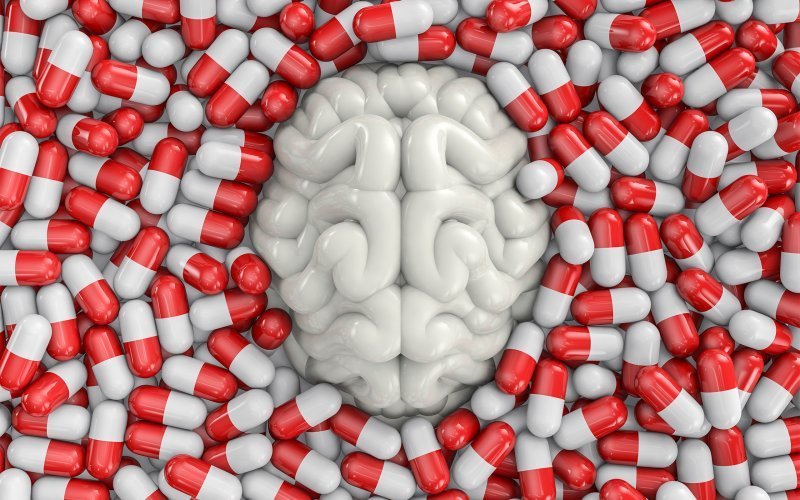
Adderall may seem to help kids improve their grades. It is in the class of drugs called amphetamines which are also called "speed." But they are also highly dangerous and controlled substances with recognized side effects including growth suppression, increased blood pressure, and in some cases psychotic episodes: seeing people and hearing voices that are not there, and feeling suicidal.




Comment: