Health & WellnessS


Pills

Male birth control pill looming on the horizon

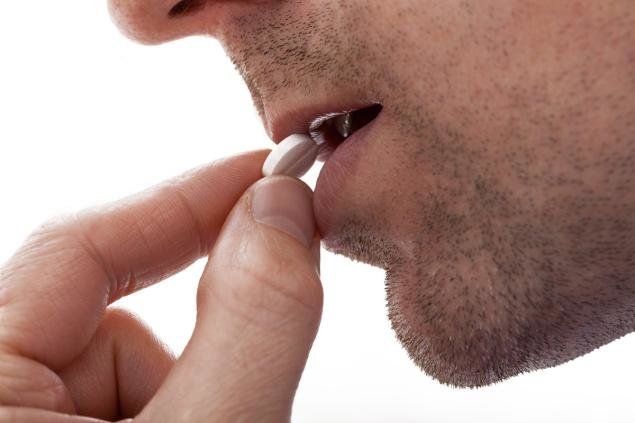
man taking pill
Scientists are moving closer to figuring out a male birth control pill.
Viagra may soon get a much-needed partner — a male birth control pill.

Roughly 18 years after Pfizer's erection tablet hit the markets, scientists are prepared to announce Monday that they are closer than ever to developing medication to create temporary male sterility.

"At certain doses, it (works)," Jillian Kyzer, a graduate student at the University of Minnesota who has been working on the so-called male pill, said in a statement. "But at those doses, it doesn't work for up to 20% of men, and it can cause side effects, including weight gain and a decrease in 'good' cholesterol."

Still, it's promising news — but before men can start popping the pill, a lot has to happen.

Attention

More vaccine insanity: HPV vaccines for infants?

vaccine baby
If you can push the most dangerous vaccines in use today on teen and pre-teen girls, and later on boys of the same age, without any proof that they work, then why not give them to newborn infants - plus another 'booster' later on? That appears to be planned for Gardasil and Cervarix, along with a slick new marketing program, thanks to the vaccine-industrial complex.

The Vaccine Adverse Events Reporting System (VAERS) database shows clearly that the vaccines with the most reported adverse effects are Gardasil and Cervarix, the two human papilloma virus (HPV) vaccines. It would obviously be madness to lower the age at which they've given - but that appears to be exactly what's being planned.

Shoe

Study shows a variety of physical activities can increase brain volume and cut Alzheimer's risk by 50%

gardening, exercise
A new study shows that a variety of physical activities from walking to gardening and dancing can improve brain volume and cut the risk of Alzheimer's disease by 50%.

This research, conducted by investigators at UCLA Medical Center and the University of Pittsburgh, is the first to show that virtually any type of aerobic physical activity can improve brain structure and reduce Alzheimer's risk. The study, funded by the National Institute of Aging, was published on March 11 in the Journal of Alzheimer's Disease.

The researchers studied a long-term cohort of patients in the 30-year Cardiovascular Health Study, 876 in all, across four research sites in the United States. These participants had longitudinal memory follow up, which also included standard questionnaires about their physical activity habits. The research participants, age 78 on average, also had MRI scans of the brain analyzed by advanced computer algorithms to measure the volumes of brain structures including those implicated in memory and Alzheimer's such as the hippocampus. The physical activities performed by the participants were correlated to the brain volumes and spanned a wide variety of interests from gardening and dancing to riding an exercise cycle at the gym. Weekly caloric output from these activities was summarized.

The results of the analysis showed that increasing physical activity was correlated with larger brain volumes in the frontal, temporal, and parietal lobes including the hippocampus. Individuals experiencing this brain benefit from increasing their physical activity experienced a 50% reduction in their risk of Alzheimer's dementia. Of the roughly 25% in the sample who had mild cognitive impairment associated with Alzheimer's, increasing physical activity also benefitted their brain volumes.

Comment:


Shoe

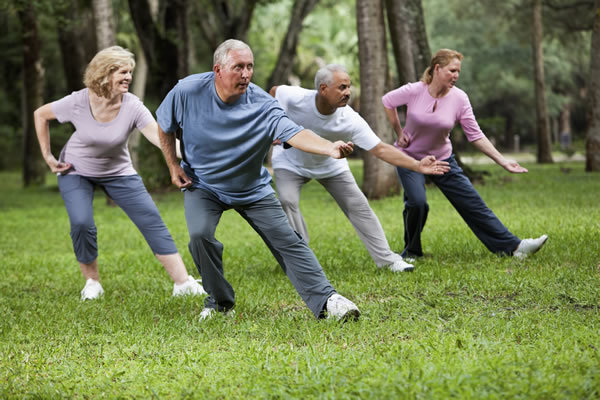
Tai chi is significantly more effective in reducing injury-causing falls than leg strengthening exercises

seniors tai chi
Recently, researchers compared the effects of tai chi to leg strengthening exercises (a physical therapy called "lower extremity training," or LET) in reducing falls. Falls are a leading cause of serious injuries in older adults and can lead to hospitalization, nursing home admission, and even death. Arthritis, heart disease, muscle weakness, vision and balance problems, dementia, and other age-related health problems can increase an older adult's risk for experiencing a fall. The study is published in the Journal of the American Geriatrics Society.

In their study, researchers assigned 368 people 60-years-old and older who had received medical attention for a fall into one of two groups. The first group received hour-long individual tai chi classes conducted by tai chi instructors every week for 24 weeks. Tai chi is an exercise practice developed in China hundreds of years ago. It combines certain postures and gentle movements with mental focus, breathing, and relaxation. Tai chi can be practiced while you're walking, standing, or even seated. Deep breathing, weight shifting, and leg stepping movements are part of the practice. The second group received individual, hour-long LET sessions for 24 weeks conducted by physical therapists. Sessions included stretching, muscle strengthening, and balance training.

Comment: Tai Chi is an effective therapy for a wide range of health conditions - the practice helps to improve strength, aerobic capacity, flexibility, and posture.


Info

Health & beauty benefits of Epsom Salt

Epsom Salt
What if we told you there's a hidden gem in your drugstore that costs less than your daily Starbucks latte and can help combat a number of beauty and health conundrums? It may sound too good to be true, but the overlooked miracle worker does exist. It's Epsom salt.

Epsom salt is composed of two minerals—magnesium and sulfate—and it's a steal, generally costing less than $10 for a few pounds of the stuff. It's been around forever, too: There "have been recorded uses of Epsom salt to solve health problems since the 1500s," says Jim Hill, president of the Epsom Salt Council.

Comment: The Many Uses of Epsom Salts


Health

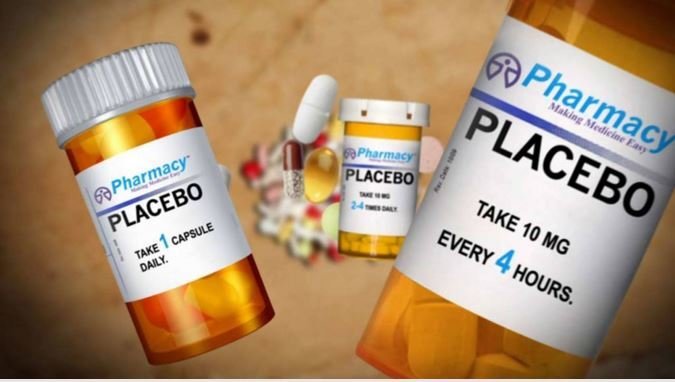
Harness your inner healing power with the power of placebo

placebo pills
"The Power of the Placebo" is a documentary film about exactly that: Placebos; how they work, and how you can harness their healing power. The fact is "dummy pills" do indeed work, and sometimes far better than anyone could have imagined.

For example, trials show people often react to a placebo in nearly the identical manner as an actual drug. Placebos have been shown to produce dopamine release and other chemical responses, mimicking the effects of drugs without actually taking an active ingredient.

By definition, a placebo is an inert substance that has no effect on your body. In medical research, placebos such as sugar pills are used as controls against which the effects of experimental drugs (also in the form of pills) are measured.

However, the placebo-effect, in which a patient believes he or she is getting an actual drug and subsequently improves despite receiving no active substance at all, has become a well-recognized phenomenon.

Comment: For more on the placebo effect and how to make it work for you, see You Are the Placebo: Making Your Mind Matter by Dr. Joe Dispenza.


Newspaper

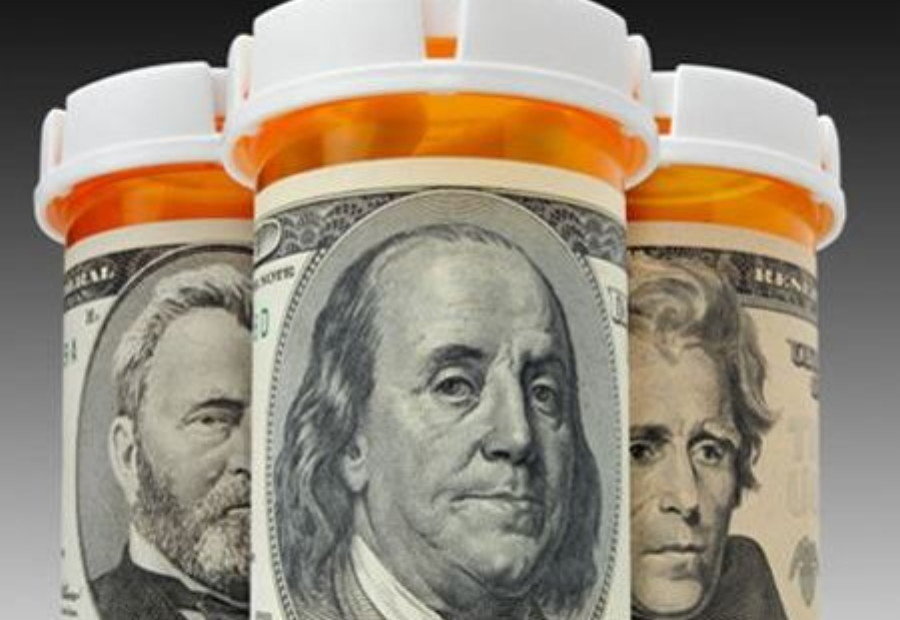
Big Pharma advertising campaigns are going all out to paint themselves as the good guys

Big pharma
© goinggentleintothatgoodnight.com
Big pharma executives are going all out to paint themselves as the good guys — just not to you.

If you wonder why Congress critters keep ignoring what the people want them to do — while doing things that people don't want them doing — take a peek at the unique PR campaign now being run by the pharmaceutical industry.

The public is dismayed and disgusted by the flagrant greed of drugmakers that are shamefully zooming the prices of medicines into the stratosphere, turning necessities into unaffordable luxuries. As a result, there's a growing demand for Congress to take action to stop the industry's out-of-control price gouging.

Comment: Big pharma lobbyists creaming tens of billions out of the federal government in a variety of schemes
According to New York Times columnist Nicholas Kristof, the drug industry spent $272,000 in campaign donations per member of Congress last year. He reports that there are more drug company lobbyists than members of Congress. Even before Gilead's $1000-a-pill hepatitis drug, the result of this unsavory lobbying is a $50 billion annual taxpayer gift to the drug industry - a fact that should outrage every taxpayer.


Attention

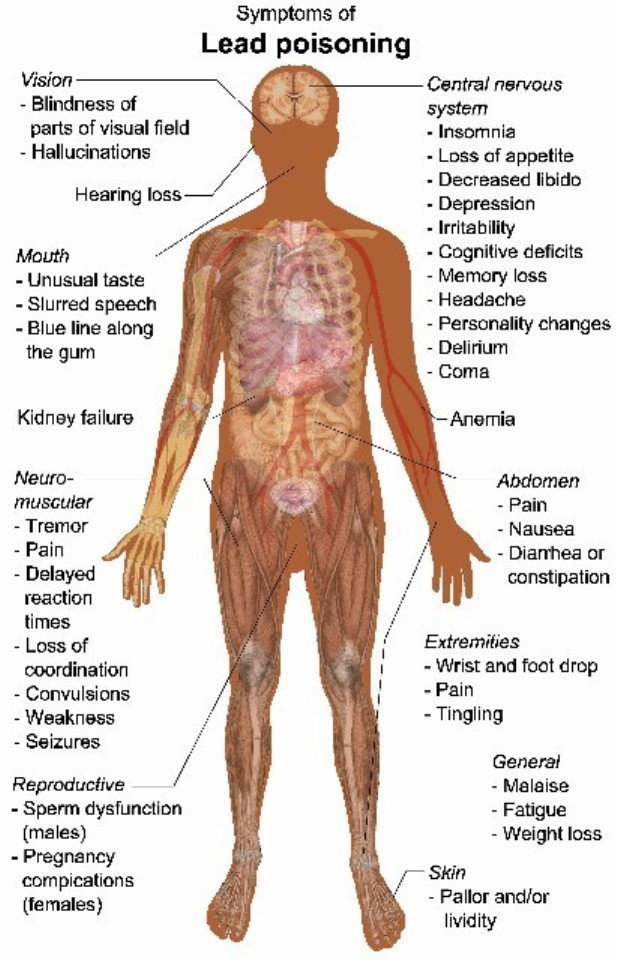
Years after exposure: Toxic Lead stays in the body

thebesthomeguys.com
The ongoing water crisis in Flint, Michigan has highlighted just how harmful lead contamination is. What you may not realize, however, is that lead exposure is a problem throughout the U.S.

The Centers for Disease Control and Prevention estimates that over four million households with children in the U.S. are exposed to elevated levels of lead. At least half a million children have blood lead levels above five micrograms per deciliter, the threshold that prompts a public health response.

Lead used to be commonly used in gasoline, household paints and even coloring pigments in artificial turf through the end of the last century. And although today lead is no longer used in these products, there is still plenty of it out there. Lead does not break down in the home or the environment, and the result is that we still have to be concerned about lead poisoning today.

Comment: How doctors use vitamin C against lead poisoning
We hear about the hazards of lead. We know that lead poisoning can cause severe mental retardation. Lead has been clearly linked with Alzheimer's disease. We have been told to avoid lead in our homes and in our water, and to clean up lead pollution of our environment. But we have not been told how to remove it from our bodies. Vitamin C megadoses may be the answer.


Gold Seal

Experts calling for urgent public inquiry into drugs firms' 'murky' practices - Big Pharma greed is killing tens of thousands around the world

The Queen's former doctor has called for an urgent public enquiry into drugs firms' 'murky' practices.
corruption medicine
© CorbisToo much medicine is doing more harm than good - and costing hundreds of thousands of lives worldwide, leading experts have warned. They maintain drugs companies are developing medicines they can profit from, rather than those which are likely to be the most beneficial.
Sir Richard Thompson, former-president of the Royal College of Physicians and personal doctor to the Queen for 21 years, warned tonight that many medicines are less effective than thought.

The physician is one of a group of six eminent doctors who today warn about the influence of pharmaceutical companies on drugs prescribing. The experts, led by NHS cardiologist Dr Aseem Malhotra, claim that too often patients are given useless - and sometimes harmful - drugs that they do not need. They maintain drugs companies are developing medicines they can profit from, rather than those which are likely to be the most beneficial. And they accuse the NHS of failing to stand up to the pharmaceutical giants.

Comment: Big applause to these experts for telling it like it is! Dr. Malhotra has also been an advocate of "saturated fat is not bad for cardiovascular health". For more information, see:


Arrow Down

Artificial sweeteners can change gut bacteria and cause metabolic dysfunction leading to obesity and diabetes

artificial sweetner
To be able to explain this research, it is best to get a few things out in the open for the global community of health enthusiasts to appreciate. The "artificial sweetener" conversation and research is changing, so there must be a new definition of what artificial sweetener means and the platform upon which they are ALL sold to the unknowing public.

Comment: See also: Splenda (Sucralose) found to have Diabetes-promoting effects