Health & WellnessS


Ambulance

Don't Drowse and Drive: Sleepiness as Risky as DUI

Sleepy driver
© Africa Studio/Shutterstuck.com
Even with holiday travel approaching, it's important to get enough sleep before getting behind the wheel: Missing 1 or 2 hours of sleep nearly doubles a person's risk for a car crash, a new report finds.

And missing 2 to 3 hours of sleep more than quadruples the risk for a crash, according to the new report, published today (Dec. 6) from the AAA Foundation for Traffic Safety. This is the same crash risk a person faces when driving over the legal limit for alcohol, according to the National Highway Traffic Safety Administration (NHTSA).

"Our new research shows that a driver who has slept for less than 5 hours has a crash risk comparable to someone driving drunk," David Yang, the executive director of the AAA Foundation for Traffic Safety, said in a statement.

The Centers for Disease Control and Prevention recommends that adults get at least 7 hours of a sleep each night.


Comment: See also:


Arrow Down

How 'premenstrual dysphoric disorder' was defined and marketed by drug makers

women PMS
© Creative Commons/Davidoff AA 2009 study involving more than 1,200 Midwestern women found that only 1.3 percent of premenopausal women may have PMDD in any given year.
Premenstrual dysphoric disorder (PMDD) — a severe form of premenstrual syndrome — is the focus of an investigative report published Tuesday by journalists at the Milwaukee Journal Sentinel and MedPage Today.

The article describes the early and troubling role that the pharmaceutical industry played in getting the Food and Drug Administration (FDA) to approve drugs for PMDD, years before the American Psychiatric Association recognized it — with considerable controversy — as a mental disorder in 2013.

Reporters John Fauber, Kristina Fiore and Matthew Wynn also explain how estimates for the number of women affected by PMDD are far greater than the scientific evidence suggests, thus putting millions of women at risk of taking potentially harmful drugs unnecessarily. In other words, the PMDD story is yet another example of disease mongering— widening the diagnostic definition of a medical condition in order to expand the market for its treatment.

Comment: This is only the tip of the iceberg: Big Pharma Karma - Magic bullets and the astonishing rise of mental illness


Roses

Rhythm of breathing affects memory and fear

Brain lights
© Rice University
Northwestern Medicine scientists have discovered for the first time that the rhythm of breathing creates electrical activity in the human brain that enhances emotional judgments and memory recall.

These effects on behavior depend critically on whether you inhale or exhale and whether you breathe through the nose or mouth.

In the study, individuals were able to identify a fearful face more quickly if they encountered the face when breathing in compared to breathing out. Individuals also were more likely to remember an object if they encountered it on the inhaled breath than the exhaled one. The effect disappeared if breathing was through the mouth.

"One of the major findings in this study is that there is a dramatic difference in brain activity in the amygdala and hippocampus during inhalation compared with exhalation," said lead author Christina Zelano, assistant professor of neurology at Northwestern University Feinberg School of Medicine. "When you breathe in, we discovered you are stimulating neurons in the olfactory cortex, amygdala and hippocampus, all across the limbic system."

The study was published Dec. 6 in the Journal of Neuroscience.

Comment: Based on scientific research, the Eiriu Eolas breathing and meditation programme features different breathing techniques for putting one into a state of reduced stress and higher mental alertness, and to help process emotional trauma.

The full programme can be found at eiriu-eolas.org

Face life with Éiriú Eolas, a stress relief breathing program


Document

Another study confirms the link between mercury and Autism

Autism mercury
© EcowatchAt least six American studies have linked autism presence or severity to mercury exposure as determined by measuring urinary porphyrins.
Two new studies by international teams, including Egyptian scientists, have validated the link between autism and mercury.

In an article published in the journal Metabolic Brain Disease, a team of nine scientists from leading Egyptian universities and medical schools confirmed the causal role of mercury in the onset of autism.

The scientists determined the extent of mercury poisoning in children by measuring urinary excretion of organic compounds called porphyrins, which act as biomarkers for mercury toxicity. The researchers also measured blood levels of mercury and lead. The researchers found a strong relationship between mercury toxicity and the presence of autism and a direct correlation between levels of mercury toxicity and the severity of autism symptoms.

The scientists studied 100 children; 40 with autism spectrum disorder (ASD), 40 healthy individuals and 20 healthy siblings of ASD children. The results showed that the children with ASD had significantly higher mercury levels than healthy children and healthy siblings. Children with the highest mercury levels had the most severe autism symptoms.

Comment: Also read: Robert F. Kennedy, Jr. launches The World Mercury Project - vows to change government policies that injure children


Bullseye

The Federal Trade Commission's war on homeopathy

homeopathy
© japantimes.co.jp
The U.S. Federal Trade Commission (FTC) is coming after the centuries' old natural medicine system known as homeopathy.

In a notice filed in November 2016, the FTC stated that in order for homeopathic remedies to claim they are effective, their makers must provide proof. If no proof is provided, the remedies must state there is "no scientific evidence that the product works."

In order to not mislead consumers, the FTC further stated that homeopathic remedies lacking sufficient proof must communicate to consumers that "the product's claims are based only on theories of homeopathy from the 1700s that are not accepted by most modern medical experts."1

About 5 million U.S. adults, and 1 million U.S. children, use homeopathy every year, and the remedies are known to be "generally safe and unlikely to cause severe adverse reactions," according to the U.S. National Institutes of Health's National Center for Complementary and Integrative Health.2

So why is the FTC slapping its makers with increased enforcement? According to Business Insider, which advocates more stringent rules on homeopathic remedies, it's to hold these products to the same standard as other, similar products, which means going through the same rigorous studies as synthetic drugs made by pharmaceutical companies.

Megaphone

Prevent hearing loss with nutrition and exercise

hearing
You're probably aware that certain nutrients can support optimal vision, but did you know your hearing may benefit from certain foods as well? If you have trouble hearing, or notice that your hearing is not as good as it used to be, your diet (and/or additional supplementation) may hold the answer.

In fact, nutritional imbalances are increasingly thought to be a causative factor in hearing loss.1 Age-related hearing loss is actually not due to any kind of mechanical dysfunction in your ear. Rather it's how your brain processes information that results in reduced hearing.

Furthermore, it's your brain's ability to provide proper feedback to your ear, by filtering out unwanted information, that declines when you reach your 40s and 50s. Without this filtering system, you're more likely to be overcome by a mass of information that is difficult to sort out.

The good news is age-related hearing loss may be reversible. Tinnitus, which is typically caused by noise-induced damage, may also be greatly improved, as can sudden loss of hearing.

Health

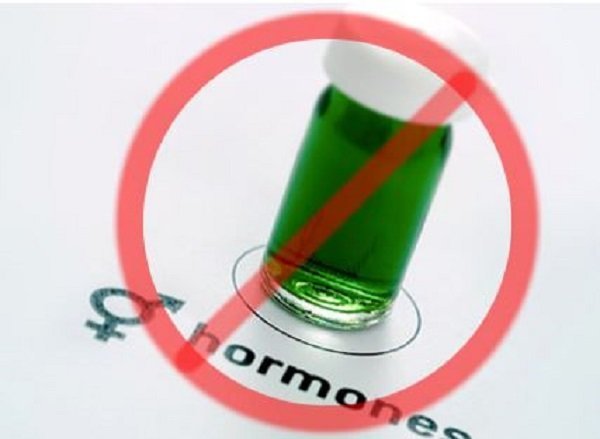
Estrogen therapy found to increase the risk of kidney damage

hormones
Estrogen treatment after menopause increases the risk of new kidney damage, according to a study by Tulane University School of Medicine researchers published in the American Journal of Physiology--Renal Physiology.

Estrogen seems to protect against high blood pressure, one cause of kidney damage. Since fewer premenopausal women have high blood pressure than men of the same age, the study focused on a breed of rats that mimic this gender-specific blood pressure difference to determine the effects of long-term estrogen therapy on women.

Promoters of bio-identical hormones claim that they are anti-aging, increase sex drive, prevent cancer and have little to no risks or side effects. However, they often are not safe and not natural.

The research team studied three groups of middle-aged rats without ovaries, which simulates the low estrogen environment of menopause. One group ("short-term") was given a short course of estrogen. A second group ("long-term") received a longer regimen of estrogen. The estrogen groups were compared to a control group that did not receive hormones.

Comment: Unsafe at any dose: Hormone therapy boosts cancer death risk


Health

'Thunderstorm asthma'? 5 people die in Kuwait following storm

Asthma
© Getty ImagesFive expatriates had died from severe asthma attacks as torrential rains hit Kuwait last Friday. The phenomenon is said to be similar with the one that killed eight people in Australia a few days ago.
Last November, a freak illness called "thunderstorm asthma" had hit the Australian city of Melbourne, killing at least eight people.

A week later, the same phenomenon had had the Middle-Eastern country of Kuwait, when a torrential rain hit the country. Five expatriate workers had reportedly died from severe asthma attacks and breathing difficulties following the freak storm, the Kuwait Times reports.

According to Kuwait's local media, casualties included two Egyptians aged 46 and 34, and an Indian immigrant aged 35 who all passed away at Mubarak Al-Kabir Hospital from asthma attacks during the storm. Two other expatriates also died of asthma after reporting to a health center in the district of Al-Farwaniya.

Seven other expatriates were kept in the intensive care unit at Mubarak Al-Kabir Hospital, while 15 others have been discharged after receiving treatment.

"Hospitals received 844 emergency cases in two days, five of them died, three in Mumbarak Hospital and two in the Amiri Hospital," Khaled Al-Sahlawi, health ministry undersecretary, said in the report. "Twenty-six cases were admitted to intensive care units and 45 to rooms. The rest received treatments."

Comment: What is "Thunderstorm Asthma"?


Info

Can intermittent fasting boost your metabolism?

intermittent fasting
Intermittent fasting is an eating pattern that involves periods of food restriction (fasting) followed by normal eating.

This pattern of eating could help you lose weight, reduce your risk of disease and increase your lifespan (1, 2).

Some experts even claim that its beneficial effects on metabolism make it a healthier way to lose weight than standard calorie restriction (3).

Comment: More helpful information on intermittent fasting:


Bulb

Understanding the mind-body link is crucial in preventing dementia

dementia
© geralt/PixabayIn 2015, the brain disorder overtook heart disease and stroke as Britain's biggest cause of death
A study published by the University of Glasgow shows that preventing high blood pressure, diabetes or coronary heart disease (CHD) may delay cognitive decline and even dementia.

The study

Researchers found that people who have high blood pressure, diabetes, or CHD perform worse on mental tasks of reasoning, memory and reaction time. Authors also highlight that:
...having two diseases was worse and three worse still, particularly for reaction times and reasoning.
Previous research has made the link between these diseases and cognitive decline. But the effect of having more than one disease on cognitive skills had not been properly examined until now.

The implications of this study are far-reaching. After all, multi-morbidity (where people are living with more than one chronic disease) is common. 6.75 million people in the UK have more than one long-term condition.