Health & WellnessS


Stop

EPA wants to ban the toxic dry cleaning chemical Trichloroethylene

Toxic chemicals
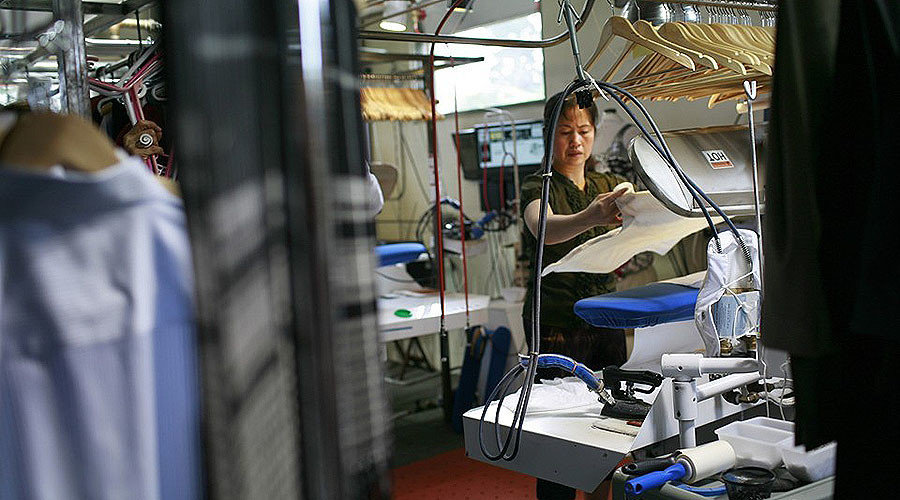
© Robert Galbraith / ReutersA worker presses clothing at a dry cleaner, San Francisco, California.
The Environmental Protection Agency (EPA) has suggested blocking a substance commonly used for dry cleaning due to its health risks. It is the first of 10 chemicals used in processes such as food production and construction that the agency may prohibit.

EPA is proposing to ban "certain uses of the toxic chemical trichloroethylene (TCE) due to health risks when used as a degreaser and a spot removal agent in dry cleaning." Trichloroethylene is a known carcinogen and one of 10 chemicals the agency has said it will review for human and environmental safety to comply with a federal chemical-reform law passed earlier this year.

"For the first time in a generation, we are able to restrict chemicals already in commerce that pose risks to public health and the environment," Jim Jones, assistant administrator for the Office of Chemical Safety and Pollution Prevention, said in a statement. "Once finalized, today's action will help protect consumers and workers from cancer and other serious health risks when they are exposed to aerosol degreasing, and when dry cleaners use spotting agents."

The Frank R. Lautenberg Chemical Safety for the 21st Century Act was passed by Congress and signed by President Barack Obama in June. The law requires the EPA to review existing chemicals for toxicity and to assess whether they "present an unreasonable risk of injury to health or the environment," a mandate the agency was not previously afforded unless it had strong proof that a risk existed.

Comment: The updated Toxic Substances Control Act - what you need to know
As the Lautenberg Act's lead sponsor Senator Tom Udall told Ensia by email, "Most Americans believe that if they can buy a product at the grocery store or the hardware store, the government has tested it and determined that it's safe. But that hasn't been true. There has been no cop on the beat testing chemicals to make sure they're safe — even the ones in your home."
TSCA regulates chemicals used commercially in the United States. That said, TSCA does not regulate pesticides, chemicals used in cosmetics and personal care products, food, food packaging, or pharmaceuticals. Some chemicals, however, have multiple uses and so may be regulated concurrently by TSCA and other federal laws. For example, TSCA regulates the plastics ingredient bisphenol A when it's used as a receipt paper coating, but the Federal Food, Drug and Cosmetic Act regulates BPA when it's used in food packaging.


Pills

Study finds opioids delay healing of chronic wounds

opioids delay wound healing
Opioid exposure is strongly correlated with reduced likelihood of healing in patients with chronic wounds.
A recent George Washington Study looked at opioid treatment and the rate of healing in chronic wounds. It turns out that chronic wound patients who never receive opioids actually heal up faster than those who receive the drugs according to researcher Victoria Shanmugam, M.D. Chronic wounds are those that have failed to heal after three months of appropriate wound care, a problem that affects a whopping 6.5 million Americans. Not only is it an excruciating problem to have but it cuts mortality rates. Shanmugam is striving for more research to see what it is about opioid prescriptions that prevents healing.

The study called "Relationship between Opioid Treatment and Rate of Healing in Chronic Wounds," published in Wound Repair and Regeneration, the data suggests a that opioid exposure is strongly correlated with reduced likelihood of healing in patients with chronic wounds. Opioid dose was found to be significantly associated with total wound surface area of the 450 subjects enrolled in the WE-HEAL biorepository.

Comment: In addition to the risks of addiction and overdose, opioids have many serious side effects including hormonal changes, constipation, decreased immune response, fracture risks, liver and kidney risks, cardiopulmonary, pulmonary and congestive heart problems, sleep apnea, mental problems and even death in those who combine them with other drugs. What's worse is that they can even make pain worse.


Ambulance

US life expectancy is in decline

life expectancy usa
© Brian Snyder / Reuters Life expectancy in the United States dropped during 2015 for the first time since 1993.
The life expectancy of Americans decreased in 2015, compared to 2014 - the first drop in over two decades. The newly-released report also shows mortality rates were up for most of the 10 leading causes of death.

The data released by the National Center for Health Statistics on Thursday shows that life expectancy in the United States dropped last year for the first time since 1993.

Americans are now expected to live an average of 78.8 years, a figure that represents a one-tenth of one year drop since 2014. Women now have a life expectancy of 81.2 years, while men are expected to live to an average of 76.3 years.

Comment: Considering the appalling state of healthcare in the US, it is unsurprising that life expectancy is trending downward. Americans spend more on healthcare than any other developed nation, yet health outcomes are much worse.


Rose

Optimistic outlook may lower womens' risk of dying

Happy older woman
© Mila Supinskaya Glashchenko/Shutterstock.com
Women with an optimistic outlook on life may live longer, a new study finds.

Optimistic women in the study were less likely to die from five major causes of death over an eight-year period than women who were less optimistic, according to the study.

And although optimism has been linked in earlier studies to healthy behaviors such as eating a healthy diet and getting more exercise, the researchers noted that these behaviors only partially explained the link to a longer life.

In other words, it's possible that optimism directly impacts our biological systems, Eric Kim, a research fellow in social behavioral sciences at Harvard University's T.H. Chan School of Public Health and a co-lead author of the study, said in a statement.

Comment: Related articles:


Attention

Paris air pollution the worst its been in 10 years, traffic restrictions prolonged

Paris air pollution
© AFP/Getty ImagesToxic: Public transport was made free to encourage Parisians to leave their cars at home
Public transport has been made free in Paris for the second day running as authorities combat the worst winter pollution to hit the city in a decade.

AirParif, the French capital's air monitoring service, said pollution had spiked amid cold weather and windless conditions which have trapped toxic pollutants such as car exhaust and wood smoke.

In response, trains, buses and the metro were made free to use on Wednesday as officials attempt to encourage Parisians to leave their cars at home.

A ban was also placed on private cars with registration plates ending with even numbers between 5.30am (4.30am GMT) and midnight.

On Tuesday, the same restrictions were in place but for licence plates that ended in odd numbers.

The measures have previously been used in notorious pollution-hit cities Beijing and Delhi.

Schoolchildren have also been prevented from exercising outdoors while the alert remains in place.

Comment: DUH! Car pollution can damage brain:


Smoking

112-Year-Old Woman Has Smoked for 95 Years and is Still Going Strong

old lady
Batuli Lamichhane is 112 years old.

She's smoked about 30 cigarettes a day for 95 years.

She lives in the hills of Nuwakot, Nepal and despite what her ID says locals believe she could be as old as 114.

Arrow Down

The absolute failure of chemotherapy

chemotherapy
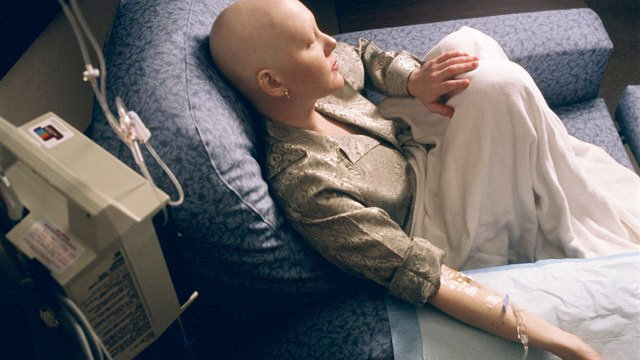
Cancer cases have increased by more than 30 percent in the last decade and half of all cases globally are ending up in deaths according to a new report from the Global Burden of Disease Cancer Collaboration published online by JAMA Oncology. Moreover, the overall contribution of cytotoxic chemotherapy to 5-year survival in adults is below 3 percent.

Cancers figure among the leading causes of morbidity and mortality worldwide. Between 2005 and 2015, cancer cases increased by 33 percent and the number of new cases is expected to rise by about 70% over the next just two decades under the current global disease promoting paradigm.

Cancer is part of the conglomerate of preventable disease which makes up approximately 80% percent of the burden of illness and 90% of all healthcare costs.

Comment: Business of cancer: People who refuse chemotherapy live over 12 years longer than those undergoing chemo treatments


Health

Lingzhi mushrooms: Nature's healer to combat aging and cancer

mushroom dragon
For years, I have wanted to include something from Chinese Medicine into my protocol, something universal and not needing a Chinese herbalist to prescribe it. Finally, I have found the perfect answer. Lingzhi mushrooms has literally hundreds of unique bio-active compounds that have life extending[1] properties,[2] stimulates brain neurons,[3]searches out and destroys cancer cells[4] and prevents the development of new fat cells in obese individuals.[5] In terms of life span extension it has been shown to increase life in studies by 9% to more than 20% in animal studies.

Ganoderma lucidum, an oriental fungus, has a long history of use for promoting health and longevity in China, Japan, and other Asian countries. It is a large, dark mushroom with a glossy exterior and a woody texture. The Latin word lucidus means "shiny" or "brilliant" and refers to the varnished appearance of the surface of the mushroom. The iconic mushroom commonly known as Reishi (in Japanese) or Ling Zhi (靈芝 in Chinese) is probably the most respected medicinal mushroom in Asia.

While mushrooms such as shitake, maitake, and cordyceps, all share similar immune boosting properties, Red Reishi has also the longest history and has been known to be effective in the treatment of the widest range of health conditions. Unlike other mushrooms, only Lingzhi has many important compounds such as triterpenes (ganoderic acid) that gives them a unique characteristic of being bitter in taste.

Use of Lingzhi mushrooms as a medicine goes as far back as the Han Dynasty's "Materia Medica" or Ben Cao Gang Mu (the earliest herbal pharmacopoeia text known, written around 1590 AD). No other plant is better at finding, decomposing and flushing out subpar cellular matter throughout the body, which then allows the surrounding organ and blood system to function at a higher level. Lingzhi is loaded with terpenes. It makes sense that one of its innate abilities is to do a similar breaking-down and dissipating action in the body.

Life Preserver

What everyone should know about Ancel Keys' experiments

ancel keys
If you've been reading the news, you probably know that eating delicious foods like butter and eggs is no longer thought to increase risk of heart attack or stroke. This post discusses new information has come to light suggesting Ancel Keys suppressed evidence that polyunsaturated fats are more harmful than trans fat!

For those of you who aren't fully convinced that butter and eggs are healthy, I've devoted the first half of this article to highlighting why, when your doctor recommends that you swap out saturated fats in foods like butter and eggs for polyunsaturated fat in products like Smart Balance and packaged breakfast cereals, it's largely thanks to Ancel Keys and his misleading, even dishonest, public statements.

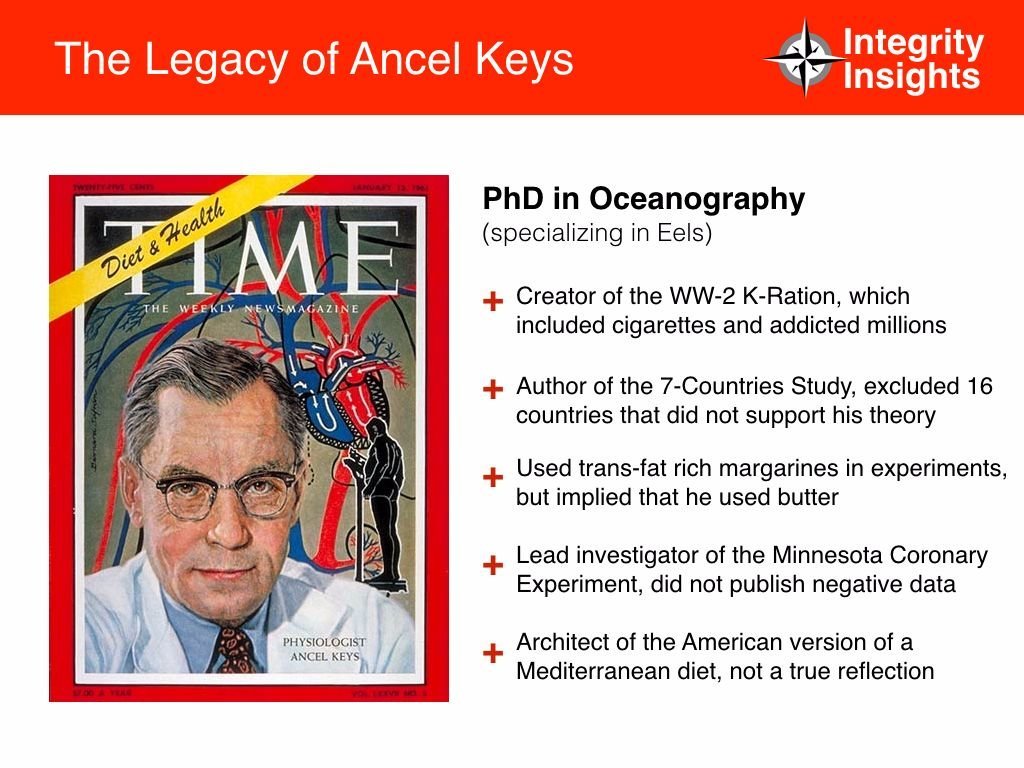
Back in the 1950s and 1960s, Ancel Keys designed a series of highly influential experiments that changed the course of American dietary history. Before Keys, Americans enjoyed traditional foods like butter, eggs, and bacon without worrying about their health. After Keys made the cover of Time magazine on Jan 13, 1961, the American public was introduced to the idea that saturated fats were clogging their arteries, and that idea ultimately led to a sea change in the foods we eat. Real foods would increasingly be replaced by processed, and the era of obesity and chronic disease would begin.

Comment: Ancel Keys just happened to observe an epidemic of cardiovascular disease and speculated that saturated fat was at the root. He spent 50 years trying to prove himself right. That doesn't mean he did solid science, much less that we needed to change our diet. Nonetheless, dietary recommendations are based on this very error for the last fifty years, much to our detriment.

For an overview on Ancel Key's pathological thinking, read The Big Fat Surprise by Nina Teicholz.

For more information, read: Victory in battle of butter


Life Preserver

Keys to releasing stress and trauma stored in our physical body

muscle stretching, psoas muscle
Stress. It's a word we hear far too often, but know all too well. Just about everyone experiences it at some point, both internally and externally. Stress on the body, whether it be from spending days on the computer, in cars and planes, can wreak havoc on our health. We don't put enough importance on the necessity of downtime, but if we did, we may find ourselves happier and less stressed.

Understanding the Psoas Muscle

Much of the tension we store occurs in our muscles, one of them being the psoas muscle. This can result in an ugly downward spiral that becomes a source of anxiety and stress in and of itself.

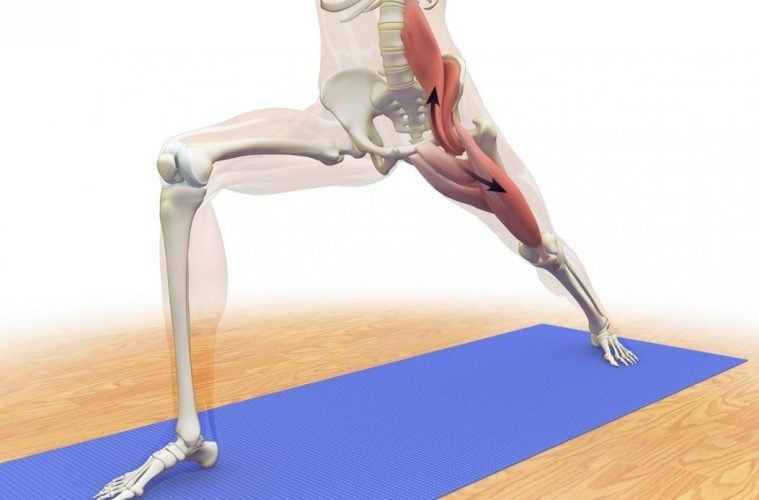
The psoas muscle is the largest muscle in our bodies, running through the entirety of our trunk.
"Because the psoas is so intimately involved in such basic physical and emotional reactions, a chronically tightened psoas continually signals your body that you're in danger, eventually exhausting the adrenal glands and depleting the immune system," explains Liz Koch in her book, The Psoas Book. "As you learn to approach the world without this chronic tension, psoas awareness can open the door to a more sensitive attunement to your body's inner signals about safety and danger, and to a greater sense of inner peace."

Comment: Read more about the muscle of the soul: The 'Muscle of the Soul' may be triggering your fear and anxiety