Health & WellnessS


Heart

The story of ouabain

Strophanthus preussii
© Wikimedia CommonsStrophanthus preussii
Sadly, the story of ouabain, the active ingredient in the plant strophanthus, is largely and somewhat mysteriously unknown. Few family doctors, internists and even cardiologists know of its effectiveness in treating and preventing heart disease and heart attacks, and it therefore remains unavailable to most heart patients.

A book written by German Naturopath Rolf-Jurgen Petry called Ouabain: The Possible Victory Over Myocardial Infarction, is a solution to this vacuum of information. However, it's available only in its original German. We've recently posted an article on our website titled "The Story of Ouabain," which outlines the book's main points. Dr. Petry became interested in the story of strophanthus/ouabain decades ago, and after his medical training spent many years reading all the original research done on ouabain. This article is a must-read for anyone interested in heart disease or the etiology, prevention and treatment of myocardial infarction (MI, commonly called "heart attacks").

Dr. Petry not only lays out the history of the benefit of strophanthus/ouabain in the prevention and treatment of MI, but he also addresses directly the many common misconceptions medical doctors and researchers continue to have about its use. The first of these misconceptions is that since ouabain is in the family of cardiac glycosides, like the more commonly used heart drug digitalis/digoxin, it must affect the body in the same way. In reality, the research conclusively demonstrates that at the doses used in practice, as in the strophanthus extract we are using, ouabain not only doesn't inhibit the sodium/potassium pump, as does digitalis, it actually stimulates the action of this pump.

Syringe

Dr. Peter Hotez is calling for the anti-vaccine movement to be "snuffed out"

History of Vaccines
© History of Vaccines
Occasionally, I come across an article that really riles me. Okay fine, when it comes to vaccine science and vaccination policy, I'll admit this happens almost every day. Still, there was an opinion published recently in Scientific American that I found particularly annoying. It's titled "Will an American-Led Anti-Vaccine Movement Subvert Global Health?" and was written by pediatrician Peter J. Hotez, MD, PhD,1 director of the Texas Children's Hospital Center for Vaccine Development2 in Houston and dean of the National School of Tropical Medicine at the Baylor College of Medicine.3

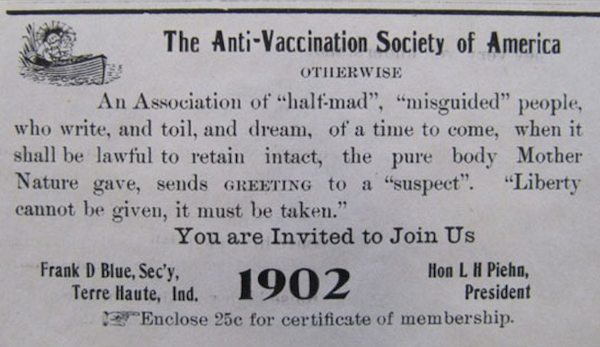
The piece starts out with an image of an old 1902 invitation for membership by the Anti-Vaccination Society of America. The invitation reads:
The Anti-Vaccination Society of America. Otherwise: An Association of "half-mad", "misguided" people who write, and toil, and dream, of a time to come, when it shall be lawful to retain intact the pure body Mother Nature gave, sends GREETING to a "suspect". "Liberty cannot be given, it must be taken." You are Invited to Join Us.1,4
One of the aims of the opinion piece is to tout the gains made vaccination programs throughout history, while cautioning that these "gains can be fragile."1

Book 2

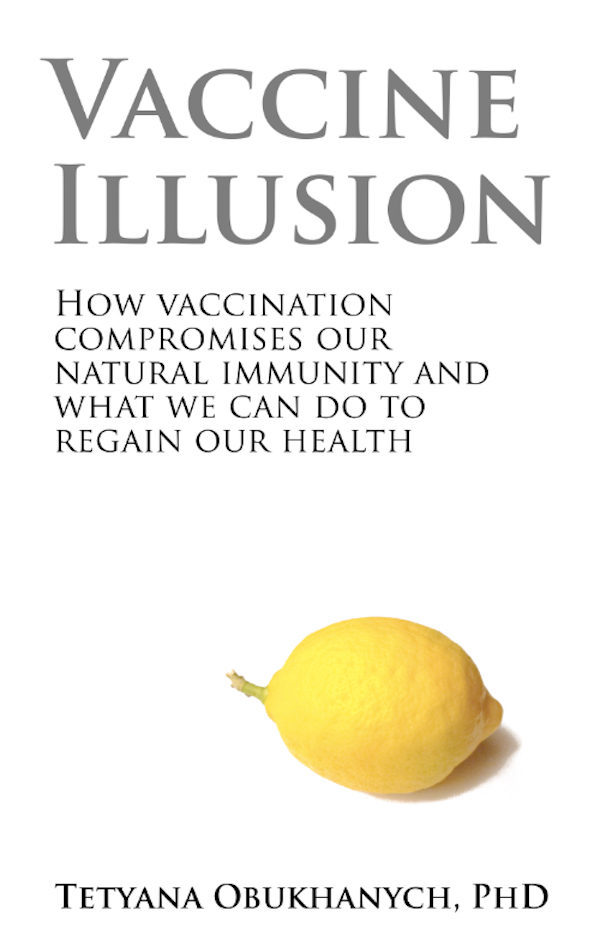
Dr. Tetyana Obukhanych: The Vaccine Illusion

vaccines
I know of many alternative health practitioners and even of a few pediatricians who have embraced the non-vaccination approach to health. However, I have yet to encounter one among my own kind: a scientist in the trenches of mainstream biomedical research who does not regard vaccines as the greatest invention of medicine.

I never imagined myself in this position, least so in the very beginning of my Ph.D. research training in immunology. In fact, at that time, I was very enthusiastic about the concept of vaccination, just like any typical immunologist. However, after years of doing research in immunology, observing scientific activities of my superiors, and analyzing vaccine issues, I realized that vaccination is one of the most deceptive inventions the science could ever convince the world to accept.

As we hear more and more about vaccine injuries, many individuals are starting to view vaccination as a necessary evil that has helped us initially to overcome raging epidemics but now causes more damage than benefit to our children.

As an immunologist, I have a different and perhaps a very unique perspective. I have realized that the invention of vaccination in the 18th century has precluded us from seeking to understand what naturally acquired immunity to diseases really is. Had we pursued a different route in the absence of that shortcut, we could have gained a thorough understanding of naturally acquired immunity and developed a truly effective and safe method of disease prevention compared to what vaccines can possibly offer.

Comment: Read more from Dr. Obukhanych about vaccine safety concerns:


Whistle

Are Monsanto's Roundup® legal nightmares just beginning?

monsanto
Robert F Kennedy Jr., Esq., stated "Democracy is alive and well in California where judges are willing to stand up for science, even against the most powerful corporate polluters. This decision gives Californians the right to protect themselves and their families from chemical trespass." [1]

Attorney Kennedy's legal words of wisdom regarding protection from and against "chemical trespass," must be recycled along the entire downline where glyphosate residues are found including, and especially in, vaccines as reported by independent scientist researcher Anthony Samsel, PhD. In the video below take note how much glyphosate, the key active herbicide-killing ingredient in Roundup made by Monsanto, is found in vaccines given to infants, toddlers, teens and adults! Cancers are the number two killer of kids between 1 and 14 years of age. [3]

Health

Gut microbiome suffers huge shifts throughout IBD disease course

microbiome
© Shutterstock
The gut microbiome of people with inflammatory bowel disease (IBD) fluctuates more compared to those of healthy individuals. These findings suggest that therapies targeting some of these alterations within the gut microbes may prove beneficial to IBD patients.

The study, "Dynamics of the human gut microbiome in inflammatory bowel disease," was published in the journal Nature Microbiology.

IBD is partially caused by a deregulated immune response, which in many cases is activated due to alterations in the natural community of microbes that populate our gut, called gut microbiome. Previous studies showed differences in the gut microbiome composition not only between IBD and healthy people, but even within different IBD subtypes, including ulcerative colitis, colonic Crohn's disease, and ileal Crohn's disease.

However, all these studies were performed at a specific time point or with few individuals, and the gut microbiome fluctuations over the long term remained poorly understood.

Comment: Listen to The Health & Wellness Show: Some of my best friends are germs for more information:
The human body is teeming with billions -- nay, TRILLIONS -- of microbes with over a thousand different species populating the gut alone. We are covered with bacteria, fungi, viruses and parasites from the top of our heads to the bottom of our feet, inside and out. How did we come to be populated with such a vast array of these little beasties and what's their purpose? What influence do they exert on our physical and mental health and, more importantly, what can we do (and what can we avoid doing) to keep our microbial community happy and in balance?


Health

Dr. Paul Marik turns to vitamin C infusion as a treatment for deadly sepsis

sepsis
© Getty Images/iStockphotoOf the million or so Americans a year who get sepsis, roughly 300,000 die. Unfortunately, many treatments for the condition have looked promising in small, preliminary studies, only to fail in follow-up research.
It's hard not to get excited about news of a potentially effective treatment for sepsis, a condition that leads to multiple organ failure and kills more people in the hospital than any other disease.

But there have been so many false promises about this condition over the years, it's also wise to treat announcements — like one published online by the journal, Chest — with caution.

The study, from Eastern Virginia Medical School in Norfolk, Va., reported some remarkable success in treating patients who were at high risk of sudden death.

The story began in January, 2015, when Dr. Paul Marik was running the intensive care unit at Sentara Norfolk General Hospital. A 48-year-old woman came in with a severe case of sepsis — inflammation frequently triggered by an overwhelming infection.

"Her kidneys weren't working. Her lungs weren't working. She was going to die," Marik said. "In a situation like this, you start thinking out of the box."

Marik had recently read a study by researchers at Virginia Commonwealth University in Richmond. Dr. Berry Fowler and his colleagues had shown some moderate success in treating people who had sepsis with intravenous vitamin C.

Comment: Sepsis: Largely unknown complication of infection that hospitalizes a million patients yearly in U.S.


Info

4 reasons why you don't need a tetanus shot

tetanus
Vaccination has been in the news a lot lately, and for all the wrong reasons as always. This week there has been the case of a young girl who contracted tetanus. As usual it's being used to convince us all to vaccinate, but tetanus is much more complex than many are aware. For starters it is not a transmissible disease. You cannot catch tetanus off someone.

Doctors now give the tetanus shot (given as the combined Dtap) to patients for everything from dog bites to kitchen knife wounds. It is a common practice that many don't question if they even need the shot. What are the risks? Does the injection even help prevent it? These are the questions we should all be asking when we are being told to have any kind of vaccine.

What Is Tetanus?

Tetanus, also known as lockjaw, occurs when the tetanus bacteria gets into the bloodstream and releases a nervous system toxin. The bacteria can be found extensively in cultivated soils. It also lives harmlessly in the gut of many animals. The infection caused by the bacteria is anaerobic (ie. it cant live in the presence of oxygen).

Life Preserver

Doctors are recommending yoga over opioids for lower back pain

yoga for back pain
It's no secret that the abuse of and addiction to opioids, including heroin, morphine, and prescription pain relievers, is a serious global problem harming the social and economic welfare of all societies and the health of many individuals within them. The more loved ones we lose and the more families affected by it, the more we need to take a hard look at some of the biggest culprits behind the problem.

Over the past 25 years in the U.S., the total number of opioid pain relievers prescribed has escalated dramatically. In fact, the amount of prescriptions for opioids like hydrocodone and oxycodone increased from 76 million in 1991 to nearly 207 million in 2013.

This greater availability is a massive problem, and the finger has largely been pointed at doctors. Why? Dr. Sanjay Gupta explains:
The fact is, we have accepted the tall tales and Pollyannaish promises of what these medications could do for too long. As a community, we weren't skeptical enough. We didn't ask enough questions. We accepted flimsy scientific data as gospel and preached it to our patients in a chamber that echoed loudly for decades.Even worse, too many doctors who didn't actually believe the hyperbole surrounding opioids doled out long-term prescriptions regardless, in the same way doctors write antibiotic prescriptions for viral illnesses. In both cases, they don't work. In both cases, they can cause colossal harm.

Comment: Why Yoga? Healing research


People 2

A conversation about sleep

sleeping couple
We spend one-third of our lives in bed, yet little is known about the purpose of sleep, says Dr. Meir Kryger, Yale professor of medicine and clinical professor of nursing. For more than 40 years, Kryger has been working to answer some of the remaining questions about sleep through innovative research and clinical practice.

Whether you have a morning or evening chronotype is dictated by your biological 24-hour clock. Until the 1950s, most people thought of sleep as a passive, dormant part of our daily lives. We now know that our brains are very active during sleep. Moreover, sleep affects our daily functioning and our physical and mental health in many ways that we are just beginning to understand.

In his latest book, "The Mystery of Sleep," Kryger examines the many aspects of sleep and its disorders. Currently on sabbatical and participating in a popular sleep course at Stanford, Kryger is gathering information that he will bring back to a course for Yale students.

What led you to focus on sleep as a specialty?

I became interested in sleep before there was a sleep specialty. When I was a medical resident at the Royal Victoria Hospital in Montreal, I had a patient, a gentleman who was having seizures while he was sleeping and was admitted to the hospital. I saw him one night struggling to breathe. I asked a friend of mine who was a neurosurgery resident to help set up equipment to study the patient while he was sleeping. We found that he stopped breathing, and his heart rate dropped while he slept -- at times there were 10 seconds between breaths. That was the explanation for his seizures. His heart was actually stopping.

Comment: See also:


Attention

Lead poisoning affects dozens of California locales worse than Flint, Michigan

water sink drain
© VICE News
Dozens of California communities have experienced recent rates of childhood lead poisoning that surpass those of Flint, Michigan, with one Fresno locale showing rates nearly three times higher, blood testing data obtained by Reuters shows.

The data shows how lead poisoning affects even a state known for its environmental advocacy, with high rates of childhood exposure found in a swath of the Bay Area and downtown Los Angeles. And the figures show that, despite national strides in eliminating lead-based products, hazards remain in areas far from the Rust Belt or East Coast regions filled with old housing and legacy industry.

In one central Fresno zip code, 13.6 percent of blood tests on children under six years old came back high for lead. That compares to 5 percent across the city of Flint during its recent water contamination crisis. In all, Reuters found at least 29 Golden State neighbourhoods where children had elevated lead tests at rates at least as high as in Flint. "It's a widespread problem and we have to get a better idea of where the sources of exposure are," said California Assembly member Bill Quirk, who chairs the state legislature's Committee on Environmental Safety and Toxic Materials.
Lead exposure map
© Reuters

Comment: In assessments, such as with toxic thresholds, values are designated in order to define a parameter. They are not per-se individual-specific to vulnerability.

See also: