Health & WellnessS


Arrow Down

The U.S. has the worst record of maternal deaths in the developed world, 60 percent are preventable

maternal mortality USA
The U.S. has the worst rate of maternal deaths in the developed world, and 60 percent are preventable. The death of Lauren Bloomstein, a neonatal nurse, in the hospital where she worked illustrates a profound disparity: The health care system focuses on babies but often ignores their mothers.

As a neonatal intensive care nurse, Lauren Bloomstein had been taking care of other people's babies for years. Finally, at 33, she was expecting one of her own. The prospect of becoming a mother made her giddy, her husband Larry recalled recently — "the happiest and most alive I'd ever seen her." When Lauren was 13, her own mother had died of a massive heart attack. Lauren had lived with her older brother for a while, then with a neighbor in Hazlet, New Jersey, who was like a surrogate mom, but in important ways she'd grown up mostly alone. The chance to create her own family, to be the mother she didn't have, touched a place deep inside her. "All she wanted to do was be loved," said Frankie Hedges, who took Lauren in as a teenager and thought of her as her daughter. "I think everybody loved her, but nobody loved her the way she wanted to be loved."

Other than some nausea in her first trimester, the pregnancy went smoothly. Lauren was "tired in the beginning, achy in the end," said Jackie Ennis, her best friend since high school, who talked to her at least once a day. "She gained what she's supposed to. She looked great, she felt good, she worked as much as she could" — at least three 12-hour shifts a week until late into her ninth month. Larry, a doctor, helped monitor her blood pressure at home, and all was normal.

On her days off she got organized, picking out strollers and car seats, stocking up on diapers and onesies. After one last pre-baby vacation to the Caribbean, she and Larry went hunting for their forever home, settling on a brick colonial with black shutters and a big yard in Moorestown, not far from his new job as an orthopedic trauma surgeon in Camden. Lauren wanted the baby's gender to be a surprise, so when she set up the nursery she left the walls unpainted — she figured she'd have plenty of time to choose colors later. Despite all she knew about what could go wrong, she seemed untroubled by the normal expectant-mom anxieties. Her only real worry was going into labor prematurely. "You have to stay in there at least until 32 weeks," she would tell her belly. "I see how the babies do before 32. Just don't come out too soon."

Alarm Clock

FDA hypocrisy on marijuana & prescription drugs is worse than we thought

FDA drug regulation
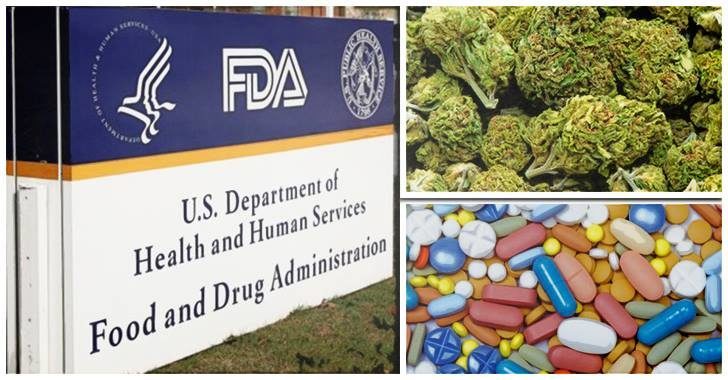
One-third of FDA-approved drugs were later found to have safety risks, according to a recent analysis of drugs cleared by the agency between 2001 and 2010.

According to the study, published in the Journal of the American Medical Association, "Among 222 novel therapeutics approved by the FDA from 2001 through 2010, 71 (32.0%) were affected by a post-market safety event."

A post-market safety event includes "(1) withdrawals due to safety concerns, (2) FDA issuance of incremental boxed warnings added in the post-market period, and (3) FDA issuance of safety communications."

The researchers, many of them from Yale University, found these events were more common among biologic and psychiatric drugs, as well as those granted access to the FDA's expedited approval process. The Washington Post summarized the researchers' findings:
Three of the drugs were withdrawn from the market. The FDA also required 61 new black-box warnings — the agency's most serious safety alert, included in the drug's packaging — and issued 59 safety communications to inform doctors and consumers about newly identified concerns. Some products had more than one boxed warning added or safety communication issued over the time of the study.

Health

5 reasons to get your sweat on

sweating
Sweating is a vital function of our bodies that regulates core body temperature - overheating can be fatal. When the temperature rises over 37 degrees Celsius or 98.6 degrees Fahrenheit, sweating appears as a cooling-down process that keeps us alive.

Here are 5 reasons to regularly work up a sweat:

Sweat fights germs.

Natural antimicrobial agents from sweat keep in balance the microbiome on the skin. Opportunistic bacteria can irritate and proliferate the skin. Sweat helps the body to keep under control these bad bugs.

Comment: See also:


Red Flag

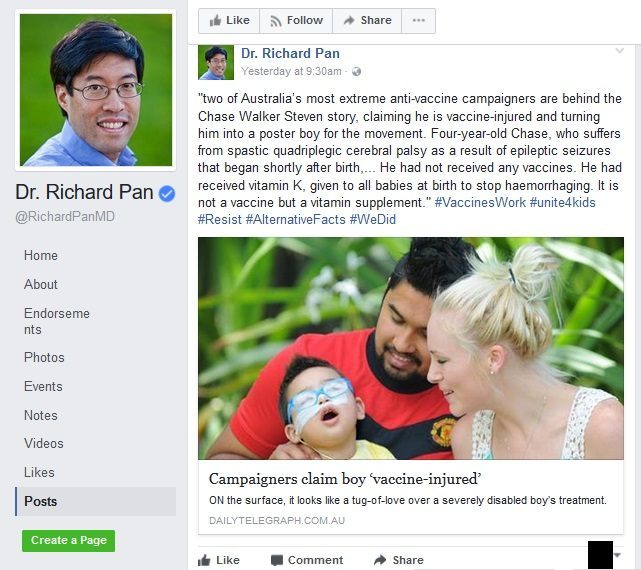
Big Pharma supporter Senator Richard Pan is bashing parents in Australia

Senator Richard Pan of Sacramento, California is pledging his allegiance to big pharma again.

Instead of choosing to focus on Sacramento's severe problems with drugs, violence, poisoned water and everything else, he is directing his opposition to vaccine choice all the way to the southern hemisphere.

He posted this on social media:
richard Pan

Health

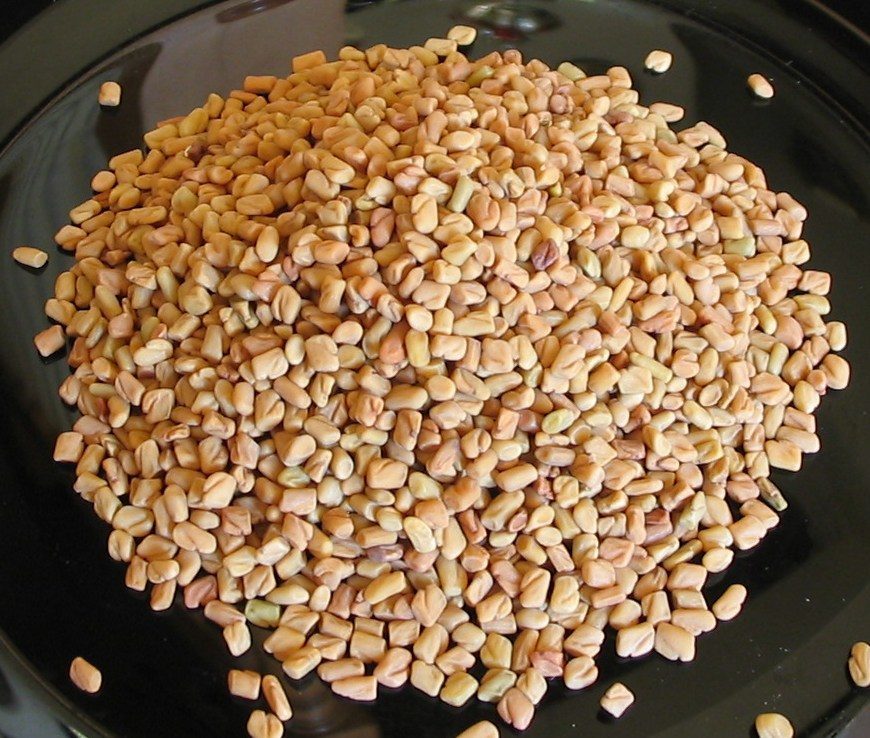
The medicinal properties of fenugreek

fenugreek
Ayurvedic medicine practitioners discovered the fenugreek medicinal qualities thousands of years ago. Its seeds have some amazing health benefits that could change your life and transform your health for the better. These tiny light yellowish stones help in reducing both external and internal inflammation.

Fenugreek seeds taste somewhat bitter, similar to burnt sugar or celery, and are often used to make medicine. But the taste is far more pleasant when cooked.

Nutrition Facts

One serving /1 tablespoon — of fenugreek seeds contains:
  • 5 calories
  • 7 grams fiber
  • 4 grams carbohydrates
  • 5 grams protein
  • 7 gram fat
  • 7 milligrams iron (20 percent DV)
  • 6 milligrams phosphorus (3 percent DV)
  • 1 milligram manganese (7 percent DV)
  • 21 milligrams magnesium (5 percent DV)
  • 1 milligram copper (6 percent DV)
  • 1 milligram vitamin B6 (3 percent DV)

Syringe

Are vaccines to blame for infectious disease outbreaks?

vaccines
“Every life form wants to live, wants to survive. Universal principle. And viruses and bacteria are no exception.” — Barbara Loe Fisher, National Vaccine Information Center
It seems like whenever there is an outbreak of an infectious disease in the United States, the media, local public health officials and legislators immediately blame people, who weighed the benefits and risks of vaccination for themselves or their minor children and exercised their right to informed consent to medical risk taking, which includes the freedom to decline to take the risk. News reports abound about how the outbreak would not have happened had people just done what doctors told them to do and gotten their shots.

Of course, the irony is that, in many outbreaks of infectious disease of late in the U.S., a substantial minority or, in some cases, a majority of those infected had been vaccinated. So the obvious conclusion would be that there is a problem with the vaccine's long term effectiveness. But that conclusion is often downplayed or ignored.

The preferred explanation of why infections occur in vaccinated people, especially in small communities where a lot of people are living in close proximity to each other, is that people are "particularly susceptible to the virus, even if they've been vaccinated."1 That was the most common explanation, for example, for the outbreak of mumps on college campuses throughout the country last year.

Comment: The phenomenon of measles infection spread by MMR (live measles-mumps-rubella vaccine) has been known for decades. In fact, 20 years ago, scientists working at the CDC's National Center for Infectious Diseases, funded by the WHO and the National Vaccine Program, discovered something truly disturbing about the MMR vaccine: It leads to detectable measles infection in the vast majority of those who receive it.


2 + 2 = 4

When evidence says no, but doctors say yes

Years after research contradicts common practices, patients continue to demand them and doctors continue to deliver. The result is an epidemic of unnecessary and unhelpful treatment.

patient believer
© ProPublica
First, listen to the story with the happy ending: At 61, the executive was in excellent health. His blood pressure was a bit high, but everything else looked good, and he exercised regularly. Then he had a scare. He went for a brisk post-lunch walk on a cool winter day, and his chest began to hurt. Back inside his office, he sat down, and the pain disappeared as quickly as it had come.

That night, he thought more about it: middle-aged man, high blood pressure, stressful job, chest discomfort. The next day, he went to a local emergency department. Doctors determined that the man had not suffered a heart attack and that the electrical activity of his heart was completely normal. All signs suggested that the executive had stable angina — chest pain that occurs when the heart muscle is getting less blood-borne oxygen than it needs, often because an artery is partially blocked.

Syringe

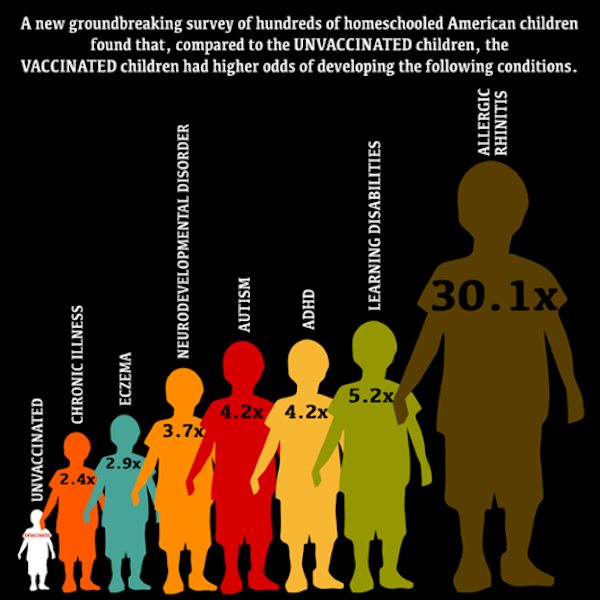
Vaccinated vs. unvaccinated pilot study: Early vaccination sees exponential increase in chronic disorders

vaccines
The move towards mandatory vaccination is no longer a conspiracy theory. California Senate Bill 277 snapped families into a reality where informed consent and health freedom do not apply.

Presently, the American people are facing 173 vaccine-related bills in 40 states. The language of many of the new bills aims to increase tracking, target non-vaccinating families, force vaccine schedules, and further persecute families who choose not to accept vaccines; the private products of for-profit, legally protected pharmaceutical companies. The corporate media and medical industries have thrown their full influence behind Big Pharma's transparent 'safe and effective' messaging. At the same time, both industries are simultaneously censoring discussions around the fraud, dangers, mounting injuries, and criminal behavior inherent within the vaccine industry and those pushing for mandatory vaccination. A central point of contention, and human rights violation, is the fact that historically, no true study has been conducted between vaccinated versus unvaccinated populations. However, such a study has now come to fruition.

Attention

A dangerous mix of opioids called 'gray death' is causing overdoses across the US

gray death
It's being called "gray death" and the new and dangerous drug combination underscores the ever-changing face of the opioid epidemic.

Investigators have found it and recorded overdoses blamed on it in Alabama, Georgia and Ohio.

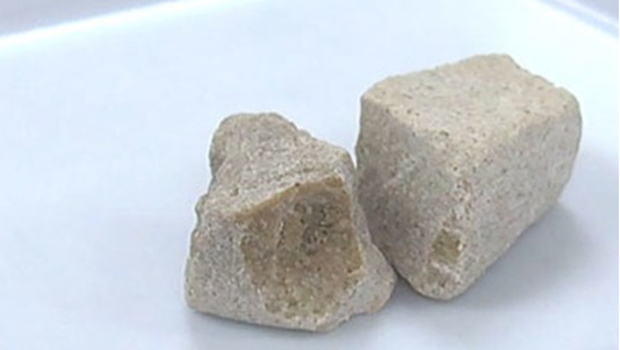
The drug looks like concrete mix and varies in consistency from a hard, chunky material to a fine powder. It's a combination of several opioids that are tied to thousands of fatal overdoses in the U.S., including heroin, fentanyl, carfentanil (sometimes used to tranquilize large animals, including elephants) and a synthetic opioid called U-47700.

"Gray death is one of the scariest combinations that I have ever seen in nearly 20 years of forensic chemistry drug analysis," said Deneen Kilcrease, manager of the chemistry section at the Georgia Bureau of Investigation.

Gray death ingredients and their concentrations are unknown to users, and they can be particularly lethal, Kilcrease said. And because these strong drugs can be absorbed through the skin, simply touching the powder puts users at risk.

Last year, the U.S. Drug Enforcement Administration listed U-47700 in a category that includes the most dangerous drugs it regulates, saying it was associated with dozens of fatalities, mostly in New York and North Carolina.

Comment: U.S. police warn of opioid drug so potent it can be fatal 'just by touching'


Megaphone

Another blow to 'vaccine science' - study suggests unvaccinated children are healthier

vaccinated children
With the measles outbreak in America being traced back to unvaccinated children, there has been an uproar of ridicule over parents who choose not to vaccinate their children.

But a piece of the puzzle is going overlooked in this argument, and that is how and why we vaccinate altogether. Are we over-vaccinating? Are we using safe practices?

In 1992, the Immunization Awareness Society (IAS) performed a survey to better understand the health of New Zealand's children. The researchers received 495 completed questionnaires, revealing 226 vaccinated children and 269 unvaccinated children. The ages ranged from 2 weeks to 46 years of age.

According to the researchers:
Respondents were asked to provide the year of birth, gender, vaccinations received, whether or not the child suffered from a range of chronic conditions (asthma, eczema, ear infections/glue ear, recurring tonsillitis, hyperactivity, diabetes and epilepsy) whether or not he or she had needed grommets, had had a tonsillectomy, or were slow to develop motor skills (walking, crawling, sitting-up, etc.). Parents also provided information on breastfeeding and bottle feeding and when the child was weaned if breastfed.