Health & WellnessS


Health

How grains can trigger skin conditions

skin disorder
You may prudently care for your skin each day, cleansing, exfoliating, moisturizing and hydrating. But, did you know that the sandwich you had at lunch may be doing more damage to your skin than skipping one of your nightly rituals?

Your skin is the largest organ in your body, responsible for temperature control, protection and excreting toxins to name just a few. Far from being an inactive covering for your internal organs, your skin is an intricate system of nerves, glands and cell layers that plays a fundamental role in your overall health and wellness.

If you want to protect your skin, age gracefully and reduce problem breakouts, it is time to care for your skin in the same way you care for your heart, control your weight and lift your mood. In other words, pay attention to the foods you eat every day.

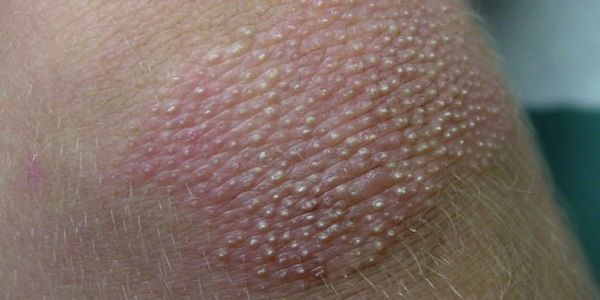
Wheat is one of the grains in many of the processed foods at your grocery store that interferes with a healthy complexion and contributes to psoriasis and eczema outbreaks. Proteins in wheat are responsible for inflammation and changes to your gastrointestinal tract, nervous system and cardiovascular system.

Number of People with Gluten Sensitivity Rising

The extreme form of gluten sensitivity, celiac disease, affects people differently. Over 200 symptoms have been attributed to the condition. Approximately 3 million people in the U.S. suffer from celiac disease1 and close to 20 million suffer from gluten sensitivity.2 Dr. Alessio Fasano is the director for Celiac Research and the chief of pediatric gastroenterology and nutrition at Massachusetts General Hospital. In a Celiac Disease Foundation blog, Fasano said: 3


Question

Are you sleep deprived? Test yourself

tired lady
Are you tired? If your answer is yes, it would seem relatively straightforward to assume you're not getting enough sleep. Yet, signs of sleep deprivation may not always be this obvious (and there are other factors besides sleep loss that can make you feel fatigued). The late Nathaniel Kleitman, Ph.D., professor emeritus in physiology at the University of Chicago, came up with one of the simplest tests to determine if you're sleep deprived — and as a pioneer in sleep research, he was well qualified to know.

Not only did Kleitman co-discover REM sleep, but he published the first major textbook on sleep ("Sleep and Wakefulness" in 1939). He even stayed awake for 180 hours to figure out what sleep deprivation does to your body. Kleitman also spent more than one month underground in a cave — an environment without sunlight or schedules — in order to track changes in wakefulness and circadian rhythm.1 So when he suggested a way to test yourself for sleep deprivation, people took notice.

Sleep Deprived? Take the Sleep Onset Latency Test to Find Out

Kleitman's sleep onset latency test sounds complicated, but it's quite simple. And, "It's based on solid science," said Dr. Michael Mosley, who is both a physician and a journalist for BBC in the U.K.2 Here's how it works: In the early afternoon, grab a spoon and head off to your darkened bedroom to take a nap. Place a metal tray on the floor beside your bed, and hold the spoon over the tray as you attempt to fall asleep.

Be sure to check the time as well. Next, when you inevitably fall asleep and the spoon crashes down onto the tray, waking you up, immediately check the time again and note how much time has passed.

Comment: See also:


Health

The healing abilities of thyme essential oil

Thyme oil
Thyme essential oil is one of the strongest antioxidants available today, but it has been used medicinally since ancient times. Thyme oil is extracted from the herb, Thymus vularis.

For centuries thyme has been used to support the nervous, digestive, respiratory, and immune systems. Today, thyme essential oil is praised for its antibacterial, antispasmodic, antiseptic, hypertensive, and calming properties. As a result, thyme essential oil can be useful for various health conditions, including respiratory infections, intestinal infections, skin problems, oral problems, circulatory problems, stress and anxiety, hormonal imbalance, and fibroids. This article details thyme essential oil, its benefits, and how to use it.

Facts and History about Thyme Essential Oil

Thyme is a popular cooking herb also used in aromatherapy. Thyme is a member of the mint family, along with rosemary, lavender, oregano, and basil. It is a bushy, wood-based evergreen subshrub that has small aromatic, gray-green leaves that is native to southern Europe from Southern Italy to Western Mediterranean. The thyme plant also has purple or pink flowers that blossom during early summer.

Health

Congress pushing back on FDA attempts to eliminate competition for BigPharma - Will the agency comply?

natural medicines, compounding pharmacies
Congress sends a clear message to the FDA. Will the agency listen? Action Alert!

Earlier this month, President Trump signed an appropriations (spending) bill that included very important language on the FDA's war on customized, natural medicines made at compounding pharmacies.

Since the passage of the Drug Quality and Security Act in 2013 (DQSA), the FDA has been issuing rules and guidance documents to implement the law. Unfortunately, the agency has been going far beyond what Congress intended. We believe that the FDA is working at the behest of pharmaceutical companies to eliminate the compounding industry, which competes with Big Pharma's drugs.

The FDA hasn't been doing this in one fell swoop; rather it's been "death by a thousand cuts": the agency has limited interstate commerce, restricted "office use" by doctors of compounded medicine, and slashed the menu of substances from which pharmacies could make medicines, to name a few.

Congress has now pushed back against these abuses by specifically directing the FDA to follow congressional intent regarding permitted customers and office-use compounding.

Comment: The pharmaceutical industry has a long history of using its vast financial resources to 'encourage' both politicians and the FDA to protect its profit margins. Without a huge public outcry, the FDA will likely continue to do "business as usual".


Red Flag

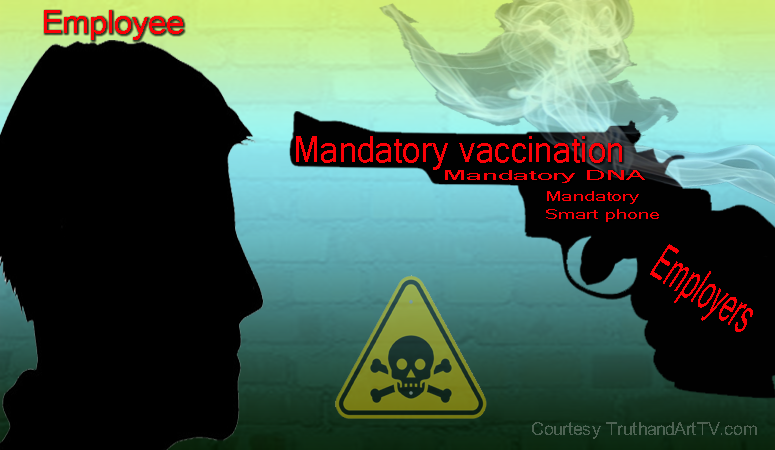
Comply or starve: New bill will mandate employees to submit to 'health preventive' measures

mandatory vaccines
A new bill, HR 1313, has been introduced by North Carolina Congresswoman Virginia Foxx which is designed to give employers absolute power over the employee by mandating whatever they deem to be proper "heath preventive" measures. These measures would include submitting DNA records as well as mandatory vaccinations and other perceived "health preventive" measures designed for the "greater good" of the general public. The result of not complying with this new law of course would be losing your job.

This kind of legislation thus gives large corporations government-like political status and god-like powers over the individual and further widens the gap between the rich and poor. But even more importantly this kind of legislation strips away intimate individual medical privacy and further solidifies the global control grid being created by the ruling elite as they attempt to complete their new world order plans of permanent human enslavement. No need to imagine how this "future" new world order enslavement will look like anymore. We're seeing it all being rolled out in real-time and in broad daylight for the world to see.

As I discuss in my video below, all of this is part of the Communist-Globalist "peaceful revolution" strategy which is designed to financially neutralize the individual by first making the individual financially dependent on the state or the rulers, and then the threat of having all their food and survival (work related) income taken away is enough to "peacefully" silence the individual into submission.

Evil Rays

Teens enslaved by computers: WHO report warns of major health risks for adolescent digital screen addiction

teen digital tech
© CCO/ Pixabay
Around 1.2 billion people, 1 in 6 of the world's population, are adolescents aged 10 - 19. Many are at risk of premature death, illness and injury. In a major report, the World Health Organization lays out the major risks facing this vast demographic - too much time spent staring at digital screens festers near the top of the pestilential heap.

The report, Global Accelerated Action for the Health of Adolescents (AA-HA!), notes there has been a dramatic increase in the time young people spend staring at digital screen time since the turn of the century, with little indication this will be slowing any time soon. Spending more than two hours in front of tablets, computers and smartphones is causing children as young as 11 to suffer an increased risk of poor health.

​The report notes usage rates in the UK alone have increased for both sexes since 2000, and tripled for girls aged 15 or over.

In 2014, 74.6 percent of girls and 76.5 percent of boys aged 11 — 15 used a computer, tablet or phone for two or more hours on a weekday. In Scotland, these figures stood at 79.9 percent for girls and 83.6 percent for boys. Of the 200,000 children in 42 countries studied by the WHO, Scotland came top for computer use by girls, Wales fourth and England seventh.

Christmas Tree

Study finds marijuana could slow memory loss and delay onset of Alzheimer's in the elderly

granny smoke pot
Old mice regained their speed of memory after consuming pot, German scientists found
Psychologist Professor Andreas Zimmer of Bonn University in Germany said the findings are essential in the movement to understand cannabis as a form of medicine.

More than half of the highly influential United States has voted in favor of legalization for medical use, and Germany followed suit just two months ago.
'Chronic, low-dose treatment with THC or cannabis extracts could be a potential strategy to slow down or even reverse cognitive decline in the elderly,' he said.

'Together, these results reveal a profound, long-lasting improvement of cognitive performance resulting from a low dose of THC treatment in mature and old animals.

'THC treatment for 28 days restored the learning and memory performance of mature and old animals in the water maze, novel object location recognition and social recognition tests to the levels observed in young mice.'

Red Flag

Trump Admin relaxes Obama-era school lunch requirements but maintains current crony system

school food
The Trump administration is relaxing school lunch requirements set under the Obama administration. States will now be allowed to grant exemptions to schools struggling to hit certain nutrition benchmarks. Exempted schools will not have to cut more salt from meals, can serve fewer whole grains, and can offer 1% flavored milk in addition to the fat-free flavored milk currently required.

The changes do not affect the basics of the current crony system. Recall that two of the biggest school lunch suppliers used their money and political influence to twist regulations so that a slice of pizza would be considered a vegetable and kids could be served all of the French fries they wanted.

School lunch is also marred by outright corruption. The US Department of Agriculture pays $1 billion per year to buy produce and meat for school lunches. Instead of preparing that food on-site in a healthy manner, schools hire management companies, which in turn hire processors to prepare the food. The processors turn chicken meat, scraps, flavorings, and fillers of uncertain origin into things like chicken nuggets. The processors, in turn, pay what look to us to be kickbacks to the management companies for choosing them over another processor. None of this money goes back to the schools. Those seeming kickbacks—the management companies call them "rebates"—are arguably illegal. The New York Attorney General sued one management company and received a $20 million settlement.

Evil Rays

Wireless technology affects kids' epigenetics

wireless child
Cindy Sage and Ernesto Burgio published a new paper "Electromagnetic Fields, Pulsed Radiofrequency Radiation, and Epigenetics: How Wireless Technologies May Affect Childhood Development" on the Bioinitiative 2012 website, which ought to dispel much of the disparity about EMFs not being harmful, especially to children, and fetuses in particular, I'd like to add.

The authors talk about epigenetics affecting childhood development, something to listen up about very carefully in this day and age of neuro-developmentally-challenged children, something not widespread in former generations. According to the 2015 "America's Children and the Environment, Third Edition" [1]:
[A]pproximately 15% of children in the United States ages 3 to 17 years were affected by neurodevelopmental disorders, including ADHD, learning disabilities, intellectual disability, cerebral palsy, autism, seizures, stuttering or stammering, moderate to profound hearing loss, blindness, and other developmental delays, in 2006 - 2008.

[CJF emphasis added. It's now 2017. What are current figures?]

Clipboard

Canadian Parliament set to vote on mandatory labeling for GMOs

GMO food
© Underground Health
On Wednesday, May 17th, Members of Parliament will vote on Private Member's Bill C-291 for mandatory labeling of genetically modified (GM) foods.

"Labelling is necessary for transparency and traceability in our food system," said Lucy Sharratt of the Canadian Biotechnology Action Network. "Canadians want to know where GM foods are in their grocery stores."

Polls over twenty years consistently show that over 75 percent of Canadians want GM foods labelled. Health Canada's 2016 survey put this number at 78 percent.(1)

"Why are Canadians being kept in the dark? Who will go shopping with me to tell me which foods are GM?" said 17-year-old Rachel Parent, founder of the group Kids Right to Know. "In our democracy, I expect our Members of Parliament to vote for the wishes of Canadians."

Private Member's Bill C-291 was sponsored by Member of Parliament Pierre-Luc Dusseault (Sherbrooke, Quebec).