Health & WellnessS


Biohazard

Major Lancet study finds low-fat diet filled with refined sugars can lead to early death

butter
© GUILLAUME SOUVANTButter has been demonised, some heart experts say
Low-fat diets could raise the risk of early death by almost one quarter, a major study has found.

The Lancet study of 135,000 adults found those who cut back on fats had far shorter lives than those enjoying plenty of butter, cheese and meats.

Researchers said the study was at odds with repeated health advice to cut down on fats.

Those doing so tended to eat far too much stodgy food like bread, pasta and rice, the experts said, while missing out on vital nutrients.

Participants eating the highest levels of carbohydrates - particularly refined sugars found in fizzy drinks and processed meals - faced a 28 per cent higher risk of early death.

Ambulance

LGB older adults more likely to suffer chronic health conditions than heterosexuals, study finds

elderly lesbian couple
© Thomas Geyer / Quad City Times / Via qctimes.com
Lesbian and bisexual older women are more likely than heterosexual older women to suffer chronic health conditions, experience sleep problems and drink excessively, a new University of Washington study finds.

In general, lesbian, gay and bisexual (LGB) older adults were found to be in poorer health than heterosexuals, specifically in terms of higher rates of cardiovascular disease, weakened immune system and low back or neck pain. They also were at greater risk of some adverse health behaviors such as smoking and excessive drinking. At the same time, however, findings point to areas of resilience, with more LGB adults engaging in preventive health measures, such as obtaining HIV tests and blood pressure screening.

The study is the first to use national, population-based data to evaluate differences in health outcomes and behaviors among lesbian, gay and bisexual older adults. Using two-year survey data of 33,000 heterosexual and LGB adults ages 50 and older from a probability-based study of the U.S. Centers for Disease Control and Prevention, researchers from the UW School of Social Work report noticeable health disparities between LGB and heterosexual adults.

The findings were published in the August issue of the American Journal of Public Health.

Smoking

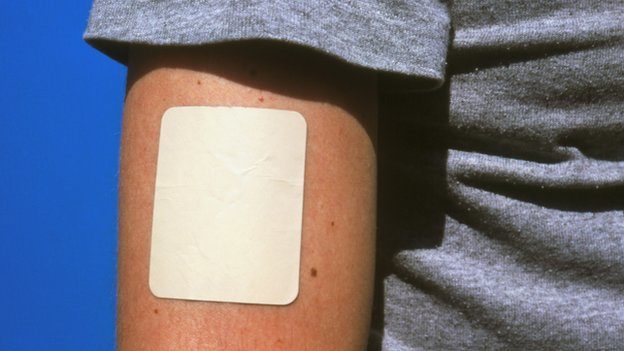
Clinical trial to use nicotine patches to treat chronic lung disease

nicotine patch
Doctors believe there is some good to be found in nicotine, the highly addictive drug in tobacco products. Lung experts at The Ohio State University Wexner Medical Center are testing whether nicotine can help people with a chronic inflammatory lung disease called sarcoidosis.

"It's tricky because it mimics other diseases. It's frequently misdiagnosed. Sarcoidosis can look like lung nodules, pneumonia, scar tissue, even lung cancer. It can involve other vital organs, and it differs from one person to the next," said Dr. Elliott Crouser, a pulmonologist specializing in sarcoidosis. Left untreated, the disease can cause severe lung damage and even death. Unlike most lung diseases, the main symptom isn't shortness of breath, but debilitating fatigue. Current treatments such as steroids often have side effects harsher than the symptoms of the disease itself. "We can't use the medications for very long before these side effects occur. They can be severe, such as the development of osteoporosis, cataracts, diabetes or high blood pressure and complications related to those," Crouser said. "We need better, more tolerable options."

So Crouser is leading a clinical trial at Ohio State Wexner Medical Center to test nicotine patches, normally used to help people stop smoking, as a potential treatment for sarcoidosis. A small initial study of the patches showed some benefit, and now Crouser is conducting a larger, randomized trial. The Cleveland Clinic is also participating in the study.

"Why nicotine? Around 2000, we learned two things. There was new evidence that nicotine is an anti-inflammatory, and from other studies we discovered smokers were less likely to get sarcoidosis," Crouser said. "So we're testing whether nicotine can be a solution. We hope people will actually get a secondary benefit - not only will their lung disease get better, but they'll feel more energized and have better quality of life."


Comment:


Coffee

Major study: Four cups of coffee a day could decrease your chances of early death

Freddie / Stockimo / Alamy
Britons consume around 55 million cups of coffee each day
Drinking four cups of coffee a day could slash the chance of early death, a major study suggests.

Research on 20,000 middle-aged men and women found that those who drank it regularly had mortality rates almost two thirds lower.

Previous studies have found that coffee can improve liver function, reduce inflammation and boost the immune system.

The new study suggests that it could reduce the chance of early death from all causes - by as much as two thirds.

Every extra two cups were associated with a 22 per cent drop in mortality - rising to 30 per cent among older patients in the study. And those drinking four cups had a 64 per cent lower death risk, compared with those who never or rarely consumed coffee.

Comment: Well, if the added caffeine doesn't upset your sleep cycles - sip away!

See also:


Footprints

Dancing is more effective at turning back the clock on aging than regular exercise

dancing seniors
Forget about all the supplements, holistic treatments, and superfood smoothies. Seniors who want to turn back the clock when it comes to aging and keep both their bodies and their brains healthy need only to take a trip to their local ballroom dance hall.

That's because a new study finds that while regular exercise helps keep us strong physically and mentally, dancing may be the most valuable form of physical activity - so much so that it actually has certain anti-aging effects more substantial than the benefits of general fitness.

Comment:


Health

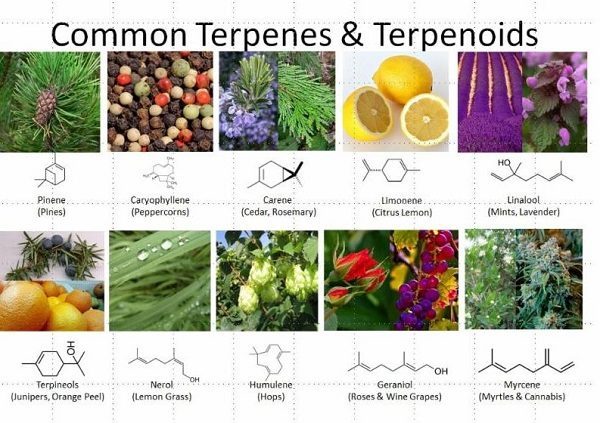
What are terpenoids and how can they benefit your health?

terpenoids
Traditional medical practitioners have known for millennia that plants have the power to prevent, treat or otherwise improve a number of medical conditions. Plants contain bioactive phytochemicals, such as tocopherols, polyphenols and ascorbic acid, which perform important functions in both plants and humans.

Terpenoids (aka isoprenoids) are another beneficial phytochemical - one that many people haven't heard of before. Out of the seemingly countless compounds in plants, terpenoids represent the largest and most diverse class of beneficial chemicals.1 More than 40,000 individual terpenoids exist, and new ones are discovered every year.2

Plants use terpenoid metabolites to support basic functions like growth, repair and development. However, according to research published in Advances in Biochemical Engineering and Biotechnology, they "use the majority of terpenoids for more specialized chemical interactions and protection."3

Among humans, terpenoids have long been valued for medicinal purposes in traditional Indian and Chinese medicines, and they've also been used for food, pharmaceutical and chemical purposes. The cancer drug Taxol and the antimalarial drug artemisinin are both terpenoid-based drugs,4 but the plant compounds are perhaps most well-known for being the main constituents of the essential oils in many plants.

Because they're responsible for the wide variety of plant flavors and aromas - from flowery and fruity notes to woody undertones - they're a sought-after commodity by the flavor and fragrance industries.5 Further, as noted by a study in the journal Recent Patents on Food, Nutrition & Agriculture:6

Sun

Anti-inflammatory effects of vitamin D can prevent heart failure

Vitamin D koji se unosi putem namirnica životinjskog porijekla efikasniji od vitamina D iz namirnica biljnog porijekla
More trials are needed to test vitamin D supplementation for the prevention of heart disease, say researchers behind a new study showing heart failure among the elderly is strongly associated with vitamin D deficiency.

In the absence of Vitamin D from sunlight, disease increases more than 1000 percent. Experts suggest that the chances of getting vitamin D from your diet are very low. And if you are a vegetarian, it is all the more difficult to gain vitamin D. What they repeatedly suggest is exposure to sunlight is the best source of vitamin D. Humans spend less time in the sun today than at any point in human history -- which is why more than 1 billion people worldwide are vitamin D deficient.

Humans make 90 percent of our vitamin D naturally from sunlight exposure to our skin -- specifically, from ultraviolet B exposure to the skin, which naturally initiates the conversion of cholesterol in the skin to vitamin D3.

Researchers have also discovered specific molecular signaling events by which vitamin D prevents inflammation. In their experiments, they showed that low levels of Vitamin D, comparable to levels found in millions of people, failed to inhibit the inflammatory cascade--a series of rapid biochemical events which propagates and matures the inflammatory response. However, levels considered adequate did inhibit inflammatory signaling.

Comment: See also:


No Entry

God help us all - Google is about to enter the dubious field of psychiatry

Google AI
In my work-in-progress, The Underground, here is what I wrote about Google: "They're clever, I'll give them that. They're saying you can search them for any information in the world, but they're really searching you."

Google has decided it's not doing enough to lead us into a better world. So now it's going to enter the field of psychiatry.

Engadget.com: Google is "offering a medically validated, anonymous screening questionnaire for clinical depression if you search for information on the condition. This won't definitively indicate that you're clinically depressed, to be clear, but it will give you useful information you can take to a doctor."

"Google and others are determined to fight fake news, and they know that the consequences of false or incomplete medical information could be serious. If you need help, they want to be sure you get the appropriate support."

Let's see if I can help Google fight false or incomplete medical information.

For example, be aware that there is no defining lab test for clinical depression.

No blood test, no urine test, no saliva test, no brain scan, no genetic assay.

Eye 1

The science behind why onions make us cry

onion tears
If you plan on making a salad, some kind of soup or a savory stir-fry, onions will most likely be part of the equation. You might also slice them into rings to place on sandwiches, or sauté them gently in coconut oil or grass fed butter until they're soft, translucent and absolutely delicious. But something else may be likely as well: When you're cutting or chopping them, before you get very far into the first onion, you're very likely to find your nose twitching and tears making your eyes smart.

Medical News Today suggests onions make your eyes spring a leak when you cut into them (or, to a lesser degree, other potent-smelling members of the allium family, such as garlic, chives, scallions and leeks) to discourage greedy predators from eating them. Whatever the reason, you can blame - or thank - specific volatile chemicals for giving onions their characteristic bold flavor and fragrance.

A perennial vegetable, onions form a bulb the first year, which happens to be quite flavorful and functions as the plant's energy store. The next year, they produce flowers and seeds, which keep the fragrance and cause the onion itself to keep reproducing.

Researchers have recently determined how it actually works. The eye-irritating factor released by chopping onions was once thought to be "cut loose," so to speak, by the enzyme alliinase, which breaks down into flavor molecules, and in the process, some are converted to lachrymatory factor (LF) by LF synthase.1 The journal Nature published the study, in which the researchers explained:
"Here we show that this factor is not formed as a by-product of this reaction, but that it is specifically synthesized by a previously undiscovered enzyme, lachrymatory-factor synthase. It may be possible to develop a non-lachrymatory onion that still retains its characteristic flavour and high nutritional value by downregulating the activity of this synthase enzyme."2

Health

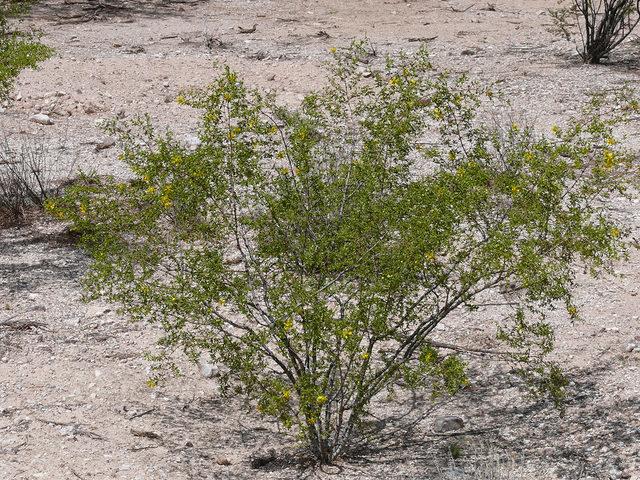
Creosote bush: Native American medicinal plant may be stronger than modern drugs

Creosote bush
A plant used for generations by natives in both the United States and Mexico may be better at treating certain parasitic infections than currently available pharmaceuticals, according to new research by scientists at the University of Colorado.

Researchers at CU's Anschutz Medical Campus teamed up with UC San Diego to study naturally-occurring compounds in the creosote bush, which is commonly found in the American Southwest. In native cultures, the plant has traditionally been used to treat a wide range of medical problems, including intestinal problems.