Health & WellnessS


Health

FDA approves first ever gene therapy to treat cancer

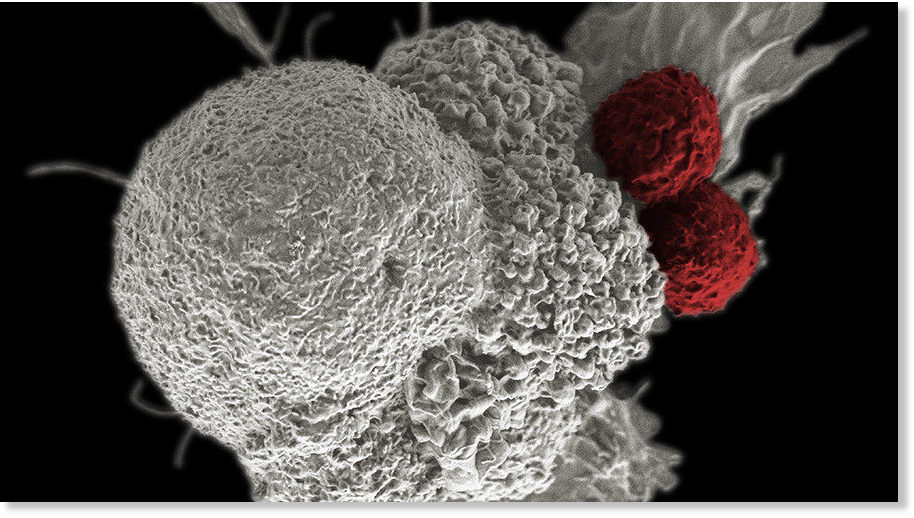
cancer cells
© National Cancer Institute Duncan Comprehensive Cancer Center at Baylor College of Medicine
The Food and Drug Administration has approved the first-ever gene therapy to treat cancer in the US. The treatment offers a totally new approach to fighting the disease and could lead to novel treatments of other serious and life-threatening maladies.

On Wednesday, the FDA approved a new leukemia treatment from the Swiss pharmaceutical company Novartis, which the agency said is "the first gene therapy available in the United States."

The treatment, called Kymriah, is a "genetically-modified autologous T-cell immunotherapy," where each dose is created by using the patient's own T-cells, a type of white blood cell known as a lymphocyte.

Each patient's T-cells are sent to a manufacturing center where they are genetically modified to include a new gene that contains a specific protein, called a chimeric antigen receptor (CAR). The CAR-T cells known as "a living drug," are then infused back into the patient, where they target and kill leukemia cells.
Health

Largest and longest study of mammography finds no benefit, screenings may harm more women than they help

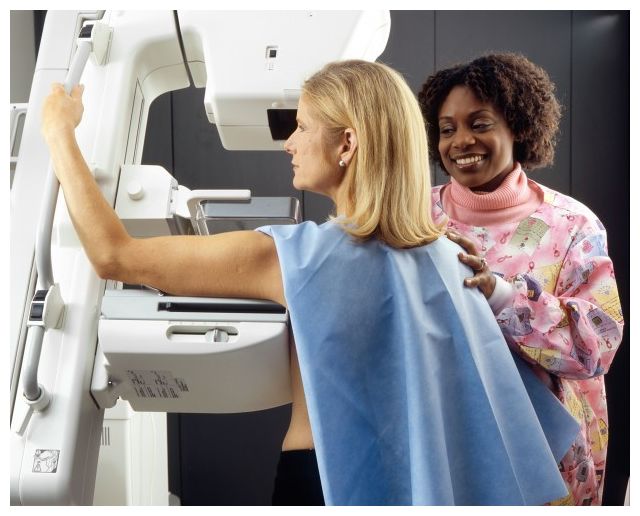
Mammogram
© Guardian Liberty Voice
It appears once again, major industry defenders will remain in complete denial and do anything possible to put profits before people.

An annual mammogram is the conventional go-to "prevention" strategy for breast cancer. But researchers increasingly agree that mammography is ineffective at best and harmful at worst.

Unfortunately, breast cancer is big business, and mammography is one of its primary profit centers. This is why the industry is fighting tooth and nail to keep it, even if it means ignoring the truth.

Several studies over the past few years have concluded that mammograms do not save lives, and may actually harm more women than they help, courtesy of false positives, overtreatment, and radiation-induced cancers.

The latest study to reach this conclusion is also one of the longest and largest. As reported by the New York Times:1
"One of the largest and most meticulous studies of mammography ever done, involving 90,000 women and lasting a quarter-century, has added powerful new doubts about the value of the screening test for women of any age.
It found that the death rates from breast cancer and from all causes were the same in women who got mammograms and those who did not. And the screening had harms: one in five cancers found with mammography and treated was not a threat to the woman's health and did not need treatment such as chemotherapy, surgery or radiation."

Comment: See also:


Take 2

Fatal addiction: Chris Hedges reports on America's opioid crisis

Opioid deaths
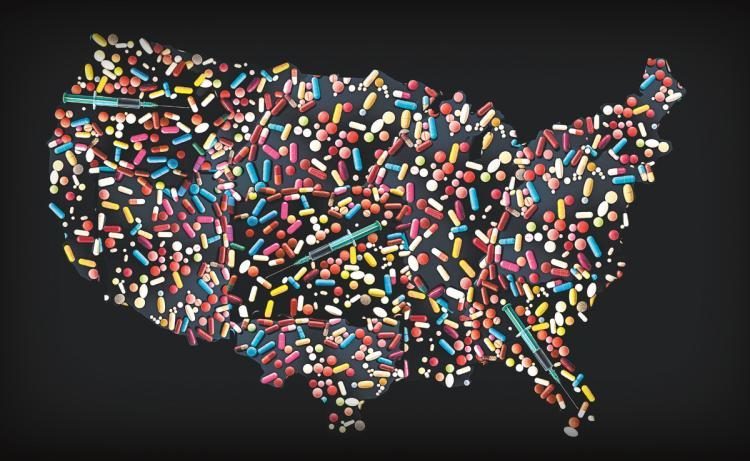
© New York Daily NewsOpiate overdoses in the United States are a public health catastrophe.
The American opioid crisis has been primed by Big Pharma's intentional flooding of their opioid products into our communities creating the initial circumstances of addiction. The crisis is supplied by the military-industrial complex whose Afghani opium poppy fields, controlled and guarded by US troops, supply upwards of 90 percent of the world's heroin. Heroin is turned to as the path of least resistance once pharma-addicted individuals run out of their opioid prescriptions, by systemic design. And finally, the American opioid crisis has been guaranteed by insurance companies with the help of Obamacare which does little to nothing to address root causes and cover proper rehab and treatment.

The tipping point is approaching if not here already. The window of opportunity to rescue an entire American generation from the combined effects of both an opioid crisis and an autism epidemic is limited as both have gripped this nation's children and young adults. Through their continued actions, both the American government and health system have shown that they would rather render our country's suffering generation invisible rather than provide any meaningful change.

Evil Rays

Cell phone tower hypocrisy: Rescuing firefighters not kids

cell phones

Editor's note: California is once again in a trendsetting legislative battle with dramatic implications for our collective public health. Big Telecom wants fewer impediments to deliver next generation connectivity: more, faster, e-ver-y-where. It's time to say: NO. The technology we love is harming us and, most of all, our precious children who absorb ten times more radiation than adults, with their thinner skulls and higher water- and ion-content brains.
Please share this post widely.

Dear Gov. Jerry Brown,

I have a story to share with you. It involves inside information from the telecommunications industry; firefighters and what their brains look like following a five-year exposure to a cell tower outside their station; and a bill currently flying through the California Senate and Assembly.

SB 649 is going to land on your desk sometime in early September.

Beaker

Monsanto Toxicity: It ain't Glyphosate, it's the additives!

Monsanto
Sometimes your future food is so poisonous that it’s dangerous for you to get anywhere near it.
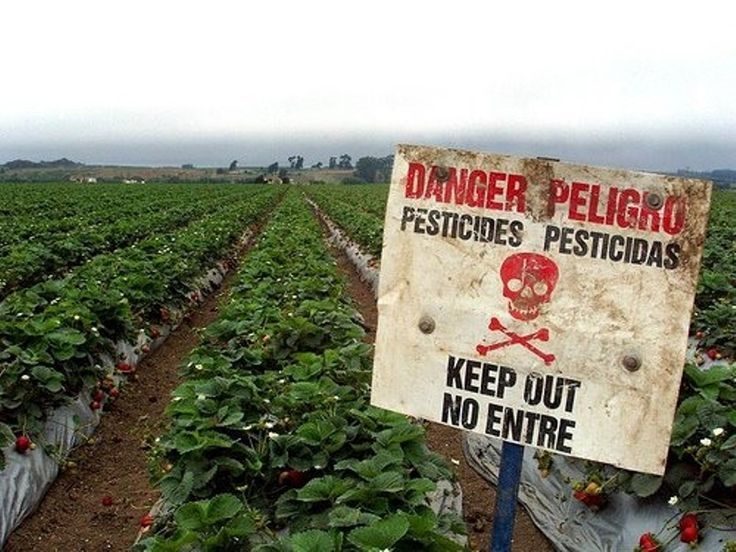
Famously corrupt and unscrupulous, Monsanto Corporation has now been discovered in covering up the highly toxic effects of the secret additives it combines with glyphosate in Roundup, the world's most-used herbicide. The IARC, an agency of the World Health Organization, released a report in March, 2015 that declared the chemical glyphosate to be "probably carcinogenic to humans (Group 2A)." They were not provided tests that included the effects of glyphosate combined with specific trade secret additives. Monsanto is desperate to hide the true carcinogen in its Roundup weed-killer.

Glyphosate is the largest component of Monsanto Roundup, the world's largest weed-killer and the toxin mandated in every Monsanto Genetically Manipulated (GMO) planting. But what Monsanto refuses to disclose is what additives it uses, otherwise termed surfactants or adjuvants, ostensibly to give the glyphosate a "turbo" weed-killer effectiveness boost.

Comment: Not so inactive: So-called inert ingredients make Roundup far more toxic than glyphosate alone


Health

Soy formula is a formula for disaster

bottle feeding baby
The food you feed your baby during his or her first years has an enormous impact on their development and long-term health. I strongly encourage all mothers to do everything possible to exclusively breast-feed for least six months or longer for this reason, as breast-feeding has tremendous benefits for both mother and child. It may even be a good idea to begin planning for successful breast-feeding before your baby is even born. If it turns out you can't breast-feed, then you can't, but it's good to have an optimal goal.

La Leche League1 is a great resource whether you want to prepare beforehand or find you're having trouble breast-feeding once your baby is born. Also find out whether your hospital of choice offers breast-feeding classes and lactation consultants. If it doesn't, you may want to select a hospital that offers greater support. If for whatever reason you're unable to breast-feed, or you have adopted your newborn, donated breast milk may be an option.

Like the Weston A. Price Foundation (WAPF), I do not recommend using human milk banks, though, as they require the milk to be pasteurized. An alternative may be to work with a physician or pediatrician who is willing to help you find a safe milk donor, and who will be involved in a screening process to ensure the milk is safe. If neither breast-feeding nor milk donation work out, your next best bet is to make your own infant formula.

Syringe

Another failure in the making: Researchers are testing a vaccine to treat opioid addiction

vaccine
Is the next attempt to treat opioid addiction a vaccination? Well, some researchers certainly think so. Score another point for the pharmaceutical companies.

Researchers are coming up with a new vaccine that would render the effects of opioids null and void in the body. The vaccine is said to offer protection from the effects of both heroin and the synthetic opioid fentanyl. The new vaccine is currently under development by researchers in the United States and its creators say that one day, this vaccine could help curb addiction and even possibly prevent fatal overdoses. Researchers say this new vaccine will make the brain immune to mind-altering chemicals and it could be the key to ending the opioid crisis.

Drug overdoses, more specifically, opioid overdoses, in the United States are feared to have caused more than 60,000 deaths in 2016. How incredibly ironic that the very industry that fueled this crisis now has the solution to the problem...

Health

Chronic constipation is on the rise

constipation
For most people, an occasional bout of constipation is a minor aggravation. However, this is not the case for the nearly 15 percent of the U.S. population suffering from chronic constipation.1 This means 63 million people have difficulty passing hard, dry, lumpy stool, suffer from feeling bloated, have abdominal pain or feel as if there is something stuck in their rectum or intestines.2

For many, the topic of their bowel movements is a private matter. This makes understanding and learning about the actual mechanics of how stool is produced and eliminated difficult, as many don't find it a topic they want to discuss, even with their physicians.

The number of stools you have each week is closely linked to the types of food you eat, the amount of exercise you get and your hydration status. While many people may have a bowel movement once a day, the normal amount ranges between four times each week to several times a day.3 What differentiates infrequent stools and constipation is the consistency of the stool, the difficulty in passing it and other symptoms you may experience, such as bloating or feeling full.

Unfortunately, the number of people who suffer from chronic constipation is rising, leading to a characterization of the condition as a "silent epidemic" as those who suffer often suffer in silence.

Health

Nine day sugar-free diet cut fatty liver in children by 20 percent

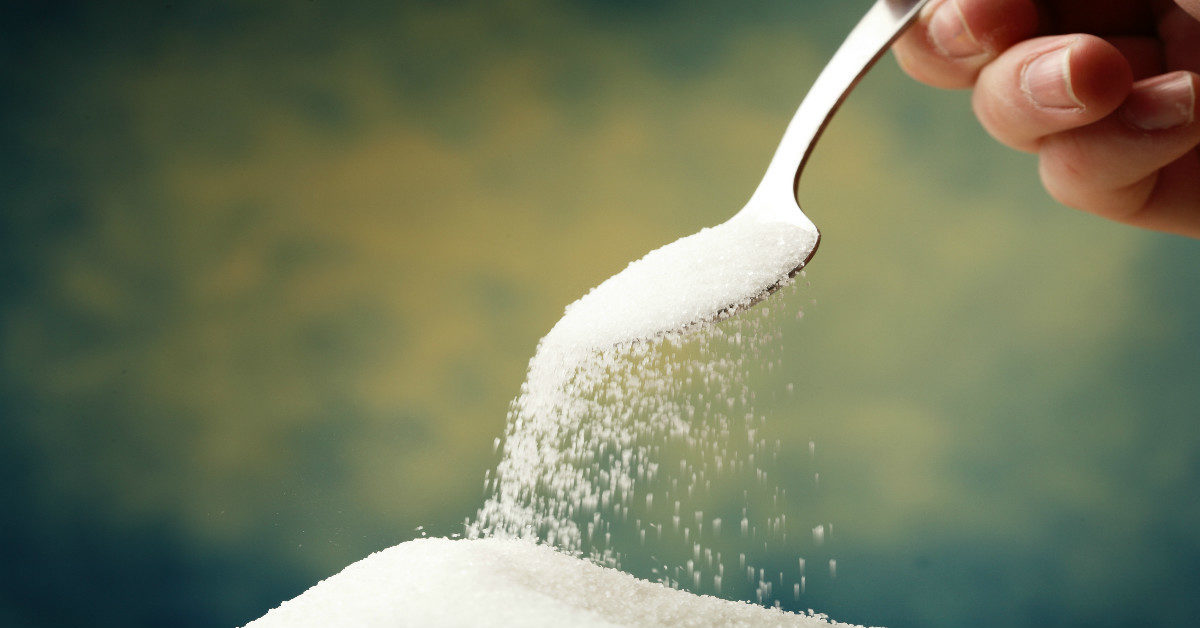
sugar
In a nine-day experiment, researchers from Touro University and UC San Francisco found that a diet with reduced sugar cut liver fat by more than 20 percent.

Cutting out the sort of sugar commonly found in soft drinks, fruit juices and processed foods reversed the buildup of liver fat in children and adolescents, a condition closely tied to diabetes and heart disease.

Fatty liver disease in youth has more than doubled in the past two decades, leading to increased insulin resistance. That, in turn, reduces a person's ability to control blood sugar, which leads to Type 2 diabetes. The findings were published in the journal Gastroenterology.

Said lead author Jean-Marc Schwarz: "Our study clearly shows that sugar is turned into fat, which may explain the epidemic of fatty liver in children consuming soda and food with added sugar. And we find that fatty liver is reversed by removing added fructose from our diet."

Comment: See also:


Bacon n Eggs

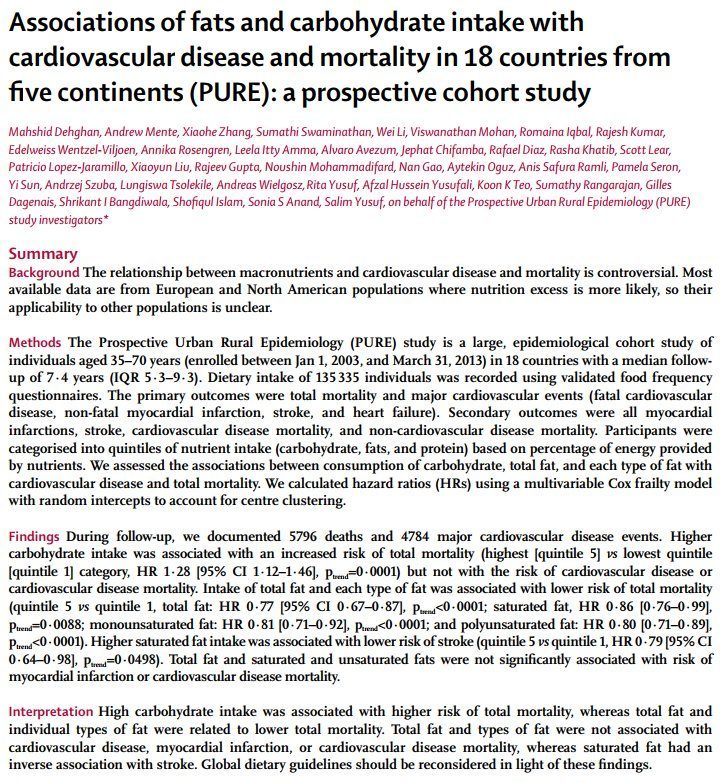
Largest-ever epidemiological study (PURE) shakes up nutritional field: High fat intake beneficial

PURE study
© Lancet
A new study of dietary habits in 135,000 people around the world is set to shake up the nutrition field, with results showing high fat intake-including saturated fat-was associated with a reduced risk of mortality.

The PURE study, which followed participants from 18 countries for 7 years, also found that high carbohydrate intake was associated with an increased risk of mortality, although the data do not discriminate between processed and unprocessed carbohydrates.

While the study found a beneficial effect of increasing consumption of fruit, vegetables, and legumes on mortality, the maximum benefit was seen at three to four servings a day (equivalent to 375-500 g/day), with no additional benefit with higher intakes. The benefit from fruit, vegetables, and legumes was greater if they were eaten raw rather than cooked.

There was no association of either fat (total or saturated) or carbohydrate intake or fruit/vegetable/legume intake with major cardiovascular-disease events.