Health & WellnessS


Megaphone

Hearing voices? Your brain may just be better able to pick up hidden sounds

hearing voices
Researchers in the United Kingdom say they've discovered that such individuals use unusual skills when their brains process sound and that such 'voice-hearers' may be able to detect disguised speech-like sounds more quickly and easily than folks who had never had a voice-hearing experience. It suggests their brains tend more readily to detect meaningful speech patterns in ambiguous sounds.

Misophonics have shown distinctive brain activity whenever they hear their trigger sounds, but authors say that hearing voices are another part of the brain's tuning in mechanisms.

Said lead author Dr. Ben Alderson-Day, from Durham University's Hearing the Voice project: "These findings are a demonstration of what we can learn from people who hear voices that are not distressing or problematic. It suggests that the brains of people who hear voices are particularly tuned to meaning in sounds, and shows how unusual experiences might be influenced by people's individual perceptual and cognitive processes."

The findings lend insight into the brain processes of voice-hearers and could help researchers find better ways to help people who find the voices troubling. The U.K. study involved people who hear voices -- or, auditory verbal hallucinations -- but otherwise have no mental health problems.

Brain

Brain regeneration: Why it's real & how to do it

the brain
Have you ever wished you could regenerate those brain cells you sacrificed in college? Do you fear that your aging brain is in a perpetual state of decline? Medical science is being rewritten to show that we CAN improve the health of our brain, and that repairing damage is not only possible, it's something anyone can do.

It is a commonly held misconception that the brain is beyond repair. Even the medical establishment has asserted that once we kill brain cells, they are gone forever. The fact is, the brain can repair itself, and as science is now proving, there is real benefit to simple practices that can help keep our brains sharp and elastic throughout our lifetime.

Rewriting the Story of Brain Health

The field of cognitive neuroscience is relatively new - only around one hundred years old - so it's no surprise that we are constantly arriving at a newer and better understanding of how the neural circuitry of the human brain supports overall brain functioning.

For most of those one hundred years, it was believed that once damaged, the brain could not regenerate. Brain cells were finite, and any loss or injury would be suffered as a deficiency for the rest of that person's life. This created a false belief that the brain is essentially in a perpetual state of decline.

Health

Vitamin C found to regulate the action of leukemia stem cells

vitamin C
The life of a stem cell is still a mystery to scientists. Stem cells are the pervasive cells that "seed" new cancer cells, feed fatal tumors and often evade treatment. But recent research is intrigued with the effects of vitamin C on leukemia stem cells.

A new study from the Children's Medical Center Research Institute at UT Southwestern (CRI) has found that stem cells take up unusually high levels of vitamin C, which then regulates their function and suppresses the development of leukemia.

Dr. Sean Morrison, the Director of CRI said:
We have known for a while that people with lower levels of ascorbate (vitamin C) are at increased cancer risk, but we haven't fully understood why. Our research provides part of the explanation, at least for the blood-forming system.
The trick for learning about stem cell metabolism is for scientists to find a large enough of them to study - but it's apparently rare to find them in each tissue of the body.

Yet, this study broke ground in that development with new techniques they write about in the recently published study in Nature. Incredibly, the researchers can now routinely measure metabolite levels in rare cell populations such as stem cells.

Biohazard

France: Nine dogs dead as Loire river algae worsens

river dog
Two more dogs have died since the bacteria was officially confirmed.
More dogs have died after coming into contact with contaminated water from the Loire river in Maine-et-Loire.

The river, which was last week confirmed as containing cyanobacteria from algae - namely the oscillatoria and formidium bacteria - has been especially affected this summer, threatening the safety of normal riverside activities such as fishing, swimming, and dog-walking.

So far, 12 dogs have been reported as affected by respiratory and neurological problems after swimming in or drinking the river water, with nine dead so far across the department.

One other pet dog death in the Indre-et-Loire is also being linked to the algae, marking two more dog deaths in total since the bacteria was first confirmed last week.

Although the phenomenon has previously been seen in the Landes and in Brittany, it has reached unprecedented levels in Maine-et-Loire this year.

The algae is known to grow on rocks on river beds, and in the right weather conditions - including in high temperatures - can come to the surface and become dangerous.

Pets and other small animals are especially at risk of death, but humans in significant contact with the bacteria can also suffer from skin irritation, stomach cramps, nausea, diarrhoea, fever, angina, muscular pain, mouth sores, and liver damage.

Shoe

Health experts state that Brits are in the midst of a laziness epidemic

sleeping man
© Getty ImagesAlmost half of over 16s are so sedentary they do not even manage a ten-minute walk once per day, according to heath bosses.
Britain is in the grip of an 'inactivity epidemic', with nearly half of adults failing to go for a brisk walk even once a month.

Health bosses say 45 per cent of over-16s are so sedentary they do not manage the health-boosting ten-minute walk.

Public Health England (PHE) officials are especially worried about more than 6 million inactive people aged between 40 and 60 who are putting their busy lives ahead of their health.

In a major change of strategy, they said inactive people should start aiming simply to get out for a short walk each day - rather than the more ambitious 150 minutes of exercise a week that has dominated NHS advice for years.

They said the British population was 20 per cent less active now than in the 1960s, and the average person walked 15 miles less a year than they did just two decades ago.

Newspaper

New decision in US vaccine court SIDS case is significant

sleeping baby
Not reported by any major media outlet was a recent July 10th decision by the Office of Special Masters of the U.S. Court of Federal Claims, known as the vaccine court, that sufficient evidence was put forth to rule that vaccination caused a child to die from Sudden Infant Death Syndrome (SIDS).

In order to better understand this decision by the vaccine court, it helps to consider some additional points first. Vaccines are indeed not safe. Not only do the manufacturers' vaccine inserts include a laundry list of severe adverse reactions but, since its inception in 1986, the vaccine court has also begrudgingly paid out nearly $4 billion in compensation for injuries and deaths deemed to be a direct result of vaccines.

The National Childhood Vaccine Injury Act of 1986 established a National Vaccine Injury Compensation Program (NVICP) to compensate vaccine-related injuries and deaths. Congress initially designed the NVICP to supplement the state law civil tort system as a simple, fair, and efficient means for compensating vaccine-injured people. The program was meant to award compensation quickly and easily. Unfortunately, independent investigation and countless horror stories from individuals who have experienced the vaccine court process have demonstrated clearly that the program is deeply flawed and highly adversarial towards petitioners. There is no jury trial within the vaccine court as it consists of administrative processes, sometimes resting solely upon the bias of the appointed special master overseeing the case.

Cheeseburger

Documents reveal FDA safety concerns over fake meat burger

The Impossible Burger
Three years ago, I wrote about the safety questions looming over the meat substitute known as Quorn, a fungus-based ferment that hit the U.S. market in 2002. Quorn was originally developed by Imperial Chemical Industries, one of the largest chemical companies in the U.K. The fungus used to make quorn is Fusarium venenatum, which is Latin for "venomous."

Since its inception, a number of studies1 have raised concerns about Quorn's safety, especially in people with food- and/or mold allergies. An early study by the manufacturer found 10 percent of 200 human subjects developed nausea or stomachache after eating Quorn.2 The Center for Science in the Public Interest (CSPI) maintains an adverse report collection site for Quorn-related illnesses, which include:3
  • Nausea
  • Cramps and/or diarrhea
  • Forceful vomiting
  • Anaphylactic reactions
  • Death4
Enter the Impossible Burger

The Quorn brand now has competition from Impossible Foods and its meatless, "bleeding" burger.5,6,7,8,9 Contrary to lab grown meat 10 (which may hit the U.S. market as early as next year 11), this meat substitute contains a mix of soy, wheat, coconut oil, potatoes and "heme," the latter of which is derived from genetically engineered yeast.

Impossible Foods was founded in 2011 by Pat Brown, a Stanford University chemist. A primary ingredient in the Impossible Burger is genetically engineered soy leghemoglobin, which releases a heme-like protein when broken down. This protein is what gives the plant-based patty its meatlike look, taste and texture, and makes the patty "bleed" when cooked.


While the company refers to it as "heme," technically, plants produce non-heme iron, and this is technically GE yeast-derived soy leghemoglobin.12 Heme iron only occurs in meat and seafood. A main difference between heme and non-heme iron has to do with its absorbability. Plant-based non-heme iron is less readily absorbed. This is one of the reasons why vegans are at higher risk of iron-deficiency anemia than meat eaters. Moreover, while soy leghemoglobin is found in the roots of soybean plants, the company is recreating it using GE yeast. As explained on the company website:13

Water

60 million Pakistanis threatened by toxic ground water

Getting Water from Well
© Tasawar Khanam, COMSATSCollection of samples from a dug well in the Gujrat district of Punjab province in Pakistan.
The largest ever assessment of water quality in Pakistan has found that as many as 60 million people are at risk because of high concentrations of arsenic in ground water on the Indus Plain.

The study, conducted by a team led by Joel Podgorski from the Swiss Federal Institute of Aquatic Science and Technology, measured arsenic concentrations from 1200 sites across the country, most of them hand- and motor-operated pumps.

Using the test results, Pogorski and colleagues then constructed a "hazard map", factoring in statistical estimates of arsenic movement through groundwater. The results suggest that much of the Indus Plain contains arsenic levels above the maximum recommended by the World Health Organisation (WHO).

The study - published in the journal Science Advances - confirms and extends the results of recent previous, smaller studies.

In February this year the journal Environment International published a paper assessing the health risks posed by consuming a diet based on arsenic-laced water in Pakistan.

The research, led by Hifza Rasheed of the University of Leeds, UK, used questionnaires to establish the average intake of water, rice and wheat per person. It found that daily water and wheat consumption were both higher than current WHO recommendations, while rice intake was below par.

Syringe

End of Polio and Ebola? Scientists may be close to developing groundbreaking vaccine using plants

Polio vaccine
© Sputnik/Igor Zarembo
One of the scientists behind the research that might help to defeat Zika, Ebola and polio revealed to Sputnik details about a new breakthrough vaccine.

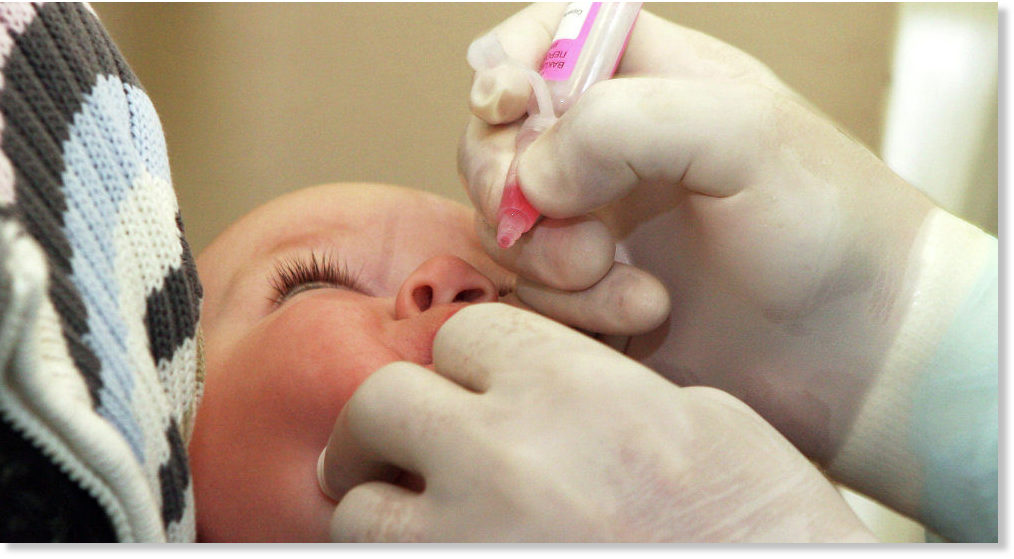
Scientists have started using plants to make a polio vaccine. The team of researchers at the John Innes Centre developed a process that is cheap, easy and quick.

Radio Sputnik discusses the issue with Dr. Johanna Marsian, a project manager for human and viral vaccines at German biopharmaceutical company IDT Biologika, who was one of the scientists behind the research.

"It is a very significant result, especially for plant-based research. It is a huge discovery, because it has a huge impact. Polio is known worldwide as a horrific disease," Marsian told Radio Sputnik.

Christmas Tree

Exploratory study finds marijuana use tied to increased risk of hypertension

marijuana plant
© Nir Elias / Reuters
Marijuana use may be a cause of high blood pressure, a new study reports.

Researchers studied 332 deaths among 1,213 people participating in a larger health study, of whom 57 percent were marijuana users. They had used marijuana for an average of 12 years, and the longer they used it, the more likely they were to have hypertension. The study is in the European Journal of Preventive Cardiology.

After controlling for many health and behavioral variables, including a prior diagnosis of high blood pressure, they found that compared with nonusers, marijuana users had more than three times the risk of death from hypertension-related causes.


Comment: In order to understand whether three times the risk is in fact significant, we need to know what the risk is for non-users. If the risk were say 1 in 1 million, then usage is no big deal. If on the other hand the risk for a non user was 1 in 100 then suddenly three times the risk IS a big deal. By itself though, the description (three times the risk of death) does not actually tell us anything meaningful.


In addition to being a risk for heart disease, hypertension can lead to kidney disease, heart failure and aneurysm. The scientists also noted a link to cardiovascular disease and stroke, both also caused by hypertension, but it was not statistically significant.

The researchers acknowledge the difficulty of measuring frequency and quantities of marijuana use, and the likelihood that illegal use is underreported. The lead author, Barbara A. Yankey, an epidemiologist at Georgia State University, urged caution in interpreting what she called "an exploratory study."

Still, she said, "There is a possibility that marijuana use is related to deaths with hypertension as an underlying cause. People who use marijuana should have regular medical checkups to assess their cardiovascular health."