Health & WellnessS


Health

Natural ways to safeguard bone health

bones
© Getty Images
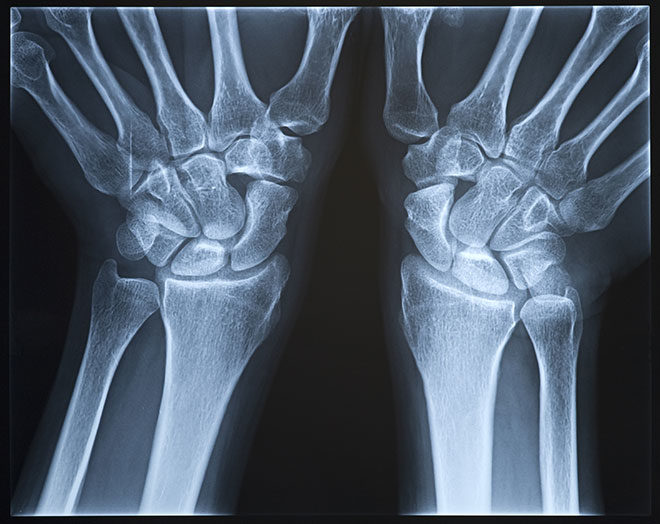
Osteoporosis is a common problem, affecting an estimated 1 in 10 women worldwide at the age of 60.1 By the time a woman reaches the age of 80, she has a 2-in-5 chance of developing osteoporosis. In most people, sometime during your 30s your bone mass will start to gradually decline. For women, that bone loss can significantly speed up during the first decade of menopause.

Statistics suggest that, worldwide, 1 in 3 women and 1 in 5 men over the age of 50 will experience an osteoporosis-related bone fracture. In 2000, there were 9 million osteoporotic fractures, including 1.6 million hip fractures - a quarter of which occurred in men - which can lead to a significant decline in health and quality of life. Hip fractures can also be life-threatening. Twenty percent of those who break a hip die in the first 12 months following the fracture.

Statistics also reveal that osteoporosis is becoming more prevalent. In the decade between 1990 and 2000, the number of hip fractures increased by 25 percent worldwide.2 So, what can be done about this problem? It's important to realize that osteoporosis is preventable by "proper living," meaning eating right, getting nutritional movement and effective exercise.

Weight-bearing exercises are particularly important for the prevention of osteoporosis, which is characterized by porous and fragile bones. Unfortunately, drugs are typically the first-line remedy recommended by conventional doctors. This is tragic, considering these drugs do more harm than good.

Health

Fasting is the new frontier in longevity research

rhesus monkeys
© Jeff Miller/University of Wisconsin-MadisonA rhesus monkey on a calorie-restricted diet (left) and a control group monkey (right) who were subjects in a pioneering long-term study of the links between caloric restriction and aging at the University of Wisconsin's Wisconsin National Primate Research Center.
People have been losing weight by counting calories for years. But some recent medical studies are trying to prove that if you want the ultimate benefit of better dietary habits - less diseases and a longer life - your body may need to think you're eating less often, too.

Longevity scientists are studying food fasting to find out if regular periods of going without any food, or making your body think you are going without food, could be a key to lengthening the human lifespan.

"When you consume calories also plays a role," said Sebastian Brandhorst, data analyst at the Longevity Institute, based at the University of Southern California, who is involved in pioneering studies with what is called the fast-mimicking diet (FMD), a way to eat that tricks the body into thinking that a person is fasting.


Backers of the research say the results are encouraging. Under the direction of the Longevity Institute's Dr. Valter Longo, a fasting diet has been tested on yeast, rodents and a small group of humans. The effects produced lead researchers to argue for larger clinical trials in humans. Longo also has launched a for-profit start-up business, L-Nutra, to sell the fasting diet to the public.

Hearts

Woman suffers from a broken heart after the loss of her beloved dog

Meha the terrier
© Joanie SimpsonA Texas woman suffered “broken-heart syndrome” following the death of her Yorkshire terrier, Meha.
Joanie Simpson woke early one morning with a terrible backache. Her chest started hurting when she turned over.

Within 20 minutes, she was at a local emergency room. Soon she was being airlifted to a hospital in Houston, where physicians were preparing to receive a patient exhibiting the classic signs of a heart attack.

But tests at Memorial Hermann Heart & Vascular Institute -Texas Medical Center revealed something very different. Doctors instead diagnosed Simpson with Takotsubo cardiomyopathy, a condition with symptoms that mimic heart attacks. It usually occurs following an emotional event such as the loss of a spouse or child. That link has given the illness its more colloquial name: broken-heart syndrome.

In Simpson's case, the event that she says tipped her over the edge was the recent death of her beloved Yorkshire terrier, Meha.

"I was close to inconsolable," she said. "I really took it really, really hard."

Comment: See also:


Book 2

Where pain lives - 'The reign of pain is mostly in the brain'

back pain
For patient after patient seeking to cure chronic back pain, the experience is years of frustration. Whether they strive to treat their aching muscles, bones and ligaments through physical therapy, massage or rounds of surgery, relief is often elusive - if the pain has not been made even worse. Now a new working hypothesis explains why: persistent back pain with no obvious mechanical source does not always result from tissue damage. Instead, that pain is generated by the central nervous system (CNS) and lives within the brain itself.

I caught my first whiff of this news about eight years ago, when I was starting the research for a book about the back-pain industry. My interest was both personal and professional: I'd been dealing with a cranky lower back and hip for a couple of decades, and things were only getting worse. Over the years, I had tried most of what is called 'conservative treatment' such as physical therapy and injections. To date, it had been a deeply unsatisfying journey.

Attention

Air and water pollution is killing millions of people a year and the world is reaching 'crisis point'

air pollution smog
© AFPGlobally, nine million people died in 2015 as a result of air pollution.
Pollution is killing 50,000 people a year in the UK, according to a damning new report, which lays bare the toxic danger posed by contaminated air and water.

The problem is responsible for more deaths in Britain than almost all of its Western European neighbours, the study says, and suggests a higher death toll in the UK from pollution than had been feared.

Experts had previously estimated that 40,000 people were dying in the UK from air pollution, which itself had led to calls for immediate action from the Government. The new findings, from a two-year project involving more than 40 international researchers, show the world's air quality is reaching "crisis point" and must be dealt with urgently.

Comment: Yet the mainstream media and conventional health pundits drone on and on about smoking.


Arrow Up

About time: Cancer therapy undergoing a rethink as fasting and dietary interventions show promising results

cancer
Could fasting and ketogenic diets make conventional cancer treatment safer and more effective and cut the "financially toxic" high costs?

World authorities on cancer causes and best treatment and prevention methods believe so. They flew into Paris for the recent Rethinking Cancer conference at France's Gustave Roussy Institute.

Topics discussed included immunotherapy, autophagy (the body's natural "clearing house" of debris) and longevity medicine. Age is a big cancer risk factor. Speakers showed that methods to extend healthier lifespans also offered protection from cancer.

High on the event menu were ketogenic diets (high fat, low carbohydrate, moderate to low protein), stem cell therapy advances, anti-angiogenesis (stopping cancer's blood supply) and the metabolic model of cancer. The model holds that cancer is not genetic; it's a mitochondrial, metabolic disease.

Comment: There is abundant evidence showing the effectiveness of dietary and nutritional interventions in the successful treatment of cancer. The primary reason why these approaches have not received more attention is that the 'cancer industry' is far too lucrative for the medical establishment.


Health

Madagascar Plague outbreak has killed 57 and infected over 600 according to WHO

Madagascar Plague
An outbreak of the plague in Madagascar is spreading at an unprecedented rate. With the ease of spreading the plague, the likelihood that this disease will move to other more densely populated regions of the planet has become a huge concern for many.

So far, the plague has claimed 57 lives and infected more than 680 others. These figures are from October 12, however, and the disease is spreading rapidly. An estimated 329 of these cases and 25 of the deaths were in the capital city of Antananarivo. Of the 684 cases reported as of October 12, 474 were the pneumonic plague, 156 bubonic and 1 septicemic plague. A further 54 were unspecified, according to the World Health Organization. Of Madagascar's 114 districts, 35 have reported cases of plague, including at least 10 cities.

Plague is caused by infection with the bacterium Yersinia pestis and is typically spread through the bite of infected fleas, frequently carried by rats. The bacteria will eventually end up causing the often fatal plague. Symptoms can include painful, swollen lymph nodes, called buboes, as well as fever, chills, and coughing. Pneumonic plague is more virulent or damaging and is an advanced form of the disease characterized by a severe lung infection. The infection can be transmitted from person to person via airborne droplets from coughing or sneezing. The incubation period is extremely short too, and an infected person may die within 12 to 24 hours of contracting the bacteria making cures in underdeveloped regions of the globe difficult at best.

Comment: See also: Plague spreading rapidly in Madagascar warns WHO


Water

Three healthy benefits of distilled water

water distillers
Distilled water is water that's been purified of contaminants through distillation. The process is relatively simple; water is brought to a boil and converted to steam. The steam flows through cooling tubes and condenses back into pure water. This is different than simply filtering water in that this process removes all potentially harmful organisms and chemicals. As you may imagine, there are benefits to drinking and using distilled water beyond superficial smell and taste improvements.

1. Removing Contaminants

The most important health benefit distilled water offers is the elimination of water borne contaminants that may potentially be found in water. Drinking contaminated water is one of the fastest ways to spread disease, toxic metals and industrial pollutants. By removing the contaminants from water through distillation, we can help alleviate the risk of future illnesses and toxic buildup.

Comment: The water supply contains a cocktail of contaminants -- what to do?


SOTT Logo Radio

SOTT Focus: The Health & Wellness Show: Chinese Medicine, Acupuncture & Somatic Therapy: Interview With James and Linnéa Lovinsky

acupuncture
Today on the Health and Wellness Show, we interview Doctors of acupuncture and Traditional Chinese Medicine Linnéa Snyder (L.Ac. MSTCM) and James Lovinsky (L.Ac. MSTCM).

Linnéa currently practices in the state of Rhode Island. She was first drawn to acupuncture after receiving it as a teenager and noticing its widespread effects. Most notably, she loves the way it balances one's nervous-system and can clear emotional build-up without the necessity of attaching or sharing about the feelings or pain. Linnéa is interested in women's health, psycho-emotional disorders and stress induced illnesses. James came upon acupuncture during a very stressful period in his life. After trying several modalities to treat his own stress-induced health concerns, he settled on acupuncture. Upon changing his career and beginning acupuncture school he realized that Chinese medicine offered many treatments that could give patients an alternative to drugs and surgery. James is interested in pain management, digestive disorders and psycho-emotional health.

Linnéa and James met on their first day of acupuncture school. Both received their training in Boston at the New England School of Acupuncture and in San Francisco at the American College of Traditional Chinese Medicine. In addition to acupuncture, their training includes herbal medicine, nutrition, and treatment modalities like cupping, moxabustion and massage. Recently they learned the M-Test somatic response technique developed by Dr. Yoshito Mukaino, MD.

Join us for a fascinating discussion about acupuncture, Chinese medicine and somatic therapy.

Running Time: 01:50:52

Download: MP3


Here's the transcript of the show:

Pills

Mouse study suggests dietary supplement glucosamine could dampen brain's hyperexcitability seen in seizures or epilepsy

Brain
Seizure disorders - including epilepsy - are associated with pathological hyperexcitability in brain neurons. Unfortunately, there are limited available treatments that can prevent this hyperexcitability. However, University of Alabama at Birmingham researchers have found that inducing a biochemical alteration in brain proteins via the dietary supplement glucosamine was able to rapidly dampen that pathological hyperexcitability in rat and mouse models.

These results represent a potentially novel therapeutic target for the treatment of seizure disorders, and they show the need to better understand the physiology underlying these neural and brain circuit changes.

Proteins are the workhorses of living cells, and their activities are tightly and rapidly regulated in responses to changing conditions. Adding or removing a phosphoryl group to proteins is a well-known regulator for many proteins, and it is estimated that human proteins may have as many as 230,000 sites for phosphorylation.

Comment: See also: Treatment of epilepsy: Ketogenic diet often better than drugs