Health & WellnessS


Microscope 1

Are cancer stem cells the key to discovering a cure?

cancer cell

The root cause and potential cure for cancer is ignored by virtually all conventional oncologists despite an accumulating body of research that we already have the answer.


From the perspective of conventional cancer treatment a diagnosis of multi-drug resistant cancer is equivalent to a death sentence. By the time such a diagnosis occurs, the patient's body has been irreversibly damaged by chemotherapy and radiation, and an even more aggressive cancer has emerged to take the place of the original one.

Tragically, these treatments do not simply fail, but make the cancers more malignant. This fact is effectively concealed by the name multidrug resistant cancer which makes it seem as if the cancer was so exceptionally resistant and malignant that the normally effective drugs used to treat it just couldn't do the job.


Health

How to detoxify plastics from your body

entgiftung, detox
As we discussed in the first article, over accumulation of phthalates in the body has the potential to be a major contender for a series of health challenges.

One of the first questions I am commonly asked is where am I getting this exposure from?

Exposure to plasticizers can come from skin absorption of cosmetics, body lotions, hair gels, shampoos, and deodorants. You can ingest them from water, PVC (water) pipes, detergents, and foods. We also can inhale them from airborne adhesives and glues, building materials, school/business supplies, furnishings, auto interiors, solvents, plastics, lubricants, insect repellants, vinyl flooring, carpet tiles, vinyl wallpaper, body toiletries, artificial leather, adhesives, dyes, and toys. Don't forget that plastics coat every wire in the electrical systems of our homes, offices, appliances and computers. As the wires heat, the plastic coating outgases into the air.

So as you can see, plastics are everywhere and, to be quite honest, they are difficult to avoid.

The best most people can do is to be certain they are doing everything they can to effectively and efficienctly eliminate any build-up of plastics (phthalates) in the body.

Comment: The Health and Wellness Show - Detox Protocols


Health

Make sure your collagen is organic

collagen drink
Dull, wrinkled, sagging skin and dry, brittle hair and nails - all of these are signs of aging, which in large part can be attributed to the loss of collagen that occurs naturally with age. Collagen is the most common and abundant of your body's proteins, comprising about 25 percent of the total protein in your body, and up to 80 percent of your skin, in terms of dry weight.1

It's found specifically in the connective tissues throughout your body, from your muscles, bones and tendons to your blood vessels and digestive system. As a compound of essential amino acids, there's only one way to get collagen; your body can't produce it, so you must obtain it through your diet. Most people, however, will simply reach for a collagen supplement rather than boiling down chicken feet or beef bones for a homemade collagen-rich broth.

But what are you really getting in these supplements? Recent laboratory testing stirred up controversy with popular collagen and bone broth products results revealing potential contaminants - including antibiotics, prescription drug metabolites, parabens, steroids and insecticides.

Troublesome Contaminants Found in Many Nonorganic Collagen Products

The collagen products in question were selected based on their popularity and sales ranking on Amazon.com, and all were nonorganic. The results indicate that if you are consuming bone broth or collagen products that are not organic you are likely getting CAFO (concentrated animal feeding operations) byproducts. As reported by the Consumer Wellness Center (CWC):2
"The nonprofit Consumer Wellness Center has completed testing of eight popular bone broth and bone broth protein products to determine the possible presence of chemical pesticides, pharmaceuticals, industrial chemicals, toxicological chemicals and food additive chemicals. No companies paid the CWC to be included or excluded from these tests. All products were purchased from Amazon.com in the year 2017.
Lot numbers of each product tested are included in the full results. No one involved in this testing has any financial stake in the success or failure of any bone broth product ... Chemical analytes were confirmed using five different scientific analysis methods. Those methods, encompassed in LC-MS-TOF analysis, include accurate mass, retention time, isotopic ratios, isotopic spacing and ion fragmentation 'fingerprint' analysis." 3

Comment: See also:


Info

Different gut bacteria in Alzheimer patients

Gut Bacteria
© Vogt et al./Scientific Reports
A team of researchers primarily based out of the University of Wisconsin-Madison examined the gut microbiota of twenty-five Alzheimer's patients at the Wisconsin Alzheimer's Disease Research Center and compared their samples with those of twenty-five control subjects matched for age, gender, and health.

Overall, Alzheimer's patients had reduced microbial diversity, as well as a few noteworthy differences in bacterial abundance.

"Alzheimer's disease participants had decreased abundance of Firmicutes and Actinobacteria, and increased abundance of Bacteroidetes compared to control participants," the researchers reported.

Firmicutes bacteria may aid in glucose metabolism. Diabetics and obese individuals have fewer of them. Many Actinobacteria, and particularly a subset called Bifidobacterium, are used as probiotics and possibly fight inflammation in the body. On the other hand, Bacteroides have been detected at higher levels in patients with Parkinson's disease, another neurodegenerative disorder.

Bad Guys

The creation of the Rockefeller pharma industry

Rockefeller
Modern medicine has some good points, for sure, and is great in an emergency, but it's time we learn that today's mainstream pharma industry (Modern medicine), with its focus on drugs, radiation and surgery, is at its foundation a Rockefeller creation. But how did the pharma industry come to be so prominent in our modern world?

Where it all began - John D. Rockefeller(1800s)

Let's go back in time to the late 1800s. John D. Rockefeller, the head of the Rockefeller family had just become very rich through extracting oil from the ground. Now he is looking for ways to capitalize his oil, and he comes across the idea of using coal tar - a petroleum derivative - to make substances that affect the human mind, body and nervous system.

Wait... Petroleum Drugs?

Yes, these drugs are excellent at masking or stopping symptoms, but overall do not cure the underlying cause of a disease.

Rockefeller then bought out part of the massive German pharmaceutical cartel, I.G. Farben. This was the very same cartel that would later assist Hitler by manufacturing chemicals and poisons for war. Funny how it all comes together huh?

Comment: See also: Modern day health propaganda revealed


Info

The Global Food & Health Crisis: Monsanto's bogus science

Monsanto
© Future Shock: Imagining India
Dr. Tedros Adhanom Ghebreyesus is the new director general of the World Health Organization (WHO). With a $4 billion annual budget, WHO's decisions affects us all and its decisions also affect the bottom line of some of the most powerful corporations on the planet.

Health is political. And health is big business. For instance, WHO makes dietary and nutrition recommendations that can affect the likes of Nestle, Unilever, Pepsi, Coca-Cola, General Mills and Kellogg's. WHO devises a list of essential medicines that governments should stock for the health of their people, thereby affecting the sales of major pharmaceutical companies. It also helps other UN agencies procure billions of dollars of pharmaceutical products by vetting manufacturers to ensure they meet WHO standards and specifications.

Pills

Jon Rappoport: Insider reveals how the opioid crime network operates

Washington Post
© Washington Post
PBS Frontline (2/23/2016):
"The opioid epidemic has been called the worst drug crisis in American history...with overdoses from heroin and other opioids now killing more than 27,000 people a year..." (Note: prescription opioids are now a very significant gateway-drug leading addicts into heroin.)
CBS News (8/1/2017):
"Nearly 92 million U.S. adults, or about 38 percent of the population, took a legitimately prescribed opioid like OxyContin or Percocet in 2015, according to results from the National Survey on Drug Use and Health."
On the condition of anonymity, an insider with intimate knowledge of the opioid crime network spoke with me. He is not a participant or a criminal. He has spent years exposing the network.

Comment: Former DEA official's '60 Minutes' bombshell: Congress worked with Big Pharma to hook America on opioids


Black Magic

Rat studies find Monsanto's GMO corn is toxic to liver, kidneys, intestines and testes

monsanto field
Ever since agribusiness giant Monsanto began pushing its GM crops on the public, the company has maintained that the technology is safe, and that consumption of Frankenfood products, such as genetically-modified corn, causes no ill effects in either animals or humans.

Monsanto propaganda holds that GMOs have been proven safe, but the truth is that few real safety studies have ever been conducted, while much of the existing scientific literature on the subject is bogus industry-backed drivel. However, despite Monsanto's efforts to control the narrative, independent researchers have been finding evidence that contradicts the company's claims.

GM Watch recently published the results of one such study, conducted by two researchers at the Faculty of Medicine at Tanta University, Egypt.

The researchers fed Monsanto GM corn - a genetically-altered version of a local Egyptian corn variety - to laboratory rats over a 90-day period, with a control group being fed a non-GM variety of local corn.

Comment: The Bad Seed: The health risks of genetically modified corn


Health

Blood Flow Restriction Training: The easier, faster and safer way to build muscle

Kaatsu training
Kaatsu training
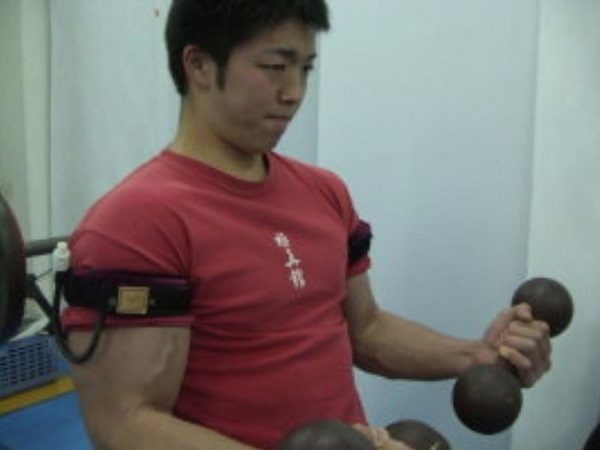
If you haven't heard of Kaatsu training before, you're in for a treat. While still a novelty in the West, Kaatsu training was developed in Japan five decades ago. Ka means "additional" and atsu means "pressure." An English layman's term for the practice is "blood flow restriction training," and involves performing strength training exercises while restricting blood flow to the extremity being worked.

A significant benefit of the method is that you can do strength exercises using just 30 to 50 percent of the weight you'd normally use while still reaping maximum benefits. In a way, you're trading weight for repetitions, in that you're using less weight but doing more reps - up to 20 or 30 repetitions opposed to the 10 or 12 you might normally do.

The cuffs or bands are just tight enough to allow arterial blood flow but not venous flow. This causes lactic acid and other waste products to build up, giving you the same benefit as heavy lifting without the dangers associated with heavy weights. For this reason, it's a great strategy for the elderly and those who are recuperating from an injury.

Compelling evidence suggests that venous blood flow restriction dramatically increases muscle growth and strength by increasing growth hormone secretion, reducing myostatin and inducing cell swelling - all while circumventing the tissue damage that can occur with traditional high-intensity weight training.

Health

Researchers find key molecule that can mimic ketosis and lower inflammation

ketogenic diet
Ketogenic diets -- extreme low-carbohydrate, high-fat regimens that have long been known to benefit epilepsy and other neurological illnesses -- may work by lowering inflammation in the brain, according to new research by UC San Francisco scientists.

The UCSF team has discovered a molecular key to the diet's apparent effects, opening the door for new therapies that could reduce harmful brain inflammation following stroke and brain trauma by mimicking the beneficial effects of an extreme low-carb diet.


"It's a key issue in the field -- how to suppress inflammation in brain after injury," said Raymond Swanson, MD, a professor of neurology at UC San Francisco, chief of the neurology service at the San Francisco Veterans Affairs Medical Center, and senior author of the new study.

In the paper, published in the journal Nature Communications, Swanson and his colleagues found the previously undiscovered mechanism by which a low carbohydrate diet reduces inflammation in the brain. Importantly, the team identified a pivotal protein that links the diet to inflammatory genes, which, if blocked, could mirror the anti-inflammatory effects of ketogenic diets.