Health & WellnessS


Health

Ovarian cancer study finds origin likely starts in fallopian tubes

belly
Most - and possibly all - ovarian cancers start, not in ovaries, but instead in the fallopian tubes attached to them.

This is the finding of a multicenter study of ovarian cancer genetics led by researchers from Perlmutter Cancer Center at NYU Langone Health, and published online Oct. 17 in Nature Communications.

"Based on a better understanding of its origins, our study suggests new strategies for the prevention and early detection of ovarian cancer," says senior study author Douglas A. Levine, MD, director of the Division of Gynecologic Oncology at Perlmutter and professor of Obstetrics and Gynecology at NYU School of Medicine.

The results revolve around the fallopian tubes, which enable egg cells that have the potential to be fertilized and become embryos - to pass from the ovaries where they are made to the uterus. The new study found that ovarian cancer cells have more in common with cells covering the tips of fallopian tubes than with those on the surface of ovaries.

Ambulance

Do you have Hep C? Big Pharma hopes so

Hep C
© Wall Street Journal
The sicker you get, the richer they become.

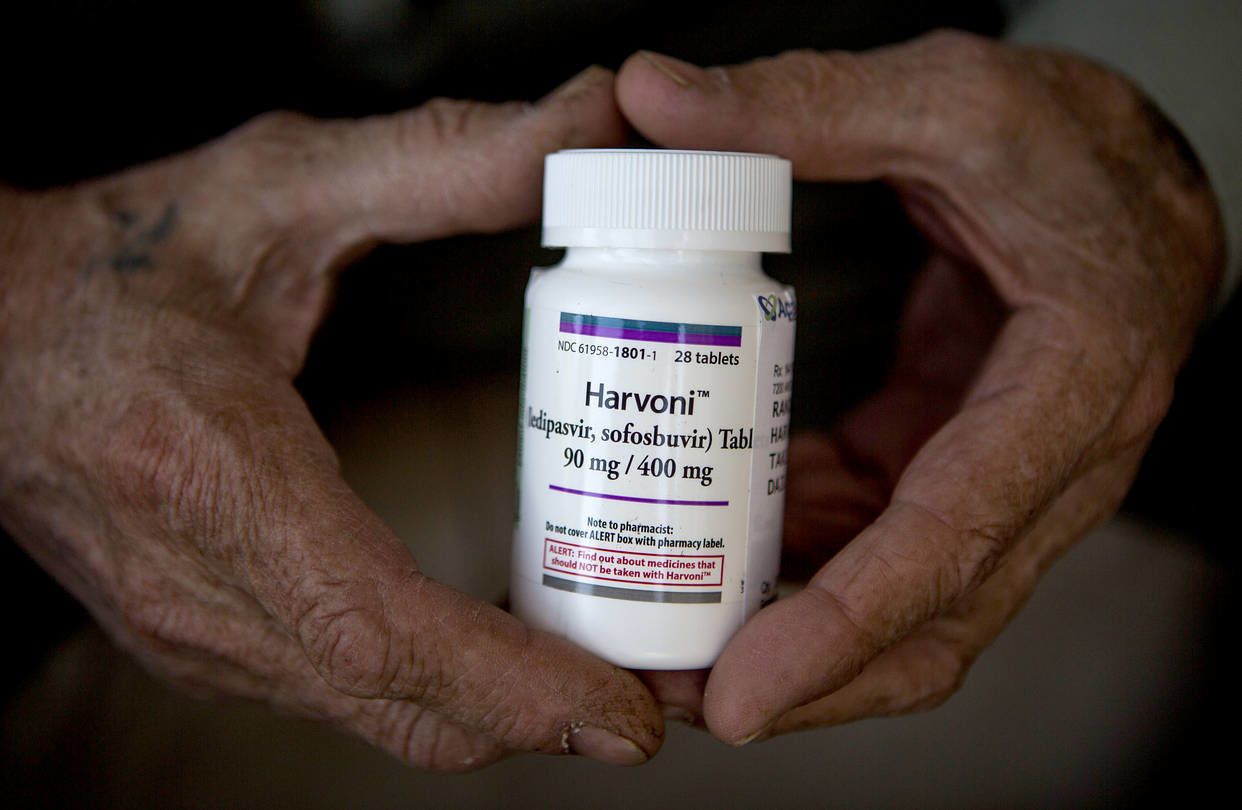
The campaigns are everywhere. On ABC, NBC, CBS and FOX, Animal Planet, the Game Show Network and Syfy. In People, Popular Mechanics and Better Homes and Gardens magazines. On the radio and along subway lines. If you were born between 1945 and 1965, you could have Hep C, screams Gilead Sciences, which makes the Hep C drug Harvoni.

The campaign seeks to sound like a message from the Centers for Disease Control and Prevention addressing public health. But the Hepatitis C "facts" resulting from an internet search are paid searches from Pharma, not from public health agencies.

Is there new information that shows baby boomers are newly prone to Hep C? Why have we not heard from the "CDC" about this pressing public health threat until now? There is new information--sales information that Gilead Hep C drugs are "plummeting" and new markets are needed.

Comment: Big pharma lobbyists creaming tens of billions out of the federal government in a variety of schemes
After an 18-month investigation into the high cost of Gilead's hepatitis C drug Sovaldi-initially listed at $84,000 for a course of treatment or $1,000 per pill-the Senate Finance Committee said the prices did not reflect the cost of research and development and that Gilead cared about "revenue" not "affordability and accessibility." That sounds like an understatement. Sovaldi and the related pill Harvoni cost Medicare and Medicaid more than $5 billion in 2014, charged senators.


Clipboard

Those who give vaccines should know the ingredients

Chef
It is reasonable to assume that those who administer influenza vaccines regularly to people should know the ingredients of what they are giving. It’s not all that different from memorizing the ingredients of a few favorite food recipes.
The chances are that if you ask most chefs about the ingredients they put into their favorite recipes, they will be able to list for you the name of every single ingredient and the corresponding amounts. That is what you would expect. By the same token, you would expect most doctors, nurses, pharmacists and other medical workers who administer vaccines would be able to list for you every ingredient in vaccines, along with the corresponding amounts. That is what you should expect. However, that is not necessarily the case.

According to neurosurgeon Russell Blaylock MD:
You'd be amazed at the number of physicians, you ask them what's in a vaccine? They'll say, well, there's the bacteria, the virus you want to vaccinate against, and then there's a little immune stimulant in there to help stimulate the immunity so they react against those viral antigens. They don't know about these other chemicals in there like formaldehyde, special proteins, special lipids that are known to be brain toxic, that are known to induce autoimmunity in the brain. They're not aware of that. They don't know that MSG is in a lot of vaccines―monosodium glutamate, a brain excitotoxin. They're not aware of what's in the vaccine they're giving.1

Comment: 25 facts about vaccines and the pharmaceutical industry coverup


Take 2

60 Minutes bombshell: Congress is to blame for the opioid epidemic

opioid epidemic
Sunday, October 15, 2017, CBS TV news 60 Minutes dropped a proverbial "bombshell" regarding the problems with the U.S. pharmaceutical industry and the "shills" who promote Pharma's wares-licensed medical doctors, distributors, pharmacists, etc.

If, by chance, you missed CBS's outstanding piece of investigative journalism, here's a short introductory video to acquaint you with the huge problem U.S. citizens are facing because of the compromises U.S. Congress members have engaged in to affect the health of citizens regarding opioids and the ensuing addiction horrors now plaguing us.

Health

Probiotic treatment erased peanut allergy in 70% of children

peanut allergy
Last week Australian scientists announced a major breakthrough in treating peanut allergies - and it can last for up to four years!

This news couldn't come at a better time since hundreds of Americans die each year from food allergies and around 200,000 of the estimated 15 million Americans with food allergies will wind up in the emergency room each year. Almost six million of those with food allergies in the U.S. are children.

Peanuts are among the top 8 food allergens that include wheat, milk, eggs, soy, tree nuts, shell fish and fish.

The recent EpiPen price gouging scandal is more proof that it's time for alternative life-saving treatments.

Ambulance

Beyond obesity: Research suggests up to 76% of the world's population is 'overfat'

Obesity, overfat
© Maffetone, Rivera and Laursen (2016) Front
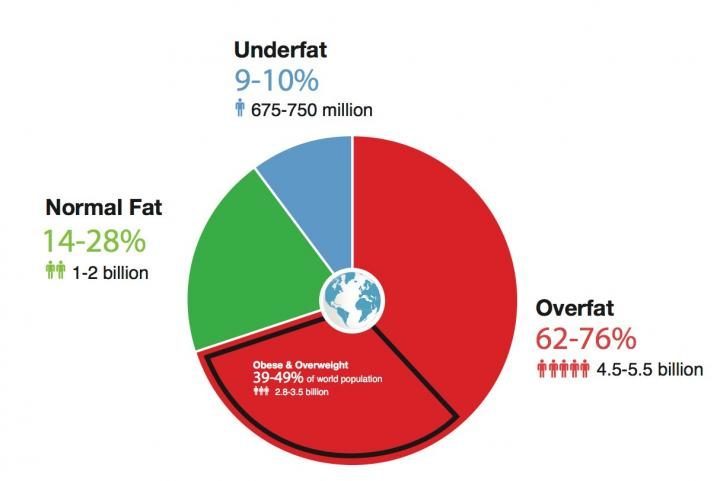
Just in time for those making New Year's resolutions, researchers take a closer look on the current data to suggest up to 76 percent of the world's population is overfat. This amounts to an astonishing 5.5 billion people.

"The overfat pandemic has not spared those who exercise or even compete in sports," says lead author of the study Dr. Philip Maffetone, CEO of MAFF Fitness Pty Ltd, who collaborated with Ivan Rivera-Dominguez, research assistant at MAFF and Paul B. Laursen, adjunct professor at the Auckland University of Technology.

The researchers put forth a specific notion of overfat, a condition of having sufficient excess body fat to impair health, in their recent research hypothesis & theory article published in the journal Frontiers in Public Health. Based on a new look into current data, they argue how, in addition to those who are overweight and obese, others falling into the overfat category include normal-weight people.

Alarm Clock

Stress could be just as harmful for the digestive system as a junk food diet

stress worse than junk food diet
© ShutterstockResearch shows that stress has a similar impact on digestive health as a high-fat diet.
A diet full of junk food isn't the only thing that can have a negative impact on the digestive system.

Researchers from Brigham Young University (BYU) found that stress could be just as harmful to the human body as a nutritionally poor diet.

The scientists discovered that when female mice were exposed to stress, their gut microbiota-the microorganisms vital to digestive and metabolic health-morphed to look like the mice had been eating a high-fat diet.

"Stress can be harmful in a lot of ways but this research is novel in that it ties stress to female-specific changes in the gut microbiota," BYU professor of microbiology and molecular biology Laura Bridgewater said in a statement. "We sometimes think of stress as a purely psychological phenomenon but it causes distinct physical changes."

Comment: The research doesn't make any distinction between the type of fats included in the diet, so it's impossible to know the impact of this on the results of the study. Saturated fats are used by the human body in a variety of critical ways, while polyunsaturated fats are inflammatory. Inflammation in the body has been linked to all sorts of illnesses and health issues!


Smoking

Marijuana legalization reduced opioid-related deaths & alters brain function, studies show

cannabis marijuana plant
© Ivan Alvarado / Reuters
A new study finds the legalization of cannabis in Colorado was associated with "a statistically significant reduction" in opioid-related deaths. Another study shows that long-term use of marijuana changes the brain at a cellular level.

On Monday, researchers from Brigham Young University's neuroscience department published a study in the journal JNeurosci that found long-term use of cannabis depressed gamma-aminobutyric acid (GABA) cell activity in the ventral tegmental area (VTA), which they said was "necessary for reward behavior with dopamine cells critically involved in reward signaling."

Pills

One scientist's mad quest for an exercise pill that won't give you cancer

Evans.
© Emil Berl/Bloomberg Business WeekEvans.
Ronald Evans realized the word was out when scores of strangers, some fit and some fat, started showing up at his biology lectures around the country. Soon, via email and voicemail, they were hounding him at all hours. Was it true, some wanted to know, that he had pills that could vaporize fat? Could the pills really, others asked, increase athletic endurance by 70 percent? Would he be interested in coming over and doping a racehorse?

During a lecture for a crowd of 200 in Montreal, a pair of college athletes took the mic and peppered Evans with questions about the pills' potential impact on the effectiveness of human growth hormone and erythropoietin. They ignored his interjections that those two performance-enhancing drugs were banned by most athletic rule-making bodies.

That was 2007. Evans was finishing up a study showing that mice taking the drug, an experimental GlaxoSmithKline Plc compound called GW501516, vastly increased their fat burn and athletic performance, even with minimal exercise. Some mice demonstrated the kind of endurance that would normally require intense training. Evans, a researcher at the Howard Hughes Medical Institute and the Salk Institute for Biological Studies, warned repeatedly that the pills weren't ready for human consumption when he published the study in 2008. They were just a proof of concept, he said, using some potentially dangerous substances. There were no studies showing they'd work on humans, no data on possible side effects.

Health

Intermittent fasting and the fight against obesity

empty plate clock intermittent fasting
Up to sixteen weeks of intermittent fasting without otherwise having to count calories helps fight obesity and other metabolic disorders. Such fasting already shows benefits after only six weeks. This is according to a study by Kyoung-Han Kim and Yun Hye Kim in the journal Cell Research which is published by Springer Nature. Intermittent fasting in mice helped to kick-start the animals' metabolism and to burn fat by generating body heat. The research team was led by Hoon-Ki Sung of The Hospital for Sick Children in Ontario, Canada.

Research has shown that our unhealthy eating habits and sedentary lifestyles are playing a major role in the development of lifestyle-related metabolic diseases such as diabetes, heart disease and obesity. For this reason, dietary interventions like intermittent fasting are gaining popularity to treat conditions such as obesity.

The research team in this study wanted to better understand the reactions that interventions such as fasting trigger on a molecular level in the body. They exposed groups of mice to sixteen weeks of intermittent fasting. The recurring regimen saw the animals being fed for two days, followed by one day without anything to eat. Their calorie intake was not adjusted otherwise. Four months later the mice in the fasting group weighed less than those in the control group who continued to eat the same volume of food. The lower body weight of the mice in the fasting group was not the only effect. The fasting regime helped lower fat build-up in the white fat by increasing the brown-like fat (involved in burning energy and producing body heat) of mice on the high fat diet. Their glucose and insulin systems also remained more stable. In a further experiment, similar benefits were already seen after only six weeks of intermittent fasting.

Comment: More on the benefits of intermittent fasting in humans: