Health & WellnessS


Bandaid

Why Americans are avoiding going to the doctor

line for mobile clinic
© Getty ImagesPeople wait to enter a remote mobile clinic for free health services in Grundy, Virginia last year. A recent survey shows that many Americans are skipping health care due to the cost.

Despite having insurance, the costs are too high


Between a third and a half of people age 45 to 59 and a quarter of those 60+ went without needed health care in the past year due to its cost, according to a troubling new survey from the West Health Institute and NORC at the University of Chicago.

"We were surprised by the magnitude of the findings," said Dr. Zia Agha, chief medical officer at the West Health Institute, a nonprofit applied medical research organization based in San Diego. "And 80% of the people we surveyed had health insurance, so just having insurance does not make you immune to health care costs."

The researchers at West Health Institute and NORC at the University of Chicago (a nonpartisan research institution) interviewed 1,302 adults. Their findings were released at the American Society on Aging's 2018 Aging in America conference in San Francisco.

Comment: As America continues to stagnate, the health of the population is tanking. And with medical costs increasing (even with insurance) while wages and employment rates continue to drop, the fate of the country's citizenry has never looked more dire.

See also:


Biohazard

CDC warns of new antibiotic-resistant 'nightmare bacteria' in every US state

bacteria
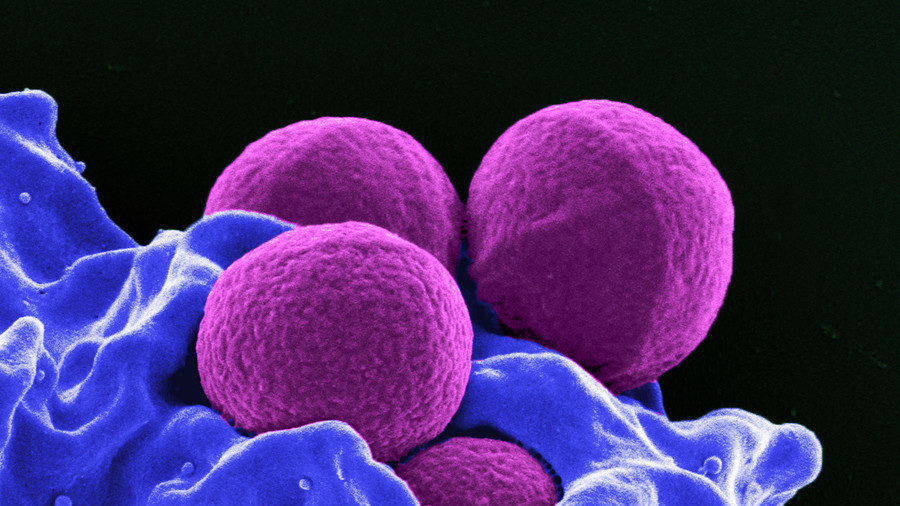
The Center for Disease Control and Prevention is warning Americans about a drug-resistant "nightmare bacteria" that has spread to every state after more than 200 cases last year.

More than 23,000 Americans die each year from infections caused by drug-resistant germs, according to the CDC, and last year a first-of-its-kind nationwide study uncovered 221 instances of a rare antibiotic resistant (AR) "nightmare bacteria". It mostly afflicts people either in or visiting hospitals and nursing homes.

It's thought the number of cases is actually higher as only certain labs in each state were involved in the study, explained the CDC in a Vital Signs report released Tuesday. The health officials warn that the new and highly-resistant germs are "constantly developing and spreading."

Comment: According to this CDC publication, the 'nightmare bacteria' is CRE, or carbapenem-resistant Enterobacteriaceae, and is usually found in health care facilities. There is no vaccine for CRE and if there were, it probably would be as 'effective' as other vaccines. (Vaccines also contain antibiotics which contributes to worldwide antibiotic resistance).


Donut

90 percent of Americans eat garbage

Junk food
Junk food is a multibillion-dollar industry. In his book, "Fast Food Nation," Eric Schlosser, investigative journalist and best-selling author, describes how nearly 90 percent of America's budget is spent on junk food.1 What is more appalling is that nearly 60 percent of food eaten in America are ultra-processed,2 convenience foods that can be purchased at your local gas station. These processed foods also account for nearly 90 percent of the consumption of added sugar in the U.S.

The industry doesn't depend upon fate to drive sales. They use several tricks to paint their products in a better light. Since people eventually start questioning the decision to eat foods based solely on taste, especially with the increasing attention on healthy eating, the industry funds research to justify your cravings for their products.

Thus, when a study revealed that children who ate candy bars were 22 percent less likely to be overweight,3 it came as no surprise the research was funded by a trade association representing some of the country's top candy makers. Marion Nestle, Ph.D., professor of nutrition at New York University, acknowledges that "The only thing that moves sales is health claims."4

Nestle formerly served as nutrition policy adviser in the U.S. Department of Health and Human Services and editor of the Surgeon General's Report on Nutrition and Health.5

Reliance on these ultra-processed foods is undoubtedly one of the primary factors driving skyrocketing rates of obesity and disease. Consumers may "know better," but it is difficult to steer clear of foods that may be more addictive than cocaine for some.6 A recent report from the U.S. Centers for Disease Control and Prevention (CDC) reveals only 10 percent of Americans are getting enough fruit and vegetables in their daily diet.7

Radar

Digital Pills: Are you ready?

digital pills

What could possibly go wrong with swallowing tracking microchips with already highly toxic pharmaceuticals?


At GreenMedInfo, we've been closely monitoring the development of implantable medical devices, controversial nanotechnology that has existed for at least twenty years. Nearly a decade ago, we reported that ingestible RFID tech was being pioneered to assist with medication compliance. By August 2012, the FDA issued a green-light for the development of an ingestible sensor that would electronically verify when patients took their medicine. In the final weeks of 2017, Abilify MyCite, the world's first digital pill, was approved for use by the FDA. The pill represents the literal and figurative merging of pharmacology with digital technology. Whether or not you are comfortable with transmitting your most personal health information via an app on your cell phone, the financial implications of this emerging technology mean it is likely to be a more pervasive-and invasive-treatment option, one that could eventually become hard to avoid.

Comment: Smart drugs come with stupid side effects


Book 2

Could walking be the solution to your physical and mental health problems?

walking
Walking is a simple way to improve your physical health and encourage creativity.

Editor's Note: The following is an excerpt from the book Walking Your Blues Away: How to Heal the Mind and Create Emotional Well-Being by Thom Hartmann (Park Street Press, 2006). In the book, Hartmann explains how walking allows people to heal from emotional trauma. When we walk, we engage both sides of the body, simultaneously activating both the left and right sides of the brain. Hartmann explains that both hemispheres of the brain join forces through the bilateral therapy of walking, in order to break up the patterning of a traumatic experience that has become "stuck" in the brain.

Walking for creativity and problem solving
"The legs are the wheels of creativity." - Albert Einstein

Comment: Feeling stressed?! Need a boost of creativity? Take a walk:
Wordsworth was a walker. His work is inextricably bound up with tramping in the Lake District. Drinking in the stark beauty. Getting lost in his thoughts.

Charles Dickens was a walker. He could easily rack up 20 miles, often at night. You can almost smell London's atmosphere in his prose. Virginia Woolf walked for inspiration. She walked out from her home at Rodmell in the South Downs. She wandered through London's parks.

Henry David Thoreau, who was both author and naturalist, walked and walked and walked. But even he couldn't match the feat of someone like Constantin Brancusi, the sculptor who walked much of the way between his home village in Romania and Paris. Or indeed Patrick Leigh Fermor, whose walk from the Hook of Holland to Istanbul at the age of 18 inspired several volumes of travel writing. George Orwell, Thomas De Quincey, Nassim Nicholas Taleb, Friedrich Nietzsche, Bruce Chatwin, WG Sebald and Vladimir Nabokov are just some of the others who have written about it.


Clipboard

Physicians follow a script: Cookbook medicine and mandatory vaccination

cookbook medicine
The standardization of medical practice forces physicians to follow a script to achieve cost effectiveness and efficiency, but at what price to the patient?
Think about the last time you visited a medical office. The nurse ushers you into the examination room. He or she then proceeds to ask you questions from a checklist on a laptop while simultaneously typing in your responses. The nurse barely makes eye contact with you. After the checklist is completed, an algorithm in the computer generates a "to do" list based on your responses.

The physician enters the room, diagnoses your symptoms based on the computer algorithm, perhaps puts in a request for laboratory testing, writes a drug prescription for you and sends you on your way, all in a span of 10-15 minutes. This process is known as "cookbook medicine"-a set of generalized clinical guidelines dictating how physicians should approach patient care.1

Life Preserver

Forget serum cholesterol: Why your Omega-3 blood level is a better predictor of mortality

omega-3-fettsäuren,meeresfrüchte,fisch
© alexpro9500/Shutterstock
Omega-3 has once again been validated for its usefulness to not only lower your risk of cardiovascular disease (CVD) but also your risk of all-cause mortality. Beyond that, the new research, funded by the National Institutes of Health, suggests measuring your omega-3 blood level may be a better predictor of your risk of death than your serum cholesterol.

Omega-6s also recently made the news for similar reasons, giving me an opportunity to remind you of the importance of balancing your intake of these two essential fatty acids. Because you are more likely to be omega-3 deficient, I highly recommend you take the omega-3 index blood test to accurately determine and begin to track your omega-3 percentage.

As part of a consumer-sponsored research project, GrassrootsHealth has created a convenient test kit to measure both your vitamin D and omega-3 index. This data will be used to analyze the health benefits of these vital nutrients, as well as any potential linkage between the two. Given the importance of vitamin D and omega-3s to your overall health and longevity, this is a test you simply cannot afford to overlook.

Comment: Read more about the benefits of Omega-3 fatty acids:


Cell Phone

Clear evidence found of phone radiation causing tumors in rats

Cell Phones 10 years threat
© n/a
Can cellphones really cause cancer? It's been a question that's dogged researchers for years.

However, a group of experts say the results of some tests are pretty surprising.

Millions of people constantly call, text, click, take pictures and play on cellphones.

Even the top cellular radiation researchers from around the world have a hard time untethering.

But, they gathered recently in North Carolina to talk about cellphone concerns and whether they really do increase the chances of developing cancer.

The panel voted that the results from years of testing on mice and rats were more significant than originally thought.

They say they found clear evidence that phone radiation caused tumors in the hearts of rats, which were similar to tumors in people.

Comment:


Attention

412,000 deaths each year may be attributed to lead exposure in the United States

lead
According to a new study published in the Lancet Public Health, up to 412,000 deaths a year can be attributed to lead exposure in the United States.

This study also claims that exposure to lead may be in "important but largely overlooked" factor in the 256,000 cardiovascular disease deaths that occur every year.

"Our study findings suggest that low-level environmental lead exposure is an important risk factor for death in the USA, particularly from cardiovascular disease," the paper reads. "It is not surprising that lead exposure is overlooked; it is ubiquitous, but insidious and largely beyond the control of patients and clinicians."

Comment: Read more about why we need to be concerned about lead exposure:


Cut

CRISPR9 Gene-Editing dangers cause a firefight

The Conversation
© The Conversation
We have claims that a recent study highlighting gene-editing dangers was sloppily done, incompetent, and wrong.

Lovers of the revolutionary gene-editing tool, CRISPR, are crowing over a "victory," but as usual the verdict is far from in.

The other day, I highlighted a 2017 study and quoted from a phys.org article, as follows: "...a new study published in Nature Methods has found that the gene-editing technology can introduce hundreds of unintended mutations into the genome."

"The researchers determined that CRISPR had successfully corrected a gene that causes blindness, but Kellie Schaefer, a PhD student in the lab of Vinit Mahajan, MD, PhD, associate professor of ophthalmology at Stanford University, and co-author of the study, found that the genomes of two independent gene therapy recipients [mice] HAD SUSTAINED MORE THAN 1500 SINGLE-NUCLEOTIDE MUTATIONS AND MORE THAN 100 LARGER [GENE] DELETIONS AND INSERTIONS. None of these DNA mutations were predicted by computer algorithms that are widely used by researchers to look for off-target effects." (Emphasis is mine.)

Comment: Read more about The very real dangers of CRISPR gene editing technology: