Health & WellnessS


Magnify

Human nose too cold for bird flu, says new study

Avian influenza viruses do not thrive in humans because the temperature inside a person's nose is too low, according to research published today in the journal PLoS Pathogens. The authors of the study, from Imperial College London and the University of North Carolina, say this may be one of the reasons why bird flu viruses do not cause pandemics in humans easily.

There are 16 subtypes of avian influenza and some can mutate into forms that can infect humans, by swapping proteins on their surface with proteins from human influenza viruses.

Today's study shows that normal avian influenza viruses do not spread extensively in cells at 32 degrees Celsius, the temperature inside the human nose. The researchers say this is probably because the viruses usually infect the guts of birds, which are warmer, at 40 degrees Celsius. This means that avian flu viruses that have not mutated are less likely to infect people, because the first site of infection in humans is usually the nose. If a normal avian flu virus infected a human nose, the virus would not be able to grow and spread between cells, so it would be less likely to damage cells and cause respiratory illness.

Info

The Many Uses of Epsom Salts

Image
I remember as a kid when my Great Aunt Grace would put some Epsom Salts in a dish pan, add really warm water and soak her feet because they hurt.

So, to me, that's what Epsom Salts was all about - a remedy for painful joints in old folks. Little did I know!

Times have changed - or have they?

All the talk about 'Natural Remedies' and 'getting back to basics' always floors me because my great aunt and my grandmothers were all doing this stuff when I was a little girl. So did my mom...and so have I. So, for me, there's been no 'getting back to' anything.

Sun

Organic Foods Provide More than Health Benefits

Organic foods can be considered to be better and healthier not only for the consumer but also for the environment. Organic foods are considered to be more nutrient dense than their counterparts produced via modern farming practices.

Dr. David Thomas, a physician and researcher, has studied and compared the United States government guidelines and tables for the nutritional content of various foods. These tables have been published by the government first in 1940 and again in 2002. Dr. Thomas has noticed a trend that supports the decline in the nutritional quality of fruits and vegetables produced via modern farming practices in recent decades. Because of his research Dr. Thomas has posed the following question, "Why is it that you have to eat four carrots to get the same amount of magnesium as you would have done in 1940?"

Life Preserver

New Study: Probiotic Strain Boosts Immune Response to Flu Virus

A new study just published in the journal Postgraduate Medicine has good news about a way to help fight a potential flu pandemic, naturally. Researchers found that a specific strain of probiotics, which are beneficial microorganisms similar to the "friendly" bacteria found naturally in the body's digestive system, increases the body's immune response to the flu virus -- specifically, to influenza A. And the currently much hyped and much feared so-called swine flu, also known as H1N1, is a variant of influenza A.

Magic Wand

Vitamin C Stops the Growth of Some Cancerous Tumors in Mice

30 years ago the famous Nobel laureate Linus Pauling said that vitamin C supplements can prevent cancer, a highly controversial statement at the time. Now a team of Johns Hopkins scientists have shown that vitamin C stops the growth of some tumors in mice.

Info

Homeopathy Heals in Africa

Homeopathic clinics in Kenya, Tanzania, Botswana and Ethiopia and Ghana are bringing homeopathy's healing medicines to the suffering in Africa. Treating malaria and AIDS, these clinic and others like them are staffed by selfless healers and are in need of our support. Over 23 million Africans are living with HIV/AIDS, including two millions new HIV infections recorded in 2007. In Tanzania, a person dies of malaria every three minutes. This is over 200, 000 deaths a year and this figure is growing.

Mr. Potato

Walking disaster? Why some are accident prone

Image
© Kim Carney / msnbc.com
The more distracted and stressed we are, the harder we fall, research says

Steve Roe's catalogue of self-induced injuries reads like something out of The Spanish Inquisition Handbook: fractured skull, torn rotator cuff, shattered fingers, broken wrists, fractured elbows, torn muscles, sulfuric acid burns, self-stabbings, multiple broken noses and, as of last month, a ruptured tendon in his ankle.

"I didn't trip or anything," says the 46-year-old patent attorney from Madison, Wis. "I was just walking down the hall, in a hurry, and I went around the corner and it suddenly felt like somebody hit me in the ankle with a baseball bat."

Hurry, worry, multitasking, stress - you might call them the four horsemen of the accident prone. Stress is such a huge factor when it comes to accidents, in fact, it was recently linked to an increase in post-9/11 traffic fatalities by researchers at the University of Minnesota.

Syringe

White House Czar Calls for End to 'War on Drugs'

Kerlikowske Says Analogy Is Counterproductive; Shift Aligns With Administration Preference for Treatment Over Incarceration

Image
© Brendan Smialowski for The Wall Street JournalGil Kerlikowske, the new White House drug czar, signaled Wednesday his openness to rethinking the government's approach to fighting drug use.
Washington -- The Obama administration's new drug czar says he wants to banish the idea that the U.S. is fighting "a war on drugs," a move that would underscore a shift favoring treatment over incarceration in trying to reduce illicit drug use.

In his first interview since being confirmed to head the White House Office of National Drug Control Policy, Gil Kerlikowske said Wednesday the bellicose analogy was a barrier to dealing with the nation's drug issues.

"Regardless of how you try to explain to people it's a 'war on drugs' or a 'war on a product,' people see a war as a war on them," he said. "We're not at war with people in this country."

Arrow Up

Brain Chemical Reduces Anxiety, Increases Survival Of New Cells

New research on a brain chemical involved in development sheds light on why some individuals may be predisposed to anxiety. It also strengthens understanding of cellular processes that may be common to anxiety and depression, and suggests how lifestyle changes may help overcome both.

The animal study, in the May 13 issue of The Journal of Neuroscience, shows an important role for fibroblast growth factor 2 (FGF2), a chemical important in brain development, in anxiety. The findings advance understanding of cellular mechanisms involved in anxiety and illuminate the role of neurogenesis, or cell birth and integration in the adult brain, in this process. Together, these findings may offer new drug targets for the treatment of anxiety and potentially for depression as well.

Shoe

The man who revealed the secrets of sweat

US infantry soldiers
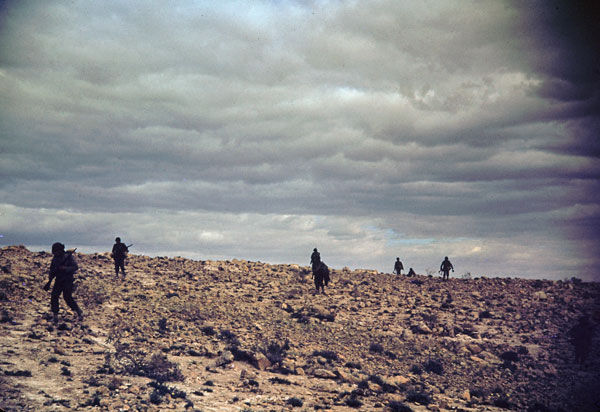
© Eliot Elisofon/Time and Life Pictures/GettyUS infantry soldiers trudge across a hill in the desert in the El Guettar Valley, Tunisia, early 1943
On 17 August 1942, seven men set up camp near the isolated desert crossroads of Freda, California. Soon, a squad of soldiers arrived for what seemed a particularly brutal form of training. The troops worked and hiked up to 35 kilometres beneath the merciless sun. Then they did it all over again, periodically submitting to tests to see how their bodies were coping. The goal was to help win the second world war by learning how far a man could be pushed in the baking North African desert. Today the results remain vital for marathon runners, trekkers, and others who exert themselves in scorching heat.

California's lower Colorado desert is a forbidding place, particularly in the summer. It's a barren landscape of rocks and rattlesnakes, where little grows but creosote bushes and cactus. Midday temperatures top 43 °C and searing winds and afternoon sun combine to suck moisture from the body.

This is not the place for a midday march, but that is exactly what Edward Adolph had in mind when he took a group of soldiers and researchers there in the summer of 1942. Adolph, a physiologist at the University of Rochester in New York state, wanted to find out how people could live and work efficiently in the desert and how to get the best out of them.

He wasn't the first to ponder the effects of hot, dry conditions on the human body. The image of the traveller lost in the desert, crawling towards a shimmering mirage, is probably as old as desert travel itself. But earlier researchers always focused on survival. "They never looked at performance," says Timothy Noakes, an exercise physiologist at the University of Cape Town, South Africa, and veteran of some of the world's toughest ultramarathons.