Health & WellnessS


Health

Cancer-Feeding Fructose Consumption may be New 'Alcoholism'

HFCS
© Natural Society

America is hooked on fructose, particularly mercury-containing high-fructose corn syrup. With consumption rates continually rising in the United States, researchers have examined the similarities between fructose and its fermentation byproduct ethanol. Linked to skyrocketing obesity rates, type 2 diabetes, and metabolic syndrome, fructose consumption may be a destructive habit comparable to alcoholism. A number of studies have also established a relationship between excess fructose consumption and the spread of cancer. In fact, cancer cells prefer fructose.

According to Lewis Cantley, director of the Cancer Center at Beth Israel Deaconess Medical Center at Harvard Medical School, as much as 80 percent of all cancers are "driven by either mutations or environmental factors that work to enhance or mimic the effect of insulin on the incipient tumor cells."

What the research found is that there are definite similarities between the two substances that tie in perfectly with the statements of Lewis Cantley. Both serve as substrates for fat production and subsequently promote insulin resistance. Also, both substances can result in liver inflammation. Excess fructose consumption has even been linked to
  • DNA damage
  • Inflammation
  • Altered cellular metabolism
  • Increased production of free radicals
both directly and indirectly, creating habituation and dependence. Therefore, it is actually possible to develop a dependence for fructose consumption in a similar manner to that of an alcoholic craving alcohol.

Health

9 Foods the Government is Paying for You to Eat

Corn Field
© Natural Society

The United States federal government paid American farmers $12.3 billion in 2009 to boost crop production. While this number may seem high, it is actually nearly the lowest amount paid to farmers in the past 10 years. The reason farmers are paid to grow certain crops is to ensure that they grow more for the country while at the same time making the same amount of money. What some people aren't completely aware of is the huge impact that the subsidies have on what ends up on our plate - in plain sight or otherwise. Corn alone took in a whopping $77.1 billion from the government between 1995 and 2010. The U.S. government continues to be a major player in the national food business, with subsidies continuing to grow. Here are the top 9 food products that the government most heavily subsidizes:

Corn

Corn easily rests at the top of the list of government sponsored foods. Between 1995 and 2010, $77.1 billion was given to farmers so that they could grow massive amounts of corn. But oddly enough, most of the corn grown isn't corn on the cob. The corn produced is actually specifically created for purposes of adding certain ingredients in the food. One such ingredient is high fructose corn syrup, which has been found to contain mercury and cause cancer, resides in many products such as ketchup, cereals, and beverages. It has nearly replaced sugar in all sodas and soft drinks. Then there is corn starch, corn gluten meal, hydrolyzed corn protein, and corn syrup which can all be found in snacks like cookies. Lastly, corn is used to feed conventionally-fed animals to prompt weight gain and hasten their slaughter weight. Unfortunately, these animals' digestive systems are not meant to digest corn, causing the animals to be fed antibiotics.

What's frightening is that most of the corn that is produced isn't even edible! The commodity, corn, is produced with government backing for one primary reason - to be processed. The corn is simply a raw material meant to be transformed into the harmful ingredients we've come to consume so often today.

The argument for so much subsidization is to help the US compete internationally, but most of the corn being processed is used domestically. What the government is really subsidizing, is obesity and tons of other health complications within the nation. The truth is that many of the products we buy possesses some type of processed corn. Corn is even consumed when eating meat, as the animals are force-fed genetically modified corn. All of the subsidizing set in place by the system is ultimately contributing to the downfall of our food quality as we know it. It does of course, make costs for businesses cheaper.


Magnify

Fraudulent Seafood: Are You Really Getting What You Think You Are?

Market_Fresh_Fish_on_Ice
© n/a
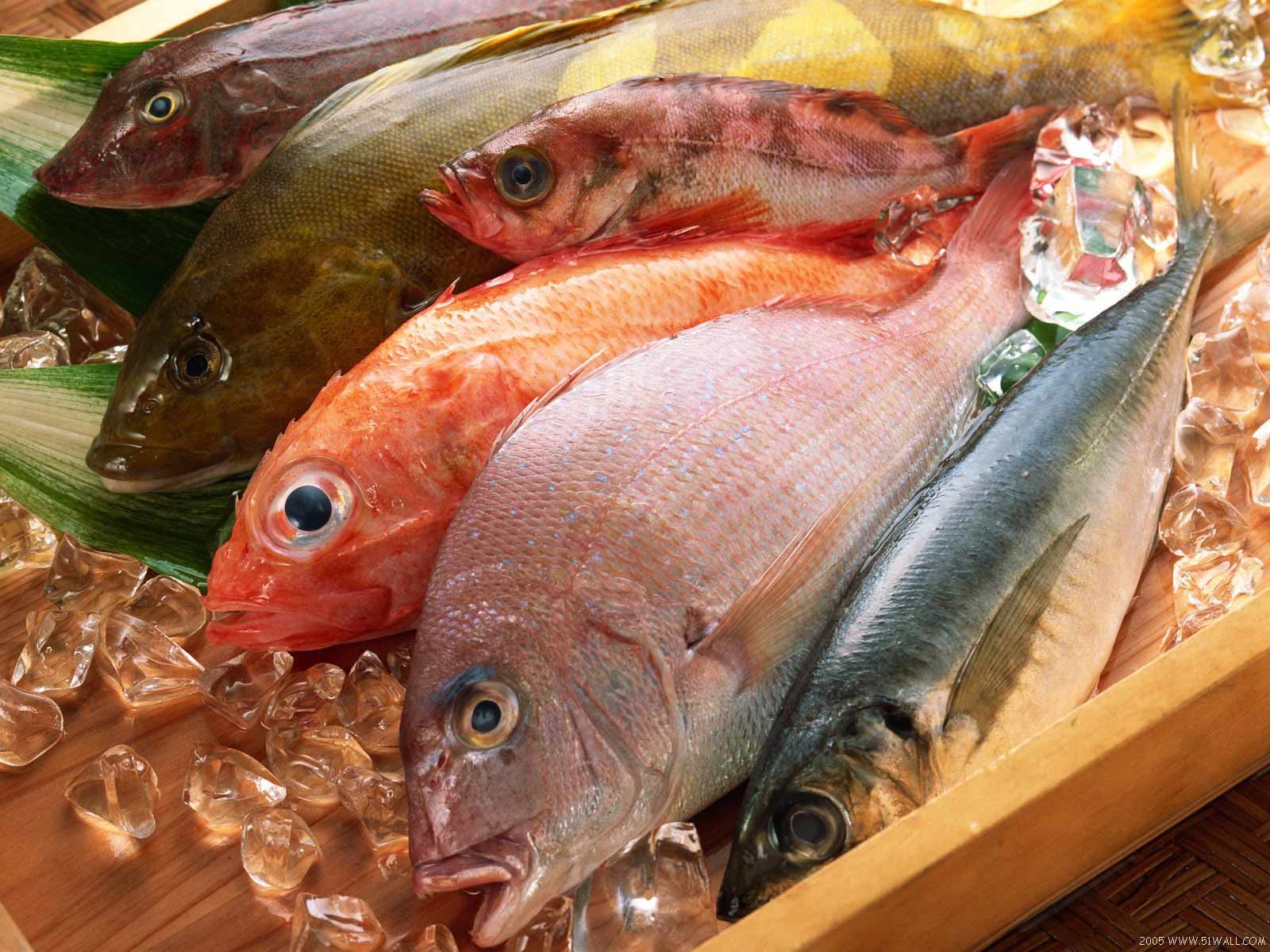
By running fish DNA through gene sequencers, scientists have found rampant labeling fraud in the supermarket and in restaurants. Cheap fish is substituted for expensive filets and over fished species are passed of as fish whose numbers are plentiful. The fish geneticists state that 25 to 70% of the seafood they check is fraudulently identified. Government inspections find an average of 37% of seafood fraudulently identified. The most common mis-labelings are for red snapper, cod, wild salmon and grouper. Most fish purchased in the US is imported but the FDA currently inspects less than 2% of these fish.

Fraud runs as high as 90% for red snapper. Most red snapper is another type of snapper, rockfish or a variety of unrelated fish. Because of dyes and feed additives, it has become very difficult to tell wild salmon from farmed salmon. Wild salmon is commercially extinct in the Atlantic Ocean, so any salmon labeled "Atlantic" is farmed. Salmon labeled "wild-caught" has been found to actually be farmed salmon 56% of the time.

Some other examples of fraud: Tilapia masquerading as almost anything else; perch labeled as shark, yellowtail instead of mahi-mahi, catfish as grouper and farmed shrimp from Vietnam labeled "Gulf shrimp". In one case, tilefish was labeled as grouper. Tilefish contains more than 3X the amount of mercury found in grouper and women of childbearing age and children are advised not to eat it.

Attention

Is the CDC Deliberately Hiding the Truth about the Link between Autism and Mercury in Vaccines?

Mercury
© Alliance for Natural Health

The latest scandal to hit the CDC is explosive: what appears to be a deliberate cover-up of damning scientific data.

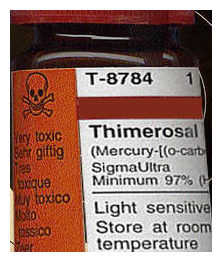
Thimerosal, a controversial mercury compound used as a preservative in certain vaccines, was removed from all vaccines in Denmark in 1992. A subsequent Danish study showed a marked decline in autism rates following the removal of thimerosal, indicating a clear link between mercury in vaccines and the development of autism.

Documents obtained by the Coalition for Mercury-free Drugs (CoMeD) through the Freedom of Information Act (FOIA) suggest that officials at the US Centers for Disease Control and Prevention were fully aware of the Danish data, yet published an article about the study in the journal Pediatrics which excluded this information, manipulated the data to misrepresent the decline as an increase, and propagated the erroneous conclusion that thimerosal in vaccines does not cause autism.

As CoMeD noted, one of the Danish study's co-authors was aware of the omission in the initial draft of the Pediatrics article, and alerted CDC officials in a 2002 email: "Attached I send you the short and long manuscript about thimerosal and autism in Denmark. I need to tell you that [your] figures do not include the latest data from 2001, but the incidence and prevalence are still decreasing in 2001."

The lead author of the Pediatrics article seemed to be aware of the missing autism data, because he replied in an email, "I am not currently at the university but I will contact you and tomorrow to make up our minds." Despite this, the data from 2001 showing a decline in autism was not mentioned in the draft of the Pediatrics article, and in a 2002 letter to the editor of Pediatrics, CDC officials encouraged expedited review and publication of the article. The misleading article was published by Pediatrics in 2003.

Gear

Study: Unprecedented Marketing Of Sugary Drinks To Youth

sugar intake, soda

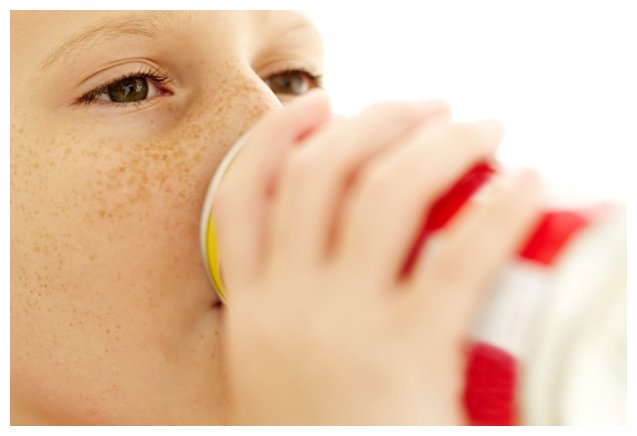
US children and teenagers are becoming major targets of the soft drink industry, with exposure to more advertising and online marketing than ever before, according to a new study from the Yale Rudd Center for Food Policy & Obesity, according to various media reports.

The study is the most widespread and scientific-based assessment of sugary drink nutrition and marketing ever conducted.

Data from the study shows that soft drink companies are aggressively targeting young people, especially black and Hispanic youth. Researchers are presenting their findings today during the American Public Health Association's annual meeting in Washington, DC.

Soft drink ads on TV geared toward children and teens have doubled from 2008 to 2010, the report found, with increased marketing from Coca-Cola Co and Dr Pepper Snapple Group Inc.

On a positive note, children were exposed to 22 percent fewer ads from PepsiCo Inc., the study found.

Black children and teens saw 80 to 90 percent more ads than white children, including double the exposure for the energy drink 5-Hour Energy and Coca-Cola's vitamin water and Sprite. Hispanic children also saw 49 percent more advertising for sugary and energy drinks on Spanish television, while Hispanic teens saw 99 percent more ads.

"Our children are being assaulted by these drinks that are high in sugar and low in nutrition," Yale's Kelly Brownell, co-author of the report, told Reuters. "The companies are marketing them in highly aggressive ways."

Book

"Deadly Monopolies": Medical Ethicist Harriet Washington on How Firms are Taking Over Life Itself

One of the major themes raised by the Occupy movement is the increasing power of large corporations over more and more aspects of our lives. We spend the hour looking into the issue of the corporate control of life itself. Our guest, Harriet Washington, is a medical ethicist and has just published a book that examines the extent to which what she calls the medical-industrial complex has come to control human life. In the past 30 years, more than 40,000 patents have been granted on genes alone - many more patents are pending. Washington argues that the biotechnology and pharmaceutical companies patenting these genes are more concerned with profit than with the health or medical needs of patients. Her new book is called Deadly Monopolies: The Shocking Corporate Takeover of Life Itself - And the Consequences for Your Health and Our Medical Future.


Megaphone

Food Companies Petitioned to Ban New Monsanto GMO Corn

Image
© unknown
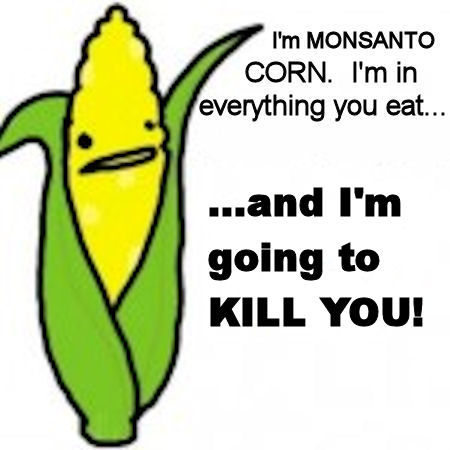
Opponents of Monsanto's new genetically modified sweet corn are petitioning national food retailers and processors to ban the biotech corn, which is not labeled as being genetically altered from conventional corn.

A coalition of health, food safety and environmental organizations said they have collected more than 264,000 petition signatures from consumers who do not want to buy the corn.

The coalition includes the Center for Environmental Health, the Center for Food Safety, and Food & Water Watch. It said it is pressing 10 of the top national retail grocery stores to ban the corn, including Wal-Mart, Kroger and Safeway. It is also asking top canned and frozen corn processors including Bird's Eye and Del Monte to ban the modified corn.

The coalition said General Mills and Trader Joe's have already indicated that they will not be using the Monsanto biotech sweet corn in their products.

Magnify

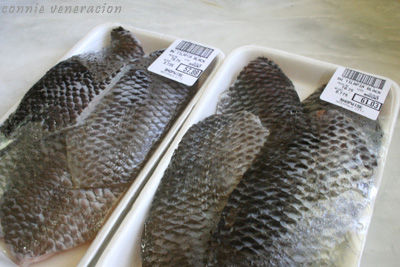
'Consumer Reports': People 'ripped off when they buy fish'

Image
© casaveneracion.comAbout 18% of the fish sampled didn't match the names on placards, labels and menus, according to a study by 'Consumer Reports'
Mystery meat has met its aquatic match: mystery fish.

Consumer Reports Friday will reveal a mislabeled seafood scam that leaves millions of consumers clueless whether the fish they think they're buying is the fish they're actually getting.

The world's largest independent product-testing organization Friday will reveal that 22% of the seafood it tested at supermarkets, restaurants, fish markets, gourmet stores and big-box stores in three states was either mislabeled, incompletely labeled or misidentified by store or restaurant employees.

"Consumers are getting ripped off when they buy fish," says Kim Kleman, editor-in-chief of Consumer Reports.

Syringe

US, California: Woman Questions Grandson's HPV Vaccination

Tammie Dennis Says Her Grandson, 11, Got HPV Vaccine Without Parental Approval

A San Diego grandmother told 10News on Tuesday that she is outraged after she says her 11-year-old grandson was given a vaccine for human papillomavirus -- or HPV -- without parental approval.

According to California law, children 12 and older can ask their pediatricians for the shots that prevent cancer-causing sexually transmitted diseases without getting their parents' approval.

2 + 2 = 4

Harsh discipline fosters dishonesty in young children

Image
All just bricks in The Wall
Young children exposed to a harshly punitive school environment are more inclined to lie to conceal their misbehaviour than are children from non-punitive schools, a study of three- and four-year-old West African children suggests.

The study, published in the journal Child Development, also indicates that children in a punitive environment are able to tell more convincing lies than those in a non-punitive environment.

The research, by Professor Victoria Talwar of McGill University and Professor Kang Lee of the University of Toronto, examined deceptive behaviours in two groups of children living in the same neighbourhood. One group was enrolled in a private school that used a traditional authoritarian discipline model, in which beating with a stick, slapping of the head, and pinching were administered publicly and routinely for offenses ranging from forgetting a pencil to being disruptive in class. In the other school, also private, children were disciplined with time-outs or scolding and, for more serious offenses, were taken to the principal's office for further reprimand.