Health & WellnessS


Health

How Biotech Corporations and GMO Crops are Threatening the Environment and Humankind Alike

GMO Products
© Natural Society

Through the mass genetic modification of nature via GMO crops, animals, biopesticides, and the mutated insects that are created as a result, mega biotechnology corporations are threatening the overall genetic integrity of the environment as well as all of humankind.

As the production and consumption of GMO crops continue to soar, it is becoming increasingly apparent that consumers worldwide are unknowingly participating as 'test subjects' in a massive experiment on the long-term effects of GMO crops and ingredients.

In fact, nearly 93% of US soybeans are genetically modified in order to resist powerful weed-killers that were found to be killing the actual soybeans as well as the weeds. So it turns out that the weedkiller was actually strong enough to kill the soybeans, yet it is considered safe for consumption. After the genetic alteration, these powerful weed-killers now simply drench the genetically modified soybeans.

Evil Rays

Government Ignored 1998 Report Finding up to 100 Cancer Deaths from TSA Naked Body Scanners Per Year

TSA Scanners
© Nautral Society

Has the government known since 1998 that the TSA body scanners could be giving you cancer? An explosive report has exposed the carcinogenic effects of X-ray body scanners, finding that up to 100 United States airline passengers each year could get cancer from the machines. Despite the report coming out years ago, millions of Americans still walk through the carcinogenic TSA X-ray body scanners, also known as naked body scanners. While many passengers may not develop full blown cancer as a result, radiation is truly unsafe at any dose. Furthermore, the long-term usage of the X-ray body scanners have not been fully studied - the number of cancers caused by the machines may actually increase over time.

In 1998, a panel of radiation safety experts got together to analyze a new security device called the Secure 1000, which was designed specifically to beam X-rays at people to see underneath their clothing. The experts pointed out in their evaluation that the machine violated a basic principle of radiation safety - they stated that humans simply should not be X-rayed unless there is a specific medical benefit.

Light Saber

Peru's Congress approves 10-year GMO ban

Genetically Modified maize
© LexpressGenetically modified maize

Lima - Peru's Congress announced Friday it overwhelmingly approved a 10-year moratorium on imports of genetically modified organisms in order to safeguard the country's biodiversity.

The measure bars GMOs - including seeds, livestock, and fish - from being imported for cultivation or to be raised locally.

Exceptions include the use of GMO products for research purposes in a closed environment, but those will be closely monitored, the legislature's official news service said.

The bill, approved late Thursday, now goes to President Ollanta Humala to be signed into law. Humala, who has been in power since late July, has repeatedly said he opposes GM programs.

Attention

Air pollution causes lung cancer in non-smokers (erm, can't it cause it in smokers too then?)

Image
Air pollution, not smoking, causes lung cancer.
People who have never smoked, but who live in areas with higher air pollution levels, are roughly 20 percent more likely to die from lung cancer than people who live with cleaner air, researchers conclude in a new study.

"It's another argument for why the regulatory levels (for air pollutants) be as low as possible," said Francine Laden, a professor at the Harvard School of Public Health, who was not involved in the research.

Though smoking is the number one cause of lung cancer, about one in 10 people who develop lung cancer have never smoked.

"Lung cancer in 'never smokers' is an important cancer. It's the sixth leading cause of cancer in United States," said Michelle Turner, the lead author of the study and a graduate student at the University of Ottawa.

Previous estimates of how many non-smokers get lung cancer range from 14 to 21 out of every 100,000 women and five to 14 out of every 100,000 men.

Comment: The study's authors and Reuters, for obvious reasons, won't just come out and say it. But reading between the lines, the take-home learning outcome is:

Smoking doesn't cause lung cancer: air pollution does.


Attention

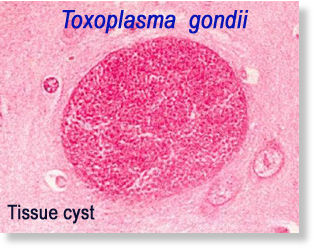
Brain parasite directly alters brain chemistry

Image
© Unknown
A research group from the University of Leeds has shown that infection by the brain parasite Toxoplasma gondii, found in 10-20 per cent of the UK's population, directly affects the production of dopamine, a key chemical messenger in the brain.

Their findings are the first to demonstrate that a parasite found in the brain of mammals can affect dopamine levels.

Whilst the work has been carried out with rodents, lead investigator Dr Glenn McConkey of the University's Faculty of Biological Sciences, believes that the findings could ultimately shed new light on treating human neurological disorders that are dopamine-related such as schizophrenia, attention deficit hyperactivity disorder, and Parkinson's disease.

This research may explain how these parasites, remarkably, manipulate rodents' behaviour for their own advantage. Infected mice and rats lose their innate fear of cats, increasing the chances of being caught and eaten, which enables the parasite to return to its main host to complete its life cycle.

Arrow Up

Close Friends Less Common Today, Study Finds

Close Friends
© Martin Novak | ShutterstockThe number of friends we confide in has shrunk over the past decades, new research shows.

If asked how many friends you have, some may have trouble distinguishing between the lengthy list of Facebook friends and those close pals you confide in. Well, it turns out, Americans' lists of the close type has shrunk to two, down from three confidantes 25 years ago, a new study suggests.

The study also found that the number of us who have zero confidantes, or the socially isolated, has not increased over these decades, as scientists had suspected based on a 2006 study showing a near tripling of Americans' social isolation between 1985 and 2004.

Although this shrinking social network "makes us potentially more vulnerable," said Matthew Brashears, assistant professor of sociology at Cornell University, "we're not as socially isolated as scholars had feared." However, Brashears isn't confident in any of the numbers gathered for social isolation in past studies and the current one, suggesting better methods of getting true numbers are needed.

Health

Lectins: Their Damaging Role in Intestinal Health, Rheumatoid Arthritis and Weight Loss

Located on the surface of cells of all living things lay many thousands of different complex sugar molecules (glycoconjugates) projecting outward from their loose anchors like moving antennae. Genetically unique, these molecules comprise a protective coating for the cell and perform many functions including cell recognition and signaling. Lectins are a class of protein molecules capable of using these sugar moieties to bind to the surface of cells. Lectins provide the way for one molecule to stick to another molecule without any immunity involved. Lectins play a wide role in health, but their ability to influence the inflammatory process indicates they are involved in inflammatory bowel disease, rheumatoid arthritis and even weight gain. Lectins' potential involvement in many aspects of our health caused DJ Freed, MD to state, "Lectins are causes in search of diseases."

This article will introduce you to the world of lectins, the "sticky proteins" we deal with from day to day in our diets and our bodily systems. Furthermore, you will learn how you can build up your defenses against what could be a hidden cause behind many of our health concerns.

Cookie

Doctor Says Whole Wheat Packs on Belly Fat - And Has a Lot in Common with Opiate Drugs

Image
© wheatbellyblog.com
It's been drilled into our heads that whole grains are heart-healthy and essential to a diet that keeps us slim and satisfied. But the wheat toast you opt for over a muffin or bagel in the a.m. may not be as smart of a dietary decision as once thought. In his new book Wheat Belly, preventative cardiologist William Davis, MD, argues that the world's most popular grain, found in everything from lager to licorice to lunch meat, is destructive to weight loss - and overall health.

According to Davis, the compounds found in wheat are responsible for appetite stimulation, exaggerated rises in blood sugar, and the release of endorphin-like chemicals that get the brain hooked on breads, pastas and crackers, while increased wheat consumption can also be linked to higher incidences of celiac disease, diabetes, heart disease, arthritis and schizophrenia.

If you think this talk about wheat sounds like a new spin on the gluten-free fad, it's not so simple. While wheat is the dominant source of gluten in the human diet - gluten is what gives dough the ability to be stretched, rolled and shaped into bagels, pretzels and pizza crusts and is the culprit underlying inflammatory damage to the intestinal tract in those with celiac disease - it also contains a unique carbohydrate called amylopectin-A, which sends blood sugar soaring higher than table sugar or a candy bar ever could.

Arrow Down

US: Some Athletes Like it Cold - Real Cold

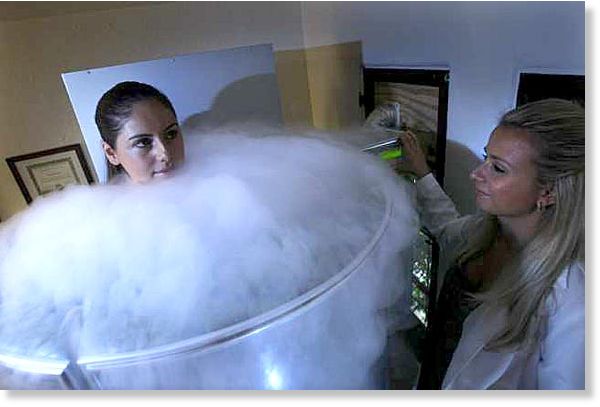
Superchilled chambers, or 'cryosaunas,' can be chilled to about minus-300 degrees. Adherents, such as Rangers pitcher C.J. Wilson, say the extreme cold helps the body recover from exertion or inflammation.
Image
© Don Bartletti / Los Angeles TimesIce-cold vapor pours out of a chamber in which amateur golfer Katarzyna Kazmierczyk is being treated.

A cream-colored Spanish villa on a street near Hancock Park lined with cottonwood trees houses the medical office where a steady stream of pro and amateur athletes comes looking to chill out.

And by chill, we mean standing nearly naked for a few minutes in a 6-foot-tall metal chamber as blasts of nitrogen chill the air inside to nearly minus-300 degrees Fahrenheit.

Such bone-chilling conditions might sound harmful, but the whole-body cryotherapy treatment utilizes extreme cold in small doses to speed muscle recovery and reduce inflammation after workouts or surgery.

The theory is that the cold tricks the body into believing it's freezing so it enters a self-preservation state, sending blood to its core to protect vital organs. There, it is enriched with oxygen, nutrients and enzymes. After the treatment, the super-rich blood rushes back to the extremities, where it's said to flush out toxins and improve circulation.

Among athletes, it's considered a Space Age alternative to the conventional ice bath.

Arrow Down

US: Chicago man tries to remove own pacemaker, dies

A Chicago man has died after authorities say he cut his chest to try to remove his pacemaker.

The Cook County medical examiner says 47-year-old Channing Askew died Monday night at a Chicago hospital. The Chicago Tribune reports that a doctor told police that Askew apparently had tried to remove his pacemaker himself. Police say paramedics were called to a group home where Askew lived when he complained of chest pain.

Police say Askew complained to paramedics about chest pains. Askew fell unconscious in the ambulance. Paramedics trying to revive him removed Askew's shirt and found a puncture wound on the upper left side of his chest.

An autopsy is planned. The group home did not have additional information.