
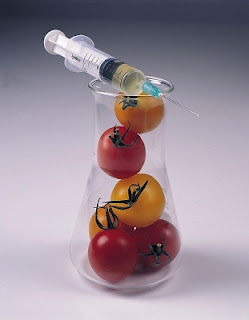
© The GMO Report
This is the standard definition of "substantial equivalence":
"Substantial equivalence is a concept developed by OECD in 1991 that maintains that a novel food should be considered the same as a conventional food if it demonstrates the same characteristics and composition as the conventional food."This concept was pushed in regards to GMOs by the FAO and the WHO in the early 1990s. Its intent was the stripping away of years of testing of so called "novel" foods which can be prohibitively expensive and time consuming and therefore would have affected the profits of companies like Monsanto that have a virtual stranglehold on the FDA, USDA, and other regulatory agencies and governments that have afforded them special treatment in allowing them to use this planet and its species as one huge science experiment. The residual effects of applying these two words to GMOs and in allowing them to be foisted upon the world with little to no adequate testing already negates the validity of applying the substantial equivalence label to them.











Comment: Read Morgellons Disease and The Quantum Leap of Awareness to learn more on the nature of the disease without the usual ridicule factor.