OF THE
TIMES
"It is ironic that the erosion of empathy occurs during a time when the curriculum is shifting toward patient-care activities; this is when empathy is most essential."In another, higher-powered systematic review published in the same journal last year entitled "Empathy decline and its reasons: a systematic review of studies with medical students and residents," reseachers looked at data from 1990-2010, which included 18 studies, and found:
"The five longitudinal and two cross-sectional studies of residents showed a decrease in empathy during residency. The studies pointed to the clinical practice phase of training and the distress produced by aspects of the "hidden," "formal," and "informal" curricula as main reasons for empathy decline."
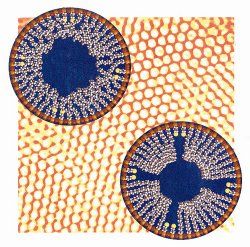
Nanotechnology involves designing and manufacturing materials on the scale of one-billionth of a meter. It is used in areas ranging from stain-resistant clothing and cosmetics to food additives. [...]
"Despite the promise of nanotechnology, without strategic research into emergent risks associated with it -- and a clear understanding of how to manage and avoid potential risks -- the future of safe and sustainable nanotechnology-based materials, products, and processes is uncertain," said the study by a committee of 19 scientists.
"The purpose of science is to discover the true nature of Earth and Universe and to convey that knowledge truthfully to people everywhere. Science gives birth to technology that makes our lives easier and better. Science improves our health and enables us to see our world in ways never before envisioned. It uplifts spirits and engenders optimism. And, science provides a truth-standard, securely anchored in the properties of matter, a means to expose and debunk the charlatans and science-barbarians who would lie, cheat, steal, and tyrannize under the guise of science."
Substantial equivalence. When looking at these two words many come away with the impression that they signify fairness, safety and adequate disclosure to consumers regarding the products those words are attached to. However, regarding the marketing of transgenic foods specifically genetically modified organisms in our food that is anything but the case. I think it is crucial that consumers are aware of what is in their food and how it may affect them and their children in order for them to be able to make informed decisions about what goes into their bodies.
This is the standard definition of "substantial equivalence":"Substantial equivalence is a concept developed by OECD in 1991 that maintains that a novel food should be considered the same as a conventional food if it demonstrates the same characteristics and composition as the conventional food."This concept was pushed in regards to GMOs by the FAO and the WHO in the early 1990s. Its intent was the stripping away of years of testing of so called "novel" foods which can be prohibitively expensive and time consuming and therefore would have affected the profits of companies like Monsanto that have a virtual stranglehold on the FDA, USDA, and other regulatory agencies and governments that have afforded them special treatment in allowing them to use this planet and its species as one huge science experiment. The residual effects of applying these two words to GMOs and in allowing them to be foisted upon the world with little to no adequate testing already negates the validity of applying the substantial equivalence label to them.
Comment: There is evidence that Type 2 Diabetes can be reversed with changes in diet: Are Diabetes and Insulin Resistance Really Reversable?
For more information on how to eat a healthy healing diet see: The Paleo Diet: Should You Eat Like a "Caveman"?