Health & WellnessS


Sheeple

Wooly Pigs A possible key to human diabetes and heart disease prevention

Wooly pigs
© unknownMangalitsa pigs aka Wooly pigs
A curly-haired, morbidly obese, genetically primitive breed of Hungarian pig that until recently was on the brink of extinction could be key to the eventual prevention of diabetes and heart disease in humans, Auburn University researchers contend.

The breed is the Mangalitsa, and two years after importing the initial group of piglets from their native land to the Auburn University Swine Research and Education Center, Auburn animal scientist Terry Brandebourg has determined that as the commonly called "wooly" pigs pack on layers of adipose tissue, they spontaneously develop symptoms of metabolic syndrome similar to those that obese humans develop, including insulin resistance, liver dysfunction and inflamed adipose tissue.

That discovery could become as huge as the Mangalitsa is fat, leading to the development of therapies that will not only treat but prevent diabetes and associated health conditions.


2 + 2 = 4

PTSD and Child Sexual Abuse

"They say time heals everything, but I'm still waiting." - Dixie Chicks

About thirteen million people suffer from Post Traumatic Stress Disorder. PTSD is a mental and physical health problem that usually includes flashbacks, anxiety, nightmares, depression and other behavioral indicators. Psychosomatic symptoms (physical problems caused by the mind) are also a part of life for most people with PTSD.

Victims of child sexual abuse, rape, incest, and trauma - as well as war veterans, commonly suffer from PTSD.

PTSD is often self-treated with drugs or alcohol. People with PTSD have biological changes in addition to multiple psychological problems. Those who suffer with PTSD are greatly affected by depression, fears, and problems with cognition or memory. These difficulties can dramatically affect a person's job, family, and social life. 1

2 + 2 = 4

Lifelong Therapy for Anxiety and Depression May Be Ineffective

Image
© Annie Leibovitz/Contact Press ImagesFrom “Pilgrimage” (Random House, 2011)
MY therapist called me the wrong name. I poured out my heart; my doctor looked at his watch. My psychiatrist told me I had to keep seeing him or I would be lost.

New patients tell me things like this all the time. And they tell me how former therapists sat, listened, nodded and offered little or no advice, for weeks, months, sometimes years. A patient recently told me that, after seeing her therapist for several years, she asked if he had any advice for her. The therapist said, "See you next week."

When I started practicing as a therapist 15 years ago, I thought complaints like this were anomalous. But I have come to a sobering conclusion over the years: ineffective therapy is disturbingly common.

Comment: One effective way of dealing with issues may be writing. For more information, see this Sott article:

Writing to Heal


Arrow Up

Cinnamon: the blood sugar stabilizer

Image
© Natural News
Cinnamon is one of the most anti-oxidant rich herbs on the planet. It has been revered by nearly every culture for centuries for its sweet taste and pleasant aroma. Cinnamon has been shown to have remarkable medicinal qualities that enhance blood sugar signaling, reduce inflammation, stimulate immunity and promote neurological health.

Cinnamon is naturally attained from the inner bark of a specialized family of trees with the genus name Cinnamomum. It is primarily grown in South East Asia regions with Sri Lanka being the major producer at 80-90 percent of the world's supply.

Cinnamon is one of the oldest and most revered spices in the world. It was mentioned in the Bible several times as a component Moses used in anointing oil and it is in the perfume in the Song of Solomon among other areas. Cinnamon was so highly esteemed that it was considered more precious than gold.

Cow

Grassfed Meat Gives Strength and Recovery

bison chop
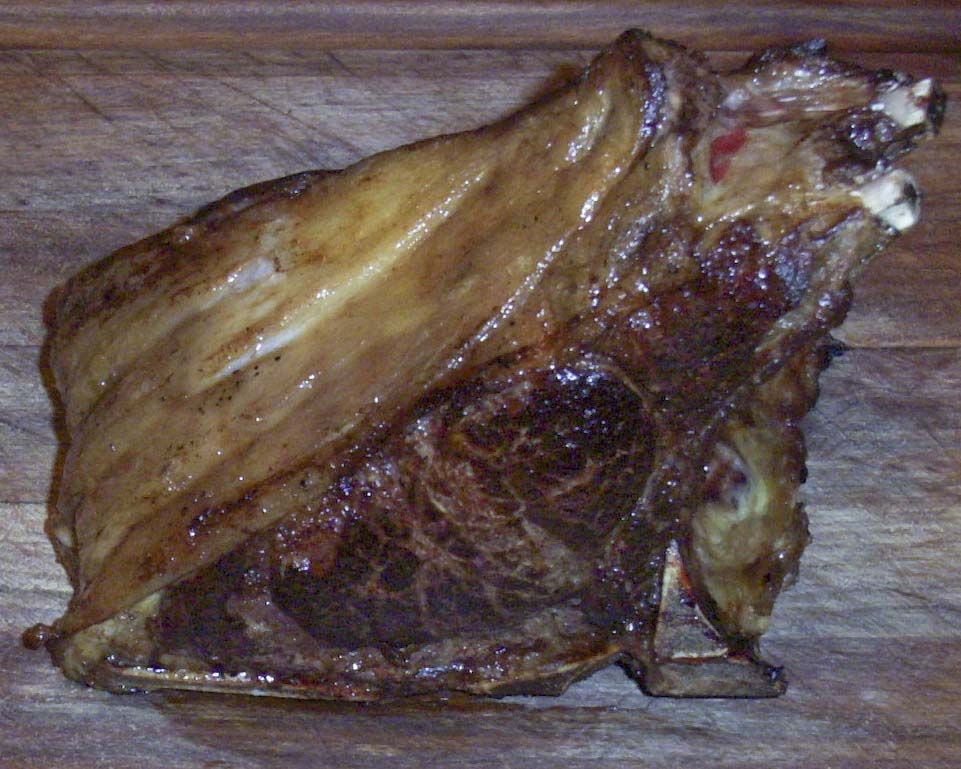
© Stanley A. FishmanSuper-Tender Double Bison Chop, nicely browned on the outside, with a very rare interior.
When I was a child, I had an illustrated copy of an old story, Hans Brinker and the Silver Skates. The story tells of a young Dutch boy from a poor family, who is a great skater. More than anything, Hans wants to win a race that had a pair of silver skates as the grand prize. Hans wanted those skates more than anything. While Hans was preparing for the race, his father had a serious injury. The doctor (this was back in the days when doctors actually made house calls and treated poor people who could not afford them) said that only good food, including rich red meat, would enable Hans' father to recover. But Hans' family was too poor to afford meat. Hans won the race, and the silver skates. He then sold the skates he had wanted so much, and used the money to buy good food for his father, including beef. The father recovered from the good food and grassfed beef.

Most of the versions of the story today have the money used to pay for surgery, but in the version I had, meat was the key to healing. That story has always stuck with me.

Info

Cause of Brain Freeze Revealed

Most people have likely experienced brain freeze - the debilitating, instantaneous pain in the temples after eating something frozen - but researchers didn't really understand what causes it, until now.

Previous studies have found that migraine sufferers are actually more likely to get brain freeze than people who don't get migraines. Because of this, the researchers thought the two might share some kind of common mechanism or cause, so they decided to use brain freeze to study migraines.

Headaches like migraines are difficult to study, because they are unpredictable. Researchers aren't able to monitor a whole one from start to finish in the lab. They can give drugs to induce migraines, but those can also have side effects that interfere with the results. Brain freeze can quickly and easily be used to start a headache in the lab, and it also ends quickly, which makes monitoring the entire event easy.

The researchers brought on brain freeze in the lab by having 13 healthy volunteers sip ice water through a straw right up against the roof of their mouth. The volunteers raised their hands when they felt the familiar brain freeze come on, and raised them again once it disappeared.

The researchers monitored the blood flow through their brains using an ultrasoundlike process on the skull. They saw that increased blood flow to the brain through a blood vessel called the anterior cerebral artery, which is located in the middle of the brain behind the eyes. This increase in flow and resulting increase in size in this artery brought on the pain associated with brain freeze.

Syringe

Hallmark cards distributing vaccine propaganda targeting newborns across America

The Arizona Department of Health Services wants to remind parents to inject their newborn babies with neurologically-damaging chemical adjuvants found in vaccines, and to aid in this effort, they've teamed up with Hallmark, the famous greeting card company

Laptop

'Pink Slime' Outrage Goes Viral in Stunning Display of Social Media's Power

Image
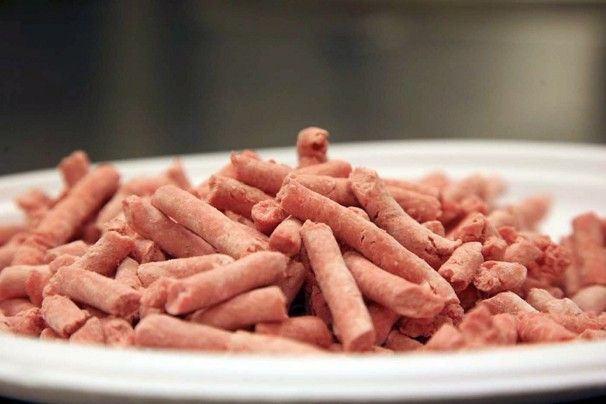
© washingtonpost.comUproar over ‘pink slime’ goes viral: The product known in the meat industry as “lean finely textured beef” has been on store shelves for the better part of two decades. The recent uproar over it signals the power of the Web and social media to not only change public opinion, but government and industry policy.
For the better part of two decades, before it was dubbed "pink slime," this beef byproduct was nothing more than a mild-mannered staple in fast food burgers, tacos in school lunches and ground beef stocked in supermarket freezers.

Federal regulators never sounded safety concerns about it. No one directly linked it to foodborne illnesses or outbreaks. In fact, many food safety activists praised it as a technological marvel in the dangerous world of raw meat.

That's why federal officials and the family-owned company that makes this product were slack-jawed when a public backlash erupted last month against what the industry calls "lean finely textured beef."

Whistle

Whistleblowers Wanted

Image
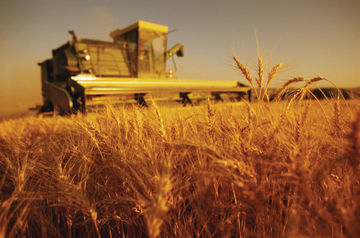
© informedfarmers.comThe major breeding objectives include high grain yield, quality, disease and insect resistance and tolerance to abiotic stresses include mineral, moisture and heat tolerance.
So something happened to wheat in the 1970s during the efforts to generate a high-yield strain that required less fertilizer to make a 24-inch, rather than a 48-inch, stalk. Multiple other changes occurred, including changes in the structure of gluten, changes in wheat germ agglutinin, changes in alpha amylase (responsible for wheat allergy) . . . to name a few.

But chief among the changes in wheat were changes in the gliadin protein molecule. We know, for instance, that the Glia-alpha 9 sequence, absent from traditional wheat, can be found in virtually all modern wheat. This is likely the explanation underlying the four-fold increase in celiac disease over the past 50 years, since Glia-alpha 9 predictably triggers the immune reaction that leads to the intestinal destruction characteristic of celiac disease.

But modern wheat also stimulates appetite . . . not a little, but a lot. The introduction of modern high-yield, semi-dwarf wheat was accompanied by an abrupt increase in calorie consumption of 440 calories per day, 365 days per year. This is because modern gliadin in wheat is an opiate. But this opiate doesn't cause a "high" like heroine; it causes appetite stimulation.


Cheeseburger

World's Cheapest Food in USA; At What Cost?

Image
In 2010, Americans spent just over 9 percent of their disposable income on food (5.5 percent at home and 3.9 percent eating out).i

This is a dramatically lower percentage spent just decades ago in the early 1960s, when over 17 percent was spent on food, and even more of a "bargain" compared to 1930, when Americans spent over 24 percent of their disposable income to feed their families.

When you compare what Americans spend to what people in other countries spend, you'll also notice some great disparities.

On the surface, having cheaper food may seem like an advantage, but in reality while Americans may be saving a few dollars on their meals, they're paying big time in terms of their health, and the health of the planet.

No Place on the Planet Has Cheaper Food Than the United States

As reported in TreeHugger, professor Mark J. Perry stated on his Carpe Diem blog:ii
"... compared to other countries, there's no other place on the planet that has cheaper food than the U.S. The 5.5% of disposable income that Americans spend on food at home is less than half the amount of income spent by Germans (11.4%), the French (13.6%), the Italians (14.4%), and less than one-third the amount of income spent by consumers in South Africa (20.1%), Mexico (24.1%), and Turkey (24.5%), which is about what Americans spent DURING THE GREAT DEPRESSION, and far below what consumers spend in Kenya (45.9%) and Pakistan (45.6%)."
Unfortunately, the "faster, bigger, cheaper" approach to food production that the United States has mastered is unsustainable and contributing to the destruction of our planet and your health. Michael Pollan, author of The Omnivore's Dilemma and a number of other bestsellers, said it best:
"Cheap food is an illusion. There is no such thing as cheap food. The real cost of the food is paid somewhere. And if it isn't paid at the cash register, it's charged to the environment or to the public purse in the form of subsidies. And it's charged to your health."
In other words, pay now or pay later. American food may be cheap, but that's about the only "compliment" it deserves, because when you rely on cheap food, you typically get what you pay for.