
© GreenMedInfo
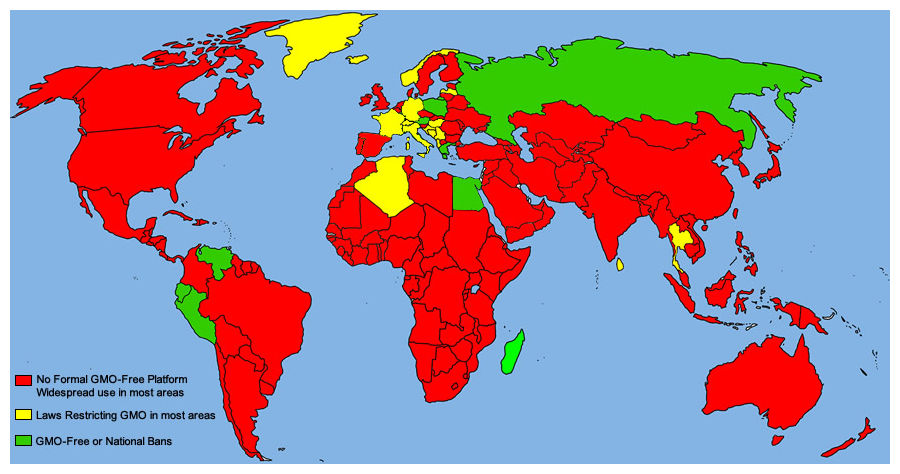
Poor food quality is a growing problem in industrialized countries increasingly focused on the quantitative dimension of food production, both in terms of the sheer volume of food produced, as well as the revenue and profit generated. In the United States, for instance, consumers do not even have the right to know what is in their food, e.g. genetically modified ingredients are not labeled by default; the use of paint pigment (
titanium dioxide) as a "manufacturing aid" in milk, not required to be listed as an ingredient on the label, etc, and raw human sewage and factory-farmed animal waste, as well as petroleum and coal byproducts, are all considered fair game as a growing medium in USDA-approved conventional farming practices.
Given these deteriorating market conditions, our bodies, which spent eons evolving complex sensorial and cognitive pathways to determine whether something was good, or bad, based on appearance, taste, smell, etc., are increasingly being chemically manipulated through food science trickery. And as the food in its unadulterated state becomes more and more unappetizing, if not clearly disgusting, the slick marketing and associated nutritional disinformation becomes less and less effective on the consumer. Enter MSG, a virtual miracle worker when it comes to turning disgusting into delicious....
Turning Yucky To Yummy With The MSG Sleight of HandMonosodium glutamate (MSG) is a commonly used "flavor enhancer," and so powerfully so that (hyperbole permitting)
you could spray it on roadkill and it would taste good. This omnipresent ingredient in modern mass market food takes advantage of our biologically hard-wired taste receptors, and makes it very hard to stop eating the foods "seasoned" with this ingredient. In fact, it is doubtful that without the MSG trick many of these mass market processed foods would be palatable enough to maintain their status as economically viable commodities. Here are some of its many disguises on food labels....















Comment: No Deaths from Vitamins: America's Largest Database Confirms Supplement Safety Pharma's Don't-Take-Vitamins Study Diametrically Opposed by Valid Study