Health & WellnessS


Health

Stress can cause breast cancer metastasis to bone, study shows

Stress can promote breast cancer cell colonization of bone, Vanderbilt Center for Bone Biology investigators have discovered.

The studies, reported July 17 in PLoS Biology, demonstrate in mice that activation of the sympathetic nervous system - the "fight-or-flight" response to stress - primes the bone environment for breast cancer cell metastasis. The researchers were able to prevent breast cancer cell lesions in bone using propranolol, a cardiovascular medicine that inhibits sympathetic nervous system signals.

Metastasis - the spread of cancer cells to distant organs, including bone - is more likely to kill patients than a primary breast tumor, said Florent Elefteriou, Ph.D., director of the Vanderbilt Center for Bone Biology.

"Preventing metastasis is really the goal we want to achieve," he said.

Comment: The Éiriú Eolas program is an excellent stress management tool that has helped thousands of people to regain their sanity in this insane world.


Cut

Flashback Circumcision Fight: Profit, Pleasure, or Population Control?

"It is important that, while circumcision interventions are being planned, several points must be considered carefully. If the experiment fails, Africans are likely to feel abused and exploited by scientists who recommended the circumcision policy. In a region highly sensitive to previous colonial exploitation and suspicious of the biological warfare origin of the virus, failure of circumcision is likely to be a big issue. Those recommending it should know how to handle the political implications." - James P.M. Ntozi.

Using circumcision to prevent HIV infection in sub-Saharan Africa

African people worldwide know about experimentation in the name of scientific advancement. However, often-vital information goes without mention and the outcome devastates the victim as in the case with the Tuskegee Syphilis Experiment in Alabama, USA. This is precisely why suspicion remains around HIVAIDS reduction experiments, but with little investigative attention by the corporate media groups.

Heart

Increased Vitamin C Could Help Reduce Heart Disease, Stroke, Cancer

vitamin c
© Unknown
The recommended dietary allowance, or RDA, of vitamin C is less than half what it should be, scientists argue in a recent report, because medical experts insist on evaluating this natural, but critical nutrient in the same way they do pharmaceutical drugs and reach faulty conclusions as a result.

The researchers, in Critical Reviews in Food Science and Nutrition, say there's compelling evidence that the RDA of vitamin C should be raised to 200 milligrams per day for adults, up from its current levels in the United States of 75 milligrams for women and 90 for men.

Comment: Adequate Vitamin C levels are particularly important now due to the radiation exposure from the Fukushima meltdown. In addition to protecting against radiation, Vitamin C has multiple health benefits and much larger doses than those commonly recommended may be necessary to correct deficiencies and cure disease.

Vitamin C Prevents Radiation Damage
Two Vitamin C Tablets Every Day Could Save 200,000 Lives Every Year
High-Dose Vitamin C Therapy Proven Effective
Pauling's last legacy: a unified theory of cardiovascular disease
200 Reasons To Love Vitamin C


Evil Rays

A Single Piece of Radioactive Food Is Comparable to 'Hundreds of X-Rays'

Image
© project.nsearch.com
As you likely are aware, x-ray imaging scans have increasingly been linked in peer-reviewed scientific literature to an increased risk of cancer - particularly in children. Dental x-rays, for example, have actually been linked to a two-fold increase in brain cancer. It is therefore quite shocking to consider a new report which states that radioactive food (food contaminated with radiation from Fukushima or others sources) consumption is comparable to receiving hundreds of x-rays.

Furthermore, research conducted by a prominent doctor also draws a relationship between radioactive food and the occurrence of birth defects.

Prestigious physician, geneticist, and professor Dr. Wladimir Wertelecki conducted research back in 2010 regarding the relationship between contaminated food and birth defects. Now, years later, the professor is speaking out over the serious impact of the Chernobyl and the Fukushima-Daiichi disasters.

Attention

Why I Never Use Agave

Image
© realfoodforager.com
I've noticed that many people use agave in their recipes even though they are Real Foodies. I just think they may not have heard the truth about agave. According to Russ Bianchi, executive of a globally recognized food and beverage development company, who lectured about this very subject at the Weston Price Mythbusters conference this past fall, agave is one of the greatest frauds perpetrated on the American people. The high levels of synthesized fructose in agave put people at risk for obesity, heart disease, arterial inflammation, high blood pressure and increased insulin resistance.

Agave is not natural

Agave was developed in the 1990′s and is made primarily in Mexico. There is really no such thing as agave nectar. The sweetener is made from the starchy part of the yucca or agave plant - the roots. Inulin, also a complex carbohydrate, makes up about 50% of the carbohydrate content of agave.

To produce so called agave nectar from the Agave Americana and Tequiliana plants, the leaves are cut off the plant after it has aged 7 to 14 years. Then the juice is expressed from the core of the agave. The juice is filtered, then heated, in order to hydrolyze the polysaccharides into simple sugars. The filtered, hydrolyzed juice is concentrated to a syrupy liquid, slightly thinner than honey, from light colored to dark amber, depending on the degree of processing. (source)

Syringe

Vaccines Are Causing Mutations That May Jeopardize The Health of Future Generations

Virus
© PreventDisease.com
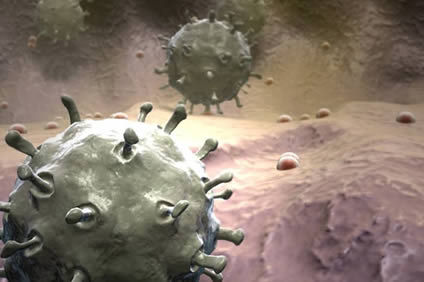
Vaccines are causing an unprecedented number of mutations creating superbugs and potent viruses and bacteria that may eventually threaten future generations and humanity itself.

Evidence continues to mount from the scientific community who now admit that certain vaccines are in-fact causing both viral and bacterial mutations. Ironically, the same researchers assert that "better" vaccines are needed to offset the rise in persistent mutations.

Life-threatening pathogens are capable of evolving rapidly and developing genetic decoys that serve to disguise them from even the most powerful drugs. University of Oxford researcher Rory Bowden found that pathogens switch genetic material with other bacteria, but predominantly for the part of the genome responsible for making the cell coating, which is the area targeted by vaccines.

Former post-doctoral researcher of the Center for Infectious Disease Dynamics, Grainne Long found that vaccination led to a 40-fold enhancement of B. parapertussis colonization in the lungs. His data suggested that the vaccine may be contributing to the observed rise in whooping cough incidence over the last decade by promoting B. parapertussis infection.

Health

Children Abused by Parents Face Increased Cancer Risk, Study Finds

Frequent abuse by a parent can increase a child's cancer risk in adulthood, and the effects are especially significant when mothers abuse their daughters and fathers abuse their sons, according to new research from Purdue University.

"People often say that children are resilient and they'll bounce back, but we found that there are events that can have long-term consequences on adult health," said Kenneth Ferraro, distinguished professor of sociology and director of Purdue's Center on Aging and the Life Course. "In this case, people who were frequently emotionally or physically abused by their parents were more likely to have cancer in adulthood, and the link was greater when fathers abused sons and mothers abused daughters. Overall, the more frequent and intense the abuse, the more it elevated the cancer risk.

"We would like to see child abuse noted as an environmental factor that can increase cancer occurrence in adulthood. More research on this topic also could help mediate the effects or improve interventions to help abused children."

Magnify

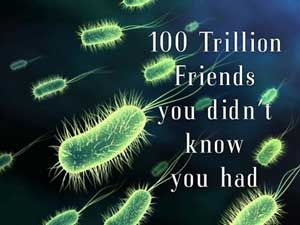
Thriving Gut Bacteria Linked To Good Health

Image
Beneficial Gut Bacteria
There's no magic elixir for healthy aging, but here's one more thing to add to the list: good gut health.

A study published in the latest issue of Nature finds diet may be key to promoting diverse communities of beneficial bacteria in the guts of older people.

To evaluate this, researchers analyzed the microbiota, or gut bacteria, of 178 older folks, mostly in their 70s and 80s.

Some of the people were living in their own homes, and their diets were rich in fiber, fruits, vegetables, grains, poultry and fish.

Others were living in long-term care facilities or nursing homes where the typical diet was much less varied. "Mashed potato and porridge were the only staples in this diet type that were consumed daily," explains Paul O'Toole of the Alimentary Pharmabiotic Centre at University College Cork in Ireland. Meals were supplemented with puddings, cookies and sugar-sweetened beverages such as tea.

Info

Rest Assured: There's Nothing Wrong with Segmented Sleep

Asleep
© FotoliaIt appears that in centuries past, and in pre-industrial societies, bedtime has meant falling asleep once, then waking for awhile, and then going back to bed for a “second sleep.”
Bad sleepers rarely hear good news. Insomniacs often read about the latest ways our nighttime pacing is believed to be wrecking our health. Or we are treated to recycled and often unrealistic advice about how to shift around our routines to encourage sounder sleep. We can feel guilty if we find ourselves unable to follow it.

So my curiosity was piqued when a recent BBC online story, "The myth of the eight-hour sleep," shone a light on a growing body of research suggesting that "segmented sleep" is perfectly normal. It appears that in centuries past, and in pre-industrial societies, bedtime has meant falling asleep once, then waking for awhile, and then going back to bed for a "second sleep."

"That sounds like me," I thought - as many others surely did. Historians are arguing that everyone used to spend the night that way. For those who wake up in the middle of the night, this could be liberating news.

Before artificial lighting "colonized" the darkness (to borrow a term from the historian Craig Koslofsky), a nightly wakeful interlude was expected. Lighting and caffeinated beverages promoted active, chatty evenings. This, historians believe, believe pushed back the Western world's bedtime. The modern ideal of a continuous eight-hour slumber was born.

But prior to that, the idea of a "first" and "second" sleep was so routine, one researcher wrote, "it provoked little comment at the time."

This was the insight of A. Roger Ekirch, a professor of history at Virginia Tech. In his 2005 book At Day's Close, he argued that: "Until the close of the early modern era [roughly the year 1800], Western Europeans on most evenings experienced two major of sleep bridged by an hour or more of quiet wakefulness." This period was known as the "watch" or "watching."

"Segmented sleep has a lot of historical evidence," says Koslofsky, an associate professor of history at the University of Illinois and author of last fall's Evening's Empire: A History of the Night in Early Modern Europe. "[Ekirch] really demonstrated that these terms, 'first' and 'second' sleep, appeared in Homer, in Virgil, in ancient medieval Christian literature," he says. Humbler literature including diaries and prayer books also contain clues to how Westerners slept in the past.

Health

Differences Between Human Twins at Birth Highlight Importance of Intrauterine Environment

Your genes determine much about you, but environment can have a strong influence on your genes even before birth, with consequences that can last a lifetime. In a study published online in Genome Research, researchers have for the first time shown that the environment experienced in the womb defines the newborn epigenetic profile, the chemical modifications to DNA we are born with, that could have implications for disease risk later in life.

Epigenetic tagging of genes by a chemical modification called DNA methylation is known to affect gene activity, playing a role in normal development, aging, and also in diseases such as diabetes, heart disease, and cancer. Studies conducted in animals have shown that the environment shapes the epigenetic profile across the genome, called the epigenome, particularly in the womb. An understanding of how the intrauterine environment molds the human epigenome could provide critical information about disease risk to help manage health throughout life.

Twin pairs, both monozygotic (identical) and dizygotic (fraternal), are ideal for epigenetic study because they share the same mother but have their own umbilical cord and amniotic sac, and in the case of identical twins, also share the same genetic make-up. Previous studies have shown that methylation can vary significantly at a single gene across multiple tissues of identical twins, but it is important to know what the DNA methylation landscape looks like across the genome.