Health & WellnessS


Cookie

Food Politics and Power: The Men Who Made Us Fat

diet fat obesity
© UnknownBritish people are on average nearly three stone (19kg) heavier than 50 years ago, but who or what is to blame? Jacques Peretti (pictured above) investigates.
Contrary to popular belief, we as a race have not become greedier or less active in recent years. But one thing that has changed is the food we eat, and, more specifically, the sheer amount of sugar we ingest.

"Genetically, human beings haven't changed, but our environment, our access to cheap food has," says Professor Jimmy Bell, obesity specialist at Imperial College, London.

"We're being bombarded every day by the food industry to consume more and more food.

"It's a war between our bodies and the demands our body makes, and the accessibility that modern society gives us with food. And as a scientist I feel really depressed, because we are losing the war against obesity."

One of the biggest changes in our modern diet stems back to the 1970s when US agriculture embarked on the mass-production of corn and of high-fructose corn syrup, commonly used as a sweetener in processed foods.

This led to a massive surge in the quantities of cheaper food being supplied to American supermarkets, everything from cheap cereal to cheap biscuits. As a result, burgers got bigger and fries (fried in corn oil) got fattier.

According to nutritionist Marion Nestle, this paved the way for obesity.

"The number of calories produced in America, and available to American consumers, went from 3,200 in the 1970s and early 80s to 3,900 per person, almost twice as much as anybody needed. And that enormous increase, I think it's the cause of a great deal of difficulty," she says.


Info

Canola Oil - Is This Health Food Imposter In Your Pantry?

Canola Oil
© GreenMedInfo

Olive oil comes from olives, corn oil comes from corn and canola oil comes from ... canola?

Right... sort of. Canola oil is a genetically modified food made from a hybridized version of the rapeseed plant which is a member of the mustard or cabbage family.

Rapeseed oil is a low quality monunsaturated oil used mostly in industrial applications and in some traditional Japanese, Indian and Chinese cultures. The problem with rapeseed oil is that it's high (30 to 60%) in a toxin called erucic acid, found to be associated with fibrous heart lesions.

In the late 1970's, when polyunsaturated fats from vegetable oils were beginning to be shunned for their association with high rates of cancer and heart disease, monounsaturated fats like olive oil were being relied on more and more as the best source of healthy monounsaturated oil. However, there was not enough olive oil for world demand, not to mention that it was too expensive for producing cheap processed foods.

Canadian researchers came to the rescue by engineering a new plant from the rapeseed plant which was lower in erucic acid. It was eventually called "canola," short for Canadian oil, low [erucic] acid.

The Canola Council of Canada defines canola as
...an oil that must contain less than 2% erucic acid, and the solid component of the seed must contain less than 30 micromoles of any one or any mixture of 3-butenyl glucosinolate, 4-pentenyl glucosinolate, 2-hydroxy-3 butenyl glucosinolate, and 2-hydroxy-4-pentenyl glucosinolate per gram of air-dry, oil-free solid.

Alarm Clock

Nearly 36pc of Fukushima children diagnosed with abnormal thyroid growths

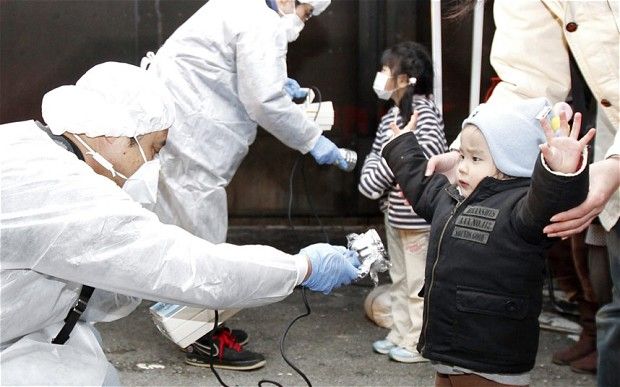
Officials in protective gear check for signs of radiation on children
© Reuters/Kim Kyung-HoonOfficials in protective gear check for signs of radiation on children who are from the evacuation area near the Fukushima Daini nuclear plant in Koriyama
Nearly 36 percent of children in Fukushima Prefecture have been disgnosed with abnormal growths on their thyroids, although doctors insist there is no link between the "cluster" of incidents and the disaster at the Fukushima Dai-ichi nuclear plant in March of last year.

The Sixth Report of Fukushima Prefecture Health Management Survey, released in April, included examinations of 38,114 children, of whom 35.3 percent - some 13,460 children - were found to have cysts or nodules of up to 5 mm (0.197 inches) on their thyroids.

A further 0.5 percent, totalling 186 youngsters, had nodules larger than 5.1 mm (0.2 inches).

A study by the Japan Thyroid Association in 2001 found that zero percent of children in the city of Nagasaki had nodules and only 0.8 percent had cysts on their thyroids.

"Yes, 35.8 percent of children in the study have lumps or cysts, but this is not the same as cancer," said Naomi Takagi, an associate professor at Fukushima University Medical School Hospital, which administered the tests.

Ambulance

Cholera Outbreak Spreading Throughout Western and Central Africa

Image
© portaltoafrica.com
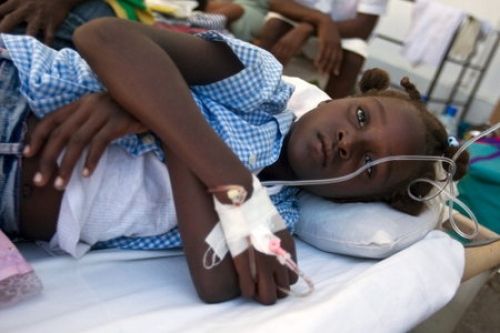
Freetown - Sierra Leone's health ministry on Wednesday said an outbreak of cholera in the west African country has killed 62 people in less than a month.

The western area, including the capital Freetown, and "three towns in the northern and southern parts of the country have now been declared cholera outbreak areas", said a ministry statement.

2 + 2 = 4

Vandana Shiva on the Problem with Genetically Modified Seeds

Bill talks to scientist and philosopher Vandana Shiva, who's become a rock star in the global battle over genetically modified seeds. These seeds - considered "intellectual property" by the big companies who own the patents - are globally marketed to monopolize food production and profits. Opponents challenge the safety of genetically modified seeds, claiming they also harm the environment, are more costly, and leave local farmers deep in debt as well as dependent on suppliers. Shiva, who founded a movement in India to promote native seeds, links genetic tinkering to problems in our ecology, economy, and humanity, and sees this as the latest battleground in the war on Planet Earth.


Info

New Report Reveals Link Between Bladder Infections and Overuse of Antibiotics in Chicken

Image
© guardian.co.uk
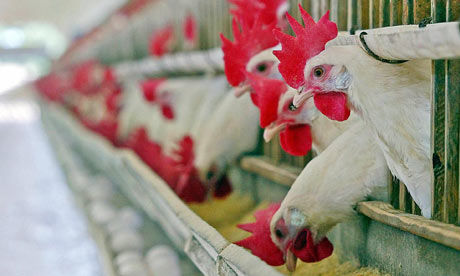
Bladder inflections affect 60 percent of all American women, with a rising number resistant to antibiotic treatment. Now researchers looking into the cause of the mysterious drug resistance have found evidence that it's coming from poultry treated with antibiotics, according to a joint investigation by the Food & Environment Reporting Network and ABC News.

The investigation, which aired on ABC's Good Morning America, highlights how the overuse of antibiotics in animal agriculture has made it more difficult to treat these painful, long lasting, and recurring infections because one course of antibiotics no longer works. The cost of treating the disease is estimated at $1 billion annually.

"A growing number of medical researchers say more than 8 million women are at risk of difficult-to-treat bladder infections because superbugs - resistant to antibiotics and growing in chickens - are being transmitted to humans in the form of E. coli," writes ABC Senior National Correspondent Jim Avila.

FERNnews Reporter Maryn McKenna looked into the studies, which revealed the link between human illness and the overuse of antibiotics in food animals. Amee Mangus, epidemiologist at McGill University, found that the E.Coli responsible for bladder infections closely matches the bacteria found in retail chicken - and those bacteria have a high level of resistance. "We're particularly interested in chickens," she said. "They in many cases are getting drugs from the time that they were in an egg all the way up to the time that they are slaughtered." McKenna goes into more detail in a story that appears here on The Atlantic.com.

Magnify

Our Microbes Are Under Threat - And The Enemy Is Us

Image
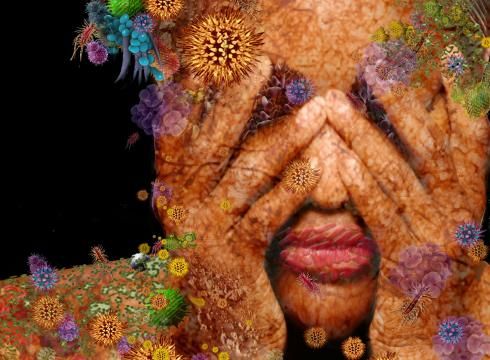
© usatoday.comMicrobes live on and in the human body, outnumbering human cells 10 to 1.
There's a war going on, right under our noses, and we're just too blind to see it.

Well, maybe not that blind.

We can see these tiny combatants, all 100 trillion of them, just fine under a microscope.

But they're not always under our nose.

Some of them are in our nose.

And in our mouths. And our intestines. Even in our breast milk and the birth canal.

They're microbes, living on and in the human body, and they outnumber human cells 10-to-1. Together, the microbes and their genes collectively have come to be called the microbiome, says Lita Proctor, who leads the National Institutes of Health's Human Microbiome Project, which last month released its initial map of a "normal" microbial makeup.

It's true that no man is an island. Scientists say we're closer to a coral reef, with an estimated 10,000 species of bacteria, fungi, yeasts and assorted others making up our ecosystem.

Health

Lungs respond to hospital ventilator as if it were an infection

When hospital patients need assistance breathing and are placed on a mechanical ventilator for days at a time, their lungs react to the pressure generated by the ventilator with an out-of-control immune response that can lead to excessive inflammation, new research suggests.

While learning that lungs perceive the ventilation as an infection, researchers also discovered potential drug targets that might reduce the resulting inflammation -- a tiny piece of RNA and two proteins that have roles in the immune response.

Using human cell cultures, Ohio State University researchers determined that mechanical pressures trigger an innate immune response -- the same immune response that the body launches to begin its fight against any kind of infection.

The rhythmic pressure of ventilation stimulated the production of pro-inflammatory chemicals by activating proteins called toll-like receptors (TLRs) in lung cells, the research showed.

Clock

Skin Has an Internal Clock

A research team at Charité - Universitätsmedizin Berlin together with scientists at a company in Hamburg has now discovered that human skin has an internal clock responsible for the time-based steering of its repair and regeneration, among other things.

The team published its first results from their basic research in the current issue of Proceedings of the National Academy of Sciences (PNAS).

Our skin is one of the body's essential organs and perhaps the most versatile: Besides representative, communicative and sensory functions, it serves as our body's boundary to the environment, forms an active and passive barrier against germs and helps keeping conditions constant for other important systems of the body, even though environmental conditions can change drastically. Frost, heat, sunlight and moisture - a variety of challenges for our skin - have different effects depending on the time of day.

Pills

Pharmaceutical Drugs are 62,000 Times More Likely to Kill You than Supplements

Image
The UK-based, international campaign group, the Alliance for Natural Health International (ANH-Intl) recently revealed data[1] showing that compared to supplements, an individual is:
  • Around 900 times more likely to die from food poisoning
  • Nearly 300,000 times more likely to die from a preventable medical injury during a UK hospital stay, which is comparable to the individual risk of dying that active military face in Iraq or Afghanistan
Additionally, the data shows that adverse reactions to pharmaceutical drugs are:
  • 62,000 times more likely to kill you than food supplements
  • 7,750 times more likely to kill you than herbal remedies
The data, which was collected from official sources in the UK and EU, demonstrate that both food supplements and herbal remedies are in the 'super-safe' category of individual risk - meaning risk of death from their consumption is less than 1 in 10 million. The group has created an excellent graphic[2] showing your relative risk of death from a variety of activities. Besides drugs and hospital injuries, you're also more likely to die from being struck by lightning or drowning in your bathtub than having a lethal reaction to herbs or supplements...