Health & WellnessS


Health

Social Deprivation Has a Measurable Effect On Brain Growth

Image
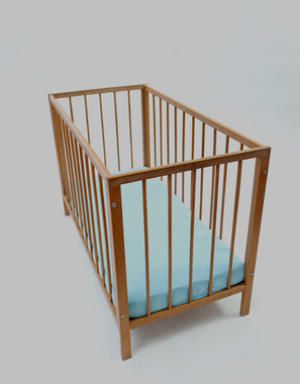
© Marcin Sadlowski / FotoliaCrib. Severe psychological and physical neglect produces measurable changes in children's brains, finds a study led by Boston Children's Hospital.
Severe psychological and physical neglect produces measurable changes in children's brains, finds a study led by Boston Children's Hospital. But the study also suggests that positive interventions can partially reverse these changes.

Researchers led by Margaret Sheridan, PhD, and Charles Nelson, PhD, of the Labs of Cognitive Neuroscience at Boston Children's Hospital, analyzed brain MRI scans from Romanian children in the ongoing Bucharest Early Intervention Project (BEIP), which has transferred some children reared in orphanages into quality foster care homes.

Their findings, published in the Proceedings of the National Academy of Sciences (Early Edition, online the week of July 23), add to earlier studies by Nelson and colleagues showing cognitive impairment in institutionalized children, but also showing improvements when children are placed in good foster homes.

People

Infants Can Use Language to Learn About People's Intentions

Image
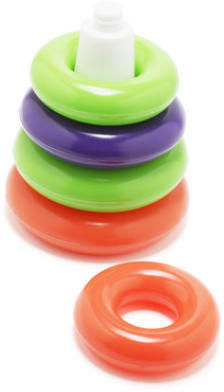
© Silkstock / FotoliaStacking rings.
Infants are able to detect how speech communicates unobservable intentions, researchers at New York University and McGill University have found in a study that sheds new light on how early in life we can rely on language to acquire knowledge about matters that go beyond first-hand experiences.

Their findings appear in the Proceedings of the National Academy of Sciences (PNAS).

"Much of what we know about the world does not come from our own experiences, so we have to obtain this information indirectly -- from books, the news media, and conversation," explained Athena Vouloumanos, an assistant professor at NYU and one of the study's co-authors. "Our results show infants can acquire knowledge in much the same way -- through language, or, specifically, spoken descriptions of phenomena they haven't -- or that can't be -- directly observed."

The study's other co-authors were Kristine Onishi, an associate professor in the Department of Psychology at Canada's McGill University, and Amanda Pogue, a former research assistant at NYU who is now a graduate student at the University of Waterloo.

Stop

Docs At Odds Over Kids' Cholesterol Test Guidance

Doctor
© Joe Raedle/Getty Images
Chicago -Should all U.S. children get tested for high cholesterol? Doctors are still debating that question months after a government-appointed panel recommended widespread screening that would lead to prescribing medicine for some kids.

Fresh criticism was published online Monday in Pediatrics by researchers at one university who say the guidelines are too aggressive and were influenced by panel members' financial ties to drugmakers.

Eight of the 14 guidelines panel members reported industry ties and disclosed that when their advice was published in December. They contend in a rebuttal article in Pediatrics that company payments covered costs of evaluating whether the drugs are safe and effective but did not influence the recommendations.

It also is not uncommon for experts in their fields to have received some consulting fees from drug companies.

Even so, the ties pose a conflict of interest that "undermines the credibility of both the guidelines and the process through which they were produced," says the commentary by researchers at the University of California at San Francisco. The authors are Dr. Thomas Newman, a researcher and former member of a Food and Drug Administration pediatrics advisory committee, and two heart disease researchers, Drs. Mark Pletcher and Stephen Hulley.

Pletcher has received research funding from drug and device makers; the other authors said they had no relevant industry ties.

Other criticism was published earlier this year in the Journal of the American Medical Association. That critique raised concerns about putting children on cholesterol drugs called statins, noting the medicine has been linked with a rare muscle-damaging condition in adults. Those authors were heart specialist Bruce Psaty and pediatrician Frederick Rivara, both of the University of Washington in Seattle.

JAMA included additional criticism from a dissenting member of the panel that produced the kids' cholesterol guidelines, Dr. Matthew Gillman of Harvard Medical School. He recommends more narrow screening based on family history of cholesterol problems.

Igloo

Training in the Ice Age

Ice Bath
© Raymond PrestonRugby players Jaque Fourie, Andre Pretorius and Jannes Labuschagne enjoy - or perhaps tolerate - an ice bath after a training session.
Training sessions for major sports events are gruelling. For mere mortals they can appear to be the pastime of superheroes.

Not only are there intense hours of high-performance exercises but some sportsmen like Britain's athlete Mo Farah adopt weird and inventive methods to increase their performance.

According to the Samsung Global Blogger, Farah uses an anti-gravity device and underwater treadmill to supplement his 195km-a-week running regime.

For many, cooling down after exercise involves a gentle stretch of the calf muscles and a bending over to the left and right of the abdomen - nothing too strenuous .

But Farah spends time in ice chambers that use liquid nitrogen. This might seem weird, but taking an ice bath after training has become standard practice.

Cooling or recovery techniques used usually include more traditional methods such as massage, stretching sessions, steam baths, yoga and swimming. But many athletes now claim that plunging into a tub of ice water (about 6C) after exercise increases their rate of recovery and helps reduce muscle pain.

Rocco Meiring, a swimming coach at Pretoria University's High Performance Centre, says: "This method is used for leg-intensive sports like rugby, soccer, cricket and athletics. Ice baths are often used in combination with hot baths or saunas after an intense training session or conditioning work."

So, how does an ice bath, and the combination of cold and hot, improve the speed and quality of recovery? Is there evidence that it works?

Health

Anxiety Disorders in Poor Moms Likely to Result from Poverty, Not Mental Illness, Study Suggests

Poor mothers are more likely to be classified as having the mental illness known as generalized anxiety disorder (GAD) because they live in poverty -- not because they are suffering from a psychiatric disorder, according to Rutgers researchers.

Judith C. Baer, an associate professor in the School of Social Work, and her team, in the study, "Is it Generalized Anxiety Disorder or Poverty? An Examination of Poor Mothers and Their Children," published online in Child and Adolescent Social Work, argue that although high levels of stress over long periods can lead to psychological problems, there is no evidence that generalized anxiety disorder in poor mothers is because of an "internal malfunction."

The findings confirm earlier studies that the poorest mothers have the greater odds of being classified as having generalized anxiety disorder. But Baer and her team wrote, ." ..there is no evidence for a malfunction of some internal mechanism. Rather, "there is a physical need in the real world that is unmet and produces anxiety."

Health

Genetic Mutations That Cause Common Childhood Brain Tumors Identified

Researchers at the Stanford University School of Medicine and Lucile Packard Children's Hospital have identified several gene mutations responsible for the most common childhood brain tumor, called medulloblastoma, adding evidence to the theory that the diagnosis is a group of genetically distinct cancers with different prognoses. These and accompanying findings are likely to lead to less-toxic, better-targeted treatment approaches over the next two years, the researchers said.

"We tend to treat all medulloblastomas as one disease without taking into account how heterogeneous the tumors are at the molecular level," said Yoon-Jae Cho, MD, an assistant professor of neurology and neurological sciences at Stanford, a pediatric neurologist at Packard Children's and the senior author of the new research. "This paper represents a finer-grained view of the genetic landscape of these tumors and provides us with some leads on how to develop new therapies."

The research, which appeared online in Nature July 22, is part of a large, ongoing effort to characterize genetic errors in medulloblastoma. Two companion studies on which Cho is a co-author will be published simultaneously with his paper. The three papers came from a consortium that involves scientists at Stanford, Packard Children's, the Broad Institute, Children's Hospital Boston, the Dana-Farber Cancer Institute, the German Cancer Research Center, Brandeis University and the Hospital for Sick Children in Toronto.

Coffee

Ten Reasons to Quit Your Coffee!

Image
Coffee: is it good or bad for us?

You might get media whiplash trying to figure that out. The truth is, I find this subject to be as confusing as you probably do. After all, the media certainly doesn't help clarify whether America's favorite cup of joe is going to land you in the Doc's office or set you free with a clean bill of health.

And when one night's news report conflicts with another's blatantly contradictory messages, it is no wonder why so many of you shrug your shoulders in utter confusion as you refill your morning mug and get on with your day! And with the velvety aroma and promise of energy from that caffeine jolt, you might rather just assume that there must be something to those beneficial claims...

I know all about this adoration of coffee.

I too was smitten and enamored with Coffea Arabica. We had our courtship during the 1990's when I worked over 80 hours in the emergency room and saw 30 to 40 patients a day. I traded sleep for espresso, authentic energy for Haagen Daz coffee ice cream and normal circadian rhythms for high speed caffeinated adrenaline rushes.

Comment: For more information about coffee and it's effects on the human brain and body read the following articles:

The Coffee Illusion: What the Magic Brew Really Does to Your Brain
The hidden dangers of caffeine: How coffee causes exhaustion, fatigue and addiction
Coffee Addiction: How to Naturally Kick the Habit

In addition read about a protocol developed by Dr. Mark Hyman, writer of the book Ultra Mind Solution: How to Eliminate Caffeine in Seven Days


Magic Wand

How to Rewire Your Brain to End Food Cravings

Image
© kidspot.com.auFood cravings - those intense desires to eat a particular food, strong enough that you may go off your healthy eating plan and even out of your way to get it - are complex desires that most people experience at one time or another.
I'm a food addict. We all are. Our brains are biologically driven to seek and devour high-calorie, fatty foods. The difference is that I have learned how to control those primitive parts of my brain. Anyone can this if they know how. In this article, I will share 3 steps to help you counteract those primitive parts of your brain that have you chasing high-calorie, nutrient-poor foods. But before you can update your brain's biological software, you've got to understand why it developed in the first place.

Calories = Survival

The brain's desire to binge on rich food is a genetic holdover from the days of hunter-gatherers. Given what scientists know today about our early ancestors, it makes sense that our brains are hardwired to fixate on high-calorie foods. It's a survival mechanism. Eating as many calories as possible, whenever possible, allowed our ancestors to store excess calories as fat and survive lean times. That approach worked well for 2.4 million years, but today it's making us sick and fat.

Pills

"Abuse-Deterrent" OxyContin Leads to Heroin Use - So How Do We Curb the Pill Epidemic?

Image
© Alternet
Today, the New England Journal of Medicine (NEJM) released research showing that the recent introduction of the reformulated, abuse-deterrent version of OxyContin by Purdue is linked to increases in heroin use.

In the letter-to-the-editor appearing in the Journal, Theodore Cicero, Ph.D., Matthew Ellis, M.P.E., and Hilary Surratt, Ph.D., wrote,
"Our data show that an abuse-deterrent formulation successfully reduced abuse of a specific drug but also generated an unanticipated outcome: replacement of the abuse-deterrent formulation with alternative opioid medications and heroin, a drug that may pose a much greater overall risk to public health than OxyContin."
Not surprisingly, it turns out that making one particular drug harder to abuse does not suddenly cause a drug-free life for people addicted to OxyContin. If only it were that simple, but it's not.

Butterfly

Power Naps Boost Memory, Increase Alertness and Improve Mood

Image
For decades researchers have studied the science of sleep. Sleep problems are common in North America so the need to understand the suspension of consciousness is huge. Today scientists say with confidence that sleep not only provides our bodies with the restorative rest it needs, it can help our memory.

Short Naps and Sleep Problems

Evidence continues to indicate that power naps can boost our memory. U.S scientists say that a short nap allows the brain to absorb new information. In one study conducted by the University of California, healthy adults were given a difficult learning assignment in the morning. Half of them were then sent for a power nap. When the tests were repeated, those who took a nap far outperformed those who did not. The researchers examined their brain activity and explain that the retention and processing of information is happening in a sleep phase between dreaming sleep and deep sleep referred to as "stage 2 non-rapid eye movement sleep". During this period of rest, fact-based memories move from a temporary storage area in the brain to an area called the pre-frontal cortex. The pre-frontal cortex is the part of the brain that is responsible for abstract thinking and thought analysis. It is also associated with memory. It enables people to learn and concentrate.