Health & WellnessS


Health

When It's Time For a Health Check-up, Avoiding Your Doctor Can Save Your Life

Doctor
© PreventDisease.com
Today, more than ever, conventional medicine is one of the biggest threats to your health. You're nearly 300,000 times more likely to die from a preventable medical injury during a hospital stay. Pharmaceutical drugs are 62,000 times more likely to kill you than food supplements and 7,750 times more likely to kill you than herbal remedies. CT scans are a major cause of the breast cancer they are supposed to detect. No ifs, ands or buts about it, Doctors are a leading cause of death and if you want to a live longer life, you'll avoid them.

When Brian Mulroney, the former Canadian prime minister, went for a check-up in 2005 he was given a CT scan.

This discovered two small lumps in his lungs, and surgery was recommended.

The operation was complicated by inflammation of the pancreas -- a serious condition which meant being in intensive care.

He spent six weeks in hospital but was readmitted a month later because a cyst, which had developed on his pancreas because of the inflammation, had to be removed as well.

All those operations, scans, time off work, tests -- but some say such medical testing is worth it if they catch the nodules early and save lives isn't it? Not at all. The nodules weren't cancer -- they were benign.

Essentially, Mulroney had surgery and complications for a 'problem' that hadn't actually been a problem. This happends thousands of times per day across mainstream medicine.

'Body MOT' screening tests -- like those the politician had -- are done for people who are completely well and have no symptoms.

A clampdown on clinics offering MOT health checks to the worried well -- which can include whole body scans -- has been signaled by governments, amid concerns over the exposure of healthy people to unnecessary radiation.

How could an innocent check-up be harmful?

Evil Rays

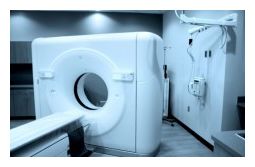
Cardiac CTA Emits Radiation Equal to 600 Chest X-Rays

CT Scan
© Natural Society
CT scans are used for the diagnosis of a numerous health symptoms in today's society. They allow your doctor a clear picture of the inner workings of your body, but unfortunately these screenings come with a price. Using one example, a cardiac CT angiogram, or a cardiac CTA, specifically looks for blockages in the heart, but this helpful medical tool may be doing some serious additional harm.

According to researchers at Mayo Clinic in Rochester, Minnesota, a cardiac CTA exposes patients to the same amount of radiation as 600 chest X-rays - an amount of radiation also close to a single piece of radioactive food.

Researchers warn that in many cases, the benefits of a cardiac CTA outweigh the risks and caution people against swearing them off entirely, but it can be difficult to tell when you truly need to go through such a risky screening.

Dr. Gilbert Raff of the Ministrelli Center for Advanced Cardiovascular Imaging at the William Beaumont Hospital says that comparing the radiation amounts to those of regular X-rays is unfair, that "modern technology has reduced the chest X-ray [radiation] dose so substantially that it is no longer a fair or reasonable target to use." Of course the mere nature of his position as director at the Center for Advanced Cardiovascular Imaging begs us to question his impartiality.

Health

Scientists Explore Molecular Link Between Arsenic Exposure and Lung Cancer

Arsenic is a natural element in the environment, sometimes found in air, soil and water. Arsenic contaminated water is a global threat, currently affecting more than 100 million people. Both genetic and epigenetic changes drive arsenic-induced carcinogenesis and lung cancer is one of the main consequences of this process.

Researchers from the British Columbia Cancer Research Center have analyzed a panel of lung tumors from a population exposed to arsenic. Victor Martinez, researcher at the British Columba Cancer Research Center, will share his latest research at the 5th Latin American Conference on Lung Cancer on July 26.

Health

Gene Therapy Holds Promise for Reversing Congenital Hearing Loss

Image
© Vasiliy Koval / FotoliaA new gene therapy approach can reverse hearing loss caused by a genetic defect in a mouse model of congenital deafness.
A new gene therapy approach can reverse hearing loss caused by a genetic defect in a mouse model of congenital deafness, according to a preclinical study published by Cell Press in the July 26 issue of the journal Neuron. The findings present a promising therapeutic avenue for potentially treating individuals who are born deaf.

"This is the first time that an inherited, genetic hearing loss has been successfully treated in laboratory mice, and as such represents an important milestone for treating genetic deafness in humans," says senior study author Lawrence Lustig of the University of California, San Francisco.

Hearing loss is one of the most common human sensory deficits, and it results from damage to hair cells in the inner ear. About half of the cases of congenital hearing loss are caused by genetic defects. However, the current treatment options -- hearing amplification devices and cochlear implants -- do not restore hearing to normal levels. Correcting the underlying genetic defects has the potential to fully restore hearing, but previous attempts to reverse hearing loss caused by genetic mutations have not been successful.

Health

Use of Sunbeds Leads to Over 3000 Cases of Melanoma a Year in Europe

Of 63,942 new cases of cutaneous melanoma (a form of skin cancer) diagnosed each year in Europe an estimated 3,438 (5.4%) are related to sunbed use. Sunbed users are at a 20% increased relative risk of skin cancer compared with those who have never used a sunbed. This risk doubles if they start before the age of 35 and experts warn that "tougher actions" are needed to reduce this risk.

Sun exposure is the most significant environmental cause of skin cancer and sunbeds have become the main non-solar source of UV exposure in Western Europe (UV is the wavelength associated with the occurrence of skin cancer). A study from 2005 found a 75% increased risk of melanoma if sunbed sessions were started during adolescence or early adulthood. But no studies since then have estimated the impact of melanomas (skin cancer tumours) due to sunbeds in Western Europe.

So researchers from the International Prevention Research Institute in France and the European Institute of Oncology in Italy analysed the results of 27 separate studies on skin cancer and sunbed use between 1981 and 2012. Countries included the UK, France and Germany.

Pills

New Drug Could Treat Alzheimer's, Multiple Sclerosis and Brain Injury

A new class of drug developed at Northwestern University Feinberg School of Medicine shows early promise of being a one-size-fits-all therapy for Alzheimer's disease, Parkinson's disease, multiple sclerosis and traumatic brain injury by reducing inflammation in the brain.

Northwestern has recently been issued patents to cover this new drug class and has licensed the commercial development to a biotech company that has recently completed the first human Phase 1 clinical trial for the drug.

The drugs in this class target a particular type of brain inflammation, which is a common denominator in these neurological diseases and in traumatic brain injury and stroke. This brain inflammation, also called neuroinflammation, is increasingly believed to play a major role in the progressive damage characteristic of these chronic diseases and brain injuries.

By addressing brain inflammation, the new class of drugs -- represented by MW151 and MW189 -- offers an entirely different therapeutic approach to Alzheimer's than current ones being tested to prevent the development of beta amyloid plaques in the brain. The plaques are an indicator of the disease but not a proven cause.

Health

How a Single Brain Trauma May Lead to Alzheimer's Disease

A study, performed in mice and utilizing post-mortem samples of brains from patients with Alzheimer's disease, found that a single event of a moderate-to-severe traumatic brain injury (TBI) can disrupt proteins that regulate an enzyme associated with Alzheimer's. The paper, published in The Journal of Neuroscience, identifies the complex mechanisms that result in a rapid and robust post-injury elevation of the enzyme, BACE1, in the brain. These results may lead to the development of a drug treatment that targets this mechanism to slow the progression of Alzheimer's disease.

"A moderate-to-severe TBI, or head trauma, is one of the strongest environmental risk factors for Alzheimer's disease. A serious TBI can lead to a dysfunction in the regulation of the enzyme BACE1. Elevations of this enzyme cause elevated levels of amyloid-beta, the key component of brain plaques associated with senility and Alzheimer's disease," said first author Kendall Walker, PhD, postdoctoral associate in the department of neuroscience at Tufts University School of Medicine (TUSM).

Building on her previous work, neuroscientist Giuseppina Tesco, MD, PhD, of Tufts University School of Medicine (TUSM), led a research team that first used an in vivo model to determine how a single episode of TBI could alter the brain. In the acute phase (first two days) following injury, levels of two intracellular trafficking proteins (GGA1 and GGA3) were reduced, and an elevation of BACE1 enzyme level was observed.

Bandaid

FDA Tries to Wiggle Out of BPA Problem with Doublespeak and a Partial Ban

Image
© Alliance for Natural Health
Even this limited action is taken only at industry request.

The US Food and Drug Administration has amended food additive rules to "no longer provide for the use" of BPA (bisphenol-A) in infant bottles and children's sippy cups. BPA is a common ingredient in polycarbonate plastics and, as regular Pulse readers know, an endocrine-disrupting chemical that has been linked with serious health problems, including cancer, birth defects, and heart disease. China banned BPA in baby bottles last year; the European Union banned it two years ago, and Canada declared BPA to be a toxic substance.

What the FDA is doing is indirectly banning the substance in this one application, without having to say so explicitly or even take a strong position on the subject! Moreover, FDA is being careful not to make any statement on BPA's safety. All of this came in response to a request from the American Chemistry Council, which is seeking to even the playing field of their producers' market share.


What does this mean? We think this means that some producers are complaining about the cost of using substitute ingredients because of a consumer backlash against BPA, and no longer want their competitors to be able to use it.

We and others in the nonprofit world have been working on the BPA issue for years. It is not at all surprising that we actually got what we wanted, after numerous rejections from FDA - but only because industry eventually joined our side for profit reasons. Is there nothing FDA won't do for them? Big Business says, "Jump!" and FDA asks, "How high?"

Magic Wand

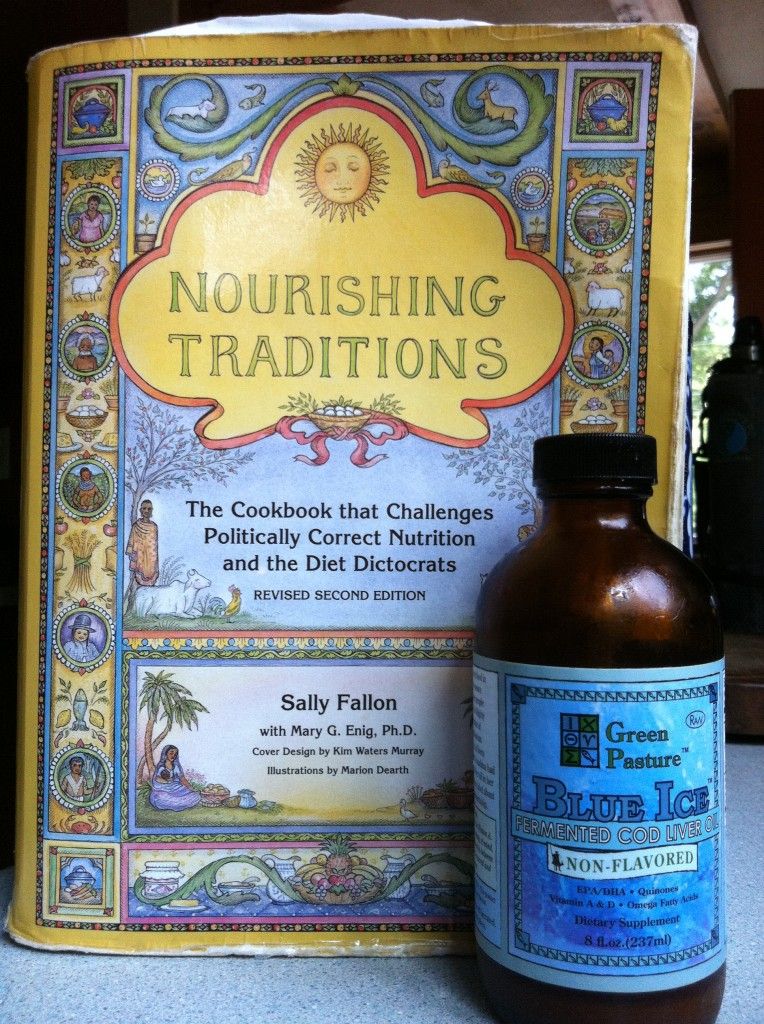
How the Weston Price Diet Helped My Client with Her Autoimmune Disease

Image
© pvnutritionaltherapy.com
When Amy walked in my office for my free initial consult, I wasn't sure I could help her. She came to me seeking help for a rare autoimmune disease called Behcet's disease (pronounced Beh SHETS) which is characterized by inflammation in blood vessels throughout the body.

Autoimmune diseases are conditions where the body's immune system attacks its own tissues. Multiple sclerosis, lupus, type 1 diabetes, hashimoto's thyroiditis, rheumatoid arthritis, crohn's disease, ulcerative colitis and parkinson's are some of the more well-known autoimmune diseases.

Behcet's disease is one of about 100 autoimmune diseases that afflict some 24 million Americans. That's 1 out of every 12 Americans. And they afflict women more than men, 1 out of 9, to be exact. They are the number two cause of chronic illness in America and one of the leading causes of death for women under the age of 65.

Here's the scary part. The incidence of autoimmune diseases has tripled in the past few decades.

Why? What's going on?

No one knows for sure but the evidence, like so many of our chronic diseases, points to industrialized living. Rates of autoimmune diseases are significantly higher in industrialized countries. Exposures to thousands of man made pollutants and chemicals in our food and environment are wreaking havoc with our body, in particular, our immune system.

Attention

Flu vaccine to be given to all children in the UK

All children are to be given the flu vaccination after experts said it could save up to 2,000 lives a year.
Image
© AlamyFlu vaccine: Nasal spray could protect against norovirus

The scheme, which is expected to be rolled out in 2014, will see all children aged two to 17 given the vaccination through a nasal spray.

Younger children will be given the spray at their GP practice and schoolchildren will receive it at school.

The Joint Committee on Vaccination and Immunisation, which advises the Government on vaccination policy, said the flu program should be extended to children because it could reduce the rate of infection by 40%.

Health Secretary Andrew Lansley has accepted the recommendation, a Department of Health spokesman said.

At present, over-65s, pregnant women and people with a serious medical condition, including children, are eligible for a seasonal flu jab.

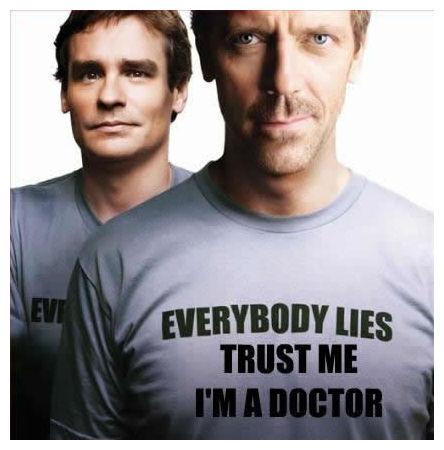
Comment: Pretty much wherever you go in Western nations:

Image
© WeKnowMemes