Health & WellnessS


X

Cargill and others behind anti organic "Stanford Study"

Anti-organic "study" is not news, rather, coordinated propaganda campaign.

Organic Food
© Unknown
Harry Wallop of the London Telegraph ends his anti-organic food editorial with the following sentence: "Tomorrow, the baby is going to get an extra dollop of pesticide-sprayed carrots."

Whether or not Wallop is as brain-addled as he leads on to being, the point of his editorial is to encourage similar attitudes amongst the Telegraph's readership, attempting to manipulate public perception in the wake of a recent Stanford "study" regarding organic food.

Whether or not readers of the Telegraph will put their own health and that of their children at risk for the sake of protecting big-agri's bottom line and the faltering paradigm that big-agri products are safe for human consumption simply because Harry Wallop thinks its good to feed his baby with pesticide-sprayed carrots remains to be seen.

The London Telegraph, when not fabricating news to support England's latest imperial adventures overseas, is at the forefront of many of the largest corporate-financier funded lobbying campaigns. Recently, someone has splurged, and splurged big on anti-organic food lobbying built atop a suspect Stanford study.

A Flawed "Study"

When entire news cycles are dominated by headlines built on a single university study, with editorials attempting to hammer in big-agri talking points, a lobbying effort is clearly afoot.

Whistle

Monsanto's Top 7 Lies About GMO Labeling and Proposition 37

Image
© Natural Society
Due to the near future voting on November 6, 2012 for California's Proposition 37, there has been a lot of heat going back and forth concerning GMO foods. Up until now, 10′s of million of dollars have been funneled into the opposing side of the bill, with biotechnology giant Monsanto dishing out a whopping $4.2 million alone. Monsanto has even recently published a page on their site titled "Taking a Stand: Proposition 37, The California Labeling Proposal," where the GMO giant attempts to logically explain why it is against GMO labeling. Needless to say, the post reeks of false and misleading statements, and oftentimes downright deception. Here are the top 7 lies Monsanto wants you to believe regarding GMO labeling and Prop 37.

Magic Wand

Corruption of Science: 5 Ways the Stanford Study Sells Organics Short

organic food
© Indiana Public Media/Flickr
Is organic food little more than a trumped-up marketing scheme, another way for affluent consumers to waste money? A just-released paper by Stanford University researchers - and the reaction to it by the media - suggests as much. (Abstract here; I have a copy of the full study, but can't upload it for copyright reasons.)

"Stanford Scientists Cast Doubt on Advantages of Organic Meat and Produce," declared a New York Times headline. "Organic food hardly healthier, study suggests," announced CBS News. "Is organic healthier? Study says not so much, but it's key reason consumers buy," the Washington Post grumbled.

In reality, though, the study in some places makes a strong case for organic - though you'd barely know it from the language the authors use. And in places where it finds organic wanting, key information gets left out.

Evil Rays

Study: 290% Increased Risk of Brain Tumor After 10 Years of Cellphone Use

Mobile Phone
© Natural Society
How long have you been using your cellphone? Using a mobile device for any length of time is damaging to some degree, but new research is shedding light on just how significant of an influence extended cellphone use has on the brain.

In a newly-released study conducted at the Örebro Hospita in Sweden, it was revealed that 10 years of cellphone use resulted in an average 290% increased risk of brain tumor development. Interestingly, the tumor development was found on the side of the head in which the cellphone was most used.

It's important to understand that cellphone use has gone up significantly since 10 years ago, meaning that more recent results may show an even higher risk. Statistically, the average person in Britain and many other developed nations will soon have about 2 cellphones each. With the increased number of cellphones on the citizens of the world comes something known as 'second-hand cellphone use'. Just as with smoking, sitting in a bus, airplane, or train will expose you to upwards of several hundred cellphones at one time.

Another key factor is that 10 years ago far less young children were using cellphones - a select few having them as 'emergency' contact devices. Now, it's not uncommon to see children under 10 chatting or texting on their cellphone throughout the day.

It is a well known fact that developing children are more affected by cellphone radiation, with behavioral disorders known to develop from cellphone use at an early age. It is also known that cellphone radiation is actually changing the brain in ways that are not currently understood.

Health

Use Essential Fatty Acids to Reduce Inflammation and Support Your Adrenals

Image
Essential fatty acids (EFAs) are nutrients that are necessary for biological processes but are not created in our own body. These fatty acids must be obtained from our diet.
EFAs are essential fatty acids, which we need to live but our bodies cannot create. So we need take EFAs from outside sources.

Johanna Budwig, the creator of the Budwig Diet for successfully treating cancer, claimed before she died at age 95 in 2003 that she was given as much grief from the burgeoning heat processed hydrogenated trans-fatty acid cooking and salad oil industry as the cancer industry.

Budwig was a German biochemist whose research pioneered the classifications of fatty acids. She publicly announced often that those trans-fatty oils promoted to 1950s' housewives were worse than unhealthy; they caused disease.

Bulb

Thinking Outside the Processed Foods Box: Health and Safety Advantages of Organic Food

Image
I have enjoyed a virtually exclusive organic diet for the past 30 years. But I was deeply unsettled by a September 4 New York Times article and a similar Associated Press story casting doubt on the value of an organic diet.

In terms of the extra cost and value of eating organically, I have always subscribed to the adage "pay now or pay later." While my personal experience does not provide much in terms of a scientifically legitimate sample size, in the last 30 years, after suffering from pesticide poisoning prompted my shift to an organic diet, I have exceeded my insurance deductible only once, due to an orthopedic injury. And my doctor keeps telling me how remarkable it is that I, at age 57, have no chronic health problems and take no pharmaceuticals.

Unfortunately, the analysis done by Stanford University physicians in the articles noted above did not look "outside the box" as many organic farming and food advocates do.

Arrow Up

Stem cells bring back feeling for paralysed patients

Renewed feeling
© Medical Images/Getty ImagesRenewed feeling
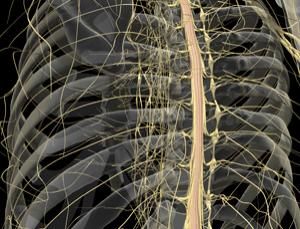
For the first time, people with broken spines have recovered feeling in previously paralysed areas after receiving injections of neural stem cells.

Three people with paralysis received injections of 20 million neural stem cells directly into the injured region of their spinal cord. The cells, acquired from donated fetal brain tissue, were injected between four and eight months after the injuries happened. The patients also received a temporary course of immunosuppressive drugs to limit rejection of the cells.

None of the three felt any sensation below their nipples before the treatment. Six months after therapy, two of them had sensations of touch and heat between their chest and belly button. The third patient has not seen any change.

"The fact we've seen responses to light touch, heat and electrical impulses so far down in two of the patients is very unexpected," says Stephen Huhn of StemCells, the company in Newark, California, developing and testing the treatment. "They're really close to normal in those areas now in their sensitivity," he adds.

Bulb

Brainy beverage: Study reveals how green tea boosts brain cell production to aid memory

It has long been believed that drinking green tea is good for the memory. Now researchers have discovered how the chemical properties of China's favorite drink affect the generation of brain cells, providing benefits for memory and spatial learning. The research is published in Molecular Nutrition & Food Research.

"Green tea is a popular beverage across the world," said Professor Yun Bai from the Third Military Medical University, Chongqing, China. "There has been plenty of scientific attention on its use in helping prevent cardiovascular diseases, but now there is emerging evidence that its chemical properties may impact cellular mechanisms in the brain."

Professor Bai's team focused on the organic chemical EGCG, (epigallocatechin-3 gallate) a key property of green tea. While EGCG is a known anti-oxidant, the team believed it can also have a beneficial effect against age-related degenerative diseases.

"We proposed that EGCG can improve cognitive function by impacting the generation of neuron cells, a process known as neurogenesis," said Bai. "We focused our research on the hippocampus, the part of the brain which processes information from short-term to long-term memory."

Info

NFL Players at Higher Risk For Brain Diseases

NFL
© Getty
Alongside the growing realization that football players often suffer numerous concussions that can permanently affect learning and memory, a new study suggests that NFL pros may also have an increased risk of dying from Alzheimer's and other brain diseases.

For the study, researchers looked at the health of nearly 3,500 National Football League players who had competed in at least five seasons between 1959 and 1988. The average age of the players was 57, and about 10 percent had died.

Of those, death certificates showed that NFL players were nearly four times more likely than the general population to die from Alzheimer's disease or Lou Gehrig's disease, also known as ALS.

Seven of the 334 deceased players had Alzheimer's and seven had ALS, the researchers report today in the journal Neurology.

Attention

West Nile Outbreak Set To Be Worst in US History

Image
WNv: Are mosquitoes to blame?
With the West Nile Virus outbreak set to be the worst in U.S. history, the nation's emergency physicians urge the public to take precautions now to protect from being infected.

"Right now, the CDC is seeing cases in practically every state in the country," said Dr. David Seaberg, president of the American College of Emergency Physicians. "This is a problem that affects everyone, everywhere. But simple steps can stand in the way of a person being infected with West Nile."

West Nile Virus, which is a disease spread by mosquitos, causes only mild, flu-like symptoms in 20 percent of cases, according to the Centers for Disease Control and Prevention (CDC). Most people (about 4 out of 5) who are infected show no symptoms at all. But in rare cases, some will develop severe symptoms that can include high fever, disorientation, coma, tremors, convulsions, vision loss, along with several others. It can cause permanent neurological damage and even death.

So far in 2012, 47 states have reported more than 1,100 cases West Nile cases, including 41 deaths, according to the CDC, with 75 percent of the cases reported in Texas, Mississippi, Louisiana, South Dakota and Oklahoma.