Health & WellnessS


Health

Toxoplasmosis: Parasite threat from cats revealed

Image
Experts say more research is needed into a disease spread by cats after figures show an estimated 350,000 people a year in the UK become infected with toxoplasmosis.

Although only a minority of people - between one and two in every 10 - has symptoms, advisers say extra measures to control the disease may be needed.

The disease is spread by direct contact with cats or eating contaminated food.

The Food Standards Agency has released an official report.

Cat owners are assured that the risks can be managed with good basic hygiene and common sense.

Comment: Read more:

Toxoplasmosis Parasite May Trigger Schizophrenia And Bipolar Disorders

Brain parasite hosted by cats linked to increased suicidal behaviour threat: study


Arrow Up

Debunked: Ridiculous Study Claims Organic Same as Conventional


The latest study to demonize foods free of GMO ingredients and mercury-containing high-fructose corn syrup ultimately once again fails to accurately address key aspects of the conventional verses organic debate and even falls short of properly addressing the limited scope of concerns it does attempt to analyze.

You can see even from the comments on many of the mainstream reports that readers quickly saw through the eroneous 'organic is the same as conventional' headlines and began highlighting the many inaccuracies of the research.

As I outline in the video, the study completely fails to account for key factors such as the presence of GMOs, artificial sweeteners like aspartame and sucralose, mercury (such as that admittedly contained in high-fructose corn syrup), BPA, and much more. It also does not even properly address the two topics it seeks to address concerning the presence antibiotics and chemical residue.

The researchers fail first of all to reveal the difference between the organic food and conventional food pesticides, and then go on to state that organic food actually does have lower pesticide levels.

2 + 2 = 4

Study: Vitamin D Deficiency Equates to Frailty and Early Death

Image
Two recent studies - one from Oregon State University and another from the University of Maryland's School of Medicine - have determined that lower blood levels of the "sunshine vitamin" - vitamin D (serum 25-hydroxyvitamin D (25(OH)D)) - equates to earlier death and greater incidence of frailty later in life.

The most recent study, led by Dr. Ellen Smit, an assistant professor at Oregon State, analyzed 4,731 adults over the age of 60 years old. The study followed the adults for twelve years using data from the Third National Health and Nutrition Examination Survey.

The researchers measured the adults' levels of frailty, gauged by low body mass, exhaustion, general weakness, slower walking and reduced physical activity.

The randomized study's methodology, intended to represent the general U.S. elderly population, also followed death rates and correlated them with serum vitamin D levels.

Health

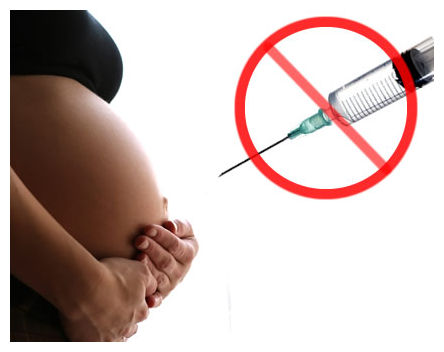
Study Shows Influenza Vaccines Cause Spontaneous Abortions and Stillbirths

Vaccines And Abortions
© Prevent Disease.com

A comparison of fetal-loss reports in the Vaccine Adverse Event Reporting System (VAERS) during three consecutive influenza seasons shows there was a synergistic toxicity causing spontaneous abortions (SAB) and stiillbirths (SB) following the Center for Disease Control (CDC) recommendations of pandemic and influenza vaccines administered to pregnant women.

An overwhelming majority of pregnant women who visit the doctor's office are now refusing the flu vaccine over fears it will harm their fetus and their fears are now scientifically justified. More than 90% of all expecting mothers will now say no to the flu vaccine due to fear of miscarriage and delivery of toxic byproducts to their unborn child.

In 2011, Dr. Alessandro Bertoucci who analyzed the practices of 256 physicians treating more than 600,000 patients, reported that a staggering 91% of pregnant women are declining influenza vaccines due to fears of miscarriage and suspected toxins in the vaccine itself.

A study published last year in the Human and Experimental Toxicology journal found a direct statistical correlation between higher vaccine doses and infant mortality rates. It was a confirmation that many anti-vaccine advocates have long awaited and further establishes and adds to preliminary evidence that vaccinations are toxic poisons having no place in the human body.

The study, Infant mortality rates regressed against number of vaccine doses routinely given: Is there a biochemical or synergistic toxicity?, was conducted by Gary S. Goldman and Neil Z. Miller who has been studying the dangers of vaccines for 25 years.

The infant mortality rate (IMR) is one of the most important indicators of the socio-economic well-being and public health conditions of a country. The US childhood immunization schedule specifies 26 vaccine doses for infants aged less than 1 year--the most in the world--yet 33 nations have lower IMRs. Australia and Canada are a close 2nd and 3rd respectively with 24 vaccine doses.

Some countries have IMRs that are less than half the US rate: Singapore, Sweden, and Japan are examples. According to the Centers for Disease Control and Prevention (CDC), "The relative position of the United States in comparison to countries with the lowest infant mortality rates appears to be worsening."

Health

Living against the clock: Does loss of daily rhythms cause obesity?

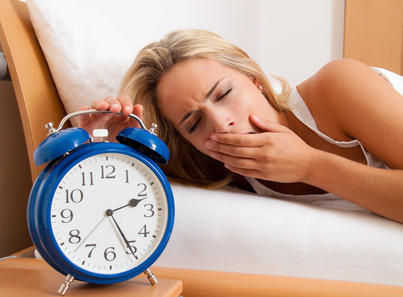
Sleep Clock
© Credit: © Gina Sanders / FotoliaElectric light allows us to work, rest and play at all hours of the day, and a new article suggests that this might have serious consequences for our health and for our waistlines.
When Thomas Edison tested the first light bulb in 1879, he could never have imagined that this invention could one day contribute to a global obesity epidemic. Electric light allows us to work, rest and play at all hours of the day, and a paper published this week in Bioessays suggests that this might have serious consequences for our health and for our waistlines.

Daily or "circadian" rhythms including the sleep wake cycle, and rhythms in hormone release are controlled by a molecular clock that is present in every cell of the human body. This human clock has its own inbuilt, default rhythm of almost exactly 24 hours that allows it to stay finely tuned to the daily cycle generated by the rotation of Earth. This beautiful symmetry between the human clock and the daily cycle of Earth's rotation is disrupted by exposure to artificial light cycles, and by irregular meal, work and sleep times. This mismatch between the natural circadian rhythms of our bodies and the environment is called "circadian desynchrony."

The paper, by Dr. Cathy Wyse, working in the chronobiology research group at the University of Aberdeen, focuses on how the human clock struggles to stay in tune with the irregular meal, sleep and work schedules of the developed world, and how this might influence health and even cause obesity.

"Electric light allowed humans to override an ancient synchronization between the rhythm of the human clock and the environment, and over the last century, daily rhythms in meal, sleep and working times have gradually disappeared from our lives," said Wyse. "The human clock struggles to remain tuned to our highly irregular lifestyles, and I believe that this causes metabolic and other health problems, and makes us more likely to become obese."

Bacon

Calorie Restriction Does Not Affect Survival: Study of Monkeys Also Suggests Some Health Benefits

Rhesus monkey
© kamonrat / FotoliaRhesus monkey eating mango.
Scientists have found that calorie restriction -- a diet composed of approximately 30 percent fewer calories but with the same nutrients of a standard diet -- does not extend years of life or reduce age-related deaths in a 23-year study of rhesus monkeys. However, calorie restriction did extend certain aspects of health.

The research, conducted by scientists at the National Institute on Aging (NIA) at the National Institutes of Health, is reported in the August 29, 2012 online issue of Nature.

Calorie restriction research has a long history. The first finding came in the 1930s, when investigators observed laboratory rats and mice lived up to 40 percent longer when fed a calorie-restricted diet. Subsequent research has cited calorie restriction as extending lifespan of yeast, worms, flies and some strains of mice. But other studies have not shown a longevity benefit. For example, in studies of certain strains of mice, calorie restriction on average had no effect on lifespan. Some of these mice actually had a shorter lifespan when given a calorie-restricted diet. To date, research does not provide evidence that calorie restriction is an appropriate age regulator in humans, the NIA investigators point out. Currently, limited human studies are under way to test the effectiveness and safety of calorie restriction in people.

The survival results in the study reported Aug. 29 by NIA researchers differ from those published in 2009 by NIA-supported investigators at the University of Wisconsin-Madison. The Wisconsin study followed two groups of rhesus monkeys for 20 years and found that monkeys on a calorie-restricted diet lived longer than those on a standard diet.

Penis Pump

Monogamy and immune System: Differences in sexual behavior impact bacteria hosted and genes that control immunity

California mouse
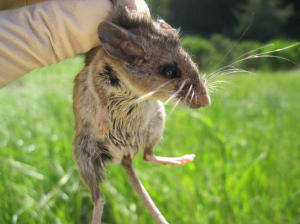
© University of Texas at Austin, Texas Advanced Computing CenterThe California mouse (Peromyscus californicus) is a species of rodent in the family Cricetidae, found in northwestern Mexico and central to southern California. Most rodents are polygamous, but the California mouse pair bonds, making it a model organism for researchers studying the genetics and implications of partner fidelity.
In the foothills of the Santa Cruz Mountains two closely related species of mice share a habitat and a genetic lineage, but have very different social lives. The California mouse (Peromyscus californicus) is characterized by a lifetime of monogamy; the deer mouse (Peromyscus maniculatus) is sexually promiscuous.

Researchers at the University of California Berkeley recently showed how these differences in sexual behavior impact the bacteria hosted by each species as well as the diversity of the genes that control immunity. The results were published in the May 2012 edition of PLoS One.

Monogamy is a fairly rare trait in mammals, possessed by only five percent of species. Rarely do two related, but socially distinguishable, species live side-by-side. This makes these two species of mice interesting subjects for Matthew MacManes, a National Institutes of Health-sponsored post-doctoral fellow at UC Berkeley.

Through a series of analyses, MacManes and researchers from the Lacey Lab examined the differences between these two species on the microscopic and molecular levels. They discovered that the lifestyles of the two mice had a direct impact on the bacterial communities that reside within the female reproductive tract. Furthermore, these differences correlate with enhanced diversifying selection on genes related to immunity against bacterial diseases.

Bacteria live on every part of our bodies and have distinctive ecologies. The first step of MacManes project involved testing the bacterial communities that resided in the vaginas of both species of mice -- the most relevant area for a study about monogamous and promiscuous mating systems

Beaker

Biploar disorder: Researchers decipher manic gene

Flying High
© Credit: © Bastos / FotoliaIndividuals with bipolar disorder are on an emotional roller coaster, alternating between depressive and manic episodes. Re­searchers have now discovered, based on patient data and animal models, how the NCAN gene results in the manic symptoms of bipolar disorder.
Flying high, or down in the dumps -- individuals suffering from bipolar dis­order alternate between depressive and manic episodes. Re­searchers from the University of Bonn and the Central Institute of Mental Health in Mannheim have now discovered, based on patient data and animal models, how the NCAN gene results in the manic symptoms of bipolar disorder.

The results have been published in the current issue of The American Journal of Psychiatry.

Individuals with bipolar disorder are on an emotional roller coaster. During depressive phases, they suffer from depression, diminished drive and often, also from suicidal thoughts. The manic episodes, however, are characterized by restlessness, euphoria, and delusions of grandeur. The genesis of this disease probably has both hereditary components as well as psychosocial environmental factors.

The NCAN gene plays a major part in how manias manifest

"It has been known that the NCAN gene plays an essential part in bipolar disorder," reports Prof. Dr. Markus M. Nöthen, Director of the Institute of Human Genetics at the University of Bonn. "But until now, the functional connection has not been clear." In a large-scale study, researchers led by the University of Bonn and the Central Institute of Mental Health in Mannheim have now shown how the NCAN gene contributes to the genesis of mania. To do so, they evaluated the genetic data and the related descriptions of symptoms from 1218 patients with differing ratios between the manic and depressive components of bipolar disorder.

Health

Coconut Oil Toothpaste can kill bug behind tooth decay

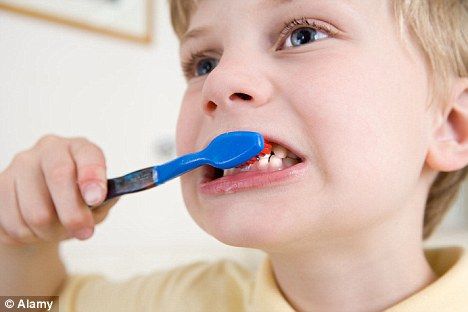
Tooth Brushing
© AlamyBug-killer: The research paves the way for toothpastes and mouthwashes containing coconut as an active ingredient
One too many Bounty chocolate bars could leave you in need of a trip to the dreaded dentist.

But scientists have found that coconut could help fight the main bug behind tooth decay.

Scientists tested coconut oil against Streptococcus mutans - a sugar-loving bacterium that clings to teeth and produces acid causing them to rot.

When the oil was treated with digestive enzymes it became a powerful killer of the bug.

It paves the way for toothpastes and mouthwashes containing coconut as an active ingredient.

Comment: Instead of waiting for the likes of Colgate to profit from Coconut Toothpaste, Coconut oil could make a potentially beneficial addition to a home made dental preparation.


Health

Can't Smell Anything? Discovery May Give You Hope

Scientists have restored the sense of smell in mice through gene therapy for the first time -- a hopeful sign for people who can't smell anything from birth or lose it due to disease.

Image
© University of Michigan Health SystemA microscopic view of cells that detect odors (olfactory sensory neurons) with yellow and green stains showing cilia.
The achievement in curing congenital anosmia -- the medical term for lifelong inability to detect odors -- may also aid research on other conditions that also stem from problems with the cilia. Those tiny hair-shaped structures on the surfaces of cells throughout the body are involved in many diseases, from the kidneys to the eyes.

The new findings, published online in Nature Medicine, come from a team at the University of Michigan Medical School and their colleagues at several other institutions.

The researchers caution that it will take time for their work to affect human treatment, and that it will be most important for people who have lost their sense of smell due to a genetic disorder, rather than those who lose it due to aging, head trauma, or chronic sinus problems. But their work paves the way for a better understanding of anosmia at the cellular level.