Health & WellnessS


Arrow Up

Looking for a good doctor? Good luck!

Hospital
© Medical Daily
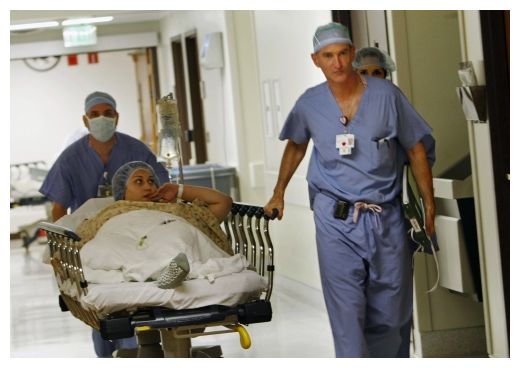
When Dr. Marty Makary was a medical student, staffers at the Boston hospital where he was training had a nickname for one of its most popular surgeons: Dr. Hodad.

"Hodad" is an acronym for "hands of death and destruction": Despite his Ivy League credentials and board certification, the surgeon had an unfortunate tendency to botch operations so badly that patients often suffered life-threatening complications.

But he was also one of the surgeons most requested by patients, including celebrities, thanks to his charming bedside manner and their lack of understanding about what caused their post-op problems.

Makary, 42, aims to end the professional code of silence that allows colleagues like Dr. Hodad to thrive. Now a cancer surgeon at Johns Hopkins Hospital in Baltimore, Makary has just published the book Unaccountable: What Hospitals Won't Tell You and How Transparency Can Revolutionize Health Care.

It outlines the extent to which doctors and hospitals suppress objective data about how patients fare in their hands and argues for clear, publicly accessible statistics to help people make the best choices when it comes to treatment. Hospitals and physicians, he argues, should collect "outcomes data" on everything from how many knee-replacement patients walk without a limp to how many prostatectomy patients become incontinent.

Without that, "patients are walking in blind" every time they choose a hospital, Makary said in an interview. With rare exception they have no way of knowing whether they will receive appropriate care or be one of the 100,000 patients killed or 9 million harmed every year in the United States because of medical mistakes.

"There is terrible guilt about keeping quiet, but there are strong social forces against speaking up when you think something doesn't look right: It can get you fired," said Makary. (HealthGrades, a Denver company that develops and markets quality and safety ratings of healthcare providers, rates Makary a "recognized doctor" based on his training and record of no disciplinary actions or malpractice claims.) "You realize as a young doctor that you've walked into an industry with a very dark side."

Stop

Mystery fever claims three lives, but officials unsure

The villagers of Chittor Lotipatti in Perayur taluk of Madurai district are gripped in fear, as a mysterious fever has broke out in the locality.

The villagers claimed that three elderly people have died in the last fortnight and alleged that the cause of the deaths was due to the fever. A battery of health officials is camping in the village, but they said that the cause of the deaths was yet to be ascertained. The deceased were identified as Alagarsamy (70), Budhar (60) and Lakshmi (70).

"They were elderly people. They did not visit the hospital for treatment after falling ill. So, we are left with no medical records to find out the cause of the death," said Latha Freeda Joan, district malaria officer, who is camping in Lottipatti.

Evil Rays

Common cancer treatments may create dangerous cancer stem cells

Cancer
© Shutterstock
Radiation therapy and chemotherapy aimed at killing cancer cells may have the undesirable effect of helping to create cancer stem cells, which are thought to be particularly adept at generating new tumors and are especially resistant to treatment, researchers say.

The finding might help explain why late-stage cancers are often resistant to both radiation therapy and chemotherapy, and it could point to new strategies to fight tumors.

Past studies hint that cancer stem cells give rise to new tumors. Researchers suggest they are ultimately responsible for the recurrence of cancers and the dangerous spread of a cancer throughout the body. Scientists also have found that cancer stem cells are more likely than other cancer cells to survive chemotherapies and radiation therapies, probably becausetheir "stemness" allows them to self-replenish by repairing their damaged DNA and removing toxins.

The exact origin of cancer stem cells is debated. One possibility is that normal stem cells - which are valued for their ability to give rise to other cell types in the body - mutate to become cancerous. Another is that regular cancer cells somehow acquire stem cell properties.

The new study suggests regular cancer cells can indeed give rise to cancer stem cells, and that the radiation commonly used to treat cancer can trigger their stemness.

Ambulance

Modern wheat a "perfect, chronic poison," doctor says


Modern wheat is a "perfect, chronic poison," according to Dr. William Davis, a cardiologist who has published a book all about the world's most popular grain.

Davis said that the wheat we eat these days isn't the wheat your grandma had: "It's an 18-inch tall plant created by genetic research in the '60s and '70s," he said on CBS This Morning.
"This thing has many new features nobody told you about, such as there's a new protein in this thing called gliadin. It's not gluten. I'm not addressing people with gluten sensitivities and celiac disease. I'm talking about everybody else because everybody else is susceptible to the gliadin protein that is an opiate. This thing binds into the opiate receptors in your brain and in most people stimulates appetite, such that we consume 440 more calories per day, 365 days per year."
Asked if the farming industry could change back to the grain it formerly produced, Davis said it could, but it would not be economically feasible because it yields less per acre. However, Davis said a movement has begun with people turning away from wheat - and dropping substantial weight.

Comment: Read the following articles for more information about Dr. Davis's 'wheat belly' research and why he states, "modern wheat is a perfect, chronic poison":

Interview with 'Wheat Belly' Author Dr. William Davis
Insulin resistance and 'wheat belly'
Take a Look at the Damage Wheat Bread Can Cause You
Wheat: The Addictive Opiate
Doctor Says Whole Wheat Packs on Belly Fat - And Has a Lot in Common with Opiate Drugs
The Long Knives Are Out For 'Wheat Belly' - bring out the "Cult" accusation!


Health

Breakthrough on immune system and brain tumors

In what could be a breakthrough in the treatment of deadly brain tumors, a team of researchers from Barrow Neurological Institute and Arizona State University has discovered that the immune system reacts differently to different types of brain tissue, shedding light on why cancerous brain tumors are so difficult to treat.

The large, two-part study, led by Barrow research fellow Sergiy Kushchayev, MD under the guidance of Dr. Mark Preul, Director of Neurosurgery Research, was published in the Sept. 14 issue of Cancer Management and Research. The study explores the effects of immunotherapy on malignant gliomas, cancerous brain tumors that typically have a poor prognosis.

What the researchers discovered was that immune cells of the brain and of the blood exhibit massive rearrangements when interacting with a malignant glioma under treatment. Essentially, the study demonstrates that the complex immune system reacts differently in different brain tissues and different regions of the brain, including tumors.

Health

Malaysian Government Hospitals May Soon Offer Alternative Treatment

Patients may soon opt for modern, traditional or complementary medicine when seeking treatment in government hospitals.

Health Minister Datuk Seri Liow Tiong Lai said even though this was not the current standard operating procedure at government hospitals, traditional and complementary medical services could be a possibility in the near future due to its growing popularity among the public.

He said a study made recently showed that 77.9% of medical doctors responded positively about traditional and complementary medicine and would refer or advise their patients to go for massages, therapies or acupuncture.

"This is something that we can look into in the near future. For now, 10 government hospitals are providing traditional and complementary medicine on the side," he said in response to points raised during debate for the Traditional and Complementary Medicine Bill 2012.

The Bill is to better regulate the growing alternative medicine industry and to set up the Traditional and Complementary Medicine Council which will be responsible for establishing eligibility of a practice area, registering individuals providing such services and issuing practising certificates.

Liow said that Islamic medicine practices were now being included in the Bill alongside traditional Malay, Chinese and Indian medicines, homeopathy and complementary therapies, adding that it was not included as part of the Bill earlier as it did not have Jakim's approval.

Question

Woman Survives Rare Internal Decapitation

Internal decapitation
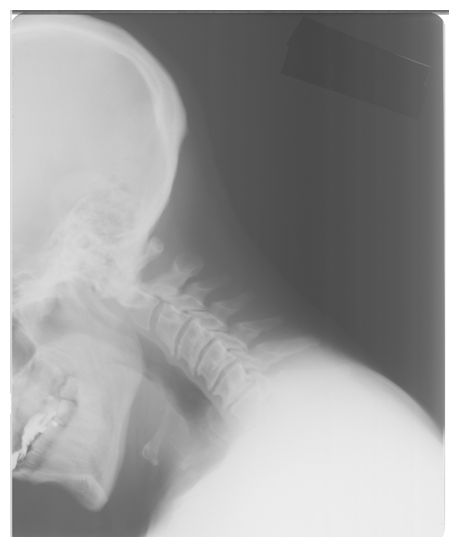
© NIHNeck x-ray image.

Rachel Bailey did not lose her head over temporarily losing her head. The 23-year-old Phoenix resident is making a miraculous recovery after a car accident fully separated her skull from her spine, a rarely seen and even more rarely survived injury called an internal decapitation.

"I just thought, 'I'm not going to let this beat me, I'm not going to let this define me,'" Bailey told Arizona TV station 3TV of the injury that put her in an intensive care unit for a month after the car crash in September 2011.

After six surgeries and extensive physical therapy, Bailey recovered her ability to walk and talk, and on Monday (Sept. 24) she had dinner with the Phoenix firefighters whose speedy work saved her from paralysis, according to 3TV.

Internal decapitation, or atlanto-occipital dislocation, occurs when head trauma separates the skull from the spinal column while leaving the exterior of the neck intact.

According to a 2006 study in the Canadian Journal of Emergency Medicine, the sensation of instability that results when part or all of the spinal column is severed in a still-conscious person "may cause patients to experience the sensation that their 'head is falling off.'"

Health

Incredibly Effective Protection from Fukushima Nuclear Radiation Effects

Vitamin C
© NaturalSociety
A special study conducted by Dr. Atsuo Yanagisawa, M.D., Ph.D., from the Japanese College of Intravenous Therapy (JCIT) took a group of men working on the Fukushima site and administered 25,000 mg (milligrams) or 25 grams of vitamin C as a pretreatment prior to half of the men entering the area. What you're about to learn is that this measure of protection may be one of the best when dealing with nuclear radiation effects.

A Solution to Fukushima's Nuclear Radiation Effects

After their hazardous work, thorough medical evaluations determined they were clear of DNA damage and precancerous indicators that would have otherwise occurred from the radiation. The untreated workers showed DNA damage and precancerous indicators, but they received a similar post treatment protocol for a couple of months and recovered completely.

The Japanese College's work and findings were supressed because TEPCO, the firm that owns the Fukushima plant, the Japanese government, and Japanese media all have ignored them and their science based advice.

Their report was published in the States by a major orthomolecular (nutritional medicine) information center, Orhomolecular.org. The report covers the JCIT study with links to JCIT's videos. Very few media outlets know of this report

Mega-dose vitamin C administered by IV (intravenously) gets more vitamin C into the bloodstream directly than orally administered C. Unfortunately it is difficult to find someone who will do IV C in the USA, thanks to our Medical Mafia. If you can find someone near you, it can be a bit pricey per treatment.

But there is another solution that anyone can access with less cost, and it can be taken orally. Liposomal encapsulated C surpasses even IV C's ability to penetrate your cells, where it is ultimately needed. So it takes considerably less liposomal encapsulated vitamin C to equal thousands of milligrams of IV C.

Stop

Russia Bans Genetically Modified Corn From US Due To Breast Cancer Fears

GMO Corn
© Photos.com
Russia is halting all shipments of American corn due to a study that revealed a higher risk in breast cancer.

The country has suspended the import and use of American genetically modified (GM) corn after a study suggested a link to breast cancer and organ damage. The European Food Safety Authority has followed up the action with its own review into the research.

Other countries may soon follow Russia's footsteps in taking the extreme measures to keep the carcinogenic corn away from its consumers.

Researchers from a French university reported in a respected scientific journal that they found raised levels of breast cancer, liver and kidney damage in the GM corn, which carries the name NK603.

The trials found evidence that consumption of minuscule amounts of commonly used weed killer, Roundup, was associated with a raised risk of cancer as well. Both the GM corn, and Roundup are created by biotech company Monsanto.

Rospotrebnadzor, Russia's consumer rights watchdog, said that it has suspended the import and use of the Monsanto GM corn in the country. It also said the country's Institute of Nutrition has been asked to assess the validity of the study.

Currently, GM corn is not on supermarket shelves in Europe, but it is still used to be fed to farm animals, such as hens, pigs and dairy cows.

Question

Gua Sha: Scraping of Back is Said to Relieve Pain and Ease Other Medical Problems

Gua Sha
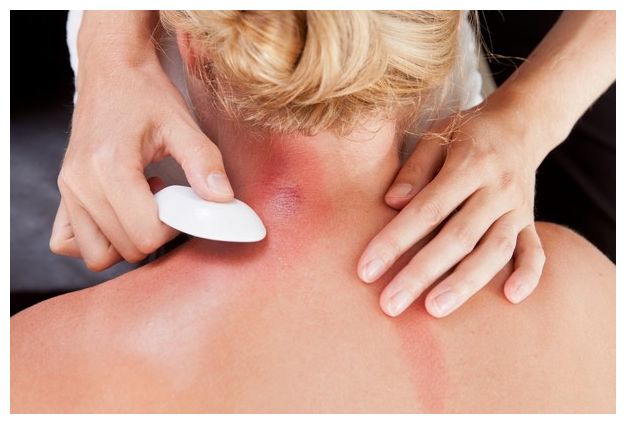
© BigstockSome acupuncturist embrace East Asian technique of scraping, Gua sha, a patient's back with a spoon until the skin turns red.
When Jason Hamacher and Jenny Luu's daughter was born in May 2010, things didn't go exactly as planned. Luu had to opt for a Caesarean section rather than the natural delivery she'd hoped for; Hamacher had a wicked cold that quickly worsened.

"My head congestion turned into sinus infection and then into chaos" when combined with the challenges of newborn care, Hamacher says. Sleep proved elusive for father, mother and child. "I was horribly sick, and there's an infant, and I'm super-exhausted." Hamacher was so wrung out he often found himself lying on the floor of the nursery.

That's when Buu Tran, Hamacher's mother-in-law, made an unusual proposition: She would scrape his back with a kitchen spoon. It's a technique that she learned as a child growing up in Asia. Tran, an ethnic Chinese, emigrated to the United States from Vietnam in 1977.

"It's going to feel like you're bleeding, but you won't be bleeding," Hamacher remembers Luu explaining. Tran scraped his back with a spoon for about 30 minutes, then gave him some chrysanthemum tea.

"Did it cure my sinus infection? No," Hamacher says. "Did my overall well-being feel better? Yes . . . the all-encompassing sickness feeling left immediately."˜

Hamacher had undergone gua sha [pronounced "gwah sah"], an East Asian home remedy for respiratory problems and other ailments. Often called "scraping," the technique is beginning to find fans in the West.

Like most alternative therapies, gua sha has not been subjected to extensive scientific studies. One small study, published last year in the journal Pain Medicine, found short-term benefits for chronic neck pain when compared to a thermal heating pad.