Health & WellnessS


Bulb

New firework causes severe eye injuries, warn doctors

A new type of firework caused severe eye injuries and blindness in children and adults at last year's bonfire night celebrations, warn doctors in a letter to the British Medical Journal.

Edward Pringle and colleagues describe how on the evening of 5 November 2011, eight patients attended the Sussex Eye Hospital, five with serious eye injuries -- two were blinded and the other three have a lifelong glaucoma risk.

Police inquiries suggest the new explosive was derived from "rope banger deer scarers," which have a slow burning rope fuse that ignites several explosives along the rope. When cut down, the fuse and explosive can be lit and thrown.

All serious injuries were consistent with a blunt injury to the eyeball, caused by material within the explosive charge, explain the doctors. They also say that this rate of serious eye injury was greater than expected for a bonfire night, based on British Ophthalmic Surveillance Unit data.

"Numbers of blinding injuries have fallen in countries with legislation that controls the use and distribution of fireworks," say the authors. "The UK has legislation to limit distribution, but deer scarers are exempt because they are not actual fireworks."

Health

GI Blues: What's wrong with the glycaemic index?

What's wrong with the Glycaemic Index? GI diet books are all the rage, but the GI is actually not that useful after all. This video lists some of the GI's anomalies and errors which are exploited by health professionals and diet book writers to mislead and misinform.


Attention

Monsanto enters pharmaceutical business, plans to manipulate gene expression in humans via diet

The Monsanto company has forged a new partnership with Alnylam Pharmaceuticals, Inc., a biopharmaceutical company whose primary focus seems to be on figuring out how to best crack the genetic code so as to manipulate the way genes inherently express themselves. And based on the agreement the two companies have made publicly with one another, it appears as though Monsanto is planning to utilize Alnylam's proprietary gene-silencing technologies in its emerging agricultural pursuits, which will likely spawn a whole new category of problems for humanity and the planet at large.

Monsanto
© Desconocido
In a recent press release, Monsanto disclosed that it has officially obtained "worldwide, exclusive rights" to use Alnylam's platform technology and intellectual property (IP) in its own agricultural products, and particularly in its new "BioDirect" line of products designed to treat seeds and crops with what the company has dubbed "biopesticides" (http://www.monsanto.com/products/Pages/biodirect-ag-biologicals.aspx). Monsanto apparently sees something exceptionally valuable in Alnylam's technologies that it does not currently possess, and is now seeking to leverage it for the purpose of expanding its own market share. But what is it?

Sherlock

Breast Cancer Awareness Month: Will ginger be on the menu?

Image
© Activist Post
New research published in the Journal of Biomedicine and Biotechnology found that "ginger may be a promising candidate for the treatment of breast carcinomas."[i] This is a timely finding, insofar as breast cancer awareness month is only days away, and one of the primary fund-raising justifications is the false concept that a low-cost, safe and effective breast cancer treatment is not yet available. Could ginger provide the type of cure that conventional, FDA-approved treatments have yet to accomplish?

The new study was performed by researchers at the Biological Sciences Department, Faculty of Sciences, King Abdulaziz University, Saudi Arabia, who discovered that a crude extract derived from the medicinal plant ginger (Zingiber officinale) inhibited the proliferation of breast cancer cells, without significantly affecting the viability of non-tumor breast cells - a highly promising property known as selective cytotoxicity, not found in conventional treatments.

Health

Diabetic transforms his health with a low-carb diet, and his doctor urges him to eat more carbs

Image
I got an interesting email over the weekend from a 56-year-old type 2 diabetic. He was diagnosed at age 42. He initially managed this as he was advised: with a high carbohydrate, low fat diet. He moved to 'healthy' grains that were 'less refined' and ate sourdough bread. In his own words:
"And despite all of this, I saw no improvement, in fact I gained weight to around 90 kg before changing my diet at the start of the year."
The man in question ended up reading the book Primal Body, Primal Mind by Nora T Gedaudas after hearing her featured on a podcast.

After reading Nora's book, he followed most of her advice and then slowly extricated himself from the wheat and grain-dominated foods that he "was supposed to eat to obtain energy and remain healthy." He started eating animal fats for the first time in years and gave up alcohol. Here's his email to me:

Attention

Monsanto makes rats grow tumors; are humans next?


2 + 2 = 4

The history of how wheat became toxic

Image
The Case for Rejecting or Respecting the Staff of Life

Gluten intolerance, wheat allergy and celiac dis-ease are all related categories of digestive and immune system disorders that have become increasingly familiar to anyone following modern trends in human health. Barely a decade ago, gluten intolerance and celiac disease were considered uncommon genetic aberrations, occurring in perhaps 1 in 2500 persons worldwide.

In just the last few years the prevalence of putative sufferers has been revised upward so frequently that it is hard to find general consensus moment by moment, but about 1 in 130 (or approaching 1 percent of the U.S. population) seems to be the current speculation by several researchers and celiac support organizations, with similar numbers recorded in Europe. The National Institutes of Health convened its first conference on celiac disease only in 2004, however, yet concluded in its report that the condition is "widely unrecognized" and "greatly underdiagnosed" while symptom-free cases appear to be increasing.[1]

The story of how a class of food long revered as "the staff of life" should suddenly become a toxic substance to large numbers of people worldwide is complex and controversial, yet also provides revealing insights into modern agriculture, world trade and industrialized methods of food production.

Health

When Doctors Stop Taking Insurance

Image
© Tim Bower
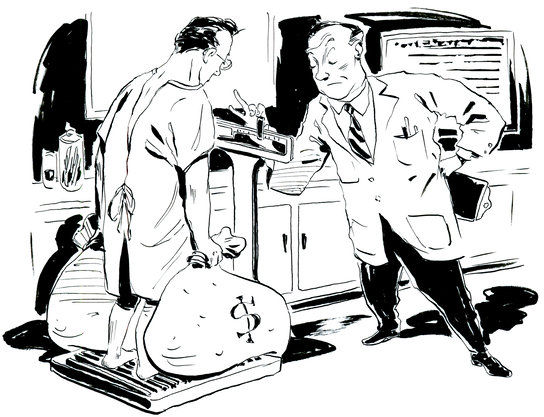
Private health insurance used to be the ticket to a doctor's appointment. But that's no longer the case in some affluent metropolitan enclaves, where many physicians no longer accept insurance and require upfront payment from patients - cash, checks and credit cards accepted.

On Manhattan's Upper East Side, it's not unusual for a pregnant woman to pay $13,000 out of pocket in advance for childbirth and prenatal care to a physician who does not participate in any health plan. Some gynecologists are charging $650 for an annual checkup. And for pediatricians who shun insurance, parents on the Upper East Side are shelling out $150 to $250 whenever a child falls or runs a high fever.

A closer look at big issues facing the country in the 2012 Election.

Attention

Kids get 7 trillion calories of sugar from cancer-causing beverages each year

Image
© greenmedinfo.com
Soda and sugary beverages make up 15 to 25 percent of the daily recommended caloric intake for children aged 2 to 19. That's almost 300 calories a day and 7 trillion calories a year of sugar, one of cancer's favorite substances.

Keeping Soda from Kids

Dr. Steven Gortmaker, Director of the Harvard School of Public Health Prevention Research Center, recently presented these statistics at the Obesity Society's Annual Scientific Meeting in San Antonio.

Amidst protests from consumer rights die-hards and the beverage lobby, Gortmaker is urging the government to keep away sodas and sugary drinks from children, in the vein of Boston's 2004 ban of selling sodas at public schools. According to Gortmaker, the kids' calorie consumption has gone down by 45 calories, "just the level you need to start flattening out the obesity epidemic, if not to start turning it all around."

Info

Confirmed Again: Statin drugs calcify the coronary arteries

Image
© greenmedinfo.com
A new study published in the journal Atherosclerosis found that statin use is associated with a 52% increased prevalence and extent of coronary artery plaques possessing calcium.[i] This study, published on August 24th, was preceded only three weeks earlier by one in the journal Diabetes Care, which found that coronary artery calcification "was significantly higher in more frequent statin users than in less frequent users," among patients with type 2 diabetes and advanced atherosclerosis.

Coronary artery disease is one of the primary risk factors for heart attack and cardiac mortality, and calcification marks the end-stage of atherosclerosis, the gradual plaque-driven narrowing of the arteries, as the lumen (opening of the artery) can no longer compensate for the obstructive build-up of plaque by expanding, once the calcification process has taken place.

Statins are increasingly recognized to have profound cardiotoxic properties, despite their widespread use in the prevention and treatment of heart disease.

Comment: Read more about the serious side effects of Statin Drugs:

How Statins Really Work Explains Why They Don't Really Work
Health Groups: Statins Linked to 300+ Negative Effects
Big Pharma Lies About Statin Drugs Finally Exposed in British Medical Journal
Statins may do more harm than good in stroke victims
Why Taking Statins Might be Pointless - And Even Bad for You
Why Women Should Stop Their Cholesterol Lowering Medication
Statins Cause Serious Structural Muscle Damage
Taking statins may increase cancer risk
Statin Drugs Found To Accelerate Arterial Calcification
Learn the truth about Glycation, Cholesterol, Statins and Dietary Fiber from Dr. Ellis