Health & WellnessS


Health

Gene that causes a form of deafness discovered

Researchers at the University of Cincinnati and Cincinnati Children's Hospital Medical Center have found a new genetic mutation responsible for deafness and hearing loss associated with Usher syndrome type 1.

These findings, published in the Sept. 30 advance online edition of the journal Nature Genetics, could help researchers develop new therapeutic targets for those at risk for this syndrome.

Partners in the study included the National Institute on Deafness and other Communication Disorders (NIDCD), Baylor College of Medicine and the University of Kentucky.

Usher syndrome is a genetic defect that causes deafness, night-blindness and a loss of peripheral vision through the progressive degeneration of the retina.

Health

Exercise improves memory, thinking after stroke, study finds

Just six months of exercise can improve memory, language, thinking and judgment problems by almost 50 per cent, says a study presented October 1 at the Canadian Stroke Congress.

Toronto researchers found that the proportion of stroke patients with at least mild cognitive impairment dropped from 66 per cent to 37 per cent during a research study on the impact of exercise on the brain.

"People who have cognitive deficits after stroke have a threefold risk of mortality, and they're more likely to be institutionalized," says lead researcher Susan Marzolini of the Toronto Rehabilitation Institute. "If we can improve cognition through exercise, which also has many physical benefits, then this should become a standard of care for people following stroke."

Forty-one patients, of whom 70 per cent had mild to moderate walking problems requiring a cane or walker, followed an adapted aerobic and strength/resistance training program five days a week. Exercises designed to imitate daily life included walking, lifting weights and doing squats.

Family

Serious child abuse injuries creep up, study shows

A new Yale School of Medicine study shows that cases of serious physical abuse in children, such as head injuries, burns, and fractures, increased slightly by about 5% in the last 12 years. This is in sharp contrast to data from child protective services agencies, which show a 55% decrease in physical abuse cases from 1997 to 2009.

Published in the November issue of the journal Pediatrics (online October 1), the Yale study is the first to track the occurrence of serious injuries due to physical abuse in hospitalized children. The study raises concerns that results from the U.S. child protective services agencies may be due to changes in reporting of cases to agencies, rather than a true lessening in child abuse cases. One possible reason for the divergent results is that studies by the child protective services agencies included all cases of physical abuse regardless of age or severity. The Yale study focused only on serious physical abuse.

"These results highlight the challenges of helping parents do better by their children and the importance of effective prevention programs to reduce serious abusive injuries in young children," said Dr. John M. Leventhal, professor of pediatrics and nursing at Yale, and director of the Child Abuse Programs at Yale-New Haven Children's Hospital.

Bulb

Poor sleep in adolescents may increase risk of heart disease

Adolescents who sleep poorly may be at risk of cardiovascular disease in later life, according to a study in CMAJ (Canadian Medical Association Journal).

"We found an association between sleep disturbance and cardiovascular risk in adolescents, as determined by high cholesterol levels, increased BMI [body mass index] and hypertension," writes lead author Dr. Indra Narang, respirologist and director of sleep medicine at The Hospital for Sick Children (SickKids), Toronto, Ontario, with coauthors. "These findings are important, given that sleep disturbance is highly prevalent in adolescence and that cardiovascular disease risk factors track from childhood into adulthood."

Approximately 20% of adolescents have significant sleep problems, such as sleep disturbances or sleep deprivation. Sleep disturbances include frequent waking up during the night, early wakening, inability to fall asleep within 30 minutes, restlessness and bad dreams.

Attention

Barbarism: Doctors now encouraging patients to remove body parts to 'prevent cancer'

Organ Removal
© NaturalSociety
Glorified as a heart warming 'preventative' trend by the mainstream media, doctors are now recommending that patients who are found to be 'more susceptible' to certain cancers based on genetic testing actually surgically remove body parts that could be affected. It sounds insane and beyond barbaric (as it is), but apparently the mainstream medical community thinks it is quite the heroic feat to perform bodily mutilation in the name of phony cancer prevention.

In a recent CNN article entitled "My preventive mastectomy: Staying alive for my kids," a mother removes both her breasts and ovaries despite not testing positive for cancer. Stating that the did so at the urging of her gynecologist, Allison Gilbert surgically removed her ovaries in 2007 and her breasts earlier this year. Gilbert explains how she decided to remove her breasts and ovaries after her doctor highly recommended doing so despite the fact that nutrition and lifestyle actually can alter your gene expression dramatically:
The decision to have surgery without having cancer wasn't easy, but it seemed logical to me. My mother, aunt and grandmother have all died from breast or ovarian cancer, and I tested positive for the breast cancer gene.
Nutrition is Known to Dramatically Affect Gene Expression

This new trend signifies a complete and utter failure to recognize legitimate science regarding the effective prevention of cancer through nutrition and lifestyle. In fact, research has repeatedly shown that what you eat directly affects your genes. As information from the Norwegian University of Science and Technology shows, nutrition can create or alleviate inflammation levels through altering gene expression. Inflammation, of course, has been linked to a long list of diseases - including cancer. As a lead researcher from the study explained:
"This affects not only the genes that cause inflammation in the body, which was what we originally wanted to study, but also genes associated with development of cardiovascular disease, some cancers, dementia, and type 2 diabetes - all the major lifestyle-related diseases."
Beyond this information, we know that countless natural substances are highly effective in the prevention of cancer across the board. Super nutrients like vitamin D, spices like ginger and turmeric, and antioxidant-rich superfoods have all been shown in peer-reviewed research to fight cancer at a genetic level. As researchers at Jefferson's Kimmel Cancer Center found, antioxidants help to both prevent and fight cancer:
"Now we have genetic proof that mitochondrial oxidative stress is important for driving tumor growth," said lead researcher Michael P. Lisanti, M.D., Ph.D.
Apparently Gilbert's gynecologist was completely unaware of this research, or perhaps the other several thousand pieces of information that exist on the subject. But sadly it is not just Gilbert's doctor who is recommending patients chop off their breasts, ovaries, and other areas of the body that present a 'genetic risk' of cancer. Sadly, this trend is not only far-reaching but being touted in the media through laughable sources like CNN as a heart warming and touching display of affection for friends and family.

Stop

Lack of sleep leads to insulin resistance in teens

Extending sleep duration may help to reduce diabetes risk in youth.

A new study suggests that increasing the amount of sleep that teenagers get could improve their insulin resistance and prevent the future onset of diabetes.

"High levels of insulin resistance can lead to the development of diabetes," said lead author Karen Matthews, PhD, of the University of Pittsburgh Department of Psychiatry. "We found that if teens that normally get six hours of sleep per night get one extra hour of sleep, they would improve insulin resistance by 9 percent."

The study, appearing in the October issue of the journal SLEEP, tracked the sleep duration and insulin resistance levels of 245 healthy high school students. Participants provided a fasting blood draw, and they kept a sleep log and wore a wrist actigraph for one week during the school year. Sleep duration based on actigraphy averaged 6.4 hours over the week, with school days significantly lower than weekends.

Attention

Wheat's Cardiotoxicity: As serious as a heart attack

Image
© greenmedinfo.com
The "diseases of affluence," as they are known, include diabetes, heart disease, arthritis, osteoporosis and cancer, and are sometimes referred to as the "Western disease" paradigm. They emerge largely in response to the type of over-nourishment that occurs in relatively wealthy societies, and particularly the excessive consumption of certain evolutionarily incompatible foods that nonetheless have become the nutritional centerpiece of agrarian, grain-based cultures. (Consider that we have only been consuming the seeds of cereal grasses, i.e. grains, en masse for 10-20,000 years, which while ancient in cultural time, is but a nanosecond in biological time!)

While we have already spent considerable time indicting the credibility of wheat as a so-called health food, whose secular and religious glorification are unparalleled within the cereal grains, we have not delved deeply enough into the link between grain consumption, particularly wheat, and cardiovascular disease, the #1 cause of death in the Western world.

This link, of course, strikes literally to the heart of the seemingly indestructible myth that eating wheat, and more exactly whole wheat (which has more lectin than white, processed wheat flour), is a good thing for human health. Beyond the well over 200 adverse health effects linked to wheat consumption that now exist in the peer-reviewed biomedical literature, we hope to point out in the following article how cardiovascular health is better served by eliminating this uniquely problematic grain from the diet.

Comment: Sayer Ji has written several excellent articles about the 'dark side of wheat':

The Dark Side of Wheat - New Perspectives on Celiac Disease and Wheat Intolerance
Opening Pandora's Bread Box: The Critical Role of Wheat Lectin in Human Disease
Beyond Gluten-Free: The Critical Role of Chitin-Binding Lectins in Human Disease
Can Wheat Drive More Than Your Digestive System Crazy?


Magic Wand

Ancient herb proven to be a potential cure for Alzheimer's

Image
© merinews.comAshwagandha is also known as Indian ginseng.
Ashwagandha is a small evergreen perennial herb that grows up to nearly 5 feet tall.

Common names used for ashwagandha include: Winter Cherry, Withania somnifera (Latin botanical name), and Indian Ginseng to name a few.

Regardless of the name you use to describe this adaptogenic herb, ashwaganda has been a part of India's Ayurvedic medical system for thousands of years.

There it's regarded as a wonder herb.

While often regarded as an herb for stress reduction and improved energy and vitality, there is a robust body of scientific research confiming ashwaganda's potential therapeutic value in several dozen health conditions.i

Now, new research has revealed this herb may also fight off the devastating effects of Alzheimer's disease.

Arrow Up

C-TEC student with cancer turns to homeopathic options

Zigo
© Jason Lenhart/The AdvocateColton Zigo, 17, sits Tuesday in front of a wall at Newark's Career and Technical Education Center that showcases the support people are showing for his battle against Hodgkin's lymphoma. Zigo, who beat his cancer the first time with chemotherapy, has decided to fight it homeopathically this time.
Newark -- Before his 16th birthday in 2010, Colton Zigo started having pain in his back.

After numerous tests and a misdiagnosis, it was determined Colton had Hodgkin's lymphoma.

In January 2011, Zigo underwent four rounds of chemotherapy, lost his hair and was sick for two consecutive weeks.

In April of that year, the cancer went into remission. But this March, while he was a junior at Career and Technical Education Center in the electronics and computer technology program, Zigo received the news that the cancer had returned.

That was a blow to his parents, Becky and Tom Zigo, of Alexandria.

"That devastated us," Becky Zigo said. "We thought we were done with everything."

But this time, Colton didn't want to go through chemo again. Instead, the young man chose to fight it homeopathically on all fronts, through a combination of massage therapy, reflexology and special natural medication, as well as eating healthier.

"I came up with the decision since the first time it didn't work," Colton said. "It was one of those feelings you get that just felt right."

Through a friend, the family found a homeopathic doctor. But the lymph nodes in his neck swelled up to the point that it was hard to open his mouth wide enough to eat.

Info

Genetic sleuthing uncovered deadly new virus in Africa

Image
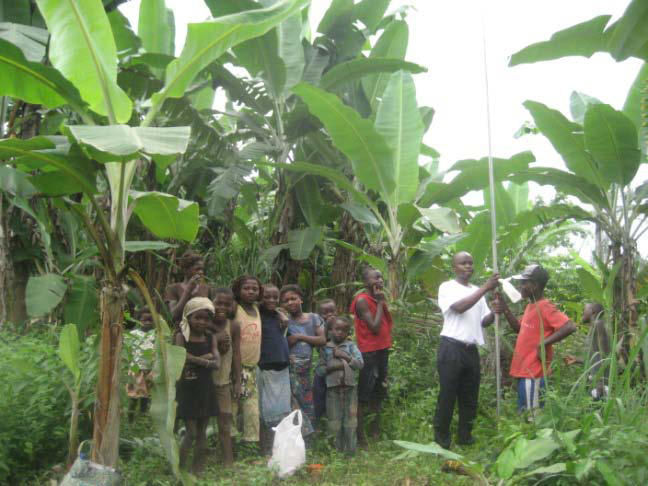
© MetabiotaCollecting samples in the Jungles of Boma in 2009 after the outbreak.
An isolated outbreak of a deadly disease known as acute hemorrhagic fever, which killed two people and left one gravely ill in the Democratic Republic of Congo in the summer of 2009, was probably caused by a novel virus scientists have never seen before.

Described this week in the open-access journal PLoS Pathogens, the new microbe has been named Bas-Congo virus (BASV) after the province in the southwest corner of the Congo where the three people lived.

It was discovered by an international research consortium that included the University of California, San Francisco (UCSF) and University of California, Davis (UCD), Global Viral, the Centre International de Recherches Médicales de Franceville in Gabon, the Institut National de Recherche Biomédicale, Kinshasa in the Democratic Republic of the Congo, Metabiota and others.

"Known viruses, such as Ebola, HIV and influenza, represent just the tip of the microbial iceberg," said Joseph Fair, PhD, a co-author and vice president of Metabiota. "Identifying deadly unknown viruses, such as Bas-Congo virus, gives us a leg up in controlling future outbreaks."