Health & WellnessS


Wine n Glass

Drinking doesn't lead to a better night's sleep

Wine Toast
© Kzenon | Shutterstock The more alcohol participants consumed, the higher their willingness to engage in unsafe sex, according to the analysis.
Having a few drinks may help you fall asleep, but that deep slumber continues for only part of the night. After that point, getting shut-eye becomes more difficult, according to a new review.

Researchers analyzed information from 20 previously published studies that looked at the effects of alcohol on sleep. Together, the studies included more than 500 people who drank low, moderate or high amounts of alcohol before going to bed, and underwent testing while they snoozed in a sleep lab.

Regardless of how much people drank, alcohol reduced the time it took them to fall asleep. In addition, drinking alcohol, no matter the quantity, increased deep sleep during the first half of the night.

However, sleep disruption, or waking after falling asleep, increased during the second half of the night, the researchers found.


Health

Cholesterol - The good, the bad, and the ugly

The Good, Bad and the Ugly
© BarryGroves Blogspot
It all started with 'high cholesterol', then came the 'good' and the 'bad' cholesterols. Now we have the last member of the notorious trio: the 'ugly cholesterol'. The risk of ischaemic heart disease -- the leading cause of death worldwide -- is three times higher in persons with high levels of the so-called 'ugly' cholesterol.

This is the finding of a new study of 73,000 Danes, which is shedding light on a long debate on this topic. The results have just been published in the Journal of the American College of Cardiology.

Most individuals believe that high cholesterol is life-threatening (despite all the evidence to the contrary). And many 'know' which type of cholesterol is the most frequent killer -- the 'bad' one, LDL -- or is it just the small, dense LDL and not the fluffy stuff.

Up until now, cholesterol has been divided into 'the good' HDL cholesterol, 'the bad' LDL cholesterol, with all the other sub-fractions, IDL, VLDL, etc, not getting a look in.

But now another 'cholesterol' has turned up in the mix: 'the ugly' cholesterol AKA 'remnant cholesterol'. And this one, it seems, is the really bad guy.

Arrow Down

Aspirin use raises risk of age-related macular degeneration

Aspirin
© Medical Daily
A new study has found that long-term aspirin use can lead to a condition known as neovascular age-related macular degeneration (AMD).

Researchers from University of Sydney, Australia, found that prolonged use of aspirin increased risk of AMD which is one of the leading causes of blindness in people above 50 years of age. Also, this increase in risk was independent of smoking or heart disease.

AMD is detected by the presence of 'drusen' which are recognized during an eye exam as yellowish deposits in the macula. Macula is the central region of the retina; a delicate membrane that acts like a screen reflects the light in the eye. AMD can either be 'dry' or 'wet' depending upon the formation of blood vessels, according to National Eye Institute.

A recent study, conducted by the researchers from University of Wisconsin School of Medicine and Public Health and published in the Journal of the American Medical Association, too had found an association between aspirin use and age-related macular degeneration.

Syringe

Chad officials: No link between meningitis vaccines and sick children

Image
© AFP Photo
Chad's government on Tuesday said a team of international experts have not been able to find any links between the hospitalisation of 38 children and their recent vaccinations against meningitis.

The children fell ill in the northern village of Gouro and were admitted to hospital after being vaccinated in a government campaign against the disease between December 11 and 15.

In a statement, the country's health ministry said tests "failed to establish a causal link between the clinical manifestations observed in the patients and the MenAfriVac vaccine."

Pills

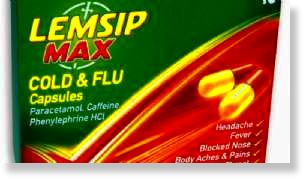
Flashback Behind the label: Lemsip max cold & flu capsules

Image
As doctors can tell you, the best remedy for colds and flu is the traditional one: rest, warmth, fluids - and time. Drug manufacturers want you to believe otherwise. But, as Pat Thomas reports, pharmaceutical 'cures' may be more than just a waste of money.

INGREDIENTS: Paracetamol, sodium lauryl sulphate, croscarmelose sodium, titanium dioxide (E171), quinoline yelow (E104), patent blue V (E131), erythrosin (E127), tartrazine (E102), phenylephrine hydrochloride, magnesium stearate, caffeine, aluminium hydroxide

Most of believe there are only four seasons; but actually there is a fifth season that runs from November to February - the cold and flu season. Out of a UK population of 48 million adults aged 16 and older, around 33 million will suffer from at least one cold or a bout of flu annually, so the odds are that at some point you are going to catch a cold. For healthy individuals, the best medicine is rest, warmth and lots of liquids - this combination being the age-old remedy that best facilitates recovery from a cold or flu.

Health

Lemsip: Why I am having it smuggled into Denmark

Image
© Photo: RexContraband: the Danes draw the line at adding vitamins to breakfast cereal nevermind openly selling Lemsip
It starts with a sniffle. The kind that makes you annoying to sit next to at the cinema but isn't enough to knock you sideways on the sofa with Kleenex and a boxset. Being a hardy Brit, I carry on, uncomplaining, until the temperature drops to minus nine.

Snow covers the country like a duvet, muffling all sound so that no one hears me swear when I lose all sensation in my fingers, drop my keys in a two-foot drift and spend half an hour digging for them.

The following morning I have sand running through my veins and drumming monkeys in my head.

"Must. Find. Lemsip," I moan as I rifle through the last of our boxes to be unpacked from the UK. Locating the yellow and green packet, I give it a shake. Empty.

"Oh, I think I used the last one," a voice shouts from the shower, "sorry!"

Health

Childhood ADHD diagnoses jump 25 percent over decade

Image
© ABCNEWS.com
The rates of childhood attention deficit hyperactivity disorder (ADHD) diagnosis have increased by nearly 25% over the past decade, researchers found.

From 2001 to 2010, the rate of ADHD diagnosis increased from 2.5% to 3.1%, according to Darios Getahun, MD, PhD, of Kaiser Permanente Southern California Medical Group in Pasadena, and colleagues.

Increases were significant among whites, blacks, and Hispanics, but did not change significantly among Asians, Pacific Islanders, and other racial groups over the 10-year period, Getahun and colleagues reported online in JAMA Pediatrics.

Health

Plastics suck up other toxins: Double whammy for marine life, gross for seafood

Image
© Kent K. Barnes / kentkb
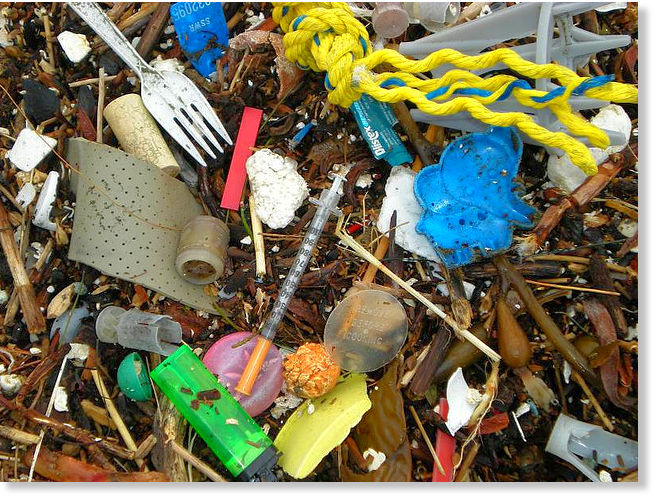
Some plastics are worse than others for the marine life that accidentally or intentionally eat them. That's because not only are the plastics themselves toxic but some also act as sponges for other toxins. Unfortunately the most commonly produced plastics also absorb the most chemicals. This according to a new study in early view in Environmental Science & Technology.

The researchers measured the absorption of persistent organic pollutants (POPs) - specifically polychlorinated biphenyls (PCBs) and polycyclic aromatic hydrocarbons (PAHs) - to the five most common types of mass-produced plastics:
Polyethylene terephthalate (PET). Recycling symbol #1. Example: Water bottles.
High-density polyethylene (HDPE). Recycling symbol #2. Example: Detergent bottles.
Polyvinyl chloride (PVC). Recycling symbol #3. Example: Clear food packaging.
Low-density polyethylene (LDPE). Recycling symbol #4. Example: Plastic shopping bags.
Polypropylene (PP). Recycling symbol #5. Example: Yogurt containers, bottle caps.

Cell Phone

WiFi in Schools - The Facts

Around the world an increasing number of governments and authorities have banned or warned against the use of wifi in schools. Many experts, scientists and doctors are warning the public to take a precautionary approach.
In this video we examine the facts...


Comment: For more information on how to protect yourself and those you care about, read our forum discussion on EMF.


Attention

Makeup can cause lead poisoning

Image
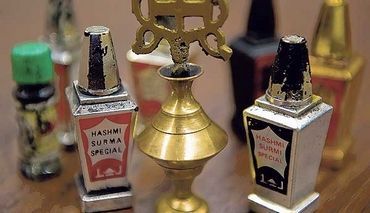
© Clifford Oto/The RecordExamples of surma, a lead-based makeup made in Pakistan and India.
The 1-year-old girl was playing "makeup" with her mother.

Every day, mom brushed a fine black powder, known as surma, around the little girl's eyes - a practice common in Pakistani and Indian cultures, to both enhance a child's beauty and to ward off the "evil eye."

But public health nurse Gail Heinrich knew it wasn't the evil eye this girl had to worry about.

Surma is rich in toxic lead. A child who touches her face with her hands, then sticks her hands in her mouth, could be ingesting enough lead to damage her rapidly developing brain.

Indeed, tests showed this little girl was suffering from lead poisoning. She endured five days of treatment at Children's Hospital Oakland, but too much damage had been done.

"(The girl's mother) called me about a year and one-half later, and the child was on special education," said Heinrich, who coordinates a child lead poisoning program for San Joaquin County Public Health Services.

"It's really sad," she said.