Health & WellnessS


Question

Is genetically engineered salmon safe?

Image
There are massively disturbing ethical, environmental, and health concerns that make the introduction of Frankenfish highly controversial.

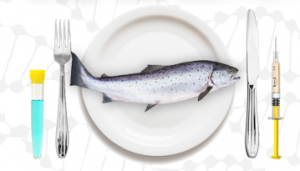
Frankenfish could be on your dinner plate by the end of the year.

On December 21, at the very end of the last business day before Christmas week, the US Food and Drug Administration (FDA) quietly released its environmental assessment that found "no significant impact" from the controversial AquaBounty AquaAdvantage transgenic salmon. We're now in a 60 day comment period that ends on February 25, at which time the FDA is widely expected to initiate formal approval.

What is the rationale behind genetically engineered salmon? Why have scientists spliced genes from an eel-like creature called the ocean pout into the genome of the Atlantic salmon? These genes crank out growth hormone year-round, resulting in a fish that grows faster, cutting the time to reach market weight almost in half. This could mean cost savings for fish farmers, leading to higher profits for the salmon farming industry and (they promise) lower prices for consumers.

But there are massively disturbing ethical, environmental, and health concerns that make the introduction of Frankenfish highly controversial.

Comment: Still undecided about the safety of Genetically Modified frankenfish?Read the follwoing articles for a more in depth look at this issue:

10 Freakiest Things About Frankenfish
Genetically Engineered Salmon's Fishy Promises
Genetically Altered Salmon Get Closer to the Table
Genetically Altered Salmon? It Doesn't Stop There
Genetically Modified Salmon Present a Number of Risks to Consumer Health and Environment
Genetically Engineered Salmon and the Company Pushing It on Consumers
US: Genetically Modified Salmon Approval Pushed by USDA with Nearly $500,000 Funding
Newly Disclosed Government Documents Conclude GE Salmon Pose A Critical Threat To Marine Environments


Attention

A can of soda a day can increase the risk of cancer for men by 40 percent?

Image
© news.nationalgeographic.com
A new medical study poses huge questions for the future of soft drinks.

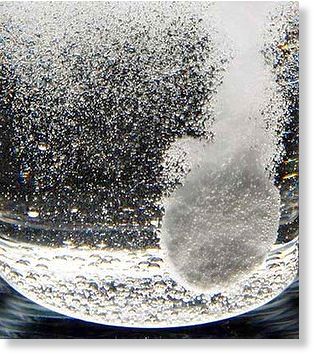
According to a Swedish study from Lund University recently published in the American Journal of Clinical Nutrition, it takes a single daily can of soda to increase a man's risk of prostate cancer by 40 percent, compared to a man who never touches the stuff.

So where is the public outcry warning Americans, who are always in search of newer and better drugs anyway, off these lucrative yet carcinogenic vehicles for addictive substances like caffeine, sugar and perhaps worse? They are likely hiding, at least for now, from an industry loathe to let cold-hearted science and much-needed reason lead the way.

Health

More than 100 children die of measles in Pakistan in 19 days

Image
© AFP Photo
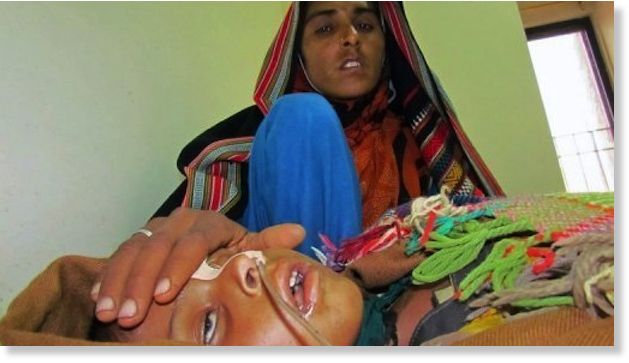
More than 100 children have died of measles in Pakistan this month, the World Health Organization (WHO) said Wednesday, calling it "an alarming outbreak."

"Some 103 Pakistani children have died from Jan 1 to Jan 19 this year because of the post-measles complications such as pneumonia, post-measles encephalitis and diarrhoea," WHO spokeswoman Maryam Yunus told AFP.

Sixty-three of the cases occurred in the southern province of Sindh, which was hit by severe flooding in 2010, 2011 and 2012.

More than 300 Pakistani children died of measles in 2012, a staggering increase on the previous twelve months and a result of three consecutive years of flooding, officials said.

Book 2

Aisle be damned: How big food dominates your supermarket choices

Image
© grist.com
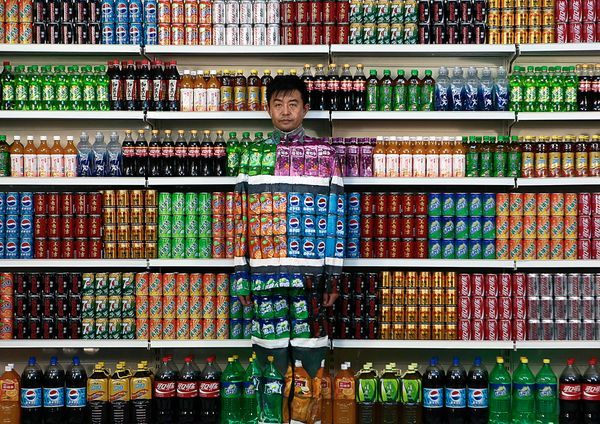
It's no surprise that gigantic, multinational companies own most of the dominant organic brands out there. Big Food's tentacles stretch far: Just four companies control 80 percent of the beef market, and many competing brands in the snack aisle huddle under the umbrella of the same parent company.

The corporate control and consolidation of the food industry is the central theme of Wenonah Hauter's new book, Foodopoly: The Battle Over the Future of Food and Farming in America. Hauter, the executive director of Food & Water Watch, explores "the battle over the food and farming in America" as independent farmers and companies struggle to stay afloat in the face of corporate mergers and bad food policy.

Pills

Aspirin use tied to age-related vision loss

Image
© Photo: Bloomberg
Regular aspirin use is linked to an increased risk of vision loss with age, a new study found.

The study of nearly 2,400 Australian men and women found those who routinely took aspirin were more likely to develop age-related macular degeneration. The results were published Monday in JAMA Internal Medicine.

However, "the evidence is insufficient to adjudicate the relationship between aspirin and [age-related macular degeneration], thereby challenging causal inferences," Dr. Sanjay Kaul and Dr. George Diamond of Cedars-Sinai Medical Center in Los Angeles wrote in an editorial accompnying the study.

Health

Soup eaten from melamine bowls may lead to increase in kidney stones

Soup
© Photos.com
Melamine, a chemical that was behind a 2008 health crisis, after it was found to have killed Chinese infants who used a certain baby formula, is sparking new concerns. It seems the chemical may raise the risk of kidney stones in people who use non-breakable melamine bowls to eat soup and other hot foods.

A study from researchers at the Kaohsiung Medical University in Taiwan has found that when these bowls are used to serve boiling-hot foods, a toxic chemical is released from the tableware that can lead to dangerous health issues.

"Melamine is a chemical used widely in industry and found in many household products," noted Dr. Kenneth Spaeth, a health expert not connected with the new research.

Melamine is found in plastics, adhesives, countertops, dishware and other products. Consumption of dairy goods contaminated with melamine in China in 2008 resulted in more than 300,000 babies infected with the dangerous chemical, including six deaths.

China vowed it would improve consumer protection following the 2008 health crisis, and just last month, the government said it would enact harsh punishments on companies that continue to violate consumer food safety laws.

Beaker

Antibacterial agent Triclosan increasingly polluting freshwater lakes

Image
© beyondpesticides.org
When people wash their hands with antibacterial soap, most don't think about where the chemicals contained in that soap end up. University of Minnesota engineering researchers do.

A new University of Minnesota study determined that the common antibacterial agent, called triclosan, used in soaps and many other products is found in increasing amounts in several Minnesota freshwater lakes. The findings are directly linked to increased triclosan use over the past few decades.

In addition, the researchers found an increasing amount of other chemical compounds, called chlorinated triclosan derivatives, that form when triclosan is exposed to chlorine during the wastewater disinfection process. When exposed to sunlight, triclosan and its chlorinated derivatives form dioxins that have potential toxic effects in the environment. These dioxins were also found in the lakes.

The study was just accepted by the journal Environmental Science and Technology and is published online.

The study's results raise new questions about the use of triclosan. Triclosan was patented in 1964 and introduced into the market in the early 1970s. Since then it has been added to many consumer products including soaps and body washes, toothpastes, cosmetics, clothing, dishwashing liquid, and kitchenware. Beyond its use in toothpaste to prevent gingivitis, the U.S. Food and Drug Administration has found no evidence that triclosan in antibacterial soaps and body washes provide any benefit over washing with regular soap and water. The FDA and the Environmental Protection Agency continue to study the effects of triclosan on animal and environmental health.

Comment:
Why You Don't Want to Use Antibacterial Soap Anymore
The Dangers of Triclosan: A Common Anti-Bacterial Ingredient
Freaky Clean: Chemical in antibacterial soap weakens muscle function
Triclosan May Be Harmful to Health, Says FDA


Arrow Down

Group finds more fake ingredients in popular foods

Faked Ingredients in Food
© Getty ImagesThe U.S. Pharmacopeial Convention (USP), discovered rising numbers of fake ingredients in products from olive oil to spices to fruit juice.
It's what we expect as shoppers - what's in the food will be displayed on the label.

But a new scientific examination by the non-profit food fraud detectives the U.S. Pharmacopeial Convention (USP), discovered rising numbers of fake ingredients in products from olive oil to spices to fruit juice.

"Food products are not always what they purport to be," Markus Lipp, senior director for Food Standards for the independent lab in Maryland, told ABC News.

In a new database to be released Wednesday, and obtained exclusively by ABC News today, USP warns consumers, the FDA and manufacturers that the amount of food fraud they found is up by 60 percent this year.

USP, a scientific nonprofit that according to their website "sets standards for the identity, strength, quality, and purity of medicines, food ingredients, and dietary supplements manufactured, distributed and consumed worldwide" first released the Food Fraud Database in April 2012.

The organization examined more than 1,300 published studies and media reports from 1980-2010. The update to the database includes nearly 800 new records, nearly all published in 2011 and 2012.

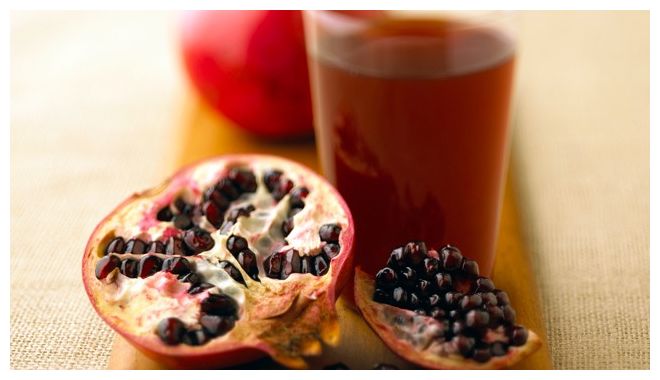
Among the most popular targets for unscrupulous food suppliers? Pomegranate juice, which is often diluted with grape or pear juice.

Syringe

European report links child swine flu vaccine to narcolepsy

Image
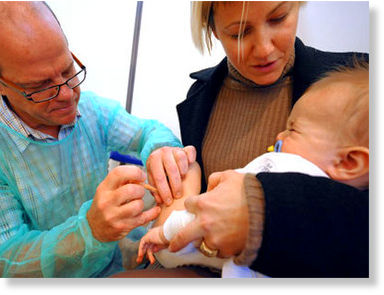
© AFP Photo / Johanna LeguerreA baby receives a vaccine against the so-called swine flu (H1N1) on December 6, 2009 in Strasbourg, eastern France, as 185 vaccination centers are opened on Sunday for the first time in France. France reported 111 deaths due to swine flu (H1N1)
A vaccine used to combat the swine flu pandemic has been linked to the sleep disorder narcolepsy in some 800 children and teens across Europe. The case has sparked debate over the risk of immunization and the potentially greater threat of anti-vaccine.

The European Centre for Disease Prevention and Control (ECDC) studied the effects of the Pandemrix vaccine in eight European countries after higher incidences of narcolepsy were reported among children given the vaccine during the 2009-2010 H1N1 swine flu pandemic, AFP reports.

Sweden and Finland have both seen a rise in the sleep condition since the vaccine was first used on children. The governments of both countries stressed their citizens were vaccinated with Pandemrix, which was the only vaccine used in both countries at the time.

In Sweden, nearly 200 children aged four to 19, developed narcolepsy after receiving the vaccine during that period, while in Finland the number was 79.

One such child, 14-year-old Emelie Olsson, told Reuters about the crippling effects narcolepsy had had on her life: "In the beginning I didn't really want to live any more, but now I have learned to handle things better," she said.

Sheeple

Farmers could lose a third of lambs in flocks infected with the deadly schmallenberg virus

Image
© Photo: PALast year more than 200 deformed sheep foetuses and more than 50 deformed calves were recorded and the number is expected to go up this year.
The virus, that first arrived in the UK last year and causes lambs to be born dead or deformed, is set to spread to most flocks this lambing season.

Infection does not necessarily mean all lambs will die but early research suggests that death rates could be high.

Data collected by students from the Nottingham Vet School show that average losses could be as high as 30 per cent on some severely affected holdings.

Last year the virus was recorded on around 1,000 farms and hundreds of animals died.

This year more than 200 farms have recorded outbreaks so far. More than 20 farms have seen deformed lambs in Wales and flocks in England have recorded losses up to 40 per cent