Health & WellnessS


Rose

Antioxidants prevent cancer and some may even cure it

Image
It is widely accepted that antioxidants in the diet and supplements are one of the most effective ways of preventing cancer. Nevertheless, Dr. James Watson has recently suggested that antioxidants cause cancer and interfere with its treatment. James Watson is among the most renowned of living scientists. His work, together with that of others (Rosalind Franklin, Raymond Gosling, Frances Crick, and Maurice Wilkins) led to the discovery of the DNA double helix in 1953. Although his recent statement on antioxidants is misleading, the mainstream media has picked it up, which may cause some confusion.

Antioxidants: What's Going On

Dr. Watson claims to have discovered that antioxidants promote the growth of late stage metastatic cancers. He says that this is "among my most important work since the double helix." [1] We agree that the finding is fundamentally important, although it was not uniquely Watson's discovery. Rather, it is standard orthomolecular medicine and has been known for years. [2,3] Within the body, antioxidant levels act as a signal, controlling cell division. In healthy cells and benign tumors, oxidants tend to increase cell proliferation, whereas antioxidants inhibit it. By contrast, the malignant tumor environment can be so strongly oxidizing that it is damaging and triggers cell death by apoptosis. In this case, antioxidants may help tumor cells proliferate and survive, by protecting the cells against oxidation and stimulating the malignancy to grow. For this reason, antioxidants may sometimes be contraindicated for use with malignant tumors, although there are particular exceptions to this.

And Oxidants?

The balance between oxidants and antioxidants is a key issue in the development of cancer, as has been known for decades. Watson appears to be behind the times in his appreciation of nutritional medicine and, surprisingly, to have misunderstood the processes of oxidation and reduction as applied to cancer. He correctly asserts that reactive oxygen species are a positive force for life; this is basic biology. They are also involved in aging, chronic illness, and cancer. Oxidants also cause free radical damage, thus the body generates large amounts of antioxidants to prevent harm and maintain health.

Syringe

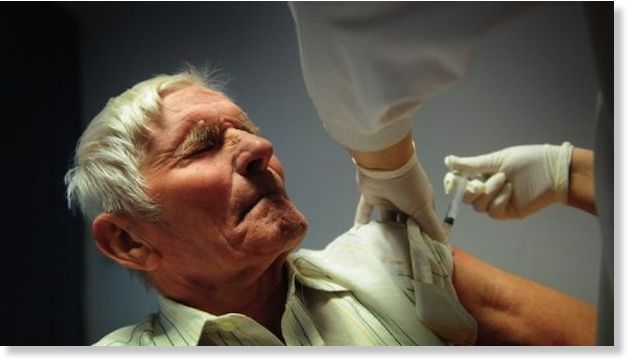
3 die in central Europe of swine flu

Image
© AFP Photo
Three people have died in Romania and Macedonia after being infected with the H1N1 influenza strain known as swine flu, the two countries' health ministries said Thursday.

"Two people have died from the H1N1 flu," Romania's state secretary of health, Alexandru Rafila, announced on private TV network Antena 3. The victims were a 55-year old woman and a 61-year old man.

"But we cannot in any way talk about a flu outbreak," he said.

Health

Breakthrough: High pressure oxygen chambers repair 'significant' stroke damage

Image
© Shutterstock
If you or someone you love have suffered a stroke and been forced into disability, a new breakthrough made by doctors at Tel Aviv University appears to offer hope for a "significant" level of recovery in the near future.

Clinical trials conducted by Dr. Shai Efrati found that sitting inside a pressurized chamber pumped full of oxygen-rich air, 90 minutes a day, five days a week for two months, caused the brains of post-stroke patients to exhibit fresh neurological activity in areas thought to be rendered useless.

It works by pumping up the blood oxygen level of stroke patients tenfold, researchers explained in a study published Wednesday by scientific journal PLoS One. Each of the patients selected for the trial had suffered a stroke within 36 months of the treatment, and all of them had at least one motor function impairment as a result.

Ice Cube

EU freezes approval of GM crops to 2014

Image
The European Commission has decided to freeze the approval process for genetically modified food crops through the end of its mandate next year while it works towards an agreement with EU member states.

"The Commission, if it wants, could launch a procedure to authorise the farming of one GM soya and six corn strains... but it won't do so," said Frederic Vincent, a spokesman for Health Commissioner Tonio Borg.

"The authorisations for farming are frozen," he added.

Vincent said the priority of Borg, who only recently took up the post of health commissioner, was to relaunch discussions with member states.

The Commission's approval of GM crops has poisoned relations with a number of the 27 EU members.

Health

Flu deaths in U.S. rise past epidemic levels, CDC says

Image
© REUTERS/Brian Snyder
The worst U.S. flu season since 2009 intensified last week, killing hundreds more people as the viral epidemic spread to additional states, health officials said.

About 8.3 percent of all deaths nationwide were due to the flu and pneumonia for the week ended Jan. 12, more than the 7.3 percent level for an epidemic, the Centers for Disease Control and Prevention said today. About 90 percent of those deaths are people older than age 65, who are being hit particularly hard by this year's flu strain, the Atlanta-based agency said.

The flu season, which has now been at epidemic levels for two straight weeks, may result in 36,000 deaths, said William Schaffner, chairman of the department of preventive medicine at Vanderbilt University School of Medicine in Nashville, Tennessee. Infections will likely persist through February and March though cases may have peaked in some regions, including the East Coast and Southeast, he said.

Donut

Heart disease is a sugar disease

Image
If you have been following conventional advice, then you've been told to avoid fats to prevent heart disease. Turns out if you want to maintain a healthy vascular system and prevent heart disease, sugar is the target you want to seek out and eliminate.

Research has found people who get at least 25 percent of their daily calories from added sugars of any kind were more than three times more likely to have low levels of the "good" HDL cholesterol in their bloodstream, a risk factor for heart disease, than people who got less than 5 percent of their calories from sweeteners. The high sugar consumers were also found to have higher triglycerides than normal, another risk factor for heart disease.

For a person who eats 2,000 calories a day, 25 percent is 500 calories, or 125 grams of sugar. To give you an idea, a medium white chocolate mocha has about 60 grams of sugar while a pecan roll has about 50. And that's just breakfast. While most people worry about added weight from excess sugar, they should also consider their risk of heart disease.

Metabolic syndrome from sugar raises heart disease risk

Researchers turned their microscopes on sugar when it became clear during the explosion of obesity and diabetes over the last 20 to 30 years that metabolic syndrome is the leading risk factor for heart disease.

Metabolic syndrome is a condition brought on by a diet high in sugar and carbohydrates that eventually causes insulin resistance. Eating a diet high in sugars and starchy carbs - pastas, pastries, breads - causes your body to pump out high amounts of insulin. Eventually the body's cells, overwhelmed by the demands of insulin, become insulin resistant. Also, the pancreas becomes overwhelmed by pumping out so much insulin and becomes exhausted. As a result, blood sugar levels skyrocket. Many people with insulin resistance go on to develop Type 2 diabetes.

Comment: For more information on how to start a sugar-less diet, check our forum thread Life Without Bread.


Passport

Do you trust an "electronic tattoo" to track your medical information?

Electronic Tattoo
© Natural Society
It sounds like something out of George Orwell's book 1984, yet scientists have touted it as a major advancement in the field of medicine. Have you heard of the 'electronic tattoo' fully equipped with the ability to track patients' vital signs and report the findings to researchers? The technology is known as an epidermal electronic system (EES), and was developed by an international team of researchers from the United States, China and Singapore.

When it comes to microchips, implants, or electronic tattoos - it all sounds a little too futuristic, like these "advances" may be paving the way for government tracking of citizens, or worse. But some industries are promoting these high-tech ideas as major advancements in their field. The medical field is just one place these ideas are gaining a foothold.

According to the International Business Times, hospitals and doctors' offices may one day soon outfit their patients with temporary electronic tattoos. These little skin-patches are said to carry a wealth of information in a tiny space and can reportedly help reduce medical errors while improving care.
"Our goal was to develop an electronic technology that could integrate with the skin in a way that is mechanically and physiologically invisible to the user," says John Rogers with the University of Illinois at Urbana-Champaign. So, invisible electronic tattoos are good?
"It's a technology that blurs the distinction between electronics and biology," says Rogers in characterizing the patches that allow researchers to track vital signs and more.

Bug

Antibiotic-resistant diseases pose 'apocalyptic' threat, top expert says

Superbug
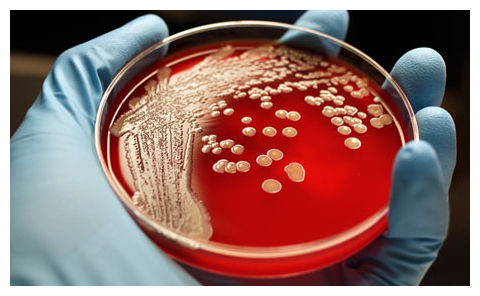
© Getty ImagesHospital superbugs such as MRSA are some of the best know antibiotic-resistant diseases, but MPs were warned about infections such as gonorrhea and TB that affect the general population.
Britain's most senior medical adviser has warned MPs that the rise in drug-resistant diseases could trigger a national emergency comparable to a catastrophic terrorist attack, pandemic flu or major coastal flooding.

Dame Sally Davies, the chief medical officer, said the threat from infections that are resistant to frontline antibiotics was so serious that the issue should be added to the government's national risk register of civil emergencies.

She described what she called an "apocalyptic scenario" where people going for simple operations in 20 years' time die of routine infections "because we have run out of antibiotics".

The register was established in 2008 to advise the public and businesses on national emergencies that Britain could face in the next five years. The highest priority risks on the latest register include a deadly flu outbreak, catastrophic terrorist attacks, and major flooding on the scale of 1953, the last occasion on which a national emergency was declared in the UK.

Speaking to MPs on the Commons science and technology committee, Davies said she would ask the Cabinet Office to add antibiotic resistance to the national risk register in the light of an annual report on infectious disease she will publish in March.

Davies declined to elaborate on the report, but said its publication would coincide with a government strategy to promote more responsible use of antibiotics among doctors and the clinical professions. "We need to get our act together in this country," she told the committee.

Nuke

Were Boston Logan airport security scanners scrapped because of radiation risks?

Image
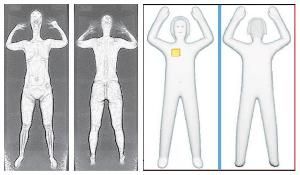
© AP Photo/Transportation Security AdministrationWhat TSA officers see on monitors when passengers pass through airport body scanners with backscatter on the left and millimeter wave with new software on the right.
I was relieved when I heard the news that Logan airport would be replacing its full body backscatter scanners -- which use small amounts of radiation -- with the millimeter wave scanners that don't use any radiation. The official reason for replacing the security scanner is because of a failure to fulfill a Congressional mandate, which required the machines to have new software to produce less-revealing images by June of this year. (See the photo above to see a before and after with the new software.)

The software adaptation can't be developed in time, according to the Transportation Safety Administration, so the $40 million contract will be canceled and the machines returned to their manufacturer. Software adjustments were successfully completed for the millimeter wave scanners, which are already in about half of the nation's airports, and will eventually replace the backscatter machines.

The reason I'm relieved that backscatter machines are going to be scrapped is because of their potential radiation risks, which radiation health experts expressed concerns about back in 2010 when the full body scanners first came to Logan and 29 other airports.

Four radiation scientists from academic institutions sent a letter of concern to the White House questioning "the extent to which the safety of this scanning device has been adequately demonstrated," especially for frequent fliers who are going through them on a daily basis. The American Pilots Association told its members to opt for pat downs rather than risk the cumulative dose of radiation.

Beaker

Toxic cleaning product ingredients might be missing on your bottle's label

Image
We recently shared a list of hazard symbols to look out for on your cleaning products. These warning signs are issued on cleaners to help protect you and your family from injuries. However, there is one thing that isn't always listed on the bottle: product ingredients.

The Federal Hazardous Substances Act does not require household products to include a list of contents. The manufacturer is just responsible for labeling their product if it is caustic, toxic, an eye irritant or if the chemical make-up of the product could pose such a hazard.