Health & WellnessS


Pills

EU drug agency to review new birth control pills for blood clot risk

Image
© AFP Photo
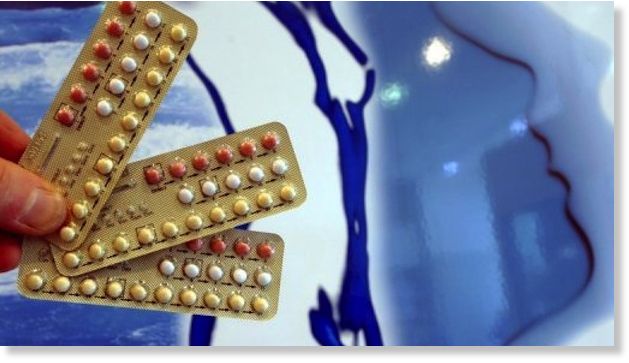
The European Medicines Agency (EMA) on Monday said it would review safety data for third- and fourth-generation birth control pills, responding to French concern that these contraceptives may cause dangerous blood clots.

Cow

Why do humans still drink milk?

Perhaps because the government tells us to. Today's processed milk is far from healthy and is essentially a dead liquid, devoid of any real nutritional value. Raw milk is a step up in nutrition since it's not put through the violent heating stages of its conventional counterpart and retains the nutrient values that nature intended. However, do we really need to drink any milk of any kind from another species besides our own?


It's a contentious topic, but most people don't stop to think about the fact that humans are the only animals that continue to drink milk after being weaned, and moreover from another animal.

Raw milk drinkers definitely have an edge in the nutrition department as at least they drink a beverage which has the potential to prevent disease. Unlike conventional, pasteurized milk which can cause heart-disease and diabetes, raw milk can actually prevent these conditions. But raw milk drinkers should know their cows intimately before making consumer purchases of raw milk.

For example, researchers have discovered that cows on organic dairy farms are healthier and less stressed than conventional cows, largely thanks to a more natural, forage-based diet instead of the grain and ground-up bones that usually pass as cattle feed on factory farms. Raw milk from pasture-fed livestock provides the most benefit, promoting the cultivation of healthy bacteria and some active enzymes that enhance immunity, digestion and nutrient assimilation. So if you drink raw milk, make sure it comes from an organic farm, for your health, safety and the nutrient value. But my next question is, why drink milk at all? There are plenty of equivalent protein sources and certainly better food sources with bioavailable calcium, so why do we need cow's milk?

Heart

Cell scientists aim to rebuild hearts with reprogrammed tissue

Image
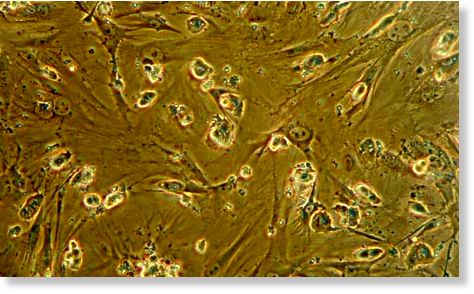
© Photograph: Mauricio Lima/AFP/Getty ImagesEmbryonic cells under the microscope. Scientists on both sides of the Atlantic are working on ways of adapting cells to help repair damage from heart attack.
Researchers in Oxford and California experiment with medical technology that could make transplants unnecessary

Every two minutes someone in the UK has a heart attack. Every six minutes, someone dies from heart failure. During an attack, the heart remodels itself and dilates around the site of the injury to try to compensate, but these repairs are rarely effective. If the attack does not kill you, heart failure later frequently will.

"No matter what other clinical interventions are available, heart transplantation is the only genuine cure for this," says Paul Riley, professor of regenerative medicine at Oxford University. "The problem is there is a dearth of heart donors."

Transplants have their own problems - successful operations require patients to remain on toxic, immune-suppressing drugs for life and their subsequent life expectancies are not usually longer than 20 years.

The solution, emerging from the laboratories of several groups of scientists around the world, is to work out how to rebuild damaged hearts. Their weapons of choice are reprogrammed stem cells.

Apple Red

Art imitates life: Ashton Kutcher landed in hospital after following Steve Jobs's fruitarian diet for movie role about mad Apple man

Image
© AFP Photo
Actor speaks of 'terrifying' health ordeal at the Sundance premiere of the Apple founder's biopic

Christian Bale is rumoured to have lived on coffee and one apple a day to achieve his emaciated physique in The Machinist. But not everyone is suited to unorthodox diets, as Ashton Kutcher discovered after adopting the late Steve Jobs's fruitarian regimen in preparation for a new biopic of the technology magnate.

Speaking at the premiere of Jobs at the Sundance film festival on Friday night, Kutcher revealed that he went to hospital with pancreas problems after following a strict diet of fruit, nuts and seeds. Jobs, who was often reported to be a fruitarian, died of pancreatic cancer in October last year.

"First of all, the fruitarian diet can lead to, like, severe issues," Kutcher told USA Today. "I went to the hospital like two days before we started shooting the movie. I was like doubled over in pain. My pancreas levels were completely out of whack. It was really terrifying ... considering everything."

Syringe

Bill Gates says global vaccination program is "God's Work"

Image
© usapartisan.com
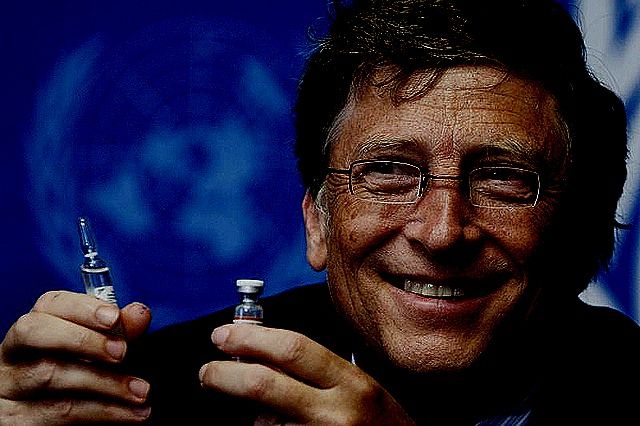
In a recent interview with the London Telegraph, Bill Gates has now claimed that his Foundation's massive push for vaccination is not just an exercise in philanthropy but that it is, in fact, "God's work."

Gates, who, according to the Telegraph, is worth an estimated $65 billion, is now dedicating his life to the "eradication of poliomyelitis," or, at least he is dedicating himself to the vaccination program allegedly aimed at achieving these ends.

As reported by the Telegraph,
"My wife and I had a long dialogue about how we were going to take the wealth that we're lucky enough to have and give it back in a way that's most impactful to the world," he says. "Both of us worked at Microsoft and saw that if you take innovation and smart people, the ability to measure what's working, that you can pull together some pretty dramatic things.
"We're focused on the help of the poorest in the world, which really drives you into vaccination. You can actually take a disease and get rid of it altogether, like we are doing with polio."

Info

The truth about red tide's man-made causes and health effects

Image
© greenmedinfo.com
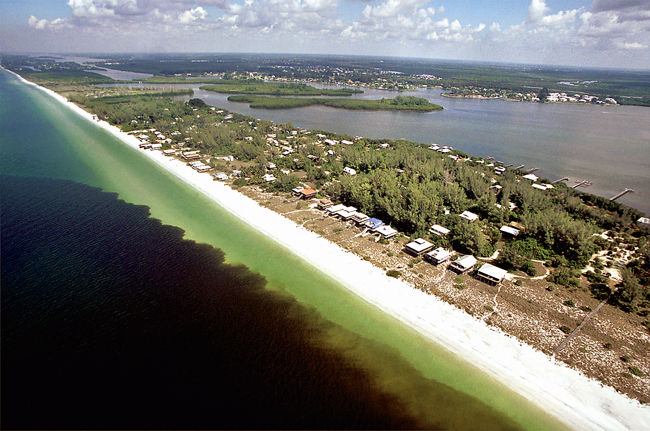
If you consult the websites of the Florida Fish and Wildlife Conservation Commission or the Mote Marine Laboratory, both considered authorities on marine environmental issues in the state of Florida, red tide outbreaks associated with Karenia brevis are "natural phenomena," 'beyond our ability to control,' and explicitly not fed by nutrient pollution or causally linked to land-based, human activities. And yet, longtime residents of the Florida Gulf coast (the author included) can tell you from first-hand experience that the blooms have been getting progressively worse, closer to shore, and persisting for a greater length of time, indicating that if it is an entirely natural cycle, it has undergone concerning changes of late.

The reality is that authorities who deny the involvement of land-based activities and algae blooms are conveniently ignoring the science, which is peer reviewed and published, that instructs us on what is feeding red tide near shore. Florida has only so many industries that sustain its fragile economy, many of which would have to enact substantial, and costly reforms in order to improve the environmental situation. The tourism and real estate industries also have a vested interest in minimizing and/or denying the extent of the problem, at least in the short term. The long term outlook, however, is dismal for these industries, who failing to act, would see the primary attractor for tourists or potential buyers of real estate -- the Gulf of Mexico -- transformed into a Petri dish. It is for this reason that the truth about red tide must gain a wider audience, and we hope, widespread acceptance.

Roses

Farmers markets exempt from new food safety rules

Image
© visitwestvolusia.com
The U.S. Food and Drug Administration released two new food safety rules this month under the landmark Food Safety Modernization Act that was signed into law two years ago to prevent foodborne illness.

The proposed rules would require food manufacturers to have a formal plan to prevent contamination and create enforceable standards for growing and harvesting produce.

But not all businesses or farms will be subject to such policies that look to reduce the approximately 3,000 annual deaths and 130,000 hospitalizations from foodborne illness, according to the FDA.

Food producers and farms are exempt from the law if they average less than $500,000 in annual sales and sell most of their food directly to consumers or restaurants and shops within the state or 275 miles.

Arrow Down

High-fructose corn syrup consumption plummets in America amid backlash

Image
© Huffington Post
Americans consumed less high-fructose corn syrup in 2011 than at any point since 1997, Bloomberg reported this week. The USDA estimates that the average American ate 131 calories worth of corn sweeteners a day this year, down 16 percent from 2007.

The decline follows several years of bad press for high-fructose corn syrup. Some have attacked it as bad-tasting, while many have argued that eating it is bad for your health. One recent study suggested that the brains of people who ate lots of fructose don't register as satiated, while another demonstrated a correlation between high-fructose corn syrup consumption and higher rates of type 2 diabetes.

Comment: The following articles are just a few examples of years of 'bad press' for High Fructose Corn Syrup(HFCS):

The High Fructose Corn Syrup Monopoly is Finally Cracking
Based on Consumer Demand More Companies Eliminate High Fructose Corn Syrup
Satan manifests itself in food with high fructose corn syrup
High-Fructose Corn Syrup is Evil: 7 Key Findings
High fructose corn syrup is not 'natural', says FDA
How High Fructose Corn Syrup Damages Your Body
High Fructose Corn Syrup - The Poison that Promotes Obesity and Liver Damage


Health

One-third of fish caught in English Channel have plastic contamination

Image
© Shutterstock
Fish were found to contain small pieces of plastic known as 'microbeads', in a study of 10 species

One-third of fish caught off the south-west coast of England have traces of plastic contamination from sources including sanitary products and carrier bags, scientists have found.

The Plymouth University study, published in the journal Marine Pollution Bulletin, looked at the occurrence of plastic in 10 species of fish caught in the English Channel.

Of 504 fish examined, more than one-third were found to contain small pieces of plastic less than 1mm in size, referred to by scientists as "microbeads".

Prof Richard Thompson of Plymouth University said in a statement: "We have previously shown that on shorelines worldwide and on the seabed and in the water column around the UK, these tiny fragments of plastic are widespread. But this new reseach has shown that such fragments are also being ingested by fish. Laboratory studies on mussels have shown that some organisms can retain plastic after ingestion, hence microplastic debris could also accumulate in natural populations."

Die

60 years of research links gluten grains to schizophrenia

Image

Does the consumption of gluten-containing grains contribute to psychiatric disorders such as schizophrenia?

Believe it or not, this question has been asked for well over 60 years by researchers who stumbled upon evidence that the removal of gluten from the diet results in improved symptoms, or conversely, that gluten grain consumption leads to higher prevalence of both neurological and psychiatric problems.

Reports of the resolution of emotional disturbances after the institution of a "gluten free" diet exist in medical literature at least as far back as 1951.[i] In 1954, Sleisenger reported to have found three schizophrenics among a group of thirty-two adults with celiac disease,[ii] and in 1957, Bossak, Wang and Aldersberg reported discovering 5 psychotic patients among 94 patients with celiac disease.[iii] The initial recognition that celiac disease, or at least gluten sensitivity, occurred at a far higher prevalence among schizophrenics than the healthy, opened up the door to more elaborate investigations.

Wartime Reduction In Gluten Grain Rations Reduces Schizophrenia Prevalence

For instance, in 1966, a remarkable epidemiological study was published in The American Journal of Clinical Nutrition titled,"Wheat "Consumption" and Hospital Admissions for Schizophrenia During World War II," which sought to confirm the possible relationship between schizophrenia and celiac disease by investigating the reported decrease in the number of admissions to mental hospitals during some wars.

The author of the study, F. C. Dohan, M.D., looked at the number of women admitted to the mental hospitals in Finland, Norway, Sweden, Canada and the United States before and after World War II. These figures were then compared to volume of wheat and rye consumed during those two periods. As Dohan explains:
The percent change in the mean annual number of first admissions for schizophrenia to the hospital in each of the five countries from the respective pre-war mean was compared to the percent change in the "consumption" of wheat and wheat plus rye."