Health & WellnessS


Magic Wand

Yoga to reduce inflammation

Image
© outbackmeditations.com
For caregivers of family members with Alzheimer's disease and other types of dementia, setting aside just 12 minutes a day for yoga can reduce stress - and possibly even decrease inflammation that could impair health. A newly published study from UCLA shows that just eight weeks of practicing Kirtan Kriya Meditation, a yogic chant, resulted in a reduction in inflammation.

Of particular interest is that this response was apparently achieved at the level of 68 genes that influence inflammation. The research team leader noted that chronic stress raises the risk for depression, that the incidence of depression among caregivers is approaching 50 percent, and that caregivers are also twice as likely to report high levels of emotional stress.

Comment: Proper breathing techniques are the foundation of all yoga practices. Practicing proper breathing techniques on a regular basis can instantaneously 'better your mood, tame your stress and reduce inflammation'. For more information about easy to use breathing techniques that can help reduce stress in the body, mind and spirit visit the Éiriú Eolas Stress Control, Healing and Rejuvenation Program website.

Yoga Reduces Cytokine Levels Known to Promote Inflammation, Study Shows
Yoga Relieves Depression by Boosting Calming Neurotransmitter Levels
Study: Yoga Improves Sleep, Quality of Life for Cancer Survivors
Yoga Can Ease the Chronic Pain of Fibromyalgia
Tame Your Stress With Yoga


Clipboard

GMO food labeling comes into force amid fears of 'lack of planning'

Image
© Daily MailPeople may mistake the 'GM' abbreviation for 'gram', activists fear
On New Year's day, India joined a select band of countries where food containing genetically modified (GM) content must be labelled as such. But it has done so without any preparation.

The labelling of foods with GM ingredients has been a long-held demand of consumer groups, but the way it has been done in India has left them disappointed.

The Legal Metrology (Packaged Commodities) Rules, 2011, which came into effect on January 1, say "every package containing the genetically modified food shall bear at the top of its principal display panel the letters 'GM'."

Consumer rights activist Bejon Misra said of the move: "It is a good step, but it is being done without any preparation at all. We don't know how this rule will be implemented or how it will be applied to products with GM content that are being imported or how the violators be prosecuted."

Moreover, merely printing the word GM on labels is not going to serve any purpose.

"People may confuse it as an acronym for 'gram'. The label should explicitly say 'this product contains genetically modified ingredients'," he said.

Health

Triaminic, Theraflu recalled after children accidentally ingested the medication

Image
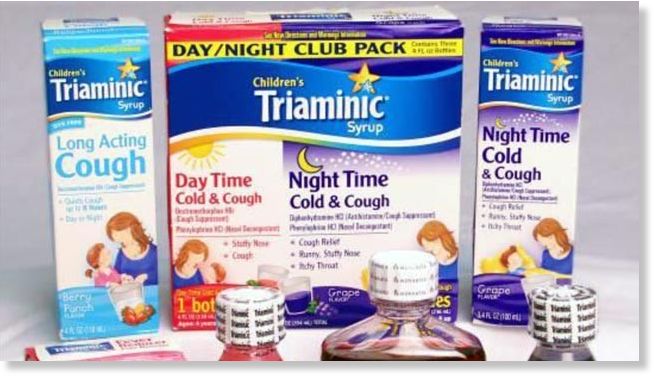
© Consumer Product Safety CommissionThe Consumer Product Safety Commission has put a recall on Triaminic and Threaflu products due to a failure to meet child-restraint closure requirements
The pharmaceutical company that makes Triaminic and Theraflu recalled 2.3 million units of cold and cough syrups after four children opened the child-resistant caps and accidentally ingested the medication themselves.

The child-resistant caps don't work in some cases, and a child can remove them even with the tamper-evident plastic seal still in place, according to a statement from the U.S. Consumer Product Safety Commission, the federal agency charged with protecting consumers against accident-causing products. Novartis Consumer Health Inc., the pharmaceutical company, recalled six kinds of Theraflu Warming Relief syrups and 18 kinds of Triaminic syrups. For a full list, click here.

Of the four affected children, one needed medical attention. Eight other children could open the caps but did not ingest the syrup, according to the commission.

"It's really common," said Dr. Donna Seger, the executive director of the Tennessee Poison Center and a professor at Vanderbilt University. "Cold and flu medicine are one of the top exposures that children have in the U.S."

Attention

More links found between schizophrenia and cardiovascular disease

A new study, to be published in the Feb. 7, 2013 issue of the American Journal of Human Genetics, expands and deepens the biological and genetic links between cardiovascular disease and schizophrenia. Cardiovascular disease (CVD) is the leading cause of premature death among schizophrenia patients, who die from heart and blood vessel disorders at a rate double that of persons without the mental disorder.

"These results have important clinical implications, adding to our growing awareness that cardiovascular disease is under-recognized and under-treated in mentally ill individuals," said study first author Ole Andreassen, MD, PhD, an adjunct professor at the University of California, San Diego School of Medicine and professor of psychiatry at the University of Oslo. "Its presence in schizophrenia is not solely due to lifestyle or medication side effects. Clinicians must recognize that individuals with schizophrenia are at risk for cardiovascular disease independent of these factors."

Led by principal investigator Anders M. Dale, PhD, professor of radiology, neurosciences, psychiatry and cognitive science at UC San Diego School of Medicine, an international team of researchers used a novel statistical model to magnify the analytical powers of genome-wide association studies or GWAS.

Attention

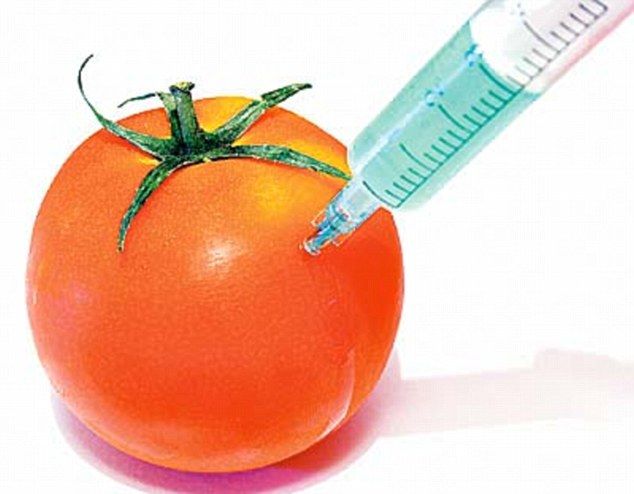
The looming future of GMO technology: Transhumanism, biocrops, and more

GMO Technology
© National Society
Right now we stand on the forefront of intellectual battle against biotechnology giants such as Monsanto who seek to monopolize the food supply through the extensive use of their genetically modified organisms, but what about tomorrow?

It's crucial that we continue the fight against Monsanto and GMO ingredients within the food, but as many are busy campaigning against the visible roots of GMO technology, the unseen roots of the biotech industry have grown much deeper - deep enough to delay any debate over today's biotech initiatives until tomorrow.

It's a powerful technique to utilize within the media, and I will highlight the specific key points in how it is deployed. You see as we are hammering Monsanto day in and day out over their pollution of the seed supply, corporations like Dow AgroSciences are working overtime on separate and far more serious initiatives.

Initiatives are being set in motion to extend genetic modification to the human body at large. And it's no longer being done behind the scenes.

Hearts

Xylitol in the news: Reading beyond the headlines

Image
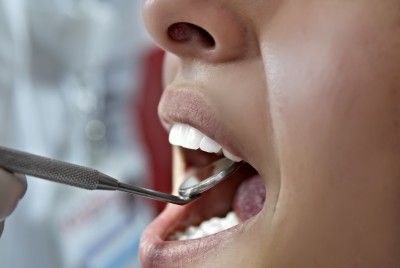
Earlier this month a study called the "Xylitol for Adult Caries Trial" was published in the Journal of the American Dental Association. Several of my dental friends contacted me, concerned to find out what was going on. If you look closely at the study, the results are not surprising, but the amazing thing was how quickly it reached the front page of the New York Times Health Section. I guess the conclusion of the study may seem shocking at first glance, because researchers found xylitol did not significantly reduce cavities in adults who are at high risk for decay.

The researchers confirmed xylitol has been shown to be successful in reducing cavities for over 50 years in Europe, Asia and even in the US. These studies, however, have mainly focused on children and adolescents, so this new study took a look at adults in the US with a high rate of cavities. The hypothesis was that 5 grams of xylitol could stop new cavities in selected clinic patients. After two and a half years, the conclusion was that xylitol had only reduced decay by 10%, which was not significant.

The results did not surprise me, nor a well-respected lecturer, Dr Graeme Milicich from New Zealand. His comment was, "Water can put out a fire, but a cup of water is not going to deal with a house fire. The people selected in this study were high-risk patients, so throwing a cup of water at the problem, without any other intervention, is obviously not going to deal with it". The patients in this study had serious decay problems and many had half their teeth missing. They experienced about 4 new cavities a year, yet it does not appear anyone addressed their lifestyle or other risk factors.

Xylitol's main benefit is its alkalizing ability. You can do a pH test in your own mouth and show that 100 percent xylitol quickly alkalizes your mouth to protect your teeth from acidity and sugars. This is why we recommend eating xylitol mints or gum after eating, after drinking and after snacking. If you eat xylitol and then sip diet soda or a 20 oz energy drink, the xylitol will have no chance to protect you. Most Americans snack frequently, particularly when it comes to sipping drinks.


Syringe

Global treaty will nix mercury - but NOT in vaccines!

Image
Why is one of mercury's most dangerous applications - human vaccines - exempted from the ban? An update to our recent report.

A week of complex discussions in Geneva ended with governments from around the world agreeing to a global, legally binding treaty to limit mercury use. The Minamata Convention on Mercury, named after the Japanese city where thousands of residents fell ill with mercury poisoning in the 1950s, bans the production, export, and import by 2020 of a wide range of products and processes where mercury is used or released.

Products include implantable medical devices, switches and relays, certain fluorescent lamps, soaps and cosmetics, and some medical devices such as thermometers and blood pressure devices. Mercury-added dental amalgams are also to be phased out.

What's exempted? Products used for military and civil protection; those with no mercury-free alternative; those used in religious or traditional practices; and vaccines in which the organomercury compound thimerosal, about which we have written about extensively, is used as a preservative.

Countries will be invited to ratify the treaty, which took four years to negotiate, at a meeting in Japan in October, but it is not expected to come into force for another three to five years.

A 2009 study published in the journal Toxicological & Environmental Chemistry found that thimerosal induces neural damage similar to that seen in autism patients - even in low levels. According to the study, "Thimerosal was found to be significantly more toxic than the other metal compounds examined."

Bacon

Stock vs Broth - Are You Confused?

French chefs have a term fonds de cuisine, which translates to "the foundation and working capital of the kitchen."
Image
Bone and meat stock provide just that, the foundation of both the kitchen and ultimately one's physical health. One of the most common questions that those individuals embarking upon the GAPS Diet have is "Do I make broth or stock?" What is the difference between the two?

The two words are often used interchangeably by the most educated of chefs. However, for purposes of the GAPS Diet, a temporary diet to heal/seal the gut wall and resolve autoimmune issues, Natasha Campbell‐McBride MD uses the terms "meat stock" and "bone stock." In this article, I will use "stock" when referencing meat stock and "broth" for bone stock.

Start with Meat Stock When Healing The Gut

Stock is used in the beginning stages of the GAPS Diet, especially during the Introduction Diet where the primary focus is in healing the gut. Broth is ideal for consuming once gut healing has taken place. The significant difference is that the stock (meat stock) is not cooked as long as broth (bone stock).

Stock is especially rich in gelatin and free amino acids, like proline and glycine. These amino acids along with the gelatinous protein from the meat and connective tissue are particularly beneficial in healing and strengthening connective tissue. These nutrients are pulled out of the meat and connective tissue during the first several hours of cooking meaty fish, poultry, beef and lamb. The larger the bones, the longer the cooking time.

In Gut and Psychology Syndrome, Dr. Campbell‐McBride explains how to prepare stock (meat stock) to be used during the early stages of the GAPS Diet. Her recipe can also be found at the end of this article.

MIB

Psychiatric wolves plan their attack on more innocent children

Image
To understand even a little bit about real psychiatry, versus the false picture, you have to know that someone running around the streets naked and screaming has nothing to do with a mental disorder.

If you can't grasp that, you'll always have a lingering sense that psychiatry is on the right track. It isn't, and never was. Not from its earliest days, and not now, when it has the full backing and force of the federal government behind it.

Psychiatry is the kind of all-out fraud few people grasp.

In a moment of weakness and exhaustion, Allen Frances, the most famous and honored psychiatrist in America at the time (2000), understood part of it. He told Gary Greenberg of Wired Magazine, "There is no definition of a mental disorder. It's bullshit. I mean, you just can't define it."

BANG.

That's on the order of the designer of the Hindenburg, looking at the burned rubble on the ground, remarking, "Well, I knew there would be a problem."

After a suitable pause, Dr. Frances remarked to Greenberg, "These concepts [of distinct mental disorders] are virtually impossible to define precisely with bright lines at the borders."

Comment:
BigPharma and Wall Street Profit from the Drugging of Children and Elderly
The Total Failure of Modern Psychiatry
Why psychiatry and big government are in a pornographic embrace


Health

Jack Andraka, 15, develops early 'dip stick' test for pancreatic cancer

Image
Jack Andraka speaks after receiving Smithsonian Magazine's first annual American Ingenuity Award for youth achievement in Washington, DC. last November. He has invented a new test for pancreatic cancer
Jack Andraka of Crownsville, Md., has developed a simple test which allows for detection of mesothelin, a biological indicator for early stage pancreatic cancer. The dip stick test, which can be used with either blood or urine, may revolutionize the treatment and detection of the deadly disease which currently kills 19 out of 20 sufferers due largely to the fact that it is so hard to diagnose before it's too late.

By using his test, pancreatic cancer patients now have a chance to find out about the disease with enough time to take advantage of medical treatment. Andraka is optimistic that with enough early warning, patients will now have a survival rate that is close to 100 percent.

Similar to the way diabetic testing strips work, Andraka's test require only a drop of blood to determine whether patients carry the mesothelin biomarker.