Health & WellnessS


Health

Gut microbes may help cause obesity

Image
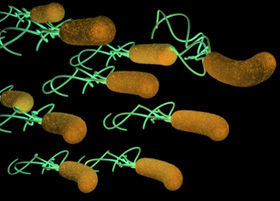
Although our own genes are generally fixed, each of us carries around the genes embedded inside 100 trillion microorganisms. Those microbes outnumber our own cells by a factor of 10 to one, making us “super-organisms" composed of our own genes and the genes of our microbiome.
When inoculated with the gut microbes of an obese woman, mice gained substantially more fat than when they were given gut microbes from the woman's identical but lean twin sister.

The finding is just one of the latest in a series of studies to show that the communities of microorganisms that live in our digestive systems -- also known as the microbiome -- may have profound effects on our health. And while there are still many details yet to be understood, the new findings suggest that we may some day be able to prevent or treat obesity by fiddling with the composition of tiny organisms that live inside us.

"Every year for the past 35 to 40 years, the weight of American society has been steadily going up, and we're now about 6 billion pounds overweight as a country," said Ronald Evans, a molecular biologist who studies the impact of the genome on diabetes and heart disease at the Salk Institute in La Jolla, Calif. He was not involved in the new study.

"Maybe the microbiome is a critical part of that," he said. "It would be great if you could take a cultured microbiome in a dish and give it to people and create healthier individuals. This study illustrates the potential and challenges of that, but it's an important step forward."


Comment: Instead of holding your breath for the next Big Pharma-sponsored-pill, change your diet according to your body's physiological needs. For more information see our forum discussion Life Without Bread.


Ambulance

Everything you need to know about B12 deficiency

Image
Sometimes B12 deficiencies can be overlooked and misdiagnosed as other disorders like Alzheimer’s, multiple sclerosis, bipolar disorder, autism, and some cancers.
Vegetarians and vegans are not the only ones who can develop a Vitamin B12 deficiency. Whether you're young or old; a Paleo, gluten-free, or raw foods enthusiast, you too can suffer from this. According to the National Health and Nutrition Examination Survey, one in every 31 adults in the US, age 51 or older, is deficient in vitamin B12.

What is B12?

Vitamin B12, also known as cobalamin, is a water-soluble vitamin required for many reactions in your body as well as for the health of your nerves, red blood cells, and DNA. Its most important role is as a methyl group donor, which is a crucial step in many of our main detoxification pathways. B12 has many forms, and the most common are cyanocobalamin and methylcobalamin (methyl-B12). Cyanocobalamin is commonly found in supplements and energy drinks. However, in order for our bodies to use it, cyanocobalamin must be converted into methylcobalamin.To make matters more complicated, about 50% of the population is estimated to have at least one mutation at the MTHFR gene and 10% has two mutations, meaning they're less able to methylate B12 or convert cyanocobalamin to methylcobalamin. (I personally have two gene mutations.) In fact, the more mutations one has at this gene, the less able one is to make this conversion, requiring supplementation with Methyl-B12, Folate, and B6.

Evil Rays

Why mammography is unscientific and harmful

Image
Getting a mammogram seems like a "no-brainer." The diagnostic test detects, by emitting allegedly harmless ionizing radiation, breast cancer early, thus it prevents the premature demise of the patient. Yet, many solid scientific facts invalidate these, on the surface, seemingly legitimate, highly plausible notions or claims about the value of mammography.

Some "inconvenient" facts women should know about mammography
"The interaction with the unaccountable, self-regulating business called "modern medicine" is analogous to buying a used car from a stranger: you never really know what you're getting because of the things you're not being told. And what is not being disclosed can (seriously) hurt you."

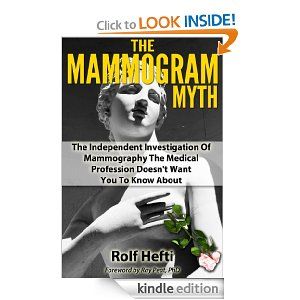
(Rolf Hefti, in The Mammogram Myth: The Independent Investigation Of Mammography The Medical Profession Doesn't Want You To Know About, 2013)
Would you (still) have mammograms if you knew that:

● many, if not most, "breast cancers" detected by screening with mammography are non-cancers;

● practically all non-cancers get treated with biopsies, surgery, radiation therapy, and other orthodox cancer treatments. That is, many essentially healthy women receive unnecessary treatments, therefore they get seriously injured -particularly because these treatments frequently induce secondary cancers;

● primary tumors tend to spread (metastasize) predominantly after a person received surgery, radiation or chemo therapy, and early detection of breast cancer by mammography increases the use of these invasive cancer treatments;

● early detection of breast cancer by mammography does not decrease (or only non-significantly) the mortality rate because the orthodox theories on cancer progression, from early to advanced stages, rest on flawed research and erroneous medical dogmas;

mammography increases total mortality;

Attention

Fetal exposure to pollutants produces childhood obesity

Image
Have you ever wondered why some infants seem to be naturally heavier than others, even though they may not necessarily be eating more? New research is confirming this may have something to do with a baby's exposure to certain pollutants within the womb.

Research from Spain's Center for Research in Environmental Epidemiology has confirmed that exposure to certain environmental pollutants in the womb produces a greater incidence of obesity and rapid growth among infants and children.

In the most recent study, the researchers followed over 4,600 infants between 2003 and 2008 who were between the age of six months and fourteen months. Within this population they identified 1,285 children who had experienced rapid growth during their first year and 1,198 overweight babies by the time they were 14 months of age.

Comment: Learn more about how Common Chemicals May be Feeding the Obesity Epidemic:

Diabetes Risk Tied to Air Pollution
Pollutants long gone, but disease carries on generations later
Researchers: Obesity May Start as Early as a Baby's Bottle
Phthalates Linked to Higher Rates of Childhood Obesity
Medical Profession 'Oblivious' to Role of Chemicals in Diabetes and Obesity
Study Claims: Prenatal Exposure to Inner-city Air Pollution is Linked to Childhood Obesity
Programmed For Obesity: Early Exposure To Common Chemicals Can Permanently Alter Metabolic System


Attention

Birth defects cluster in Washington remains mysterious

Image
© Ultrasound photo via Shutterstock
Health officials investigating a spike in cases of a fatal birth defect in central Washington state have found no common cause linking the cases, according to a new report from the Centers for Disease Control and Prevention (CDC).

The investigation began last year when a local hospital alerted the state health department to an unusually high number of babies born with a rare birth defect called anencephaly, in which parts of the baby's brain and skull are missing.

The investigators identified 23 women in a three-county area whose babies had anencephaly between January 2010 and January 2013. The anencephaly rate was more than 8 per 10,000 births, which is four times higher than the national average of one or two cases in every 10,000 births, according to the report.

Magnify

Love me, Love my microbiome

Image
"What is a human being?" It's an age-old question to which Justin Sonnenburg offers a unique answer. Each of us is, he says, "an elaborate vessel optimized for the growth and spread of our microbial inhabitants" - known collectively as our microbiome.

It has recently been my privilege to meet Justin, read his published research, and learn from his gut-centric view of human physiology. A professor of microbiology and immunology at Stanford, he is one of the world's leading researchers of the microbiome. Nobel Laureate Joshua Lederberg coined the term a decade ago to collectively describe the 100 trillion microbes that live upon and (mostly) within us.

This roughly two-pound community outnumbers our human cells (that is, the ones with our unique DNA profile) 10-fold. Further, the number of genes in all of those microbes' genomes is roughly 100 times greater than the number in our human cell genome.

Comment: Learn more about the microbiome and the role microbes play in protecting and regulating the human immune system:

Brain, heart and gut minds
Are Gut Bacteria In Charge?
A gut check for many ailments
Gut Bacteria Reflect Dietary Differences
Change Your Gut Flora and Lose Weight
Microbes Help Mothers Protect Kids from Allergies
Antibiotics Disrupt Gut Ecology, Metabolism
The Secret to Brain Health: It All Begins in Your Gut!
Bugs In The Gut Trigger Production Of Important Immune Cells
Gut Microbes Battle a Common Set of Viruses Shared by Global Populations
Biologists Link Gut Microbial Equilibrium to Inflammatory Bowel Disease
Microbes in Our Gut Regulate Genes That Control Obesity and Inflammation


Whistle

More states attempting to thwart freedom of health speech by requiring individuals to be professionally licensed before sharing information

Image
Freedom of speech, which includes the right to freely share information with others without interference or threat from the state, is one of the most fundamental tenets of American civil society. But this foundational and constitutionally-protected principle is under attack in a growing number of states where state licensing boards are increasingly trying to restrict freedom of health speech and limit it only to those who first receive permission from the government to give it.

One of the first major incidents of this in recent years involves the North Carolina Board of Dietetics / Nutrition (NCBDN), which, in 2012, decided to go after health blogger Steve Cooksey for posting information online about how he cured himself of diabetes through diet. The medical establishment in North Carolina, which is among the most restrictive and domineering in the nation, actually threatened to file a lawsuit against Cooksey in an attempt to shut him up.

Comment: The following articles provide additional information about Steve Cooksey's on- going battle with the state of North Carolina's Board of Dietetics/Nutrition:

Blogger Giving Advice Resists State's: Get a License
Officials Tell Blogger to Stop Giving Advice on Paleo Diet
Paleo Diet Blogger Sues State For Trying To Regulate His Advice
State of North Carolina Threatens to Shut Down Nutrition Blogger
Is the American Dietetic Association Manipulated by the Food Industry?


Health

West Nile: Labeled 'endemic' in Los Angeles County

Authorities count 54 human infections of mosquito-borne virus in L.A. County.

Officials have warned residents to protect themselves from mosquito bites after dozens of dead birds and mosquito samples -- including three reported in Burbank -- tested positive for West Nile virus in Los Angeles County last month, authorities said.

A dead bird and two mosquito samples collected locally tested positive for the virus, adding to the more than 260 positive mosquito samples and 63 dead birds reported in the district which includes Burbank and Glendale this year, according to the Los Angeles County Vector Control District.

"This should be a sign that West Nile virus is widespread in L.A. County," said Levy Sun, a spokesman for the district, adding that the virus "is endemic to [Southern California,] which means it is here to stay and it will occur every year."

The first and only other time the virus was detected in Burbank this year was in mid-July, when one mosquito sample tested positive. .

Info

Gut bacteria from thin humans can slim mice down

gut bacteria research
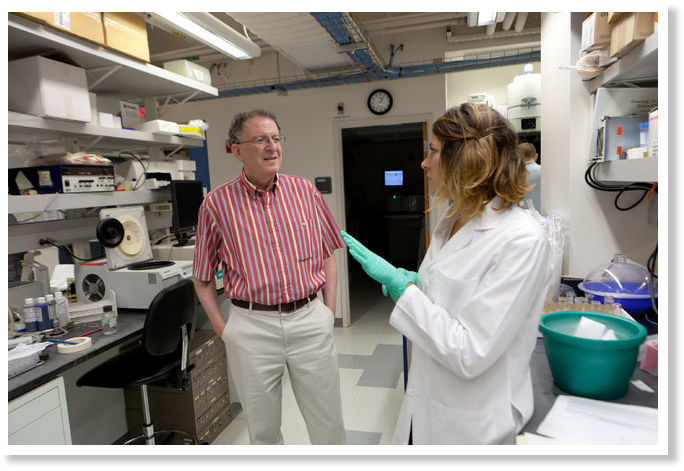
© Dan Gill/The New York TimesDr. Jeffrey I. Gordon, left, and Vanessa K. Ridaura are two members of a scientific team whose research shows a connection between human gut bacteria and obesity.
The trillions of bacteria that live in the gut - helping digest foods, making some vitamins, making amino acids - may help determine if a person is fat or thin.

The evidence is from a novel experiment involving mice and humans that is part of a growing fascination with gut bacteria and their role in health and diseases like irritable bowel syndrome and Crohn's disease. In this case, the focus was on obesity. Researchers found pairs of human twins in which one was obese and the other lean. They transferred gut bacteria from these twins into mice and watched what happened. The mice with bacteria from fat twins grew fat; those that got bacteria from lean twins stayed lean.

The study, published online Thursday by the journal Science, is "pretty striking," said Dr.Jeffrey S. Flier, an obesity researcher and the dean of the Harvard Medical School, who was not involved with the study. "It's a very powerful set of experiments."

Comment: Instead of fecal transplants - which sounds rather unappealing! - try out the low-carb, high-fat Paleo diet, which proved to be the best weight-loss system:

The unspoken truth about the paleo diet & weight loss
Benefits of a Paleo Diet
Paleo Diet Works: High Fat Diet reverses the Overloaded,Under-fuelled Condition - A case study


Syringe

Flu vaccine backfires in pigs

Image
© Andy Rouse/PhotoshotPigs vaccinated against H1N2 influenza were more vulnerable to the rarer H1N1 strain.
Preventing seasonal sniffles may be more complicated than researchers suspected. A vaccine that protects piglets from one common influenza virus also makes them more vulnerable to a rarer flu strain, researchers report today in Science Translational Medicine1.

The team gave piglets a vaccine against H1N2 influenza. The animals responded by making antibodies that blocked that virus - but aided infection with the swine flu H1N1, which caused a pandemic among humans in 2009. In the study, H1N1 infected more cells and caused more severe pneumonia in vaccinated piglets than unvaccinated ones.

The root of the different immune responses lies with the mushroom-shaped haemagglutinin protein found on the outside of influenza-virus particles, which helps them to attach onto cells in the airways. The protein occurs in all types of flu, but the make-up of its cap and stem vary between strains.

In the study, a vaccine for H1N2 spurred pigs to produce antibodies that bound the cap and the stem of that virus's haemagglutinin. But some of those antibodies also targeted the stem of H1N1's haemagglutinin protein, helping that virus fuse to cell membranes. That made H1N1 more efficient at infecting pigs and causing disease.

Comment: Despite expert's rationalizations, the findings are pretty incriminating. For more information about this topic see: