Health & WellnessS


Bad Guys

Sugar intake must come down, says WHO - but UK likely to resist

Image
© Ocean/CorbisThe WHO plans to update its 2003 recommendation that sugar should not account for more than 10% of the calories in our diet.
The World Health Organisation is set to recommend a cut in the amount of sugar in our diets in the coming months, following reviews of the scientific evidence of the link with obesity - but any proposed lower limit for sugar will have to overcome scepticism among scientific advisers to the British government.

Next year, the government's scientific advisory committee on nutrition (SACN) will report on carbohydrates, including sugar, in people's diet. Its members, some of whom receive funding from industry, are thought to be sceptical that the sugar is a cause of obesity.

The chairman of the SACN working group on carbohydrates, Professor Ian Macdonald, from Nottingham University, has been on the Mars and Coca-Cola European advisory boards, although he has stepped down from both for the duration of the inquiry.

The professor is the academic lead for his university's "strategic relationship" with Unilever, which owns ice-cream brands as well as margarine and weight-loss products. Unilever's Dr David Mela sits with him on the SACN carbohydrate group and the two are also on the government's calorie reduction expert group, which advises food companies and health groups involved in the Department of Health's Responsibility Deal, aimed at improving public health in England.

Comment: Sugar is intrinsically toxic and inflammatory. For more information see 146 reasons why sugar destroys your health.

In addition, don't miss the documentary Food Politics and Power: The Men Who Made Us Fat.


Pills

Drug companies are hiding research

Image
Big Pharma: A deadly solution
Drug companies may not be publishing complete and comprehensive data that could affect a physician's ability to practice safe and effective medicine. 'Evidence based medicine' is the trend in the medical community. But, what if the research was biased and based on selectively published clinical trials? It seems that this may be what is actually happening and it could be a deadly scenario for all of us.

Alltrials.net

Alltrials.net is a website created by Dr. Ben Goldacre, turned epidemiologist. Dr. Goldacre felt misled with information that drug companies were hiding critical clinical trial results. Dr. Goldacre explained in a Ted Talk that while positive clinical trial results are published, many negative clinical trial results are not published. As pharmaceutical companies publish positive data and suppress the negative, physicians base clinical decisions on what may be biased and selective data.

Anti-depressants

As an example, anti-depressants have led to a billion dollar pharmaceutical industry in North America. However, these medications are rarely prescribed in many countries overseas. A recent analysis of 74 studies of anti-depressants showed that 38 clinical trial results were positive and 36 trial results were negative (1). 37 out of the 38 clinical of the positive results were published while only one out of the 36 negative results was published (1). This is an example of a misleading bias, which may have caused many physicians, including Dr. Goldacre and I, to practice unsafe medicine because what is believed to be 'evidence based medicine, could actually be 'selectively biased medicine'.

Crusader

People power! Zambia, strongest anti-GMO stance in Africa

Image
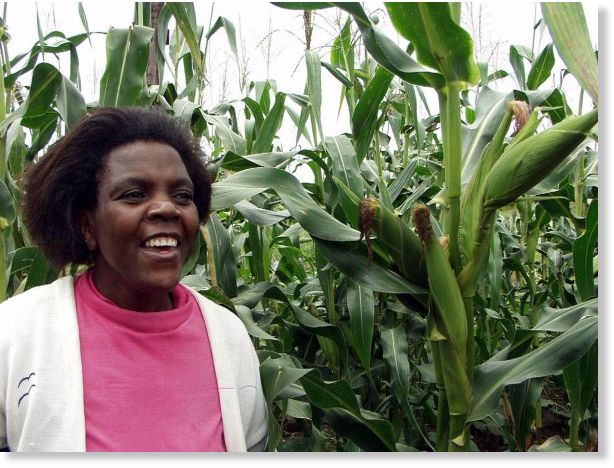
© AP Photo/Salim HenryFridah Sichalwe in her non-GMO maize field in Chibombo, 56 miles north of Lusaka, Zambia, in this 2003 file photo. Genetically modified foods have been banned in Zambia since 2002.
Zambia and three other African countries shocked the world in 2002 when they declined food aid during a regional famine. They wouldn't accept the food because it was both genetically modified (GM) and unmilled, which meant that it could potentially be planted to grow GM crops. The four countries then asked the United States, which had provided most of the aid, to mill it so it would only be good for consumption and not cultivation, but it refused, citing costs.

When South Africa stepped in to mill it, three of the countries, Malawi, Mozambique, and Zimbabwe accepted. Only Zambia still refused, citing its genetic modification, which then-President Levy Mwanawasa called "poison."

At the World Summit on Sustainable Development (Earth Summit 2002) in Johannesburg, Mwanawasa said, "We may be poor and experiencing severe food shortages, but we aren't ready to expose our people to ill-defined risks. [...] I will not allow Zambians to be turned into guinea pigs no matter the levels of hunger in the country."

Info

A soda a day packs the pounds away

Image
© Melissa Lomax Speelman/Getty ImagesFive-year-olds who drink sugar-sweetened beverages regularly are more likely to be obese than those who don't.
From the "duh" files comes yet another study linking the consumption of soda and other sweetened beverages to bad things. Except this time, researchers studied the effects sugary beverages have on the bodies of children between two and five years old.

Researchers from the University of Virginia in Charlottesville surveyed the parents of 9,600 children born in 2001 from across the nation, asking questions about their TV-watching habits, socioeconomic level, and children's consumption of sugary drinks. The completed study, published in this month's issue of the journal Pediatrics, reported that five-year-old children who drank beverages sweetened by sugar every day were 43 percent more likely to be obese than those who drank the beverages less frequently or not at all.

"Even though sugar-sweetened beverages are relatively a small percentage of the calories that children take in, that additional amount of calories did contribute to more weight gain over time," Dr. Mark DeBoer, who led the study at the University of Virginia in Charlottesville, told FoxNews.com.

Monkey Wrench

Just because science can genetically engineer foods, doesn't mean we should

Image
Recently the debate over genetically modified (GMO) foods has heated up again. In just the past few weeks, articles about GMOs have appeared in Slate, the New York Times, and Grist. And over the weekend New York Times writer Amy Harmon wrote again of the saving graces of genetically engineered foods, this time citing "Golden Rice" as a clear example of the life saving abilities of GMOs.

Yet journalists on both sides of the argument seem to have forgotten there are many ways aside from " science" to describe the world around us, and that there are other highly effective tools out there to solve hunger and malnutrition besides genetic engineering.

Let me be clear - I am not "afraid of science," a claim that someone invariably writes at the end of an article like this one to try and discredit its argument. I, like millions of people around the world, am against genetic engineering, but not because of the proven or refuted science behind it.

Top Secret

Americans eat their weight in genetically engineered food

Image
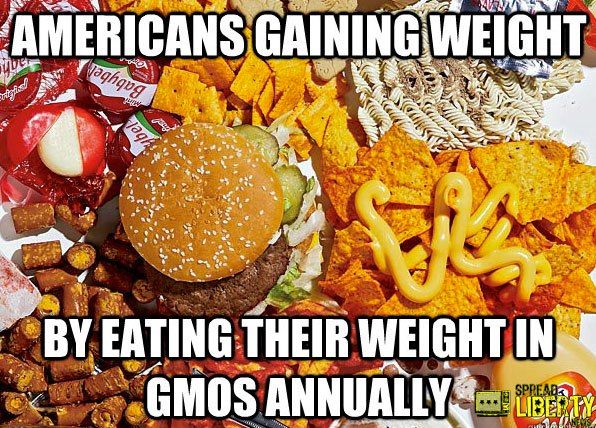
Americans are eating their weight and more in genetically engineered food every year, a new Environmental Working Group analysis shows. On average, people eat an estimated 193 pounds of genetically engineered food in a 12-month period. The typical American adult weighs 179 pounds.

These figures raise a question: If you were planning on eating your body weight of anything in a year, wouldn't you want tomake sure it was safe to eat?

Shockingly, virtually no long-term health studies have been done on consumption of genetically engineered food.

And there aren't likely to be any such studies anytime soon. The government isn't doing this kind of research and is not requiring it of the food industry. It isn't even making it possible for independent scientists to do it, since under the law, those who hold patents on genetically engineered food get to decide in most cases what testing can - and cannot - be conducted.

Ambulance

Saudi and Qatar report more MERS coronavirus deaths

MERS Coronavirus
© APSaudi Arabia is the country worst hit by the coronavirus MERS, which has killed 50 people globally
Coronavirus has claimed two lives in Saudi Arabia and one in Qatar, bringing total number of fatalities globally to 50.

Two women have died of the coronavirus MERS in Saudi Arabia, the health ministry said, bringing the total number of fatalities in the kingdom to 44.

The victims were identified on Saturday as a 41-year-old health sector worker in Riyadh and a 79-year-old woman who suffered from chronic illnesses and who came into contact with a patient stricken by the virus in the northeastern city of Hafr Al Baten.

Meanwhile, a Qatari man has also died from the virus, becoming the second fatality from the SARS-like virus to be recorded in the Gulf state, a health authority said on Saturday.

Beaker

FDA: Arsenic found in rice 'won't harm health immediately', but long-term risk unclear

rice
© AP Graphics Bank
Rice may contain measurable levels of arsenic -- a carcinogen -- but according to the Food and Drug Administration, consumers need not worry about their immediate health after eating rice and related products.

The FDA's new guidance, released Sept. 6 for consumers, however notes that the long-term health risks remain unclear. The agency said it needs to conduct more research to see if eating rice over time can raise risk for cancer and other health wies.

Life Preserver

Vascular surgeons write a damning report about lowering cholesterol drugs

Image
The statin industry is the utmost medical tragedy of all times.

Two top vascular surgeons have published a damning report on statin medications.

Dr Sherif Sultan, Consultant Vascular and Endovascular Surgeon, Honorary Senior Lecturer at NUI Galway, Ireland, and Dr Niamh Hynes, Clinical Lecturer In Vascular & Endovascular Surgery at Western Vascular Institute, Ireland have conducted a critical review of the benefits and risks associated with statin medications.

In summary, their paper highlights the following key points:
  • Not only are statin medications failing to impact on our most prevalent disease, but they are causing more harm than good.
  • Cholesterol is crucial for energy, immunity, fat metabolism, leptin, thyroid hormone activity, liver related synthesis, protection from stress, adrenal function, sex hormone syntheses and brain function.
  • Only middle aged men with coronary heart disease benefit from taking statins, but even in these cases statins may only work in the short term and should be stopped before adverse effects can take hold.
  • High cholesterol levels have been found to be protective in elderly and heart failure patients.
  • The statin industry is the utmost medical tragedy of all times.
  • A government report in Canada found an overestimation of benefit and underestimation of harm where statins are concerned.
  • Statins are associated with triple the risk of coronary artery and aortic calcification.

Pills

Autism linked to mothers taking antidepressant drugs

Image
This research linking SSRIs and high circulating serotonin levels with autistic children might be considered the canary in the coal mine. The one consistent parallel with the dramatic increase in autism over the past few decades has been the dramatically increased use of these chemical toxins amongst our foods, water, air and living spaces.
Medical researchers at the Johns Hopkins University School of Public Health say the evidence is strong that a pregnant mother who takes certain types of antidepressant drugs will have a dramatically increased risk of her child having autism.

The research investigated not only the clinical research, but the mechanisms associated with taking selective serotonin reuptake inhibitors (SSRIs) during pregnancy.

Medical research has established that about a third of autistic children have increased levels of a neurotransmitter called serotonin in the blood stream. Other findings have determined that these higher serotonin levels are often caused by errors in the signaling process amongst brain and nerve cells - as the cells are not utilizing serotonin properly.

The hypothesis that is being proven out by the research is that when the mother takes SSRIs during or prior to pregnancy, the baby's brain and nerve cells' ability to utilize and process serotonin becomes diminished.

And because serotonin is intimately related to the brain's ability to focus and concentrate thoughts - as well as experience empathy and other moods - dysfunctional serotonin metabolism can produce a myriad of mental and emotional issues.