Health & WellnessS


Clipboard

Ability to identify source of pain varies across body

Image
© University College LondonResearchers from University College London use lasers to stimulate pain in a volunteer's hand.
Where does it hurt?" is the first question asked to any person in pain.

A new UCL study defines for the first time how our ability to identify where it hurts, called "spatial acuity," varies across the body, being most sensitive at the forehead and fingertips.

Using lasers to cause pain to 26 healthy volunteers without any touch, the researchers produced the first systematic map of how acuity for pain is distributed across the body. The work is published in the journal Annals of Neurology and was funded by the Wellcome Trust.

With the exception of the hairless skin on the hands, spatial acuity improves towards the centre of the body whereas the acuity for touch is best at the extremities. This spatial pattern was highly consistent across all participants.

The experiment was also conducted on a rare patient lacking a sense of touch, but who normally feels pain. The results for this patient were consistent with those for healthy volunteers, proving that acuity for pain does not require a functioning sense of touch.

"Acuity for touch has been known for more than a century, and tested daily in neurology to assess the state of sensory nerves on the body. It is striking that until now nobody had done the same for pain," says lead author Dr Flavia Mancini of the UCL Institute of Cognitive Neuroscience. "If you try to test pain with a physical object like a needle, you are also stimulating touch. This clouds the results, like taking an eye test wearing sunglasses. Using a specially-calibrated laser, we stimulate only the pain nerves in the upper layer of skin and not the deeper cells that sense touch."

Volunteers were blindfolded and had specially-calibrated pairs of lasers targeted at various parts of their body.

These lasers cause a brief sensation of pinprick pain. Sometimes only one laser would be activated, and sometimes both would be, unknown to participants. They were asked whether they felt one 'sting' or two, at varying distances between the two beams. The researchers recorded the minimum distance between the beams at which people were able to accurately say whether it was one sting or two.

Info

Fasting for two days can regenerate entire immune system, study finds

Fasting
© PEGAZ/Alamy
Researchers say fasting "flips a regenerative switch" which prompts stem cells to create brand new white blood cells.
Fasting for as little as three days can regenerate the entire immune system, even in the elderly, scientists have found in a breakthrough described as "remarkable".

Although fasting diets have been criticised by nutritionists for being unhealthy, new research suggests starving the body kick-starts stem cells into producing new white blood cells, which fight off infection.

Scientists at the University of Southern California say the discovery could be particularly beneficial for people suffering from damaged immune systems, such as cancer patients on chemotherapy.

It could also help the elderly whose immune system becomes less effective as they age, making it harder for them to fight off even common diseases.

The researchers say fasting "flips a regenerative switch" which prompts stem cells to create brand new white blood cells, essentially regenerating the entire immune system.

"It gives the 'OK' for stem cells to go ahead and begin proliferating and rebuild the entire system," said Prof Valter Longo, Professor of Gerontology and the Biological Sciences at the University of California.

"And the good news is that the body got rid of the parts of the system that might be damaged or old, the inefficient parts, during the fasting.

"Now, if you start with a system heavily damaged by chemotherapy or ageing, fasting cycles can generate, literally, a new immune system."

Prolonged fasting forces the body to use stores of glucose and fat but also breaks down a significant portion of white blood cells.

Question

People in Kazakhstan are falling asleep for six days at a time and no-one knows why

sleeping
© Alex Coll
Suspected uranium poisoning has left residents in two tiny Kazakh villages falling asleep for up to six days on end. Krasnogorsk and nearby Kalachi, both towns near-deserted after the fall of the Soviet Union in 1989, have seen 60 of their 820 inhabitants struck down with the eerie illness.

Marina Felk, a 50-year-old milkmaid in Kalachi, said: 'I was milking cows, as usual, early in the morning, and fell asleep. I remember nothing at all, only that when I came round I was in a hospital ward, and the nurses smiled and me, and said: 'Welcome back sleeping princess, you've finally woken up. What else do I remember? Nothing. I slept for two days and two nights.'

Alexey Gom, a 30-year-old who came to visit his mother-in-law in Kalachi, also suffered. 'In the morning, I wanted to finish my work. I switched on my laptop, opened the pages that I needed to finish reading - and that was it. It felt like somebody pressed a button to switch me off,' he told local reporters. 'I woke up in the hospital, with my wife and mother-in-law by my bedside. The doctor found nothing wrong with me after a series of tests he performed. I slept for more than 30 hours. But it's never happened to me before, never in my life, or to anyone from my family.'

If that wasn't creepy enough, some residents fear that they might have buried an elderly man alive, thinking he was dead when really he was just asleep. Locals are so fearful of being struck down with the mysterious sleeping bug, which has been affecting people in stints over the past year, that they're packing bags to carry with them in anticipation of being struck down and rushed to hospital.

And it's not just a sleeping bug - other adults have symptoms of weakness, dizziness and memory loss. Children afflicted by this unknown condition have reported hallucinations, such as snakes and worms eating their arms.

Scientists, who initially thought the sleeping was down to a dodgy batch of vodka (yep, seriously) have been drafted in to determine what the fuck is going on. They've now conducted 7,000 experiments on samples of patients' hair, blood and nails as well as the surrounding soil, air and water, according to The Siberian Times.

Health

Pumpkin seed oil found to help reverse balding

Image
© Case AdamsResearchers from the Republic of Korea's Pusan National University have confirmed that pumpkin seed oil increases hair growth among balding men.
The medical researchers tested the pumpkin seed oil on 76 male patients with moderate androgenic alopecia - male pattern hair loss. None of the patients had tried any previous medication, supplement or topical therapy for at least three months prior to the beginning of the study. The researchers recruited 90 patients, but excluded those with high liver enzyme levels.

The patients were divided into two groups and half were given a placebo. The treatment consisted of giving the patients 400 milligrams of the pumpkin seed oil per day in capsules. They were given two capsules before breakfast and two capsules before dinner.

Info

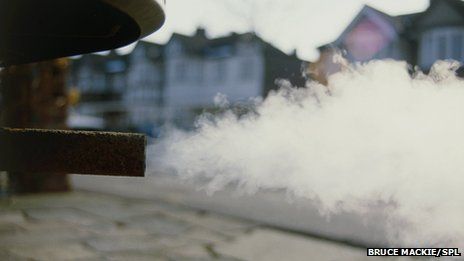
Air pollution link to irregular heartbeat and lung clotting

Image
Particulate matter in air pollution can have an adverse effect on heart health
Air pollution is linked to increased risk of developing an irregular heartbeat and blood clots in the lung, research suggests.

The impact of air pollution on the risk of heart attack and stroke is less clear, say UK experts.

Analysis of data from England and Wales shows air pollution is particularly harmful in the elderly.

Further research is needed on pollution and cardiovascular health, says the British Heart Foundation.

A team at the London School of Hygiene & Tropical Medicine analysed data collected in England and Wales between 2003 and 2009 on links between cardiovascular problems and short-term air pollution.

They found short-term air pollution was linked to arrhythmia (abnormal heart rhythm) and blood clots in the lung.

The strongest link was in the over-75s and in women, lead researcher Dr Ai Milojevic told BBC News.

Bulb

What we didn't know about the brain that changes everything

Sometimes science gets things wrong. With acknowledgement of these fundamental misapprehensions, whole swaths of dogma have to be unraveled, deconstructed, and rebuilt. The sooner the better.
Image
Vaccines may be the most egregious example of head-in-the-sand "science" that has failed to incorporate modern theories of intersystem immunology – gut, endocrine, adrenal – as well as the vast personalization required for such an intervention based on genetics and preexisting environmental exposures.
Ten years ago, science assumed that immunity was in the body, not the brain, which was thought to have "immune privilege". What does it mean to learn that the brain has an immune system? Does this change our understanding of mental illness? Neurology? Cancer? What about risks of side effects to pharmaceutical interventions that target the immune system such as vaccines?

A seminal paper entitled, Novel roles for immune molecules in neural development: implications for neurodevelopmental disorders, helps to elucidate the history of this paradigm shift. Scientific dogma had it that the immune system might infiltrate a brain in acute trauma or pathology. The earliest observations of the role of the immune system in even healthy brains arose from observations of cognitive impairment in severe combined immunodeficient mice who had peripheral T-cell depletion (but no specific blood-brain-barrier breach).

With the activity of agents called cytokines, complement, and complexes that help to identify invasive pathogens such as MHC, the presence alone, of these agents represents a new way of thinking about brain function. Then there is the consideration that patterns of immune functioning change over the course of neurodevelopment with immune agents participating in learning and brain growth. Sprinkle in the daunting complexity of genetic individuality as demonstrated in this quote:
"One of the defining features of MHC molecules and their receptors is their complexity. They are both polygenic-containing multiple genes and polymorphic-containing multiple variants of each gene. The MHC genes are the most polymorphic genes known."
...and we end up with more questions than we have answers.

Health

The AHA's absurd and unethical saturated fat obsession

The nonprofit is defending its 'heart healthy' diet in a response post to The Daily Beast that purports to 'set the record straight.' So, we'll take it from here.
Image
© The Daily BeastWhen it comes to AHA recommendations, do the opposite and you won't be far off from ideal health. Founded and heavily financed by the food industry, its studies and health policies have been responsible for the world's epidemic of heart disease by promoting carbohydrates as a replacement of anti-inflammatory animal fats. The science behind this simple and common sense concept is irrefutable.
The day after my article lambasting the American Heart Association's 2013 dietary guidelines came out in The Daily Beast, Dr. Rose Marie Robertson posted a response on blog.heart.org titled: Chief Science Officer 'sets record straight' about diet, science, AHA.

I don't know Dr. Robertson personally, but there are interesting parallels between our careers. We're about the same age and went into cardiology at a time, when female cardiologists were rare. We have both headed up centers devoted to treating heart disease in women. Since 2003 Dr. Robertson has been the AHA's Chief Science and Medical Officer (receiving more than $500,000 a year in salary and benefits) while I have continued seeing patients and engaging in clinical research and teaching. In other words, in the war against heart disease, you might say that Dr. Robertson is an officer and I am a foot soldier. But it is often in the trenches that the truth is most apparent.

Dr. Robertson employs a "Their Story" vs. "The Facts" method for the post, in which she purports to show how The Daily Beast's arguments were "based on falsehoods, questionable allegations and personal attacks." In part to "honor" the American Heart Association's "good name," Dr. Robertson says she's also writing it "out of concern for the health of the public, all the people we work hard every day to protect."

Her rebuttal begins by bashing the Cambridge University study that questioned the link between saturated fat intake and heart disease. While there was criticism of this study, and minor corrections posted by the authors, the fundamental findings stand: Saturated fat intake and the risk of heart disease do not appear to be related.

Comment: When it comes to AHA recommendations, do the opposite and you won't be far off from ideal health. Founded and heavily financed by the food industry, its studies and health policies have been responsible for the world's epidemic of heart disease by promoting carbohydrates as a replacement of anti-inflammatory animal fats. The science behind this simple and common sense concept is irrefutable. For more information see:

The Big Fat Surprise by Nina Teicholz

Straight from the horse's mouth:

Consequences of replacing saturated fats with carbohydrates or Ω-6 polyunsaturated fats: The dietary guidelines have it wrong
From the Heart: Saturated fat is not the major issue
Sweden touts low-carb diet as key to weight loss
Swedish Expert Committee: A Low-Carb Diet most effective for weight loss

For more information see:

The Ketogenic Diet - An Overview
The Obesity Epidemic, Courtesy of the Agricultural Industry
Saturated fat heart disease 'myth': UK cardiologist calls for change in public health advice on saturated fat
Heart surgeon speaks out on what really causes heart disease


Family

Who's in charge?

parents, children, kids, rights
© thepelsers.com
Yesterday I wrote about a sign in my doctor's office, informing parents that all 12 - 17 year olds must have a private conversation with a nurse. Seeking clarification, I emailed my medical group. The next day, I received a phone call from Kim in the privacy department. She could not have been more pleasant or patient as she explained why my office had posted that notice:

The medical group has developed an on-line system for making appointments and asking questions of health care professionals. You can also access test results and messages from your health care provider there. This online portal is now available to 12 - 17 year olds; they can sign up for their own account. Because of current law, these minors have the option of denying their parents access to the on-line account. This information would be included in the private conversation mentioned on the sign.

The five minute conversation would also inform the minor that he can receive reproductive care without parental consult or consent. This would include information on STDs, HIV and birth control. This is also a result of legislation - but this has been on the books for years.

Candle

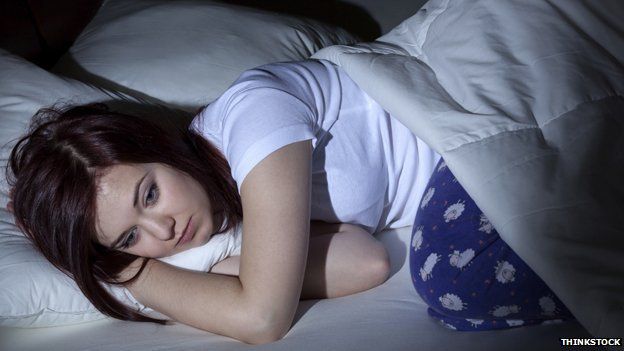
Block it out! The plague of light in our bedrooms

sleep
© ThinkstockResearchers warn of the health dangers of too much light while we try to sleep. But how did our bedrooms become so bright?
There are regular warnings that people aren't sleeping properly. Too much light from electronic devices before bedtime. Not enough time in bed. Excessive caffeine. Now there's another potential worry - too much light in the bedroom.

Previous studies have linked light at night with ill health in rodents. Now a study of 113,000 women suggests that it could cause obesity in humans. The work by Oxford University researchers for the Institute of Cancer Research found that women had larger waistlines if their bedroom was "light enough to see across", the researchers found.

Prof Derk-Jan Dijk, of the Surrey Sleep Centre, said people "should assess their bedroom and see how easy it would be to make it darker". But have our bedrooms got lighter?

There has probably been a trend towards lighter rooms over the past century, says Alex Goddard, curator at London's Geffrye Museum, which is devoted to the history of the home.

The first problem is more light outside houses. Houses in built-up areas are surrounded by streetlights, car headlights, advertising and other buildings.

Comment: For more information, see our forum discussion "Are You Getting Enough Sleep? Sleeping properly?" and the following links:


Family

I. Am. The. Mom.

vaccine, school, children
© oneduffy
Let's get one thing straight: no doctor or nurse is going to sequester my children in an exam room and talk to them privately. Period. This public service announcement made necessary because of this sign, posted at the check-in counter of my doctor's office:

I was there last week for an appointment for Amy. She hurt her foot, which makes dancing difficult, so we had to get that checked out. Amy is 17; I asked if this policy was in effect and if so, how could I opt out. The receptionist told me it's a new law and there is no opting out. Working to keep my cool, I said, "I'm sure there is." She said, "No, there isn't." At which point I asked if I needed to leave and go to the urgent care center because I was not submitting my daughter to such a conversation.

That did not go over well