In the
last article of this series I discussed artificial sweeteners, and gave you my take on whether you should include them in your diet. This week, I want to talk about sugar alcohols, which are another popular low-calorie sugar substitute.
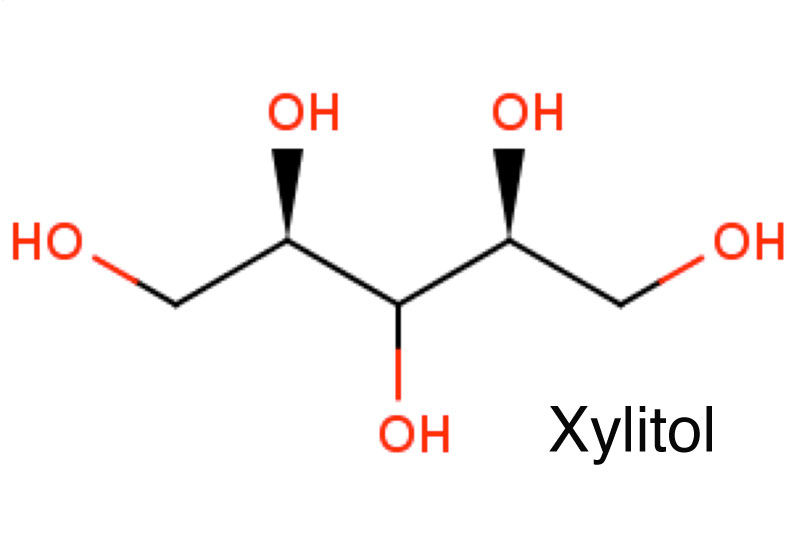
Xylitol is the most popular and most extensively researched, so I'll focus my discussion on it, but the general takeaway of this article applies to other sugar alcohols as well, such as sorbitol and erythritol.
What exactly are sugar alcohols?Sugar alcohols are a type of 'low-digestible carbohydrate,' a category that also includes fiber and resistant starch. Sugar alcohols occur naturally in many fruits and are also known as 'polyols,' which you may recognize as a
FODMAP. Unlike artificial sweeteners, sugar alcohols aren't completely calorie-free, because we are able to digest and absorb them to some extent. The absorption rate varies among sugar alcohols, from about 50% for xylitol to almost 80% for sorbitol, depending on the individual. (
1) Erythritol is almost completely absorbed, but is not digested, so it provides almost no calories. (
2)
Compared with artificial sweeteners, sugar alcohols have very few safety and toxicity studies, and are generally accepted as safe. (
3) In one long-term human study, 35 participants consumed xylitol as their primary dietary sweetener for two years, and no adverse effects other than GI distress were observed, and GI symptoms dissipated after the first couple months. (
4) The amount of xylitol consumed during this trial regularly exceeded 100g per day, often going over 200g per day, depending on the participant.
Metabolic effects of sugar alcoholsSugar alcohols are a popular choice for weight loss due to their reduced calorie content, and for diabetics due to their low glycemic index. There's not nearly as much research on the metabolic effects of sugar alcohols as there is on artificial sweeteners, but the evidence we have suggests that sugar alcohols are at least harmless, and possibly beneficial.
For the most part, sugar alcohols cause no appreciable changes in blood glucose or insulin in humans, and sorbitol and xylitol have not been found to raise blood glucose following consumption. (
5) In diabetic rats, 5 weeks of xylitol supplementation (as 10% of their drinking water) reduced body weight, blood glucose, and serum lipids, and increased glucose tolerance compared with controls. (
6) Two other rat studies also found that xylitol-supplemented rats gained less weight and fat mass compared with control rats, and had improved glucose tolerance. (
7,
8)
Because sweetness does not predict caloric value in sugar alcohols, one might expect that they would cause the same 'metabolic confusion' that is seen with noncaloric artificial sweeteners. Unfortunately there isn't enough evidence to form a conclusion about this, but my feeling based on what I've read is that this isn't a significant issue for sugar alcohols.
For one, sugar alcohols aren't 'intense sweeteners' like artificial sweeteners, which are hundreds of times sweeter than sugar. In fact, many are less sweet than sugar. Also, sugar alcohols do provide some calories, so there's not as much of a discrepancy between the caloric load your body expects and the caloric load it actually gets.
















Comment: Learn more about how fluoridation is the Ultimate Deception: