Taftan volcano near the border of Pakistan has shown signs of unrest in recent years.
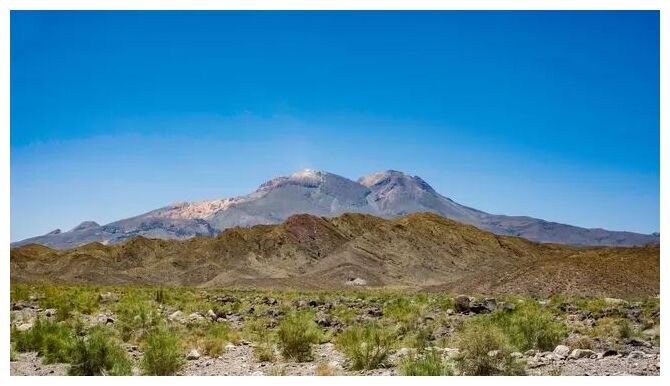
© mohammad aaref barahouei/AlamyTaftan volcano in Iran seems to be waking up after a 700,000-year-long sleep.
New research published Oct. 7 in the journal
Geophysical Research Letters finds that an area of ground near the Taftan volcano's summit rose 3.5 inches (9 centimeters) over 10 months between July 2023 and May 2024. The uplift has not yet receded, suggesting a buildup of gas pressure below the volcano's surface.
The findings reveal the need for closer monitoring of the volcano, which hasn't been considered a risk to people before, said study senior author
Pablo González, a volcanologist at the Institute of Natural Products and Agrobiology, a research center of the Spanish National Research Council (IPNA-CSIC). Volcanoes are
considered extinct if they haven't erupted in the Holocone era, which started 11,700 years ago. Given its recent activity, González said, Taftan might be more accurately described as dormant.
"It has to release somehow in the future, either violently or more quietly," González told Live Science. There is no reason to fear an imminent eruption, he said, but the volcano should be more closely monitored.
Taftan volcano is a 12,927-foot (3,940 meters) stratovolcano in southeastern Iran, situated among a rumple of mountains and volcanoes that was formed by the subduction of the
Arabian ocean crust under the Eurasian continent. Today, the volcano hosts an active hydrothermal system and smelly, sulfur-emitting vents called fumaroles, but it isn't known to have erupted in human history.















Comment: Related: 3 people mauled to death by bears in the span of 1 week in Japan