
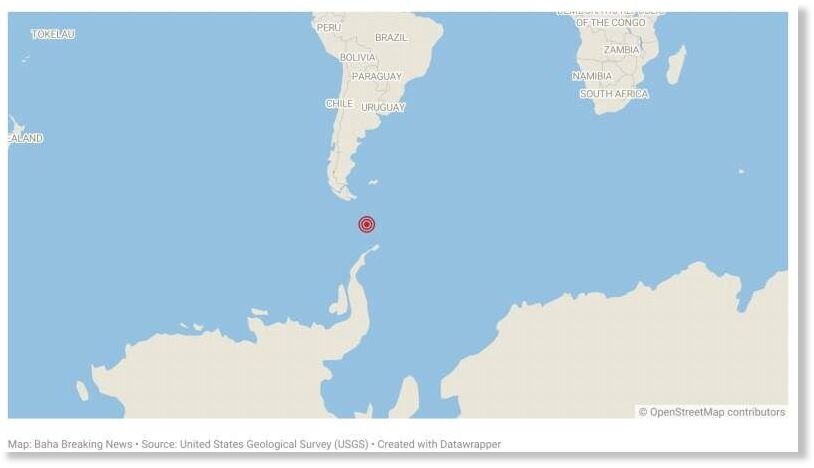
Available data show that the tremor occurred at 01:42 am, local time (03:42 am CET).
The epicenter was registered at a depth of 10.0 kilometers.

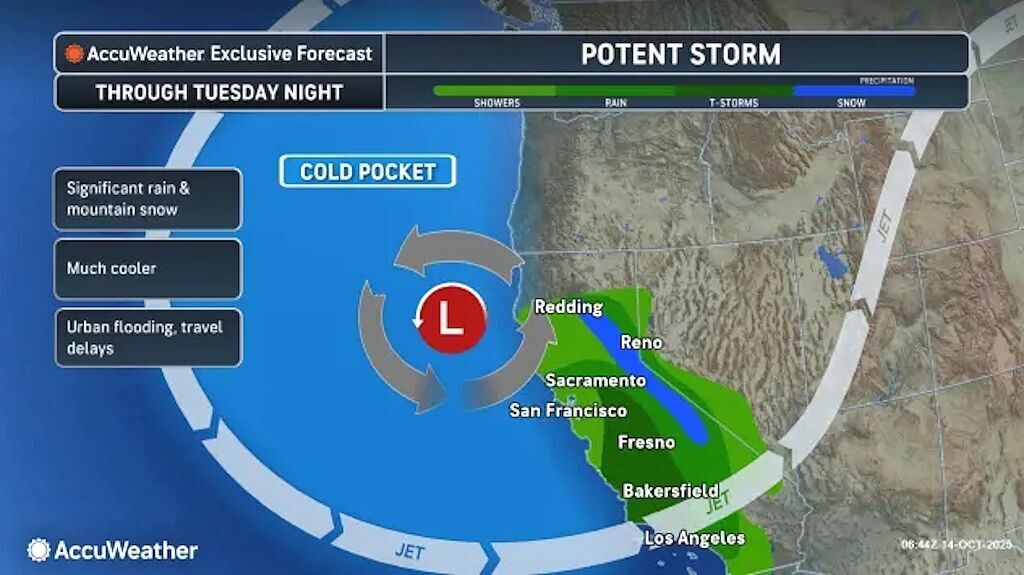
A storm will continue to barrel across California through Tuesday night, bringing much-needed rain and some mountain snow for the first time since early spring.
Showers began breaking out across Oregon and Northern California on Monday morning. Rain and high-elevation snow are forecast to expand as the storm dives southward along the Pacific coast.
Widespread rainfall amounts of 1-2 inches are expected from Redding, California, to Los Angeles."The heaviest rain will continue in the Los Angeles basin into Tuesday afternoon," said AccuWeather Meteorologist Brandon Buckingham. Conditions for the drive home and for evening activities around Los Angeles should be improving substantially.© AccuweatherWeather pattern for October 14, 2025
This could contribute to travel delays on the roads and at airports across the region.
"On a more serious note, where torrential rain falls on steep hillsides and burn scar locations, the potential for mudslides and other debris flows will be high," AccuWeather Senior Meteorologist Alex Sosnowski warned. "The risk has prompted evacuations north of Los Angeles as of early Tuesday morning. Motorists should be prepared for flooded roads, especially where the rate of rain overwhelms storm drains."
The foothills and mountains of Southern California could have as much as 2-4 inches of rain by Tuesday evening, which will bring the risks of flash flooding and debris flows, especially near burn scar areas, Buckingham warned.
The storm will be potent enough that severe thunderstorms will be of concern in Southern California through Tuesday afternoon.
"Flash flooding problems will mount quickly after the rain starts. There will even be a few thunderstorms that not only drop briefly heavy rain but also produce some wind and even hail," AccuWeather Meteorologist Chad Merrill said.
At the height of the storm, as winds blow in from the Pacific Ocean, temperatures will trend downward from the 70s to the 60s Fahrenheit in many low elevations in Northern California and the immediate Southern California coast early this week.
The incoming cold will allow for snow levels to drop to around 5,000 feet through Tuesday. Travelers planning to drive on Interstate 80 through Donner Pass, California, can expect a couple of inches of slushy snow and delays. Above the passes in the mountains, a foot or more of snow could accumulate, including in some of the resorts near Lake Tahoe.

At least 42 people have been killed and 27 others remain missing after torrential rains unleashed severe flooding across several regions of Mexico, authorities said on Saturday.Update October 14
In a statement, Mexico's National Civil Protection Coordination (CNPC) said that the heavy downpours have caused devastating floods in the states of Veracruz, Puebla, Hidalgo, Queretaro, and San Luis Potosi.
According to initial assessments, at least 42 people lost their lives in the floods, while search and rescue teams continue to work intensively to locate the 27 missing individuals.
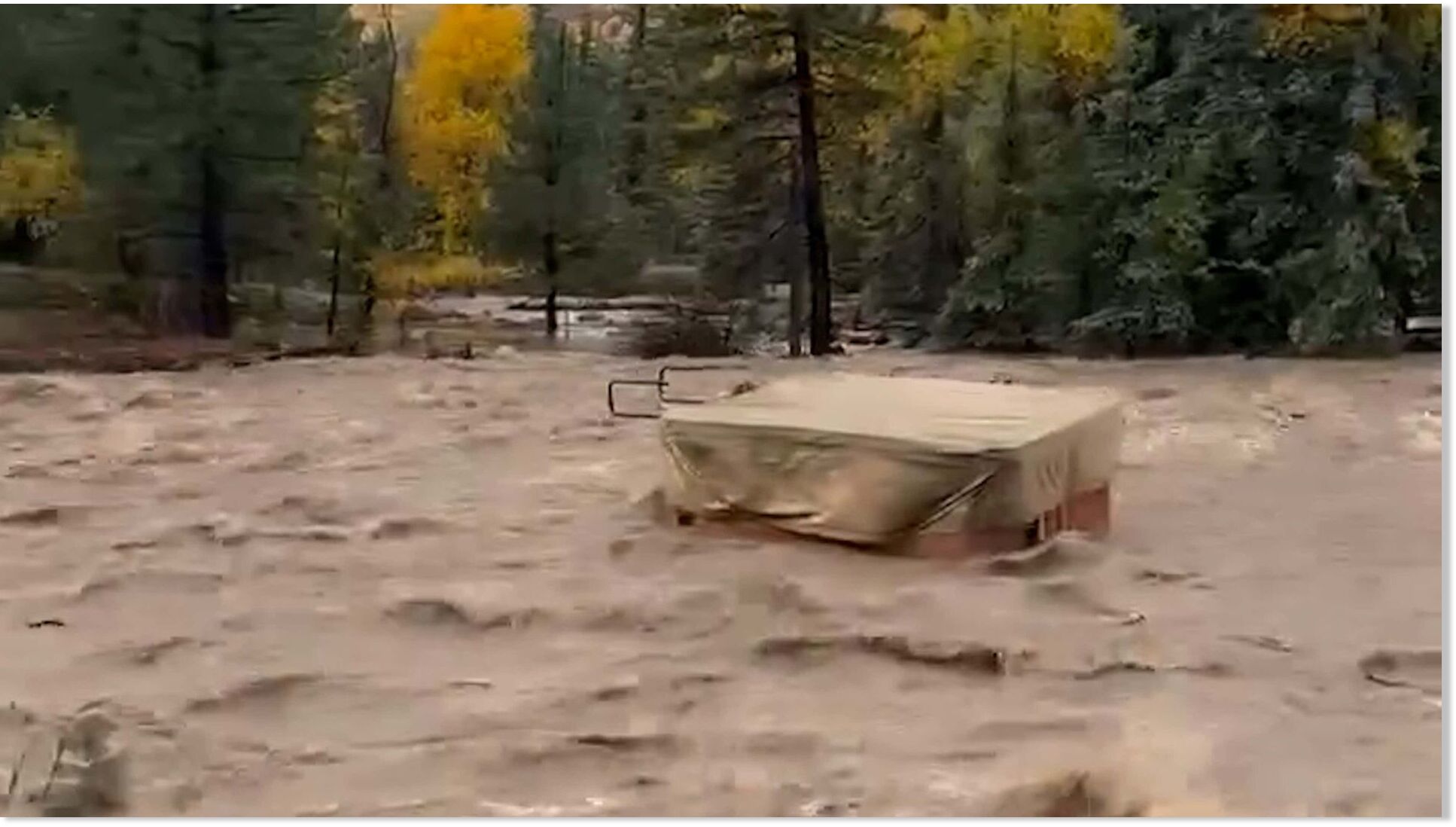
Torrential rain battered several Mexican states over several days last week, turning streets into rivers, sweeping away roads and bridges and triggering landslides.
Rescuers scrambled on Monday to reach people cut off by the devastating flooding, with 64 people killed in central and eastern Mexico and another 65 reported missing.
Dozens of small communities remained inaccessible days after the deluge, with residents working tirelessly to clear paths for the delivery of food and other supplies.
Mexico has deployed some 10,000 troops alongside civilian rescue teams to try to deal with the emergency. Helicopters have ferried food and water to 200 or so communities still cut off by road, and have evacuated the sick and injured.



'New reality' as world reaches first climate tipping pointIt might as well be straight out of the Neolithic Sorcerers Cookbook — How to wind up the crowd before you ask for the goats and girls:
The world faces a "new reality" as we have reached the first of many Earth system tipping points that will cause catastrophic harm unless humanity takes urgent action, according to a landmark report released today (13 Oct) by the University of Exeter and international partners.
With ministers gathering today ahead of the COP30 summit, the second Global Tipping Points Report finds that warm-water coral reefs - on which nearly a billion people and a quarter of all marine life depend - are passing their tipping point. Widespread dieback is taking place and - unless global warming is reversed - extensive reefs as we know them will be lost, although small refuges may survive and must be protected.
We are on the brink of more tipping points, with devastating risks for people and nature: the irreversible melting of polar ice sheets, the collapse of key ocean currents and the dieback of the Amazon rainforest - where COP30 will be held.
With global warming set to breach 1.5°C, the report - by 160 scientists at 87 institutions in 23 countries - argues that countries must minimise temperature overshoot to avoid crossing more tipping points. Every fraction of a degree and every year spent above 1.5°C matters.








Comment: 6 days prior: Huge 7.6 magnitude earthquake felt off coast of Antarctica in famous Drake Passage