Earth ChangesS


Cloud Lightning

Hurricane Melissa intensifies to Category 5, poised to strike Jamaica head-on

hurrican melissa jamaica
© NOAA/NASA via APHurricane Melissa 'rapidly intensifying', October 26, 2025
As of the latest information provided by the National Hurricane Center, Hurricane Melissa now has maximum sustained winds of 175 mph with some higher gusts, and some fluctuations in strength are likely as the storm slams Jamaica with a deadly storm surge, life-threatening and catastrophic flash flooding and landslides, and destructive winds.

"The Air Force Hurricane Hunters out there were flying through the storm, along with the NOAA P-3," FOX Weather Hurricane Specialist Bryan Norcross said. "The fact that the P-3 had such violence, turbulence, in the southwestern eye wall that they departed the storm. They usually do that just to be sure that there's nothing wrong with the aircraft."

As of the latest information provided by the National Hurricane Center (NHC), Hurricane Melissa now has maximum sustained winds of 175 mph with some higher gusts, and some fluctuations in strength are likely as the storm slams Jamaica with a deadly storm surge, life-threatening and catastrophic flash flooding and landslides, and destructive winds.

Comment:


Seismograph

Best of the Web: USGS: Shallow magnitude 6.5 earthquake hits east of Guadeloupe - mag. 6 aftershock

mmmmm
A shallow magnitude 6.5 earthquake hit off the coast of the French overseas territory of Guadeloupe, United States seismologists said, with no damages or injuries immediately reported by authorities.

The US Geological Survey said the epicentre of the quake hit around 160 kilometres (100 miles) east of the Caribbean island at a depth of nine kilometres around 8:30 am (1230 GMT).

Authorities issued a tsunami warning after the initial tremor which has been followed by several strong aftershocks.

AFP

Comment: Earthquake Track reported that one of the aftershocks was magnitude 6 that happened 12 minutes later.

And this as Hurricane Melissa, currently one of the most powerful storms ever recorded, hangs off Jamaica, flash-flooding swamps central Florida, and Trump continues American military sabre-rattling against Venezuela.


Volcano

Taal Volcano erupts: Multiple short-lived blasts send ash over Batangas, Philippines

Taal Volcano recorded four minor eruptions between October 25–26, 2025.
Taal's Sudden Eruptions: What Happened Over Batangas?

Over the course of 24 hours spanning October 25 and 26, 2025, Taal Volcano reminded the Philippines—and the world—why it's considered one of the most unpredictable volcanoes on the planet. Residents of Batangas Province woke to the sight of towering ash plumes and the faint smell of sulfur. At least four short-lived eruptions, classified as minor phreatic and phreatomagmatic events, rocked the northeastern portion of Taal's Main Crater. These eruptions sent dense columns of ash and steam shooting 1,200 to 2,100 meters into the sky, casting a gray pall over nearby communities in Laurel and Agoncillo.

According to the Philippine Institute of Volcanology and Seismology (PHIVOLCS), the first event began at 5:31 p.m. on October 25. A phreatomagmatic burst—a violent interaction of magma and groundwater—produced an ash-laden plume that drifted southwest. Just hours later, at 2:55 a.m. on October 26, a rapid phreatic explosion, locally known as pusngat, followed. This lasted about a minute, sending a billowing white cloud over the Main Crater Lake. The most powerful eruptions came shortly after sunrise, at 8:13 and 8:20 a.m., each lasting two to four minutes and generating shockwaves detectable by infrasound sensors.


Tsunami

Best of the Web: Up to 19 inches of rain in 12 hours brings flash-flooding to east-central Florida

mmmmm
Water stands in low spots and rushes through roadside ditches this morning across central Florida. The air is thick, the sky leaden, and the storm drains are struggling to keep up. After a weekend of relentless rain, flash flooding remains the biggest threat today as a Flood Watch stays in effect for much of east-central Florida, including Orlando, Melbourne, Lake, Orange, and Seminole counties.

The National Weather Service in Melbourne reports that between 10 and 19 inches of rain have already fallen in parts of Lake and Orange counties, leaving roads washed out and some neighborhoods isolated. This morning's Flood Warning covers those hardest-hit zones until 7 a.m., but high water and saturated soils will keep travel hazardous well into Monday.

Showers and thunderstorms are expected through the early afternoon before drier air begins to edge in from the northwest. Commuters should use extreme caution, avoid flooded intersections, and allow extra travel time. Remember — turn around, don't drown.


Seismograph

Significant magnitude 6.2 earthquake hits off Indonesia

mmmm
An intermediate magnitude 6.2 earthquake was reported early morning near Kefamenanu, North Central Timor Regency, East Nusa Tenggara, Indonesia.

According to Indonesia's Meteorology, Climatology, and Geophysical Agency, the quake hit on Monday, October 27th, 2025, at 1:04 am local time at an intermediate depth of 112. km. The strength of the earthquake may have been tempered by its relative great depth below the surface, which makes it feel weaker in absolute terms. The exact magnitude, epicenter, and depth of the quake might be revised within the next few hours or minutes as seismologists review data and refine their calculations, or as other agencies issue their report.

Our monitoring service identified a second report from the European-Mediterranean Seismological Centre (EMSC) which listed the quake at magnitude 6.2 as well. Other agencies reporting the same quake include the citizen-seismograph network of RaspberryShake at magnitude 6.2, and the German Research Centre for Geosciences (GFZ) at magnitude 6.2.

Tsunami

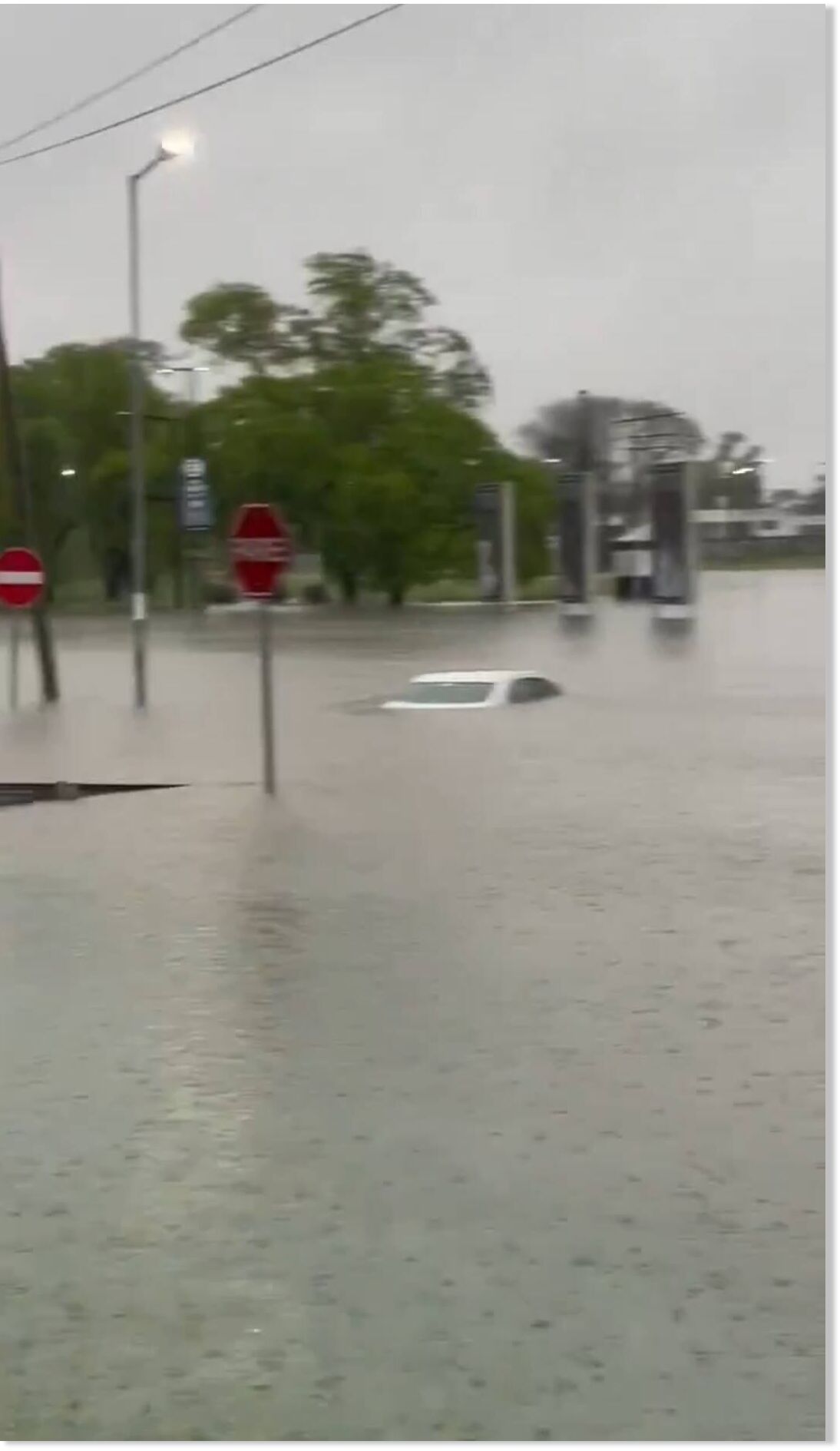
Severe floods in Buenos Aires, Argentina -100 millimeters (4 inches) of rain fell in 2 hours

Major flooding in Tecnópolis in Villa Martelli, Buenos Aires Province
Shortly before 5:00 a.m. this Saturday, a deluge of rain fell on the city of Buenos Aires and its surrounding areas. 100 millimeters of water fell in two hours, flooding parts of General Paz Avenue, among other inconveniences.

According to the Buenos Aires Central Observatory, as of 9:00 a.m., there had been a cumulative rainfall of 115 millimeters . Visibility was reduced to just seven kilometers as a result of the heavy rains. Due to the flooding on General Paz Street, dramatic scenes could be seen of people wading through waist-deep water and some cars stranded on the pavement, half-covered by the water.


Attention

The Mediterranean's 'friendly shark' killed bather in Israeli waters

Sand shark
Sand shark
A shark that was harmless, that did not attack people, that was 'friendly' in the Mediterranean Sea. Well, this statement can no longer be said with certainty, because this marine animal has attacked a person in the waters of this sea.

It is the sand shark or wolf shark that attacked a 40-year-old diver on a beach in Israel. His name is Barak Tzach who, after returning home from work, decided to go fishing at Olga beach in the city of Hadera. He was the victim of several sharks. This incident happened last April, but it is only now that the type of shark that attacked him has become known and they have been surprised by what happened.

Exactly, scientists from the University of Paris PSL have identified the deadly creatures as sand sharks.

Comment: A report from April: Shark attack horror as diver feared dead after brutal mauling off coast of Israel


Seismograph

Magnitude 6.0 earthquake strikes Coral Sea, no immediate reports of damage

mmmmmm
A strong earthquake of magnitude 6.0 struck the Coral Sea in the early hours of Sunday, according to the National Centre of Seismology (NCS). The NCS further noted that the earthquake occurred approximately 632 km north-northwest of Port Vila, Vanuatu. As of now, there have been no immediate reports of damage or casualties following the quake, and authorities are continuing to monitor the situation.

According to the US Seismology Facility for the Advancement of Geoscience, the Solomon and Vanuatu Islands are subduction-related features, formed by the subduction of the Indo-Australian Plate beneath the greater Pacific Plate. This is a seismically active region, prone to frequent and large earthquakes.

The Australian continent is moving northeast at a rate of around 6 cm per year, with variations along its boundaries reaching up to 13 cm per year. In the region of the Solomon and Vanuatu Islands, earthquakes are caused by the northeasterly movement of the Indo-Australian Plate as it dives beneath the Pacific Plate.

Ice Cube

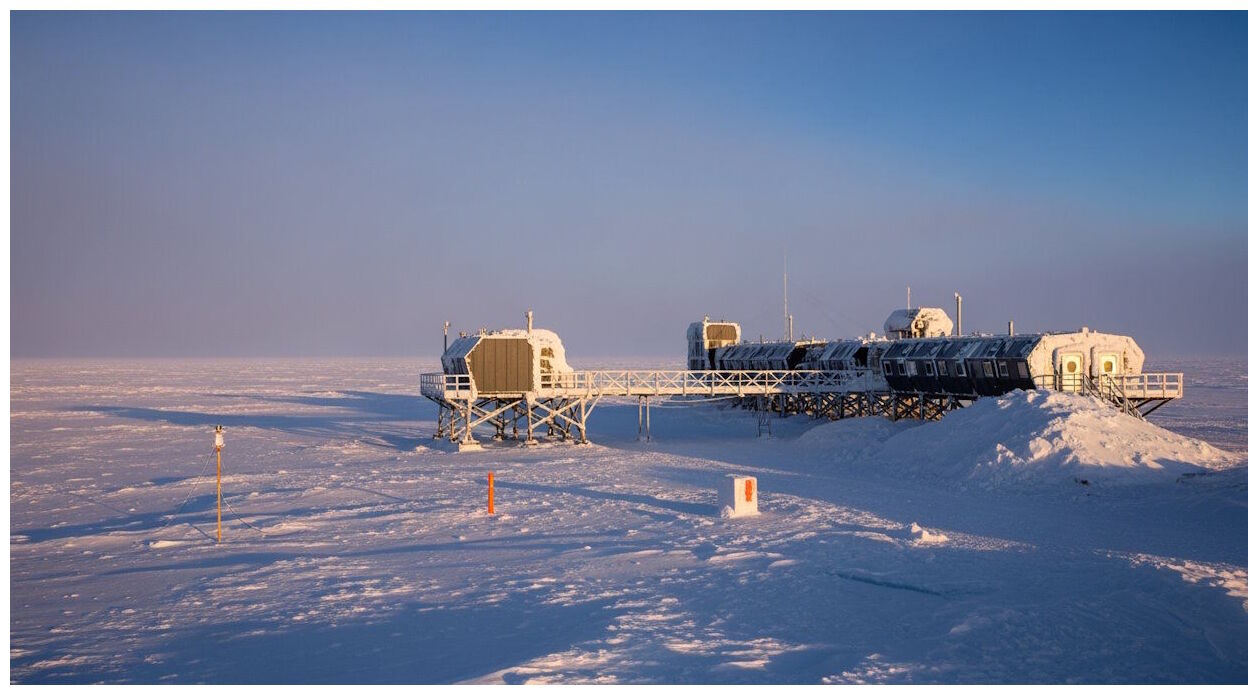
Antarctic Amundsen-Scott station sees coldest October in 44 years...Mainstream media silent!

This is not supposed to be happening, according to the climate models.
Antarctic Station
© Report24/KI
While the headlines relentlessly holler about "exploding global warming" and "dramatic melting" of the polar caps, the South Pole is telling a starkly different story.

Here reports Germany's Report 24.

On October 15, the Amundsen-Scott South Pole Station registered an astonishing temperature of minus 61.3 degrees Celsius and it isn't even winter there. It's springtime and temperatures should be on the rise.

Coldest October since 1981

According to Report 24, the numbers are clear: It was the coldest October measured at the station since 1981.

This extreme cold is not an isolated event. As the article points out, even CNN reported in 2021 that the continent had experienced its coldest winter since records began.

The data from stations like Amundsen-Scott, Vostok, and Dome C show that instead of a linear, CO₂-driven heating trend, the South Pole is dominated by naturally occurring, extreme temperature fluctuations, including pronounced cold snaps.

Cloud Lightning

Best of the Web: Slow-moving Tropical Storm Melissa, soon a hurricane, brings death, floods to Caribbean

mmmmmm
The slow-moving, but punishing, Tropical Storm Melissa that has already killed four people is threatening catastrophic flooding across the northern Caribbean as it strengthens towards Jamaica.

Melissa is expected to become a major hurricane, possibly by later Saturday or Sunday, before making landfall across central Jamaica on Tuesday, with forecasters warning the system could dump up to 89 centimetres of rain (35 inches) across Haiti.

The storm's crawling pace - moving at just 5 kilometres (3.1 miles) per hour on Friday - means Jamaica could endure hurricane conditions for more than 72 hours, while southwestern Haiti faces what forecasters describe as life-threatening flash flooding.

Three people have died in Haiti, including two killed in a landslide in Port-au-Prince and another struck by a falling tree in Marigot, officials said. A fourth person was killed in the Dominican Republic, where another remains missing.

Jamaica's Meteorological Service principal director Evan Thompson told The Gleaner that residents should brace for a "double effect" as the hurricane's eye passes over the island, with the strongest winds hitting from opposite directions on either side of the centre.