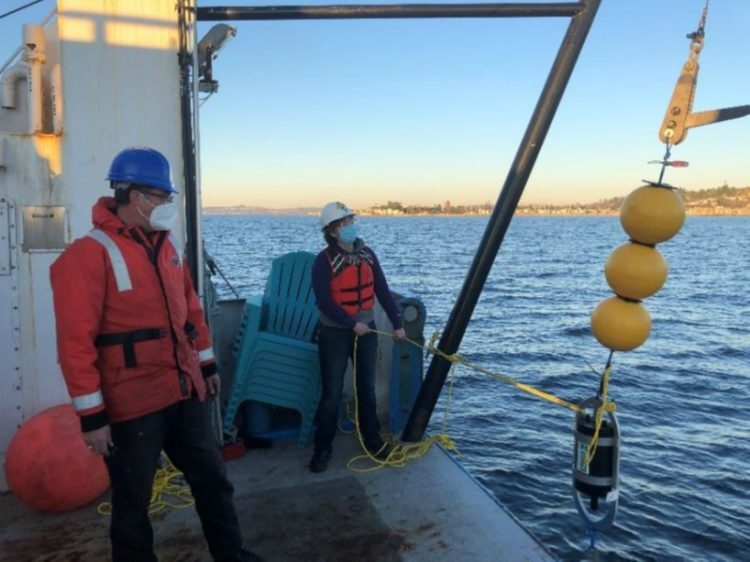
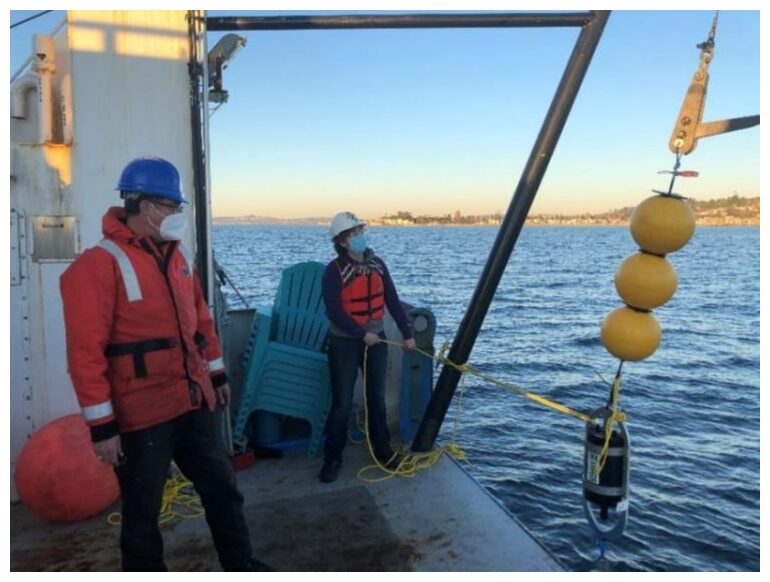
© University of WashingtonMarine technician Sonia Brugger (right) and marine engineer Tor Bjorklund aboard the RV Rachel Carson in December 2020 collecting data near the Alki Point vent field. Alki Point is seen in the distance.
The release of methane, a powerful greenhouse gas responsible for almost a quarter of global warming, is being studied around the world, from Arctic wetlands to livestock feedlots.
A University of Washington team has discovered a source much closer to home: 349 plumes of methane gas bubbling up from the seafloor in Puget Sound, which holds more water than any other U.S. estuary.The columns of bubbles are especially pronounced off Alki Point in West Seattle and near the ferry terminal in Kingston, Washington, according to a
study in the January issue of
Geochemistry, Geophysics, Geosystems."There's methane plumes all over Puget Sound," said lead author
Paul Johnson, a UW professor of oceanography. "Single plumes are all over the place, but the big clusters of plumes are at Kingston and at Alki Point."
Previous UW research had found methane
bubbling up from the outer coasts of Washington and Oregon. The bubbles in Puget Sound were first discovered by surprise in 2011, when the UW's global research vessel, the RV Thomas G. Thompson, had kept its sonar beams turned on as it returned to its home port on the UW campus. The underwater images created by the soundwaves showed a distinct, persistent bubble plumes as the vessel rounded the Kingston ferry terminal.












Comment: The author is correct that these findings will never see the light of day. The controllers aren't interested in the truth about climate change, only that the narrative enables them to make sweeping changes to society to their own benefit (and detriment to the rest of us). The plebs can't know the truth!
See also: