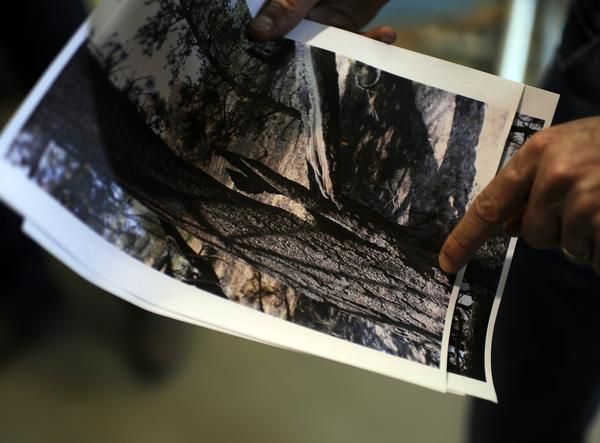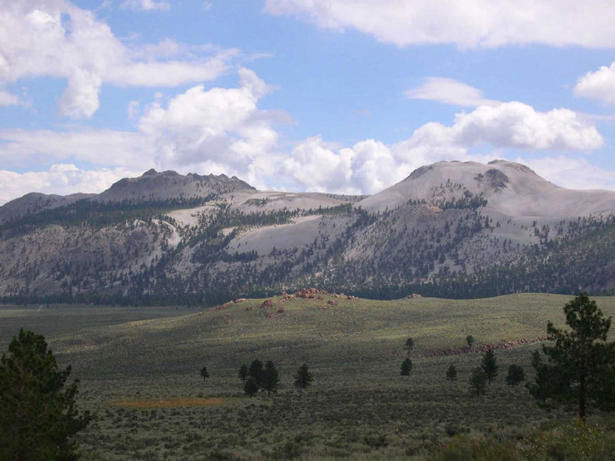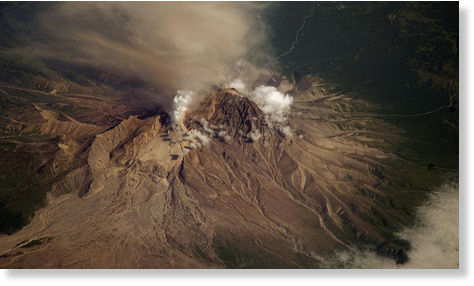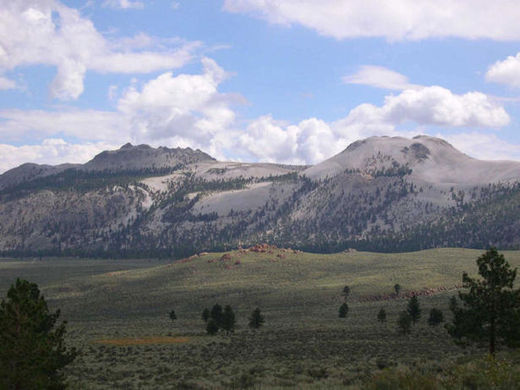
© Guilherme GualdaTo determine how long giant magma pools last before they erupt, Guilherme Gualda and his team studied quartz crystal and rock formations at Bishop Tuff, in Long Valley, Calif., where a super eruption occurred 760,000 years ago.
Imagine a volcano with enough power to wipe out much of the world with a single eruption.
Could it happen in our lifetime? Not likely, scientists say. But it could take a lot less time than previously suspected.
New evidence suggests that the lifespan of giant magma pools - which erupt through supervolcanoes - can last between 500 and 3,000 years. Previous evidence had suggested these pools lasted around 100,000 to 200,000 years before becoming super eruptions.
Supervolcanoes are said to be roughly 100 times the size of active volcanoes, spewing out more than 450 cubic kilometres of magma - enough to fill Sydney Harbour 900 times over. They lead to widespread destruction and climate change.
"Everybody now is familiar with the atmospheric effects of the eruptions of the Iceland events," says
Guilherme Gualda, assistant professor of earth and environmental sciences at Nashville's Vanderbilt University, referring to the 2010 eruption of
Iceland's Eyjafjallajokull volcano that caused air traffic nightmares and environmental concerns.
"You can imagine that multiplied by 100 and 1,000 and the effects become global in scale, rather than local or continental."