Earth ChangesS


Attention

Major faultlines with the potential to trigger massive tsunamis found off West Coast of New Zealand

earthquake
© File Photo / New Zealand Herald
Faultlines capable of causing earthquakes with magnitudes of up to 7.8, with the potential to trigger massive tsunamis, have been found off the northern West Coast.

However, the West Coast Regional Council today moved to reassure the public, saying the Alpine Fault was a far more imminent threat.

The National Institute of Water and Atmospheric Research (Niwa) led the two-year mapping project for the council, which wanted to assess the tsunami risk for coastal communities.

Niwa marine geologist Philip Barnes said while the faults were relatively large and capable of causing fairly severe earthquakes, it was thought they had extremely long recurrence intervals, meaning that large earthquakes would be very infrequent.

Cloud Lightning

Freak hail storm brings winter scenes to Falmouth, UK

A freak hail storm has left part of Falmouth in Cornwall looking like a winter's scene.


PE teacher Tommy Matthews, 52, of The Gluyas arrived home from work to find an inch of hail covering the street.

Neighbours' garages were flooded and manholes burst as the hail turned into a stream of water.

The hail storm, which left cars sliding on roads, occurred at about 17:00 BST after a Met Office warning of heavy rain in the South West overnight.

Bizarro Earth

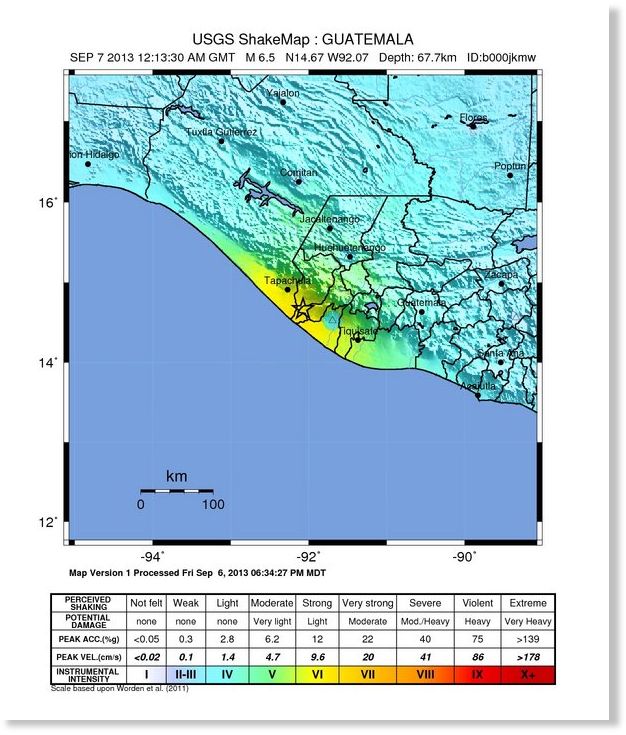
USGS: Earthquake Magnitude 6.5 - 6km SW of Pajapita, Guatemala

Image
© USGS
Event Time:
2013-09-07 00:13:30 UTC
2013-09-06 18:13:30 UTC-06:00 at epicenter

Location:
14.668°N 92.075°W depth=67.7km (42.0mi)

Nearby Cities:
6km (4mi) SW of Pajapita, Guatemala
8km (5mi) E of Ciudad Tecun Uman, Guatemala
20km (12mi) NE of Suchiate, Mexico
22km (14mi) W of Coatepeque, Guatemala
168km (104mi) W of Guatemala City, Guatemala

Technical Data

Info

The real reason Kansas is running out of water

Image
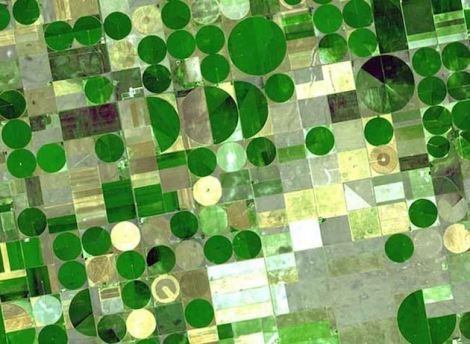
© NASA/U.S. Geological SurveyHow to make an arid region bloom: irrigated farm plots (between 0.5 and 1 mile in diameter) over the High Plains Aquifer in Western Kansas.
Like dot-com moguls in the '90s and real estate gurus in the 2000s, farmers in Western Kansas are enjoying the fruits of a bubble: Their crop yields have been boosted by a gusher of soon-to-vanish irrigation water. That's the message of a new study by Kansas State University researchers. Drawing down their region's groundwater at more than six times the natural rate of recharge, farmers there have managed to become so productive that the area boasts "the highest total market value of agriculture products" of any congressional district in the nation, the authors note. Those products are mainly beef fattened on large feedlots; and the corn used to fatten those beef cows.

But they're on the verge of essentially sucking dry a large swath of the High Plains Aquifer, one of the United States' greatest water resources. The researchers found that 30 percent of the region's groundwater has been tapped out, and if present trends continue, another 39 percent will be gone within 50 years. As the water stock dwindles, of course, pumping what's left gets more and more expensive - and farming becomes less profitable and ultimately uneconomical. But all isn't necessarily lost. The authors calculate that if the region's farmers can act collectively and cut their water use 20 percent now, their farms would produce less and generate lower profits in the short term, but could sustain corn and beef farming in the area into the next century.

And that would be great.

Bug

Thousands of genetically modified insects set for release

GMO Fly
© Natural Society
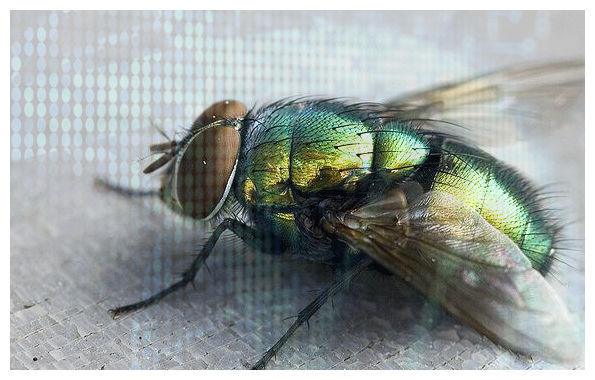
Just when you thought genetically modified mosquitoes and mutated dinner entrees were the extent of biotech's hunger to manipulate the genetic coding of the planet, scientists have now unleashed a plan to launch thousands of 'frankenfly' style insects into the wild in order to combat pests.

And just like we saw with the release of genetically modified mosquitoes, the altered insects are actually being pushed as a 'green alternative' to the use of chemicals. You see, British scientists claim that mutating the genetic code of the insects is actually a way of substituting for the use of chemical pesticides.

Chemical pesticides used to lower the population of olive flies in Britain. The reality here, however, is that you are taking something damaging like chemical pesticides and replacing it with something far worse.

It's like trading in your aging car for a bicycle, except in this case the bicycle also happens to include side effects like 'may alter the genetic structure of the entire insect population'.

Bug

Biblical plague of shrieking crickets terrorize Oklahoma as they swarm over buildings, eat each other and smell 'like rotten meat'

  • It is an unusually busy mating season for the brown cricket in the Sooner State
  • Cool, wet conditions have made this the worst cricket invasion in years
It's cricket mating season in Oklahoma and unusually massive swarms of the frisky bugs are terrorizing the state's residents.

Not only does the field cricket have a noxious odor and shrieking chirp, it has a tendency toward cannibalism so killing them only makes things worse.

Residents say the insects tend to congregate and feed on carcasses of their dead brethren, but they're covering every street, sidewalk, and building so there's no way to avoid the occasional crunch.

Image
They're everywhere: Unusually large swarms of crickets are invading Oklahoma, covering streets, sidewalks, and businesses like this McDonalds


Network

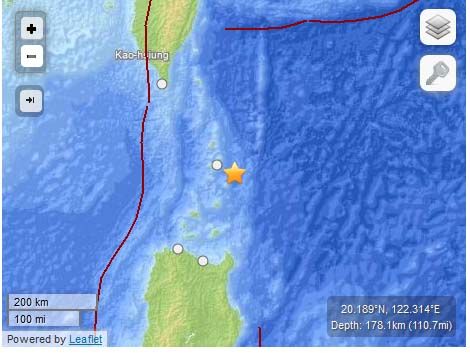
USGS: M6.0 - 43km ESE of Uyugan, Philippines

Earthquake Philipines
© USGS
Event Time
2013-09-06 11:33:53 UTC
2013-09-06 19:33:53 UTC+08:00 at epicenter

Location
20.189°N 122.314°E depth=178.1km (110.6mi)

Nearby Cities

43km (27mi) ESE of Uyugan, Philippines
214km (133mi) NNE of Aparri, Philippines
217km (135mi) NE of Claveria, Philippines
258km (160mi) SE of Hengchun, Taiwan
634km (394mi) NNE of Manila, Philippines

Technical Details

Info

Maine lobsters hit by shell-eating disease

Image
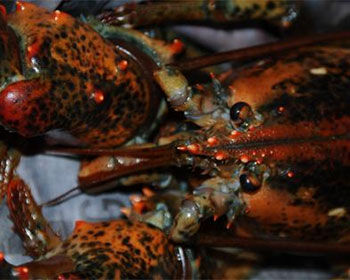
© Beate Hoddevik Sunnset/IMRAmerican lobster, Homarus americanus.
An epizootic shell-eating bacteria that has infected the southern New England lobster (Homarus americanus) for years is fast spreading up north, a situation that causes concern in the shrimp sector in Maine.

The disease, previously confined to the south of New England and Long Island Sound, has baffled a group of scientists at the University of Rhode Island, who have been researching the subject for over a decade.

The disease was first noticed in 1996 by fisheries biologist Kathy Castro. Two years later, almost 18 per cent of the Rhode Island lobsters were infected with it.

"By 2010, a third of all lobsters had the disease, and the scary part was that 70 per cent of females with eggs had it," she said. "That scared me because that's the reproducing population."

So far, only an insignificant number of Maine lobsters seem to have it: only three in a thousand sampled lobsters were infected. But there are fears that if the disease spreads as fast as it did in the waters of Rhode Island, it will have a drastic impact on the important Maine shrimp industry.

Sun

Head scratcher: No Atlantic hurricane by August in first time in 11 years

Image
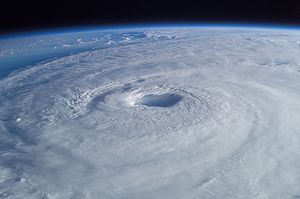
© WikipediaFrom his vantage point high above the earth in the International Space Station, Astronaut Ed Lu captured This broad view of Hurricane Isabel. The image, ISS007-E-14750, was taken with a 50 mm lens on a digital camera.
Where are all the hurricanes Al Gore, Bill McKibben, Joe Romm, and Brad Johnson say are supposed to happen due to global warming? Article includes most recent forecast from Klotzbach and Gray

Bloomberg News: August is about to end without an Atlantic hurricane for the first time since 2002, calling into question predictions of a more active storm season than normal.

Six tropical systems have formed in the Atlantic since the season began June 1 and none of them has grown to hurricane strength with winds of at least 74 miles (120 kilometers) per hour. Accumulated cyclone energy in the Atlantic, a measure of tropical power, is about 30 percent of where it normally would be, said Phil Klotzbach, lead author of Colorado State University's seasonal hurricane forecasts.

"At this point, I doubt that a super-active hurricane season will happen," Klotzbach said in an e-mail yesterday.

The most active part of the Atlantic season runs from Aug. 20 to about the first week of October. The statistical peak occurs on Sept. 10, according to the National Hurricane Center in Miami.

Cloud Precipitation

Flood death toll rises to 176 in Bihar, India - cloudburst warnings for next few days

Bihar flood
© Unknown
It's bad news for millions of flood-affected people in Bihar. The India Meteorological Department (IMD) has warned of heavy rains and near cloud burst-like situation in the next few days that may create more devastation.

Nearly six million people have been affected by floods in 20 districts of the state. At least 176 people have died in the floods so far and thousands have been left homeless.